Quick Verdict: The Benchmark Sport-SUV, But Is 456 HP Enough to Hold Off Rivals?
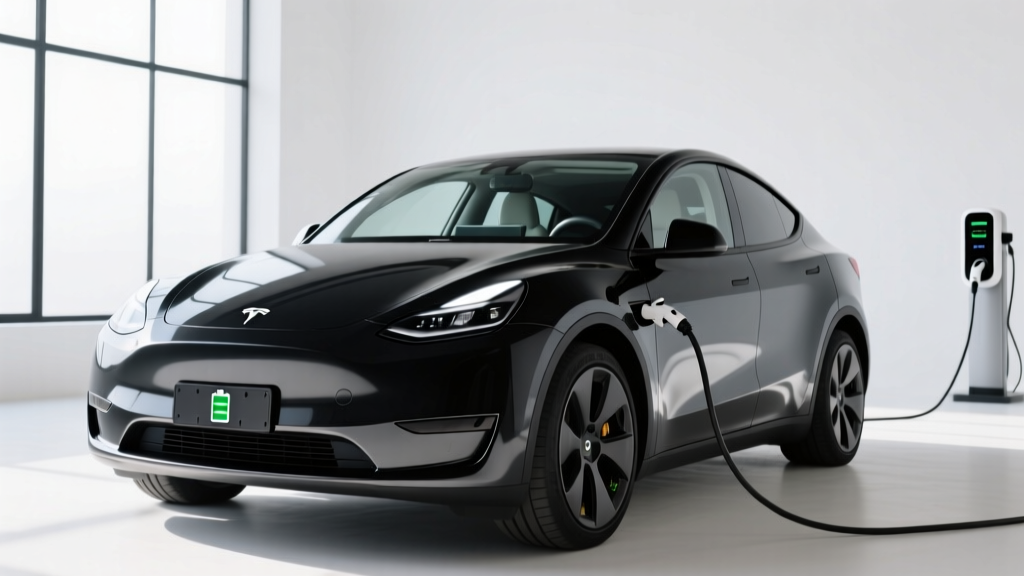
The 2026 Tesla Model Y Performance remains the default answer for buyers who want a dual-motor AWD electric SUV with sports-car acceleration and a 300+ mile EPA range. After the Juniper refresh brought revised styling, a retuned adaptive suspension, and a refreshed interior, the Performance variant now pushes an estimated 456 horsepower and cracks 0-60 mph in 3.5 seconds. But the EV SUV segment has matured. Porsche's Macan Electric, BMW's iX M60, and Hyundai's Ioniq 5 N all challenge on dynamics, while the refreshed Model Y Long Range AWD closes the performance gap for thousands less. This review dissects the real-world numbers — range, charging curves, ownership costs, and IRS §30D tax credit eligibility — so you can decide whether the Performance badge justifies its premium.
Performance & Powertrain: Where the 456 HP Actually Goes
The Model Y Performance pairs a permanent-magnet synchronous motor on the rear axle with an induction motor up front, delivering dual-motor all-wheel drive with torque-vectoring capability. Combined output sits at approximately 456 hp (340 kW) and 460 lb-ft of torque — figures Tesla derives from its own testing methodology, since the brand does not submit to SAE-certified third-party dyno numbers. What matters on the road: the instant torque delivery and traction control calibration launch the 4,400-lb crossover with minimal wheelspin.
| Metric | Value |
|---|---|
| Horsepower (combined) | ~456 hp (340 kW) |
| Torque | 460 lb-ft |
| Drivetrain | Dual-motor AWD |
| 0-60 mph | 3.5 seconds |
| Top speed | 155 mph |
| Suspension | Adaptive dampers (Juniper tune) |
Compared to the Long Range AWD (roughly 384 hp, 4.6-second 0-60), the Performance shaves 1.1 seconds off the sprint — meaningful for merging and passing, but the trade-off is slightly lower efficiency and a firmer ride. Track Mode returns for closed-course driving, adjusting stability control, regen balance, and cooling thresholds.
Range, Battery & Efficiency: EPA vs. Reality
The Juniper-generation Model Y Performance uses a ~78 kWh usable lithium-ion pack with NMC (nickel manganese cobalt) chemistry — chosen for its higher energy density versus the LFP cells Tesla fits to the RWD Long Range base trim. NMC also handles the high C-rate discharge demands of Performance driving without excessive voltage sag.
Real-World Expectation: 240-265 miles on mixed highway driving at 70-75 mph; 210-230 miles in sub-freezing weather with cabin heat; up to 280 miles in mild city/suburban duty with regen-heavy driving. The Performance's larger 21" Überturbine wheels and stickier summer-compound tires cost roughly 20-30 miles versus the Long Range AWD on 19"s.
On the EPA's fueleconomy.gov listings, Model Y variants typically land between 105-115 MPGe combined, translating to roughly 29-32 kWh per 100 miles. Expect the Performance, with its stickier rubber and firmer suspension tune, to sit near the lower end of that band — closer to 31-33 kWh/100 mi in temperate conditions.
How Much Range Do You Actually Lose?
Cold weather is the silent range killer. At 20°F, NMC chemistry experiences elevated internal resistance, and cabin heating (even with the Model Y's standard heat pump) draws 3-5 kW continuously. Plan for 20-30% range reduction in sustained winter highway driving. Conversely, mild 65°F city driving with strong regenerative braking can approach or even match the EPA sticker.
Charging Speed: 250 kW Peak, But Watch the Curve
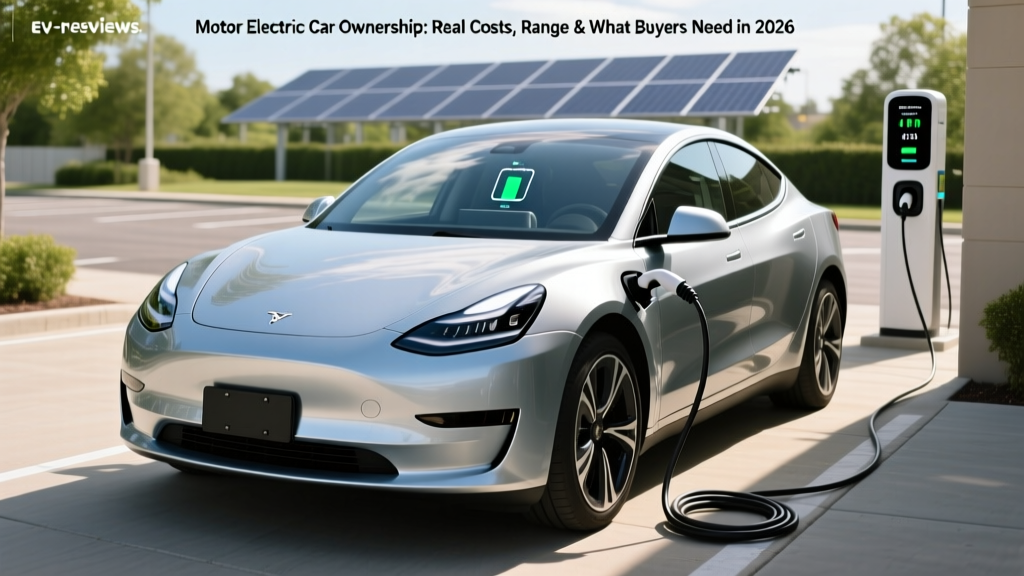
The Model Y Performance supports up to 250 kW DC fast charging via the NACS (North American Charging Standard) connector native to Tesla's Supercharger network. On a V3 or V4 Supercharger with a preconditioned battery, you'll see peak rates near 250 kW between roughly 10-30% state of charge, after which the charge curve tapers progressively — a reality that marketing materials conveniently obscure.
| Charging Method | Power | Miles Added per Hour | Notes |
|---|---|---|---|
| Level 1 (120V outlet) | ~1.4 kW | 3-5 mi/hr | Emergency/trickle only |
| Level 2 (240V, 48A Wall Connector) | 11.5 kW | ~44 mi/hr | Full overnight recharge in ~8 hrs |
| DC Fast (250 kW Supercharger) | Peak 250 kW | ~175 mi in 15 min | 10-80% in ~25-28 min |
| DC Fast (50 kW CCS w/ adapter) | 50 kW | ~35 mi/hr | Legacy networks, taper early |
Preconditioning matters. Navigate to a Supercharger using the built-in nav, and the battery thermal management system will warm the pack to optimal charging temperature before arrival. Skip this step on a cold morning and your peak rate may cap at 120-150 kW for the first several minutes — adding 5-10 minutes to your stop.
Home charging on a Tesla Wall Connector (hardwired 60A circuit, 48A continuous) delivers 11.5 kW — enough to replenish a full day's 60-mile commute in about 90 minutes. Most owners will rarely, if ever, need DC fast charging for daily use.
Interior, Cargo & Tech: Juniper Refinements Land
The Juniper refresh finally addressed the most-criticized elements of the pre-2025 Model Y. A ventilated front row, ambient lighting, a rear-seat touchscreen, power-folding second row, and acoustic glass all arrive as standard on the Performance. The 15.4-inch front touchscreen now runs an updated UI with customizable widget panels, and a second 8-inch screen serves rear passengers for climate and media control.
| Measurement | Value |
|---|---|
| Cargo (rear seats up) | 30.2 cu ft |
| Cargo (rear seats folded) | 72.1 cu ft |
| Front trunk (frunk) | 4.1 cu ft |
| Front legroom | 41.8 in |
| Rear legroom | 38.4 in |
| Towing capacity | 3,500 lbs (with hitch) |
Cargo volume trails the Hyundai Ioniq 5 and Ford Mustang Mach-E slightly due to the coupe-like roofline, but the wide, flat load floor and deep under-floor bin remain practical for strollers and gear. The 3,500-lb tow rating covers small boat and utility trailers but falls short of the Rivian R1S or F-150 Lightning for serious hauling.
Driver Assistance: Still Level 2, Not Self-Driving
Visibility cameras, ultrasonic removal compensated by Tesla Vision, and a cabin camera for driver monitoring form the sensor suite. NHTSA's Standing General Order data shows Tesla's Autopilot-involved incident rate remains under scrutiny — treat any "miles between disengagements" marketing numbers skeptically, as reporting methodologies vary widely between OEMs.
Pricing, Trims & Federal Tax Credit Eligibility
The 2026 Model Y Performance starts at approximately $54,990 (including destination), placing it under the IRS §30D MSRP cap of $80,000 for SUVs. However, qualifying for the full $7,500 credit depends on a matrix of buyer income limits, battery-component sourcing, and critical-mineral requirements that shift annually.
| Configuration | MSRP | After Max §30D Credit |
|---|---|---|
| Performance (base) | $54,990 | ~$47,490* |
| Performance + FSD | $62,990 | ~$55,490* |
| Performance + FSD + Red Paint + 21" Wheels | $66,490 | ~$58,990* |
*Assumes full $7,500 §30D credit eligibility. Verify via the IRS clean vehicle credit page — battery-component and critical-mineral sourcing requirements, plus buyer AGI caps ($150k single / $225k HOH / $300k joint), determine your actual credit. Point-of-sale transfer is available through registered dealers, reducing your out-of-pocket at delivery.
Tax Credit Checklist (§30D)
- Vehicle MSRP ≤ $80,000 (SUVs/trucks/vans) — Model Y qualifies
- Buyer AGI within limits: $150k single / $300k joint
- Battery components ≥ threshold % manufactured in North America (phasing up yearly)
- Critical minerals ≥ threshold % sourced from US or FTA partners
- Final assembly in North America (Fremont/Austin-built Model Y qualifies)
- No "foreign entity of concern" battery content
Consult a tax professional before purchase — the rules are intricate and have tightened significantly since 2023.
Ownership Costs & Warranty
Tesla's basic vehicle warranty covers 4 years / 50,000 miles, while the battery and drive unit carry an 8-year / 120,000-mile warranty with a guaranteed minimum 70% capacity retention threshold. Real-world degradation data from Tesla's fleet reports and third-party aggregators like Recurrent show NMC packs typically retain 90%+ capacity after 100,000 miles when owners avoid habitual 100% charges and DC fast charging.
| Category | Model Y Perf. | BMW iX xDrive50 (baseline) |
|---|---|---|
| Purchase (after credit) | ~$47,490 | ~$78,000 |
| Energy (home charging @ $0.16/kWh) | ~$3,600 | ~$4,100 |
| Insurance (avg) | ~$11,500 | ~$13,200 |
| Maintenance | ~$1,200 | ~$2,400 |
| Estimated depreciation | ~$18,000 | ~$29,000 |
| 5-yr total | ~$81,790 | ~$126,700 |
Insurance remains a pain point — Teslas consistently rank among the pricier EVs to insure due to repair costs and collision-loss data. Get quotes before ordering.
Pros, Cons & Who Should Buy
Pros
- 3.5-second 0-60 with 456 hp — sports-car acceleration in an SUV
- Access to 60,000+ Supercharger stalls with native NACS — best public network today
- OTA updates continually add features post-purchase
- Best-in-class efficiency for a performance SUV (105+ MPGe)
- Strong resale value vs. European luxury EV rivals
- Heat pump standard for cold-climate efficiency
Cons
- Firm ride on 21" wheels — not a luxury cruiser
- No Apple CarPlay / Android Auto — Tesla-only UI
- FSD remains Level 2 despite the name and $8,000 price
- Insurance premiums higher than segment average
- Cargo space trails Mach-E and Ioniq 5
- Build-quality variance still reported at Fremont/Austin plants
Best Suited For
Buy the Model Y Performance if: You want maximum acceleration in a practical SUV, rely on road-trip charging infrastructure (Supercharger dominance matters), and value software-driven features over traditional luxury materials.
Consider competitors if: You prioritize ride comfort and cabin quietness (BMW iX), want a driver-focused chassis (Porsche Macan Electric), or need maximum cargo flexibility and CarPlay (Hyundai Ioniq 5, Kia EV6).
FAQ: Tesla Model Y Performance
What is the real-world range of the Tesla Model Y Performance?
EPA-rated at approximately 285 miles on the 21" wheel package. Expect 240-265 miles in real-world highway driving and 210-230 miles in cold weather. City driving with regenerative braking can approach the EPA figure.
How fast does the Model Y Performance charge?
Up to 250 kW on Tesla Superchargers, delivering 10-80% in roughly 25-28 minutes with proper preconditioning. Home Level 2 charging at 11.5 kW adds ~44 miles per hour — a full overnight replenishment.
How much does the Model Y Performance cost after tax credits?
Starting MSRP is approximately $54,990. If you qualify for the full $7,500 §30D credit (income, sourcing, and MSRP requirements met), the effective price drops to around $47,490. Point-of-sale transfer is available at delivery.
Is the Model Y Performance worth it vs. the Long Range AWD?
The Performance costs roughly $5,000-$7,000 more and sacrifices 20-30 miles of range for 1.1 seconds quicker 0-60 and an adaptive suspension. If you don't track-day your SUV, the Long Range AWD delivers 90% of the experience at a lower price and better efficiency.
Does the Model Y Performance qualify for the federal EV tax credit?
The vehicle itself meets the MSRP and North American assembly requirements. Buyer eligibility depends on AGI caps, battery-component sourcing, and critical-mineral rules that update annually. Verify current status on IRS.gov before purchase.
Is Full Self-Driving actually self-driving?
No. FSD (Supervised) is an SAE Level 2 driver-assist system requiring continuous driver attention. Hands-on-wheel or eyes-on-road monitoring is enforced via cabin camera. Level 4 autonomous driving is currently limited to Waymo and Zoox robotaxi services in specific geofenced areas.
What's the battery warranty?
8 years or 120,000 miles, whichever comes first, with a guaranteed minimum 70% capacity retention. Most NMC packs exceed this threshold significantly in real-world use.