Quick Verdict: Is the Model Y Performance Worth the Premium?
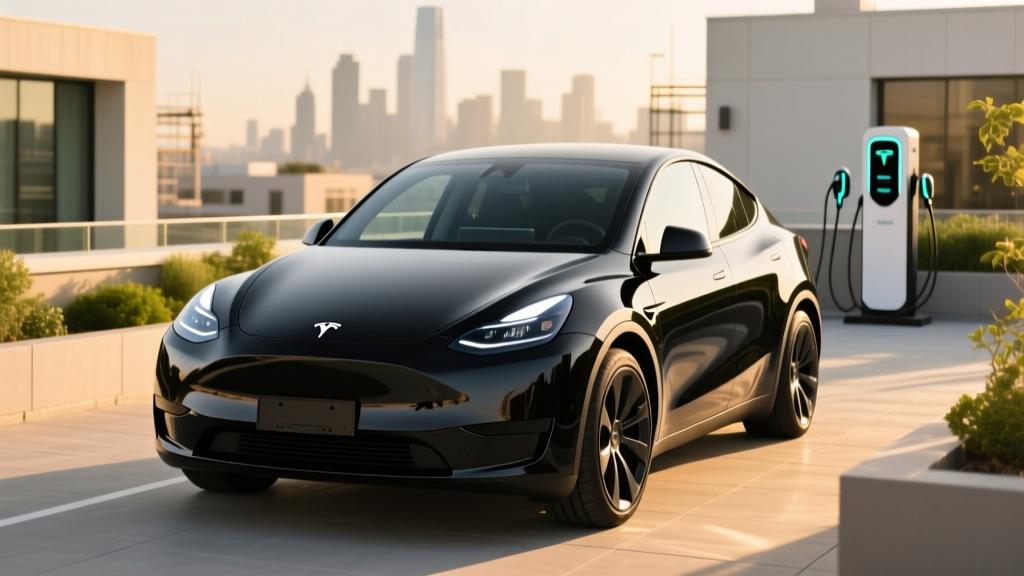
The 2026 Tesla Model Y Performance occupies a narrow but compelling lane: a 303-mile EPA-range crossover that hits 60 mph in 3.5 seconds while undercutting the Porsche Macan Electric and BMW iX on price by $20,000+. For buyers who can charge at home and qualify for the full §30D federal tax credit, the effective monthly payment lands surprisingly close to a well-equipped Toyota RAV4 Hybrid — but with dramatically lower fuel and maintenance costs. The catch? Tax credit eligibility is anything but guaranteed in 2026, and real-world highway range shrinks meaningfully in cold weather. Let's run the exact numbers.
| Spec | Value |
|---|---|
| EPA Range | 303 miles |
| Battery (usable) | ~75 kWh, NMC (nickel manganese cobalt) |
| Drivetrain | Dual-motor AWD |
| Horsepower | ~456 hp (combined) |
| 0–60 mph | 3.5 seconds |
| Top Speed | 155 mph |
| Peak DC Fast Charge | 250 kW (Supercharger V3) |
| 10–80% DC Time | ~25 minutes |
| Level 2 Home Charge | 11.5 kW / ~37 mi/hr |
| EPA Efficiency | 111 MPGe combined (30 kWh/100 mi) |
| Cargo (rear seats up) | 30.2 cu ft |
| Cargo (rear seats folded) | 72.0 cu ft |
| Rear Legroom | 37.8 in |
| Battery Warranty | 8 years / 120,000 miles (70% retention) |
| Base MSRP | $52,490 (before destination) |
Range & Efficiency: Sticker vs. Reality
The EPA rates the 2026 Model Y Performance at 303 miles on its 75 kWh (usable) NMC battery pack. That's roughly 20 miles fewer than the Long Range AWD trim, a trade-off for the Performance's stickier tires, sport-tuned suspension, and 21-inch wheels.
- City / moderate climate: 290–310 miles (regen braking recovers energy in stop-and-go)
- Highway (70–75 mph, 65°F): 260–280 miles
- Highway in cold (below 30°F): 210–240 miles — battery heating and cabin demand cut range 20–30%
- Mountain / high-elevation passes: Expect significant consumption spikes uphill; regen partially recovers on descent
The Model Y's heat pump (standard since 2021) helps mitigate cold-weather losses compared to resistive heating, but physics still wins: if your daily commute is 80+ miles round-trip in a northern climate, you'll want a home Level 2 charger to start every morning at 100%. Efficiency lands at 111 MPGe combined (30 kWh per 100 miles) per fueleconomy.gov, which remains among the best in the compact electric SUV segment.
Charging Speed: Supercharger Network vs. Home Setup
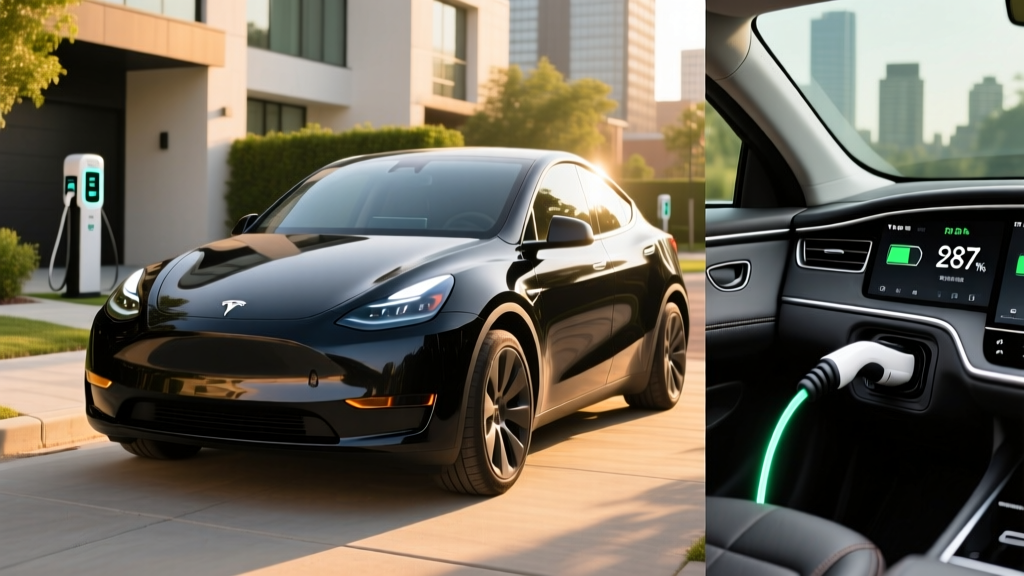
Tesla's charging ecosystem remains a core ownership advantage. The Model Y Performance peaks at 250 kW on DC fast chargers (Supercharger V3 stalls), though the charge curve tapers meaningfully past 50% state of charge. Expect a 10–80% session in roughly 25 minutes under ideal thermal conditions — preconditioning the battery via the car's navigation system is essential to hit peak rates.
| Charging Level | Power | Miles Added per Hour | Typical Use Case |
|---|---|---|---|
| Level 1 (120V) | ~1.4 kW | ~4 mi/hr | Emergency / overnight trickle |
| Level 2 (240V, 48A) | 11.5 kW | ~37 mi/hr | Home daily charging (Wall Connector) |
| DC Fast (Supercharger V3) | Up to 250 kW | ~1,000 mi/hr peak | Road trips, 10–80% in ~25 min |
| DC Fast (CCS adapter / NACS partner networks) | Up to 250 kW | Varies by station | Non-Tesla networks via adapter |
For home charging, Tesla's Wall Connector ($420 hardware) on a 60-amp circuit delivers 48 amps / 11.5 kW — enough to replenish a full day's driving in under two hours. Installation typically runs $500–$2,000 depending on panel proximity and whether your home's electrical service needs an upgrade. Tesla transitioned all North American vehicles to the NACS (J3400) charge port, and the growing list of networks offering NACS-native connectors (Electrify America, EVgo, ChargePoint) means fewer adapter-reliant sessions in 2026.
Performance & Driving Dynamics
The dual-motor powertrain produces approximately 456 horsepower and rockets the Model Y Performance to 60 mph in 3.5 seconds — quicker than a base Porsche Cayenne and within striking distance of the Macan 4 Electric. The sport-tuned adaptive damping suspension lowers the ride height slightly and sharpens cornering, though the trade-off is a firmer ride over broken pavement compared to the Long Range trim.
Tesla's regenerative braking (one-pedal driving) remains one of the most aggressive in the segment, which most owners prefer after an adjustment period. The low center of gravity from the under-floor battery pack keeps body roll well-controlled, and the 4,400-lb curb weight feels surprisingly nimble on twisty roads.
Financing, Pricing & Federal Tax Credit Eligibility
The 2026 Model Y Performance starts at $52,490 (plus $1,390 destination). Popular add-ons include Full Self-Driving (Supervised) at $8,000 or $99/month, premium interior colors ($1,000–$2,000), and 21-inch Überturbine wheels (standard on Performance). A typical as-tested price lands between $54,000 and $56,000 before incentives.
| Item | Amount |
|---|---|
| Base MSRP + Destination | $53,880 |
| Federal §30D Tax Credit (if eligible) | –$7,500 |
| Effective Price (after credit) | $46,380 |
| Est. Monthly Payment (72 mo, 6.5% APR, $5,000 down) | ~$695 |
| Est. Monthly Payment (without credit) | ~$815 |
- MSRP cap: SUVs/vans/pickups must be ≤$80,000 — Model Y Performance qualifies ✓
- Buyer income cap: AGI ≤$150,000 (single) / ≤$300,000 (joint) / ≤$225,000 (head of household)
- Battery sourcing: Critical minerals and battery components must meet phased-in domestic/free-trade thresholds — verify current-year compliance on Tesla's order page
- Point-of-sale transfer: Eligible buyers can apply the credit as a down-payment reduction at purchase rather than waiting for tax filing
- Important: Eligibility can change mid-year based on supply-chain sourcing. Always confirm with your tax professional before finalizing a purchase.
Tesla also offers financing through partner lenders and its own leasing program. In early 2026, Tesla has advertised promotional APRs as low as 1.99% for well-qualified buyers on select inventory — check Tesla's current offers page, as these rotate monthly. The total cost of ownership advantage over a gas-powered luxury crossover is substantial: the Department of Energy estimates the average U.S. electricity cost at ~$0.17/kWh, meaning a full charge costs roughly $12.75 versus $45–$55 for a comparable gas fill-up.
Interior, Tech & Driver Assistance
The Model Y's minimalist interior centers on a 15.4-inch touchscreen that handles virtually every vehicle function — climate, navigation, media, and vehicle settings. The 2026 "Juniper" refresh (introduced in early 2025) added ambient lighting, ventilated front seats, a rear-seat touchscreen, acoustic glass for improved cabin quietness, and a powered-folding second row.
Standard driver assistance includes Tesla Autopilot (SAE Level 2), which provides adaptive cruise control and lane-centering on highways. The optional Full Self-Driving (Supervised) package extends this to city street navigation, traffic-light recognition, and automatic lane changes — but requires continuous driver attention at all times.
Notable drawbacks include the absence of Apple CarPlay / Android Auto (Tesla's proprietary system is robust but closed), limited physical button controls, and rear visibility that relies heavily on the backup camera due to the sloping roofline.
Pros, Cons & Who Should Buy
- 303-mile EPA range covers most commutes and moderate road trips comfortably
- 250 kW DC fast charging + Supercharger network reliability
- 3.5-second 0–60 with dual-motor AWD traction
- 72 cu ft cargo space rivals midsize gas SUVs
- Over-the-air updates continuously add features
- Low running costs: ~$0.05/mi on average electricity vs ~$0.15/mi for gas
- Firm ride on 21-inch wheels over rough pavement
- Real-world cold-weather range drops to ~210–240 miles
- No Apple CarPlay or Android Auto
- Tax credit eligibility depends on battery-sourcing rules that can shift
- FSD ($8,000) remains a Level 2 system despite its name
- Insurance premiums run 15–30% higher than comparable gas crossovers
- Choose the Model Y Performance if: You want sports-sedan acceleration in a family crossover, have home charging access, and regularly drive in regions with Supercharger coverage.
- Choose the Model Y Long Range instead if: You prioritize maximum range (320+ miles) and a softer ride over 0–60 bragging rights, saving ~$5,000.
- Consider a competitor (Hyundai Ioniq 5, BMW iX) if: You want Apple CarPlay, a more traditional interior layout, or prefer non-Tesla service networks.
Competitive Comparison: Model Y Performance vs. the Field
| Spec | Tesla Model Y Perf. | BMW iX xDrive50 | Porsche Macan 4 Electric |
|---|---|---|---|
| EPA Range | 303 mi | 307 mi | 300 mi |
| 0–60 mph | 3.5 sec | 4.4 sec | 4.9 sec |
| Peak DC Charge | 250 kW | 200 kW | 270 kW |
| Base MSRP | $52,490 | $87,250 | $78,800 |
| Federal Credit Eligible | Yes (verify sourcing) | No (MSRP & sourcing) | No (MSRP cap for cars) |
| Cargo Space | 72.0 cu ft | 56.5 cu ft | 48.7 cu ft |
The pricing gap is stark. The Model Y Performance delivers comparable or better acceleration and range at $25,000–$35,000 less than European rivals — and remains the only one likely to qualify for the full federal credit. The BMW and Porsche offer more luxurious interiors and traditional dealership service networks, which matter to some buyers.
Battery Warranty & Long-Term Ownership
Tesla covers the Model Y's battery and drive units for 8 years or 120,000 miles, whichever comes first, with a guaranteed minimum 70% capacity retention. NMC chemistry in the Performance trim offers higher energy density than LFP (used in the base RWD Model Y) but is more sensitive to sustained high state-of-charge. Best practice: set daily charge limits to 80% and reserve 100% charges for road trips.
Tesla's degradation data from fleet reports shows an average of ~10–12% capacity loss at 150,000 miles for NMC packs — meaning a 303-mile new range becomes roughly 265–270 miles after a decade of typical use. Out-of-warranty battery replacement currently runs $12,000–$16,000 at Tesla service centers, though prices continue to decline as battery manufacturing scales.
Frequently Asked Questions
What is the real-world range of the 2026 Tesla Model Y Performance?
The EPA rates it at 303 miles, but expect 260–280 miles on highway trips at 70–75 mph in moderate temperatures, and 210–240 miles in sub-freezing conditions. City driving with regen braking often matches or slightly exceeds the EPA number.
How fast does the Model Y Performance charge at home and on road trips?
At home on a 48-amp Level 2 charger, it adds ~37 miles per hour (11.5 kW). On a 250 kW Supercharger V3, a 10–80% session takes approximately 25 minutes with proper battery preconditioning. Charging slows significantly above 80% to protect battery health.
Does the 2026 Model Y Performance qualify for the $7,500 federal EV tax credit?
It can, but eligibility depends on three factors: your adjusted gross income must be under the §30D caps ($150K single / $300K joint), the MSRP is under the $80K SUV cap, and the battery must meet current-year critical-mineral and component sourcing thresholds. These sourcing rules can change — verify on IRS.gov and with your tax professional before purchasing.
How much does the Model Y Performance cost to own vs. a gas SUV?
Assuming 12,000 miles/year and $0.17/kWh average electricity, annual fuel cost runs roughly $600–$700 versus $1,800–$2,200 for a gas crossover getting 25 MPG at $3.50/gallon. Combined with lower maintenance (no oil changes, fewer brake replacements due to regen), 5-year savings can reach $8,000–$12,000 depending on local electricity rates and driving patterns.
Is the Model Y Performance better than the Long Range trim?
The Performance gives you 0–60 in 3.5 seconds vs. 4.8 seconds and a sport-tuned suspension, at the cost of ~20 miles of EPA range and a firmer ride. If you don't need the acceleration edge, the Long Range saves $5,000 and rides more comfortably on rough roads.
Can I use non-Tesla charging networks with the Model Y?
Yes. The Model Y uses the NACS connector natively. As of 2026, Electrify America, EVgo, and ChargePoint have deployed NACS-equipped stalls in growing numbers. For legacy CCS1 stations, Tesla sells a CCS adapter. The Supercharger network remains the most reliable option for road trips.