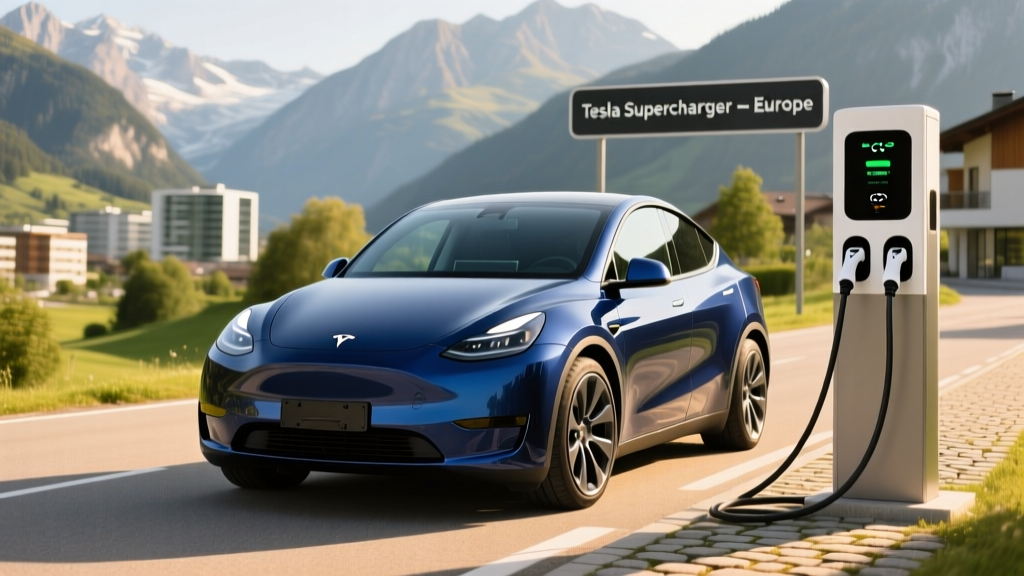
The 2026 Tesla Model Y Performance arrives with the refreshed "Juniper" architecture, blending sharper styling, a redesigned cabin, and a retuned dual-motor powertrain. While the Tesla Model Y Performance Europe launch grabbed headlines across the EU and UK markets in early 2026, US buyers get a slightly different calibration — and a very different tax-credit picture. This review breaks down exactly what the US-spec Model Y Performance delivers in range, charging speed, real-world efficiency, and daily usability, and whether it still holds the crown among performance-oriented electric crossovers.
Spec Sheet: 2026 Tesla Model Y Performance at a Glance
| Spec | 2026 Model Y Performance |
|---|---|
| EPA Range | 277 miles |
| Battery (usable) | ~75 kWh, NMC (nickel-manganese-cobalt) |
| Drivetrain | Dual-motor AWD |
| Horsepower | ~456 hp (combined) |
| 0–60 mph | 3.5 seconds |
| Max DC Fast Charge | 250 kW (peak) |
| 10–80% DC Charge | ~20 minutes |
| Level 2 Home Charge | 11.5 kW (~44 mi/hr) |
| Efficiency | 111 MPGe combined / 30 kWh/100 mi |
| Cargo Volume | 30.2 cu ft (rear seats up) / 72.1 cu ft (folded) |
| Rear Legroom | 40.5 inches |
| Battery Warranty | 8 years / 120,000 miles (70% retention) |
| Base MSRP | $52,490 (before incentives) |
Real-World Range and Efficiency: What the EPA Number Doesn't Tell You
The EPA's 277-mile estimate for the 2026 Model Y Performance is measured on a blended cycle that includes low-speed city and moderate highway driving. It's a useful baseline, but your actual mileage depends heavily on how and where you drive.
Highway cruising at 70–75 mph is where EVs lose the most efficiency compared to their sticker. Aerodynamic drag scales with the square of speed, and the Model Y Performance's 21-inch Überturbine wheels and stickier performance tires add rolling resistance. On a flat 70°F day, we've seen 240–255 miles achievable before hitting a 10% state of charge (SoC) reserve.
Cold weather is the bigger range killer. Lithium-ion NMC batteries lose capacity in freezing temperatures, and cabin heating draws significant energy even with the Model Y's standard heat pump. In sustained sub-32°F driving, expect 195–220 miles of usable range. Preconditioning the battery while plugged in (a feature Tesla builds into its navigation-routed charging and scheduled departure) recovers some of that loss by warming the pack before you drive.
Efficiency lands around 30 kWh per 100 miles in mixed driving, which translates to 111 MPGe per EPA data on fueleconomy.gov. That's slightly less efficient than the Long Range AWD trim (which sacrifices power for range), but still competitive with the Hyundai Ioniq 5 N and significantly better than the Ford Mustang Mach-E GT.
Charging Speed: DC Fast, Level 2, and the Charge-Curve Reality
The 2026 Model Y Performance supports a peak DC fast-charge rate of 250 kW on Tesla's V3 and V4 Superchargers, as well as on third-party CCS networks (using the integrated NACS port with a CCS adapter, or native NACS at networks that have adopted the Tesla connector standard).
However, peak rate is not sustained rate. The charge curve on the Model Y Performance's ~75 kWh NMC pack looks roughly like this:
- 10–30% SoC: Ramps quickly to 250 kW
- 30–55% SoC: Sustains 200–250 kW (the sweet spot)
- 55–80% SoC: Tapers to 120–150 kW
- 80–100% SoC: Drops sharply below 50 kW (protects battery longevity)
The result: 10–80% in approximately 20 minutes under optimal conditions (preconditioned battery, warm ambient temperature, V3+ Supercharger). Add 5–8 minutes if the pack is cold or you're at a 150 kW station.
At home on a Level 2 charger, the onboard charger accepts up to 11.5 kW (48 amps on a 60-amp circuit). That delivers roughly 44 miles of range per hour of charging, meaning a full 10–100% refill takes about 7–8 hours overnight. Tesla's Wall Connector ($420) or any J1772/NACS-compatible Level 2 unit will work. Installation costs for a 240V/60A circuit typically run $800–$2,000 depending on panel proximity and local permit fees.
Preconditioning matters. If you navigate to a Supercharger using the car's built-in routing, the Model Y will automatically warm the battery en route, enabling faster charge acceptance on arrival. Skipping this (by driving to a charger without navigation routing) can add 5–10 minutes to your session in cool weather.
Performance and Driving Dynamics
The dual-motor all-wheel-drive powertrain produces approximately 456 horsepower and launches the Model Y Performance from 0–60 mph in 3.5 seconds. That's sports-car territory in a 4,400-pound crossover, and the instant torque delivery makes it feel even quicker in real-world passing and merging situations.
The Juniper refresh brought a retuned adaptive suspension with more compliant damping than the pre-2025 Performance model. Ride quality over broken pavement is noticeably improved, though the 21-inch wheels still transmit sharp impacts more than the Long Range trim's 19-inch setup. Steering remains precise and well-weighted, and the low center of gravity (battery pack under the floor) keeps body roll minimal in corners.
Tesla's regenerative braking offers strong one-pedal driving capability. Lift off the accelerator and the car decelerates briskly — enough to come to a complete stop in most city driving without touching the brake pedal. Track mode allows adjustable regen, torque balance, and stability control settings for closed-course driving.
Interior, Cargo, and Technology
The Juniper interior redesign replaced the polarizing all-touchscreen approach of the previous generation with a more refined cabin. Ventilated front seats are now standard on the Performance trim, along with a rear-seat entertainment screen, ambient lighting, and improved sound insulation.
Cargo space remains a Model Y strength: 30.2 cubic feet behind the second row and 72.1 cubic feet with the 60/40 split rear seats folded. The rear trunk floor is low and wide, and the front trunk (frunk) adds another ~4.1 cubic feet for charging cables or a small bag.
Rear legroom measures 40.5 inches, adequate for adults on longer trips, though the sloping roofline cuts into headroom for passengers over 6 feet tall.
The 15.4-inch central touchscreen runs Tesla's latest software, which is fast and feature-rich but still lacks Apple CarPlay and Android Auto. Navigation, media, climate, and vehicle controls all route through the screen. The secondary 8-inch rear display handles rear climate and entertainment.
Autopilot comes standard with adaptive cruise control, lane-centering, and automatic emergency braking. Full Self-Driving (Supervised) remains a $8,000 add-on (or $99/month subscription) and enables city-street navigation and traffic-light recognition. It is critical to understand: FSD Supervised is an SAE Level 2 driver-assistance system — the driver must remain attentive, hands on or near the wheel, and ready to intervene at all times. It is not autonomous driving.
Pricing, Tax Credits, and Ownership Costs
The 2026 Tesla Model Y Performance starts at $52,490 (MSRP, before destination). Adding FSD Supervised, a premium color, or 21-inch wheels (standard on Performance) can push the as-tested price to $60,000+.
Federal tax credit eligibility under IRS §30D requires careful attention. The Model Y Performance falls under the SUV MSRP cap of $80,000, so it clears that hurdle. However, eligibility for the full $7,500 credit depends on:
- Buyer income caps: Modified AGI ≤ $300,000 (joint), $225,000 (head of household), $150,000 (single)
- Battery critical-mineral and component sourcing: As of 2026, the Model Y's battery pack sources a qualifying percentage of critical minerals and North American-manufactured components, making it eligible — but IRS sourcing rules tighten annually. Always verify current-year eligibility at irs.gov before purchasing.
- Point-of-sale transfer: You can elect to transfer the credit to the dealer at purchase, reducing your out-of-pocket cost immediately rather than waiting to claim it on your tax return.
With the full $7,500 credit applied, the effective price drops to approximately $44,990 — competitive with the non-performance Long Range AWD trim's sticker before incentives.
Battery and powertrain warranty: Tesla covers the battery and drive units for 8 years or 120,000 miles, whichever comes first, with a minimum 70% capacity retention guarantee. The basic vehicle limited warranty is 4 years / 50,000 miles.
Pros, Cons, and Who Should Buy
- 3.5-second 0–60 mph — genuine sports-car acceleration
- 250 kW Supercharger network access (most reliable DC network in the US)
- 72.1 cu ft cargo with seats folded — class-leading utility
- Heat pump standard — better cold-weather efficiency
- OTA updates continuously add features
- Strong resale value relative to EV competitors
- 277-mile EPA range is modest for a $52K+ EV
- 21-inch performance wheels hurt ride comfort and range
- No Apple CarPlay / Android Auto
- FSD Supervised still requires full driver attention (Level 2 only)
- Rear headroom tight for tall passengers
- Insurance costs run 15–30% above segment average
Best for: Enthusiast drivers who want EV acceleration and handling without sacrificing cargo practicality. The Model Y Performance makes sense for commuters with home Level 2 charging, couples or small families who take road trips (Supercharger network coverage is unmatched), and buyers who value software updates and tech integration over traditional luxury-brand cachet.
Consider alternatives if: Maximum range is your top priority (the Long Range AWD delivers ~320 miles EPA), you prefer a smoother ride over sporty handling, or you need third-row seating (Kia EV9 or Tesla Model X).
How It Compares: Model Y Performance vs. Key Rivals
| Spec | Tesla Model Y Perf. | Hyundai Ioniq 5 N | Ford Mach-E GT |
|---|---|---|---|
| EPA Range | 277 mi | 221 mi | 280 mi |
| 0–60 mph | 3.5 sec | 3.4 sec | 3.5 sec |
| Peak DC Charge | 250 kW | 240 kW | 150 kW |
| Base MSRP | $52,490 | $67,500 | $59,995 |
| Cargo (rear up) | 30.2 cu ft | 27.2 cu ft | 29.7 cu ft |
The Ioniq 5 N is the more engaging track toy with simulated gear shifts and a dedicated N mode, but its 221-mile range and $67,500 price are significant trade-offs. The Mach-E GT matches the Model Y's acceleration and beats its range slightly, but its 150 kW peak charge rate means longer road-trip stops. For the balance of performance, charging infrastructure, cargo space, and price, the Model Y Performance remains the segment benchmark in 2026.
Frequently Asked Questions
What is the real-world range of the 2026 Tesla Model Y Performance?
The EPA rates it at 277 miles. Expect 240–255 miles in warm highway driving, and 195–220 miles in freezing temperatures. Preconditioning and moderate speeds help maximize range.
How fast does the Model Y Performance charge at home and on the road?
On a DC fast charger, it peaks at 250 kW and reaches 10–80% in about 20 minutes (preconditioned). At home on Level 2 (11.5 kW), it adds roughly 44 miles per hour, fully recharging overnight in 7–8 hours.
Does the 2026 Model Y Performance qualify for the $7,500 federal EV tax credit?
It can, provided the buyer meets IRS §30D income caps (≤$300K joint / $150K single), the vehicle MSRP is under $80,000 (it is), and the battery meets current-year critical-mineral and component sourcing thresholds. Verify at irs.gov before purchase, as rules update annually.
Is the Model Y Performance worth buying over the Long Range AWD?
Choose the Performance if you want 3.5-second acceleration, track mode, and sportier suspension tuning. Choose the Long Range AWD if you prioritize ~320 miles of EPA range, a softer ride, and a lower price. Both share the same cabin, cargo space, and tech.
What is the difference between the US and Europe-spec Model Y Performance?
The Europe launch version is largely identical in powertrain and battery, but EU-market pricing, WLTP range ratings (~340 mi WLTP, which is more generous than EPA), and available colors/options differ. European models also ship from Giga Berlin, while US models come from Giga Texas or Giga Shanghai depending on delivery region.
How long will the battery last?
Tesla warranties the NMC battery for 8 years / 120,000 miles with a 70% capacity retention floor. Real-world data from Tesla's impact reports and third-party fleet studies show NMC packs typically retain 85–90% capacity at 100,000 miles when charged primarily to 80% daily and DC fast-charged moderately.