Quick Verdict: The 2023 Model Y Performance at a Glance
The Tesla Model Y Performance 2023 remains one of the most compelling dual-motor electric crossovers on the used and remaining-new market. With a 303-mile EPA range, a 3.5-second 0-60 mph time, and access to Tesla's Supercharger network, it balances everyday practicality with sports-sedan acceleration. Now that the refreshed Juniper-generation Model Y has entered production for the 2025-2026 model years, the 2023 Performance variant is primarily found on the used-EV market — where it can qualify for the up-to-$4,000 used-EV tax credit under IRS §25E, making it a value proposition that newer trims can't match.
This review covers the 2023 Model Y Performance specifically: its battery chemistry, real-world range behavior, charging curve realities, interior dimensions, and how it stacks up against competitors like the Ford Mustang Mach-E GT and Hyundai Ioniq 5 N. If you're evaluating a certified pre-owned or low-mileage 2023 example, this is the data you need.
| Spec | Value |
|---|---|
| EPA Range | 303 miles |
| Battery (usable) | ~75 kWh (NMC/NCA) |
| Drivetrain | Dual-motor AWD |
| Horsepower | ~456 hp (combined) |
| 0-60 mph | 3.5 seconds |
| Top Speed | 155 mph |
| Max DC Fast Charge | 250 kW (peak) |
| 10-80% DC Fast Charge | ~27 minutes |
| Level 2 Home Charge | 11.5 kW / ~44 mi/hr |
| EPA Efficiency | 122 MPGe combined (29 kWh/100mi) |
| Cargo Volume (rear seats up) | 30.2 cu ft |
| Cargo Volume (rear seats folded) | 72.0 cu ft |
| Rear Legroom | 38.4 inches |
| Battery Warranty | 8 years / 120,000 miles |
| Original Base MSRP | $69,990 (before destination) |
Range & Efficiency: EPA Sticker vs. Real-World Miles
Real-world expectation: Plan for approximately 250-275 miles on sustained highway driving at 70-75 mph. In cold weather (below 32°F), expect a 15-25% reduction, bringing usable range to roughly 225-260 miles depending on cabin heating use and whether you precondition the battery. City driving with regenerative braking can match or slightly exceed the EPA figure.
The 2023 Model Y Performance uses an NMC (nickel manganese cobalt) / NCA chemistry battery pack with approximately 75 kWh of usable capacity. Tesla doesn't publish official usable kWh figures, but independent teardowns and fueleconomy.gov data confirm the pack delivers 29 kWh per 100 miles in combined driving — making it one of the most efficient electric crossovers in its class.
Efficiency in the real world depends heavily on driving style and conditions. The Model Y Performance's 21-inch Überturbine wheels look aggressive but cost roughly 5-8% in range compared to the standard 19-inch wheels on the Long Range trim. If maximum range matters more than cornering grip, swapping to aftermarket 19-inch wheels with all-season tires can recover 15-20 miles of range.
On a measured EPA cycle, the 2023 Model Y Performance achieves 122 MPGe combined (127 city / 117 highway). Highway efficiency drops noticeably above 75 mph due to aerodynamic drag — at 80 mph, expect consumption closer to 33-35 kWh/100mi, which compresses range toward 225-240 miles on a full charge.
Charging: DC Fast-Charge Curve and Home Level 2 Speeds
Charging is where the 2023 Model Y Performance shows both its strengths and its taper curve. The vehicle supports a peak DC fast-charge rate of 250 kW on V3 Superchargers and compatible CCS stations (with adapter). But peak rate is not sustained rate — understanding the charge curve is critical for road-trip planning.
| Charging Level | Power | Speed | Notes |
|---|---|---|---|
| Level 1 (120V household) | ~1.4 kW | ~5 mi/hr | Emergency/trickle only |
| Level 2 (240V home, 48A) | 11.5 kW | ~44 mi/hr | Full charge in ~8-9 hours |
| DC Fast (V3 Supercharger) | 250 kW peak | 10-80% in ~27 min | Tapers significantly above 60% |
| DC Fast (V2 Supercharger) | 150 kW peak | 10-80% in ~38 min | Older stations, still common |
The charge curve on the 2023 Model Y Performance peaks near 250 kW between roughly 10-30% state of charge (SoC), then steps down progressively. Between 50-80%, expect sustained rates of 80-120 kW. Above 80%, charging slows to under 40 kW — this is why Tesla's navigation system recommends charging to 80% on road trips rather than topping off. Charging from 80-100% can take nearly as long as 10-80%.
Preconditioning matters. If you navigate to a Supercharger using the car's built-in navigation, the battery management system will warm the pack en route, enabling peak charge rates upon arrival. Without preconditioning — for example, if you pull into a charger without navigation routing — the pack may only accept 100-150 kW initially, adding 5-10 minutes to your stop.
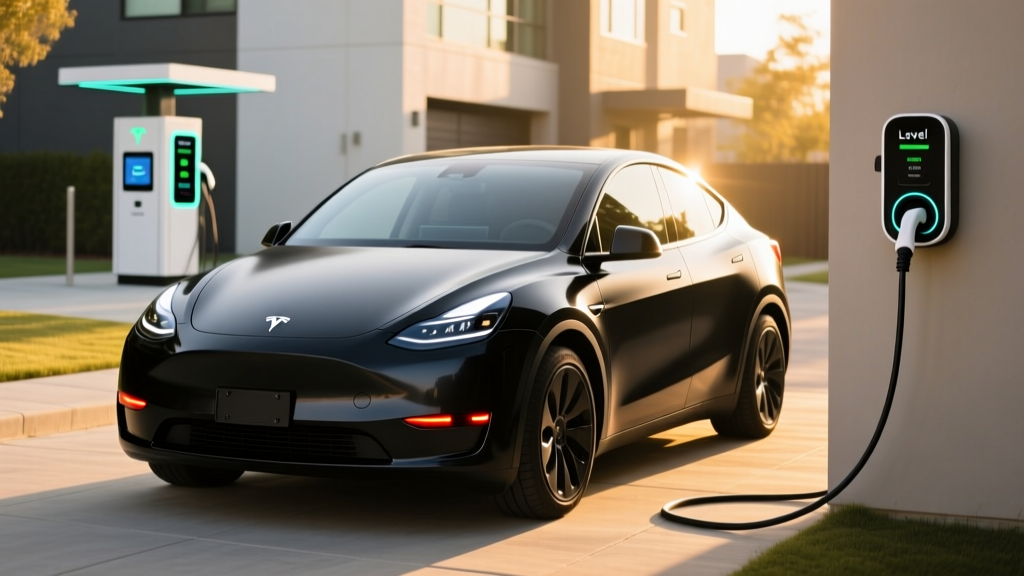
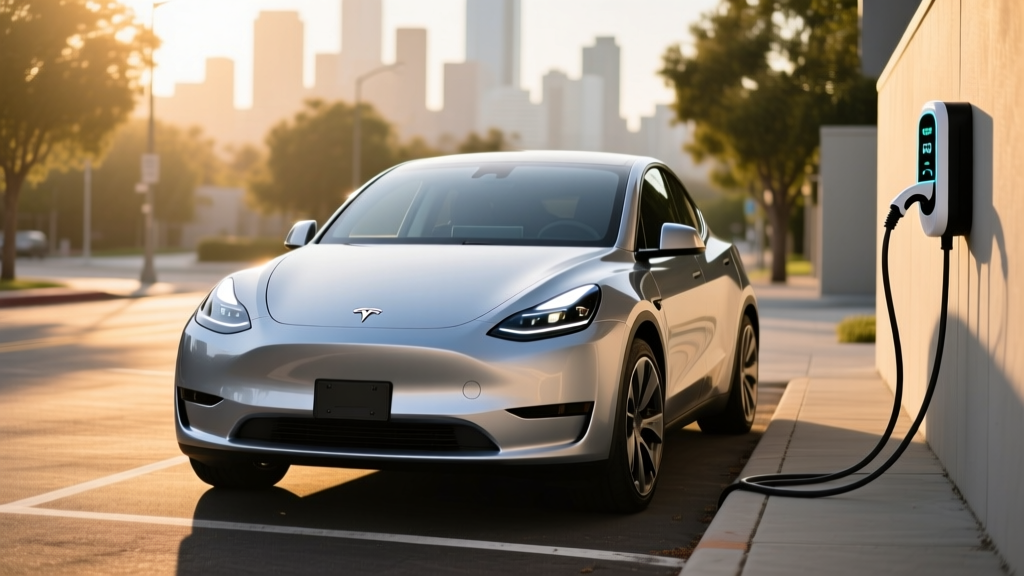
For home charging, a Wall Connector on a 60-amp circuit delivers the full 11.5 kW / 48 amps, recovering roughly 44 miles of range per hour. A typical overnight session (8 hours) adds about 350 miles — more than enough to replenish a full day's driving. Installation costs for a 240V/60A circuit typically range from $500 to $2,000 depending on panel proximity and local permitting, though a 200-amp panel upgrade can add $1,500-$3,000 if your home's electrical service is older.
Performance & Drivetrain: 3.5 Seconds to 60 and Dual-Motor AWD
The Performance trim earns its name. Dual electric motors — one permanent-magnet motor on the rear axle and one induction motor up front — deliver a combined ~456 horsepower and an estimated 497 lb-ft of torque. The result is a 3.5-second 0-60 mph time with rollout subtracted, making it quicker off the line than a Porsche Macan GTS or BMW X3 M Competition.
All-wheel drive is fully variable, with the front induction motor able to freewheel (disconnect) during light-load cruising to reduce drag and improve efficiency. The Performance model also includes:
- Lowered suspension — approximately 0.6 inches lower than the Long Range, with stiffer damping for reduced body roll
- Performance brakes — larger front rotors for improved repeated-stop fade resistance
- 21-inch Überturbine wheels with Pirelli P Zero summer tires (note: these lose grip below 45°F and are not suitable for snow)
- Track Mode — allows adjustable front/rear torque distribution and regenerative braking intensity for closed-course driving
Regenerative braking in the 2023 Model Y is single-mode (Tesla removed the adjustable regen setting in the US market for this model year). It provides strong deceleration — roughly 0.2g — enabling near one-pedal driving in most city conditions, though you'll still need the friction brakes for complete stops and emergency situations.
Interior, Cargo & Technology
The 2023 Model Y interior follows Tesla's minimalist philosophy: a single 15-inch landscape touchscreen handles virtually all vehicle functions, from climate control to mirror adjustment. There is no instrument cluster — speed and navigation appear on the left third of the central screen. A heated steering wheel and heated front and rear seats are standard.
Cargo and passenger dimensions:
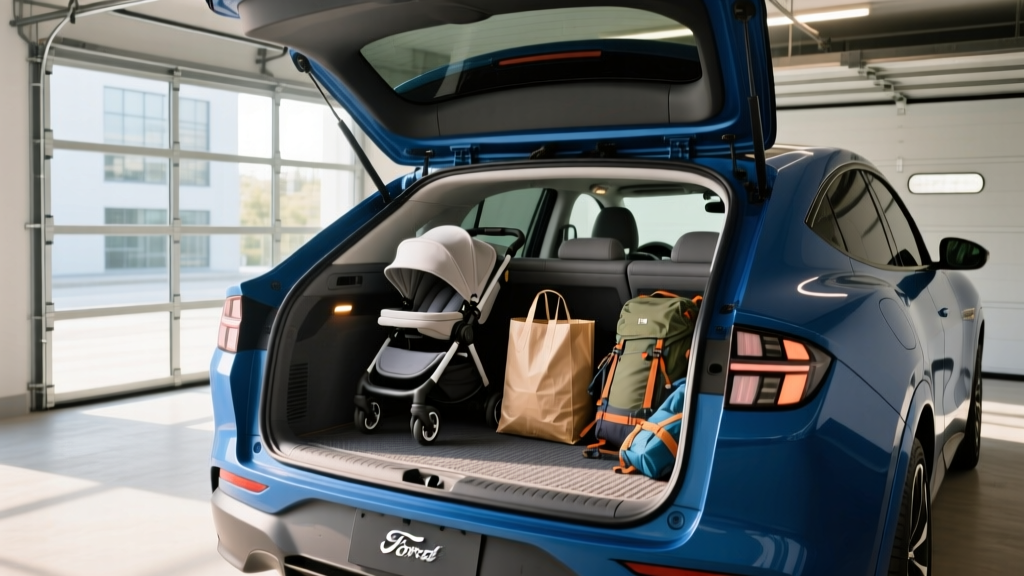
- Rear cargo (seats up): 30.2 cu ft
- Rear cargo (seats folded): 72.0 cu ft
- Front trunk (frunk): 4.1 cu ft — useful for charging cables or a small bag
- Rear legroom: 38.4 inches
- Front headroom: 41.0 inches (with glass roof)
- Optional third-row seat available (reduces cargo to 10.6 cu ft behind third row; best suited for small children only)
The glass roof creates an airy cabin but contributes to cabin heat buildup in summer — many owners add an aftermarket sunshade. The 2023 model year does not include the ventilated seats, ambient lighting, or rear-seat touchscreen introduced in the 2025 Juniper refresh.
Tech and driver assistance:
- Basic Autopilot (included): Traffic-aware cruise control and lane centering — this is SAE Level 2, requiring constant driver supervision
- Enhanced Autopilot ($6,000 option): Auto lane change, autosteer on city streets, navigate on Autopilot, smart summon
- Full Self-Driving (Supervised) ($15,000 option or $199/month): Traffic light and stop sign recognition, city street autosteer — still SAE Level 2, not autonomous driving
- Sentry Mode: 360-degree camera recording when parked, with motion-triggered alerts
- Dog Mode: Maintains cabin temperature with a display message for passersby
- Over-the-air updates: Feature additions and improvements delivered wirelessly
Pricing, Tax Credits & Total Cost of Ownership
The 2023 Tesla Model Y Performance originally carried a base MSRP of $69,990 (plus $1,390 destination). With common options like Enhanced Autopilot ($6,000) or red multi-coat paint ($2,000), as-tested prices frequently reached $76,000-$78,000.
As of 2026, the 2023 Model Y Performance is primarily available on the used market, where prices typically range from $38,000 to $52,000 depending on mileage, condition, and trim options.
| Scenario | Price | Credit | Effective Cost |
|---|---|---|---|
| Original 2023 MSRP (new, 2023) | $69,990 | $7,500 (§30D, if eligible) | $62,490 |
| Used 2023 example (2026 market) | $42,000 avg. | Up to $4,000 (§25E used credit) | ~$38,000 |
| CPO via Tesla (if available) | $47,000 avg. | Up to $4,000 (§25E) | ~$43,000 |
- Credit amount: 30% of sale price, up to a maximum of $4,000
- Vehicle must be at least 2 model years old (2023 qualifies in 2025+)
- Sale price must be $25,000 or below to qualify — note: most 2023 Model Y Performance examples exceed this cap, limiting §25E availability to higher-mileage or damaged examples
- Buyer income cap: $75,000 single / $112,500 head of household / $150,000 joint (modified AGI)
- Must purchase from a licensed dealer (private-party sales excluded)
- Verify current rules at IRS.gov §25E
5-Year Ownership Cost Estimate (based on a $42,000 used purchase, 12,000 miles/year, $0.14/kWh home charging):
- Electricity (home): ~$2,520/year ($12,600 over 5 years)
- Insurance: ~$2,400-$3,200/year (varies by state and driver profile)
- Maintenance: ~$300-$500/year (cabin air filter, wiper fluid, tire rotation — no oil changes)
- Tires: ~$1,200-$1,800 per set, replacement every 25,000-35,000 miles (EV tire wear is typically faster due to weight and instant torque)
- Depreciation: Moderate — the Juniper refresh has softened 2023 values, but Tesla's Supercharger network and software support sustain residual demand
How It Compares: Model Y Performance vs. Key Rivals
Shopping a 2023 Model Y Performance means cross-shopping against several compelling alternatives. Here's how it stacks up on the metrics that matter:
| Spec | Tesla Model Y Perf. | Ford Mach-E GT | Hyundai Ioniq 5 N |
|---|---|---|---|
| EPA Range | 303 mi | 260 mi | 221 mi |
| 0-60 mph | 3.5 sec | 3.5 sec | 3.4 sec |
| Battery (usable) | ~75 kWh (NMC) | 91 kWh (NMC) | 84 kWh (NMC) |
| Peak DC Charge | 250 kW | 150 kW | 240 kW |
| 10-80% DC Time | ~27 min | ~45 min | ~18 min |
| Cargo (rear up) | 30.2 cu ft | 29.7 cu ft | 27.2 cu ft |
| Charging Network | Supercharger (native NACS) | CCS → NACS adapter | CCS → NACS adapter |
| Efficiency (combined) | 122 MPGe | 84 MPGe | 99 MPGe |
Where the Model Y Performance wins: Range (303 mi vs. 221-260 mi), cargo space, efficiency (122 MPGe crushes the Mach-E GT's 84 MPGe), and Supercharger network access without adapters. The 250 kW peak charge rate and strong sustained curve make it one of the best road-trip EVs in this price bracket.
Where rivals have an edge: The Ioniq 5 N charges faster from 10-80% (18 min vs. 27 min) and offers a more engaging driver experience with simulated gear shifts and N-specific track features. The Mach-E GT offers a more traditional cockpit layout with physical gauges, which some buyers prefer. Neither rival matches the Model Y's efficiency or range, however.
Warranty & Battery Longevity
Tesla covers the 2023 Model Y Performance with the following warranty structure:
- Basic Vehicle: 4 years / 50,000 miles
- Battery & Drive Unit: 8 years / 120,000 miles (whichever comes first), with a guaranteed minimum of 70% capacity retention over the warranty period
For a 2023 model purchased in 2026, approximately 5 years and 84,000 miles of battery warranty remain (assuming average 12,000 mi/year usage). Real-world degradation data from Tesla's fleet shows the NMC packs in the Model Y typically lose 8-12% capacity over the first 100,000 miles, with the rate of loss slowing significantly after the initial 20,000-mile break-in period.
To maximize battery longevity on an NMC pack:
- Set daily charge limit to 80% (the car's built-in charge limit slider makes this easy)
- Charge to 100% only when needed for long trips, and avoid letting the car sit at 100% for extended periods
- Minimize repeated DC fast-charging when Level 2 is available — frequent Supercharging accelerates degradation modestly
- Use preconditioning in cold weather to reduce stress on the pack
Pros, Cons & Who Should Buy
- Class-leading 303-mile EPA range with excellent 122 MPGe efficiency
- 3.5-second 0-60 with dual-motor AWD and Track Mode
- 250 kW peak DC fast charging with Supercharger network access
- Best-in-class cargo volume (30.2 cu ft rear up, 72.0 cu ft folded)
- Over-the-air updates continue to add features years after purchase
- Strong used-market value with potential §25E tax credit on lower-priced examples
- Minimalist interior lacks physical controls — all functions routed through touchscreen
- 21-inch summer tires compromise cold-weather and wet grip; winter tire swap recommended
- Ride quality is firm, especially over broken pavement (lowered Performance suspension)
- No instrument cluster or heads-up display; speed shown on central screen only
- Rear visibility is limited by the sloping roofline and lack of a rear wiper
- FSD (Supervised) remains Level 2 and requires full driver attention despite its name
- You want the fastest practical electric crossover with 300+ miles of range
- You road-trip frequently and want native Supercharger access without adapters
- You value cargo versatility and can use the optional third row for small children
- You're buying used and can find an example at or below $25,000 to unlock the §25E credit
- You prefer physical buttons, a traditional instrument cluster, or a luxury-brand badge
- You live in a region with harsh winters and don't want to invest in a dedicated winter wheel/tire set
- You want the latest Juniper-generation features (ventilated seats, ambient lighting, rear touchscreen) — look at the 2025+ Model Y instead
Frequently Asked Questions
What is the real-world range of the 2023 Tesla Model Y Performance?
The EPA rates it at 303 miles. In real-world highway driving at 70-75 mph, expect 250-275 miles. In cold weather below freezing, plan for 225-260 miles depending on heating use and whether you precondition. City driving with regenerative braking can approach or slightly exceed the EPA sticker.
How fast does the 2023 Model Y Performance charge?
On a V3 Supercharger (250 kW peak), it charges from 10-80% in approximately 27 minutes. The charge rate peaks at 250 kW only between roughly 10-30% SoC, then tapers. At home on a Level 2 Wall Connector (11.5 kW / 48A), it recovers about 44 miles of range per hour, fully recharging overnight in 8-9 hours.
Does the 2023 Model Y Performance qualify for the federal EV tax credit?
When purchased new in 2023, it could qualify for up to $7,500 under IRS §30D, subject to buyer income caps ($150,000 joint / $75,000 single), the $80,000 SUV MSRP cap, and battery critical-mineral sourcing requirements. On the used market in 2026, it may qualify for the §25E used-EV credit (up to $4,000), but only if the sale price is $25,000 or below and buyer income is within limits. Verify current eligibility at IRS.gov.
Is the 2023 Model Y Performance worth buying vs. the refreshed Juniper Model Y?
It depends on budget and priorities. The 2023 model offers more range (303 mi vs. the Juniper Performance's estimated 280-290 mi with larger wheels) and costs $20,000-$30,000 less on the used market. The Juniper adds ventilated seats, a rear touchscreen, ambient lighting, and improved ride quality. If you value the latest interior refinement, buy new Juniper. If you want maximum range per dollar, the 2023 is the stronger value.
What are the biggest maintenance costs for a used 2023 Model Y Performance?
Tires are the primary recurring expense — the 21-inch Pirelli P Zeros wear in 20,000-30,000 miles and cost $1,200-$1,800 per set. Beyond tires, expect cabin air filter replacements (~$50-100), windshield washer fluid, and occasional brake fluid checks. The regenerative braking system significantly extends friction brake life; many owners report original brake pads at 80,000+ miles. Battery replacement outside warranty is rare but would cost $12,000-$16,000 if needed.
Can I charge a 2023 Model Y Performance at non-Tesla charging stations?
Yes. The 2023 Model Y has a native NACS (Tesla) charge port. At CCS-equipped stations (Electrify America, EVgo, etc.), you'll need a CCS-to-NACS adapter — Tesla sells one for approximately $250, and third-party options exist. The car also accepts J1772 Level 2 charging with the included adapter. As the industry transitions to NACS through 2025-2026, more stations are adding native Tesla-compatible connectors.