Quick Verdict: Still the Benchmark for Electric Crossover Performance
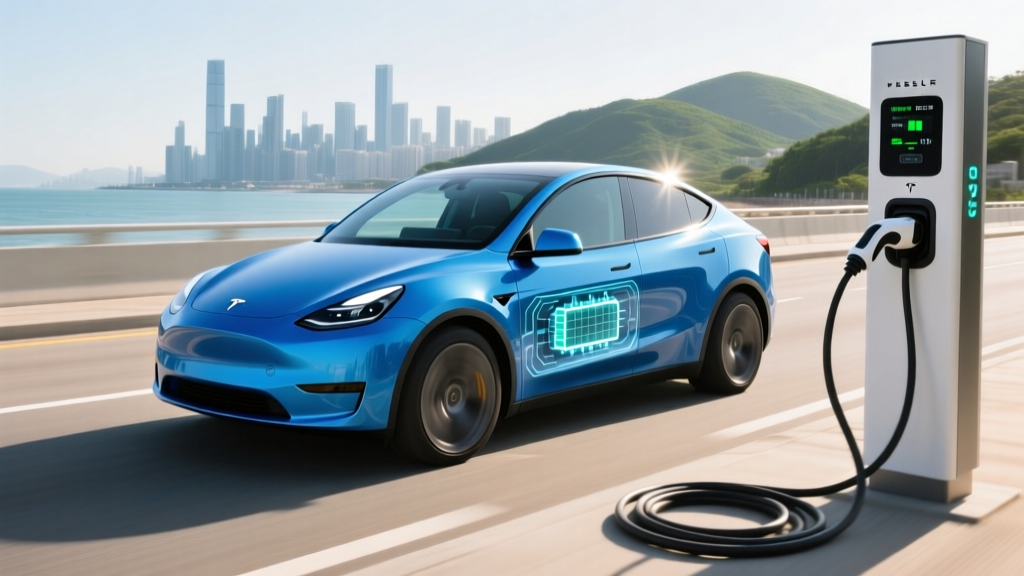
The Tesla Model Y Performance remains one of the quickest SUVs on the road in 2026, sprinting from 0-60 mph in 3.5 seconds while delivering a practical 277-mile EPA range and access to the most reliable DC fast-charging network in North America. After a significant refresh brought improved suspension tuning, acoustic glass, and a redesigned interior, the Performance variant strikes a balance between track-day thrills and daily-driver livability that few competitors match at its $48,990 starting price.
But raw acceleration numbers only tell part of the story. Real-world highway range drops noticeably below the EPA sticker, cold-weather efficiency takes a hit without a heat pump workaround, and the $7,500 federal tax credit comes with income and sourcing strings attached. Here's every number you need before signing the order sheet.
2026 Tesla Model Y Performance: Full Spec Sheet
| Specification | Value |
|---|---|
| Base MSRP | $48,990 (before incentives) |
| EPA Range | 277 miles |
| Battery Capacity | ~78.1 kWh usable (NMC chemistry) |
| Drivetrain | Dual Motor AWD |
| Horsepower | 456 hp (combined) |
| Torque | 497 lb-ft |
| 0-60 mph | 3.5 seconds |
| Top Speed | 155 mph |
| Max DC Fast Charge | 250 kW (peak) |
| 10-80% DC Charge Time | ~27 minutes |
| Level 2 Home Charge Rate | 11.5 kW (~44 mi/hr) |
| EPA Efficiency | 111 MPGe combined / 30 kWh/100 mi |
| Cargo Volume (rear seats up) | 30.2 cu ft |
| Cargo Volume (rear seats folded) | 72.0 cu ft |
| Rear Legroom | 36.5 inches |
| Battery Warranty | 8 years / 120,000 miles (70% capacity retention) |
| Basic Vehicle Warranty | 4 years / 50,000 miles |
Range & Efficiency: EPA Sticker vs. Real-World Reality
The EPA rates the 2026 Model Y Performance at 277 miles of combined range. That figure is achievable in mixed suburban driving at moderate speeds with temperate weather — the conditions under which EPA testing is designed. But real-world ownership rarely mirrors a lab dyno.
EPA Estimate: 277 miles
Highway (70-80 mph, temperate): Expect ~235–250 miles
Cold Weather (below 32°F, mixed driving): Expect ~195–225 miles
Worst-Case (highway + cold + elevation): ~175–190 miles
Plan road trips around the lower bound. Tesla's in-car range estimator (based on recent driving history) is more accurate than the static battery percentage display.
The Performance model's larger 21-inch wheels and stickier tires create more rolling resistance than the Long Range variant's 19-inch setup, which accounts for the roughly 40-mile range gap between the two trims. If you regularly drive highway corridors above 75 mph, aerodynamic drag dominates energy consumption, and you'll watch the rated range drop faster than the odometer climbs.
Efficiency comes in at 111 MPGe combined, which translates to roughly 30 kWh per 100 miles. That's competitive with the Hyundai Ioniq 5 AWD (110 MPGe) but trails the smaller Tesla Model 3 Performance (121 MPGe). At the national average electricity rate of $0.17/kWh, fueling the Model Y Performance costs approximately $5.10 per 100 miles — roughly a third of what a comparably quick gas SUV would burn.
For detailed efficiency data across all variants, fueleconomy.gov maintains the official EPA figures and allows side-by-side comparison with any vehicle on the market.
Charging Speed: DC Fast Charging & Home Level 2
The Model Y Performance retains the CCS-compatible charging port with a 250 kW peak DC fast-charge rate on V3 and V4 Tesla Superchargers. On a properly preconditioned battery (the car does this automatically when you navigate to a Supercharger), you'll see charge speeds ramp quickly from low states of charge.
| Charging Level | Power / Rate | Miles Added Per Hour | Notes |
|---|---|---|---|
| Level 1 (120V household) | 1.4 kW | ~4–5 mi/hr | Emergency/trickle only |
| Level 2 (240V / 48A home) | 11.5 kW | ~44 mi/hr | Full charge overnight (~7 hrs) |
| Level 2 (240V / 32A Mobile Connector) | 7.7 kW | ~30 mi/hr | Standard Tesla Mobile Connector on 240V outlet |
| DC Fast (Tesla V3/V4 Supercharger) | 250 kW peak | ~162 mi in 15 min | 10-80% in ~27 min; tapers above 80% |
| DC Fast (CCS adapter at EA/others) | Up to 250 kW | Varies by station | CCS adapter included with 2026 models |
The charging curve matters more than peak kW. The Model Y Performance holds strong charge rates from roughly 10% to 50% SoC — often sustaining above 200 kW. From 50-80%, the rate tapers progressively, dropping to around 60-80 kW in the final stretch. That 10-80% session takes approximately 27 minutes under ideal conditions (warm battery, V3+ Supercharger). In cold weather without adequate preconditioning, add 5-10 minutes to that figure.
For home charging, Tesla's Wall Connector on a 60-amp circuit (48A continuous) delivers 11.5 kW, adding roughly 44 miles of range per hour. A typical overnight session from 20% to 80% takes about 4-5 hours — more than enough for daily needs. Installation costs vary widely: expect $500-$1,500 if your electrical panel has spare capacity, or $2,000-$4,000+ if you need a panel upgrade to support a dedicated 60A circuit. Always get a quote from a licensed electrician before committing.
Performance & Drivetrain: The 0-60 Number That Defines This Car
Here's the headline figure most buyers search for: the Tesla Model Y Performance 0-60 mph time is 3.5 seconds. That's verified by Tesla and independently tested by multiple automotive publications within a tenth of a second in either direction depending on surface conditions and tire temperature.
The dual-motor all-wheel-drive powertrain produces 456 horsepower and 497 lb-ft of torque, with the rear motor handling the bulk of propulsion and the front motor providing traction, torque vectoring, and regenerative braking contribution. The instant torque delivery — no turbo spool, no transmission downshift — makes the 3.5-second time feel even more violent from the driver's seat than comparable gas-powered performance SUVs that need to build revs.
Track Mode, standard on the Performance trim, allows adjustable front/rear torque distribution and regenerative braking intensity, and it manages battery and motor temperatures during sustained high-load driving. The Performance model also includes a lowered sport suspension with adaptive dampers (introduced in the refresh), larger front brakes, and 21-inch Überturbine wheels wrapped in performance rubber.
For context, 3.5 seconds to 60 mph puts the Model Y Performance in the territory of a Porsche Macan GTS ($84,000+) or a BMW X3 M Competition ($76,000+), at roughly half the base price — and with a fraction of the per-mile fuel cost.
Pricing, Trims & Federal Tax Credit Eligibility
The 2026 Model Y lineup is streamlined. The Performance variant starts at $48,990 (including destination). Tesla frequently adjusts pricing, so verify the current figure on Tesla's configurator before ordering.
| Configuration | MSRP | Est. Federal Credit | Effective Price |
|---|---|---|---|
| Long Range AWD | $44,990 | Up to $7,500 | ~$37,490 |
| Performance AWD | $48,990 | Up to $7,500 | ~$41,490 |
| Performance + FSD (Supervised) | $56,990 | Up to $7,500 | ~$49,490 |
| Performance + Red Multi-Coat + FSD | $58,990 | Up to $7,500 | ~$51,490 |
Federal EV Tax Credit (§30D) — Key Eligibility Rules for 2026:
- MSRP Cap: SUVs must be priced at or below $80,000. All Model Y trims qualify on MSRP alone.
- Buyer Income Cap: Modified AGI must not exceed $150,000 (single), $225,000 (head of household), or $300,000 (joint). If your income exceeds these thresholds, you do not qualify.
- Battery Sourcing: The full $7,500 requires both critical-minerals sourcing and battery-component manufacturing requirements to be met. Tesla has progressively shifted supply chains to qualify, but specific build dates and battery batches can affect eligibility. Always verify current eligibility on IRS.gov before purchase.
- Point-of-Sale Transfer: As of 2024, buyers can elect to transfer the credit to the dealer at purchase, reducing the out-of-pocket price by $7,500 on the spot — rather than waiting to claim it on your tax return. Tesla supports this at delivery.
- Tax Liability: The §30D credit is non-refundable. If transferred at point of sale, the refundability issue is effectively resolved, but confirm with a tax professional for your specific situation.
Interior, Cargo & Technology
The refreshed Model Y interior represents a meaningful step up from the pre-2025 cabin. Ventilated front seats, acoustic laminated glass on all windows, ambient lighting, a rear-seat touchscreen, and improved material quality narrow the gap with premium competitors. The minimalist layout remains — a single 15.4-inch center touchscreen handles virtually every vehicle function, from climate to mirrors to glovebox release.
Cargo & Passenger Dimensions:
- Rear cargo (seats up): 30.2 cu ft
- Rear cargo (seats folded): 72.0 cu ft
- Front trunk (frunk): ~4.1 cu ft
- Rear legroom: 36.5 inches
- Front headroom: 40.7 inches
- Seating: 5-passenger standard (7-seat option discontinued for Performance trim)
The 30.2 cu ft behind the second row is competitive with the Hyundai Ioniq 5 (27.2 cu ft) and slightly behind the Ford Mustang Mach-E (29.7 cu ft behind row one). Fold the rear seats, and the 72 cu ft cargo area handles furniture-store runs, camping gear, or two large dogs with room to spare.
Driver Assistance — SAE Level 2, Not Self-Driving:
Every Model Y ships with Tesla's Basic Autopilot (adaptive cruise control + lane centering). Full Self-Driving (Supervised) is a $8,000 option or $99/month subscription. FSD (Supervised) adds automated city-street navigation, traffic-light and stop-sign recognition, and lane changes — but it remains an SAE Level 2 system. That means the driver must remain fully attentive, keep hands on the wheel (or demonstrate engagement via the cabin camera), and be prepared to intervene at any moment. Tesla's naming convention has drawn criticism from NHTSA and safety advocates; treat FSD as an advanced convenience feature, not autonomous driving.
Tesla Autopilot and FSD (Supervised) are SAE Level 2 driver-assistance systems. The driver is the operator at all times and must monitor the road, maintain steering input, and be ready to brake or steer immediately. Only fully driverless services like Waymo One (Level 4) operate without a human in the loop.
Ownership Costs, Warranty & Long-Term Considerations
Tesla covers the Model Y's battery and drive unit with an 8-year / 120,000-mile warranty, guaranteeing at least 70% capacity retention over that period. The basic vehicle warranty is 4 years / 50,000 miles. Tesla's NMC battery chemistry in the Performance model has demonstrated strong longevity in fleet data — most vehicles retain 90%+ capacity after 50,000 miles, with the degradation curve flattening significantly after the initial break-in period.
Estimated 5-Year Ownership Costs (Performance, 15,000 mi/yr):
- Home electricity (charging): ~$3,800 (at $0.17/kWh national avg)
- Maintenance: ~$1,200 (cabin air filter, wiper fluid, tire rotations — no oil changes)
- Tires (1 set replacement): ~$1,600 (21-inch performance tires wear faster)
- Insurance: ~$12,000–$16,000 over 5 years (varies heavily by state and driver profile; Tesla insurance available in select states)
- Estimated depreciation: ~$18,000–$22,000 (EV depreciation has stabilized but remains a factor)
The Performance model's 21-inch wheels and low-profile tires are a known ownership cost driver. Expect 20,000-30,000 miles from the OEM Pirelli P Zero tires under normal driving, and replacement costs run $350-$450 per corner. If you prioritize lower running costs over maximum grip, consider whether the Long Range AWD (19-inch wheels, 320-mile EPA range, 4.8-second 0-60) better fits your needs.
Pros, Cons & Who Should Buy
- 3.5-second 0-60 mph — supercar acceleration in a practical SUV
- Access to Tesla Supercharger network (20,000+ stalls in North America)
- Over-the-air updates continuously add features
- Strong cargo versatility (72 cu ft with seats folded)
- Class-leading efficiency (111 MPGe combined)
- Improved ride quality post-refresh
- Strong safety ratings (IIHS Top Safety Pick+, NHTSA 5-star)
- Real-world highway range falls 10-15% below EPA estimate
- 21-inch tires are expensive and wear quickly
- No Apple CarPlay or Android Auto
- Minimalist controls require touchscreen for basic functions
- FSD (Supervised) remains Level 2 despite the name and $8,000 price
- Panel gaps and paint quality still inconsistent on some builds
- Rear visibility limited without digital rearview mirror option
- Performance commuters who want a daily driver that can also hit canyon roads or track days on weekends
- Families needing space + speed — 72 cu ft of cargo with 5 seats and a sub-4-second 0-60 time
- Road-trip-oriented EV buyers who value Supercharger network reliability over maximum range
- Tech-forward buyers who appreciate OTA updates, app integration, and the Tesla ecosystem
How It Stacks Up Against Key Competitors
| Spec | Tesla Model Y Perf. | Hyundai Ioniq 5 N | BMW iX M60 | Ford Mach-E GT |
|---|---|---|---|---|
| 0-60 mph | 3.5 sec | 3.4 sec | 3.6 sec | 3.5 sec |
| EPA Range | 277 mi | 221 mi | 296 mi | 280 mi |
| Battery (kWh) | ~78.1 | 84.0 | 105.2 | 91.0 |
| Max DC Charge | 250 kW | 238 kW | 195 kW | 150 kW |
| Base MSRP | $48,990 | $67,500 | $88,500 | $59,995 |
| Federal Credit | Up to $7,500 | $0 (MSRP cap) | $0 (MSRP cap) | Up to $7,500 |
| Cargo (rear up) | 30.2 cu ft | 27.2 cu ft | 35.5 cu ft | 29.7 cu ft |
The Ioniq 5 N is the most entertaining driver's car in this group, with simulated gear shifts and a track-focused chassis, but its 221-mile EPA range and $67,500 price (above the §30D SUV cap) are significant trade-offs. The BMW iX M60 offers genuine luxury but costs nearly twice as much. The Mach-E GT is a credible alternative with a more traditional interior layout and BlueCruise hands-free driving, but its 150 kW max charge rate shows its age. For the combination of performance, range, charging infrastructure, and price, the Model Y Performance still occupies a unique position.
Frequently Asked Questions
What is the real-world range of the Tesla Model Y Performance?
The EPA rates it at 277 miles combined. In real-world highway driving at 70-80 mph in moderate temperatures, expect 235-250 miles. In cold weather (below freezing), that drops to approximately 195-225 miles depending on cabin heating use and driving style. Always plan road trips around the lower estimate and use Tesla's in-car trip planner, which accounts for elevation, temperature, and speed.
How fast does the Model Y Performance charge at home and on the road?
On a Level 2 home charger (11.5 kW / 48A), it adds roughly 44 miles of range per hour, with a full charge taking about 7 hours. On a Tesla V3 or V4 Supercharger (250 kW peak), it charges from 10-80% in approximately 27 minutes, adding up to 162 miles in 15 minutes under optimal conditions. Cold weather and low-preconditioning states will add time.
Does the 2026 Model Y Performance qualify for the $7,500 federal tax credit?
It can, but eligibility depends on your income (must be under $150K single / $300K joint), the vehicle's MSRP (under $80K for SUVs — all Model Y trims qualify), and battery component/critical-mineral sourcing requirements per IRS §30D rules. Tesla's supply chain has largely met sourcing requirements for 2026 builds, but confirm current eligibility at the time of purchase. The credit can be transferred at point of sale, reducing your purchase price by $7,500 immediately.
Is the Model Y Performance worth it over the Long Range?
If you value the 3.5-second 0-60 time, sport suspension, larger brakes, and 21-inch wheels, the $4,000 premium over the Long Range AWD is justifiable. If you prioritize maximum range (320 miles EPA vs. 277), lower tire replacement costs, and a softer ride, the Long Range is the more practical daily driver. Both share the same interior, tech, and Supercharger access.
How does the Model Y Performance handle in snow and ice?
The dual-motor AWD system provides excellent traction in winter conditions, with precise torque distribution between axles. However, the OEM 21-inch summer performance tires are not suitable for snow or ice. Plan to invest in a dedicated set of winter tires on smaller wheels (19-inch) if you live in a region with sustained winter weather. The car's traction control and stability systems are well-calibrated for low-grip surfaces with appropriate tires.
What's the insurance cost for a Model Y Performance?
Insurance premiums for the Performance trim are among the highest in the EV segment due to its acceleration capability, repair costs, and parts pricing. National averages range from $200-$350/month depending on your age, location, driving record, and coverage levels. Tesla Insurance is available in many states and can be competitive, but always compare quotes from at least three carriers before delivery day.
Sources: EPA Fuel Economy, IRS Clean Vehicle Credits, NHTSA, Tesla official specifications. Pricing and credit eligibility reflect 2026 model-year data and are subject to change. Consult a tax professional for personal credit eligibility.