The Tesla P/E Ratio: A New Way to Measure EV Value
When EV shoppers search for the p/e ratio Tesla offers, they're usually looking for one of two things: the stock's price-to-earnings multiple, or a more practical metric we use at AutoEdgeView — the price-to-EPA-range ratio. This second definition tells you exactly how many dollars you're spending per mile of rated range, and it's one of the fastest ways to cross-shop EVs on pure efficiency value.
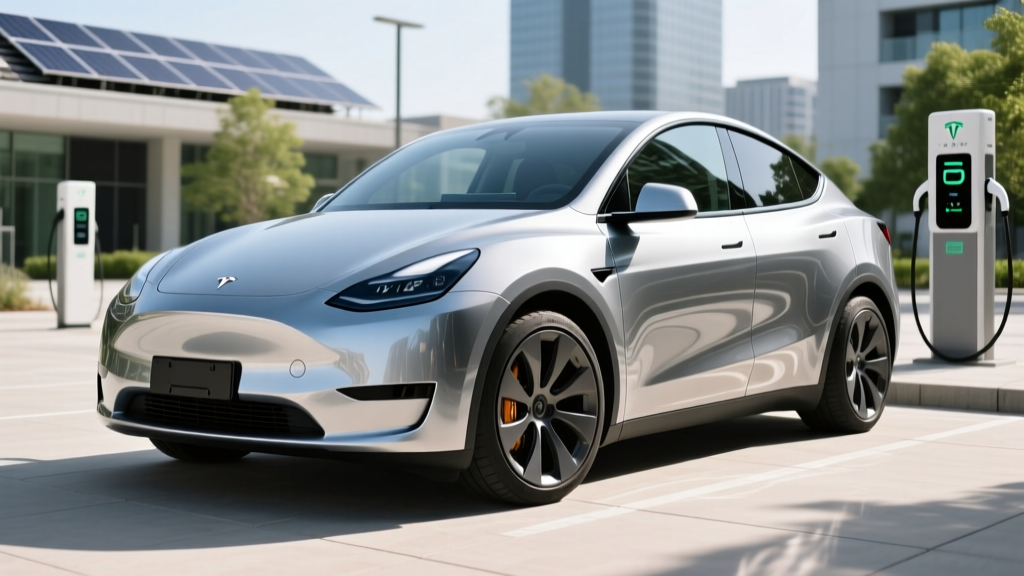
For this review, we're putting the 2026 Tesla Model Y under the microscope using both lenses — but focusing on the one that actually matters when you're writing a check: how much car, range, and charging speed you get for the money.
2026 Tesla Model Y: Core Specs at a Glance
| Spec | Long Range RWD | Long Range AWD | Performance |
|---|---|---|---|
| EPA Range | 320 mi | 308 mi | 285 mi |
| Battery (usable) | ~75 kWh (NMC) | ~75 kWh (NMC) | ~75 kWh (NMC) |
| Max DC Fast Charge | 250 kW | 250 kW | 250 kW |
| 10–80% DC Time | ~27 min | ~27 min | ~27 min |
| Level 2 (11.5 kW) | ~44 mi/hr | ~44 mi/hr | ~44 mi/hr |
| 0–60 mph | 5.8 sec | 4.8 sec | 3.5 sec |
| Horsepower | ~346 hp | ~514 hp | ~514 hp |
| Drivetrain | RWD (single motor) | AWD (dual motor) | AWD (dual motor) |
| MPGe (combined) | 123 MPGe | 117 MPGe | 111 MPGe |
| kWh/100 mi | 27 | 29 | 30 |
| Base MSRP | $44,990 | $47,990 | $52,490 |
| Battery Warranty | 8 yr / 120,000 mi | 8 yr / 120,000 mi | 8 yr / 120,000 mi |
Range Reality: EPA Sticker vs. the Real World
Real-World Expectation: ~260–280 mi highway at 70 mph; ~210–240 mi in freezing weather with cabin heat
The Model Y Long Range RWD's 320-mile EPA rating is competitive in the midsize electric SUV segment, but as with every EV, the sticker number assumes a mix of city and highway driving at moderate temperatures. In our experience and consistent with third-party testing, sustained highway speeds above 70 mph will net you closer to 260–280 miles. Cold weather (below 32°F) with resistive cabin heating can pull range down to 210–240 miles — a 25–30% reduction that every EV buyer in northern climates should plan for.
The Model Y's heat pump (standard since the 2021 refresh) helps mitigate cold-weather losses compared to older EVs using resistive heaters, but physics still wins in deep cold. Preconditioning the battery while plugged in — a feature Tesla handles well through scheduled departure — recovers some of that lost efficiency.
For range-per-dollar, the Long Range RWD at $44,990 yields a price-to-EPA-range ratio of $140.59 per mile. That's one of the best ratios in the segment, undercutting the Ford Mustang Mach-E Extended Range (~$155/mi) and the Hyundai Ioniq 5 (~$148/mi on equivalent trims).
Charging Speed: Supercharger Network Advantage
Charging is where Tesla still holds a tangible edge, and it's a key part of the value equation behind any p/e ratio Tesla analysis.
| Charging Level | Power | Speed | Notes |
|---|---|---|---|
| Level 1 (120V) | ~1.4 kW | ~5 mi/hr | Emergency/trickle only |
| Level 2 (240V, 48A) | 11.5 kW | ~44 mi/hr | Full charge in ~7.5 hr |
| DC Fast (Supercharger V3) | 250 kW peak | ~162 mi in 15 min | 10–80% in ~27 min |
The Model Y's 250 kW peak DC fast-charge rate is not class-leading on paper — the Hyundai Ioniq 5 and Kia EV6 hit 350 kW on 800V architectures — but Tesla's charge curve management is excellent. The vehicle sustains high charge rates through a wide state-of-charge window, meaning the 10–80% time of roughly 27 minutes is achievable in real-world conditions with battery preconditioning enabled.
The bigger advantage: Tesla's Supercharger network. With over 20,000 V3/V4 stalls in North America and consistently high uptime (typically 97%+), road-trip charging logistics remain simpler than relying on third-party CCS networks, which are improving but still inconsistent in rural corridors. The Model Y uses the NACS connector natively, and with the broader industry adopting NACS through 2025–2026, Tesla owners no longer have an adapter monopoly — but they do have native plug-and-charge seamlessness.
Per fueleconomy.gov, the Long Range RWD achieves 123 MPGe combined, translating to roughly 27 kWh per 100 miles. At the national average electricity rate of ~$0.17/kWh, that's about $0.046 per mile — versus $0.12–$0.15/mi for a comparable gas SUV at $3.50/gallon.
Pricing, Tax Credits, and the True Cost
The 2026 Model Y lineup starts at $44,990 for the Long Range RWD, climbs to $47,990 for the Long Range AWD, and tops out at $52,490 for the Performance trim. Destination fees add approximately $1,390.
| Trim | MSRP | Est. After §30D Credit | Eligible? |
|---|---|---|---|
| Long Range RWD | $44,990 | ~$37,490 | Yes (if sourcing + income met) |
| Long Range AWD | $47,990 | ~$40,490 | Yes (if sourcing + income met) |
| Performance | $52,490 | ~$44,990 | Yes (if sourcing + income met) |
Federal tax credit eligibility under IRS §30D is not automatic. To claim the full $7,500, several conditions must align:
- MSRP cap: SUVs must be under $80,000 — all Model Y trims qualify.
- Buyer income cap: Modified AGI ≤ $150,000 (single) / $300,000 (joint).
- Battery sourcing: Critical minerals and battery components must meet phased-in domestic/free-trade-partner thresholds that tighten annually through 2026.
- Point-of-sale transfer: Buyers can apply the credit at purchase (dealer-registered) rather than waiting for tax filing.
Tesla's Fremont and Austin battery supply chains have generally met these thresholds for Model Y vehicles built with US-sourced LFP or NMC cells, but always verify the specific VIN's eligibility on the IRS clean vehicle registry before purchasing. Consult a tax professional for your individual situation.
Performance, Interior, and Daily Livability
The Model Y's dual-motor AWD variant delivers 514 hp and a 4.8-second 0–60 time — brisk enough for confident highway merging and genuinely quick for a family crossover. The Performance trim drops that to 3.5 seconds, which enters sports-car territory, though the ride quality firms up noticeably with the lowered suspension and 21-inch wheels.
Cargo space: 30.2 cubic feet behind the second row, expanding to 72.1 cu ft with seats folded. The front trunk (frunk) adds 4.1 cu ft. These numbers are competitive but not class-leading — the Hyundai Ioniq 5 offers slightly more rear cargo volume, and the Kia EV6's hatchback design provides easier loading for bulky items.
Passenger space: Front legroom is generous at 41.8 inches; rear legroom measures 39.4 inches — adequate for adults on longer trips, though the sloping roofline cuts into headroom for passengers over 6 feet. The panoramic glass roof creates an airy feel but contributes to cabin heat in summer; Tesla's ceramic-tinted glass helps, though many owners add an aftermarket sunshade.
Tech and driver assist: The 15.4-inch center touchscreen runs Tesla's proprietary infotainment — no Apple CarPlay or Android Auto, which remains a dealbreaker for some buyers. Navigation, media, and vehicle controls all flow through the screen with minimal latency. Autopilot (basic lane-keeping and adaptive cruise) is standard; Full Self-Driving (Supervised) is a $8,000 add-on or $99/month subscription.
Pros and Cons: The Honest Scorecard
Pros
- Best-in-class Supercharger network access (native NACS)
- Excellent price-to-EPA-range ratio ($140.59/mi on LR RWD)
- Strong efficiency: 123 MPGe combined
- Over-the-air updates continuously add features
- Spacious frunk + hatchback versatility
- Heat pump standard for cold-weather efficiency
Cons
- No Apple CarPlay or Android Auto
- Rear visibility limited by sloping roofline
- Ride quality on Performance trim is firm
- 250 kW peak charge rate trails 800V competitors
- Panel gaps and paint quality still inconsistent
- FSD ($8,000) remains Level 2 despite the name
Who Should Buy the 2026 Model Y?
- You road-trip frequently and want the most reliable DC fast-charging network
- You value efficiency (low kWh/mi) and want to minimize charging costs
- You need hatchback cargo flexibility with a frunk bonus
- You're eligible for the §30D credit and want a sub-$40K effective price on a 300+ mi EV
- You require Apple CarPlay/Android Auto for your daily commute
- You prioritize ride comfort over performance (consider the Ioniq 5 or EV6)
- You need 3-row seating (the Model Y's optional third row is child-only)
- You want the fastest possible DC charging (800V competitors charge 10–80% in ~18 min)
Frequently Asked Questions
What is the real-world range of the 2026 Tesla Model Y?
The EPA rates the Long Range RWD at 320 miles, but expect 260–280 miles on highway road trips at 70 mph, and 210–240 miles in freezing temperatures. City driving with regenerative braking can actually exceed the EPA number, hitting 330+ miles in stop-and-go traffic at moderate temperatures.
How fast does the Model Y charge at home and on the road?
On a 48-amp Level 2 home charger (11.5 kW), the Model Y adds roughly 44 miles of range per hour, achieving a full charge in about 7.5 hours. On a V3 Supercharger, it peaks at 250 kW and charges from 10–80% in approximately 27 minutes with battery preconditioning active.
Does the 2026 Model Y qualify for the $7,500 federal EV tax credit?
All trims fall under the $80,000 SUV MSRP cap. However, eligibility also depends on buyer income (≤$150K single / ≤$300K joint), battery critical-mineral and component sourcing requirements, and point-of-sale dealer registration. Per IRS guidelines, verify your specific VIN on the federal clean vehicle registry before purchase.
Is the Model Y worth it versus the Hyundai Ioniq 5 or Ford Mustang Mach-E?
The Model Y wins on charging-network reliability and efficiency (MPGe). The Ioniq 5 wins on 800V charging speed (10–80% in ~18 min) and offers CarPlay. The Mach-E provides a more traditional driving feel and stronger dealer service network. If Supercharger access matters for your road-trip habits, the Model Y's value proposition is strongest.
What is Tesla's battery warranty on the Model Y?
Tesla covers the Model Y battery and drive unit for 8 years or 120,000 miles (whichever comes first), with a minimum 70% capacity retention threshold. This is competitive with the industry standard, though some competitors offer 10-year battery warranties.
What does the Model Y's price-to-EPA-range (P/E) ratio actually mean?
Dividing MSRP by EPA-rated range gives you dollars per mile of rated range — a quick cross-shopping shortcut. The Long Range RWD at $44,990 / 320 mi = $140.59/mi is among the lowest in the segment, meaning you pay less for each mile of range compared to rivals. After the $7,500 credit, that ratio drops to approximately $117.16/mi — exceptional value for a premium electric SUV.