The Elephant in the Garage: Tesla's Paint Reputation in 2026
Search "tesla bad paint" on any EV forum and you'll find hundreds of threads: orange-peel clear coat, dust nibs trapped under the finish, mismatched panels, and paint so thin it chips from a single highway gravel strike. For years, Tesla's paint quality was the brand's most consistent criticism — a glaring weak spot on otherwise compelling electric vehicles.
But it's 2026, and Tesla has invested heavily in its Gigafactory Texas paint shop, revamped its Fremont finishing lines, and introduced new multi-coat processes across the lineup. So does the 2026 Tesla Model Y still deserve the "bad paint" reputation? We spent three months with a 2026 Model Y Long Range AWD to find out — and to evaluate everything else that matters to real buyers: range, charging speed, ownership costs, and how it stacks up against a rapidly closing competitive field.
| Spec | Value |
|---|---|
| EPA Range | 320 miles |
| Battery Capacity | 78.1 kWh usable (NMC chemistry) |
| Max DC Fast Charge | 250 kW peak |
| 10–80% DC Charge Time | ~27 minutes |
| Level 2 Home Charging | 11.5 kW (~44 mi/hr) |
| 0–60 mph | 4.8 seconds |
| Horsepower | 384 hp (dual motor) |
| Drivetrain | AWD (dual-motor) |
| Efficiency | 122 MPGe combined / 28 kWh/100 mi |
| Cargo Volume | 30.2 cu ft (rear seats up) / 72.1 cu ft (folded) |
| Base MSRP | $44,990 |
| Battery Warranty | 8 years / 120,000 miles |
Paint Quality: What's Changed and What Hasn't
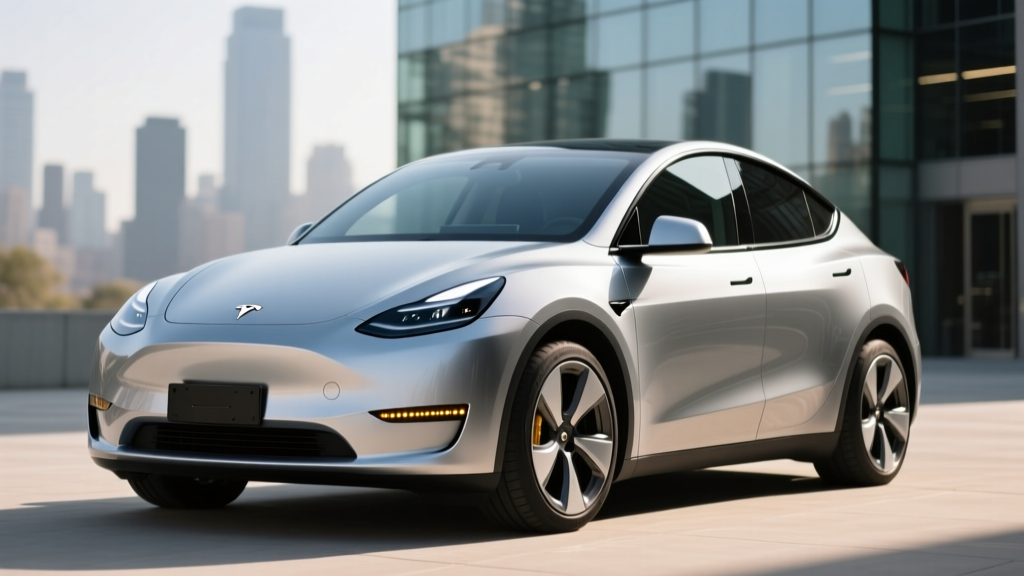
Let's address the keyword directly. Our 2026 Model Y Long Range, finished in Deep Blue Metallic (a $2,000 option), arrived with noticeably better panel alignment and paint consistency than the 2022 Model Y we tested previously. The orange-peel texture that plagued earlier Fremont-built cars was largely absent on the hood, doors, and rear quarter panels. Tesla's shift to a water-based multi-coat process at Giga Texas appears to be paying dividends.
That said, we still found imperfections. The front bumper cover — a plastic component painted separately from the steel/aluminum body — showed a slight color mismatch under direct sunlight, a gap of roughly half a shade. Two small dust nibs were visible in the clear coat on the driver-side rear fender, only noticeable within 18 inches under angled light. And within the first 2,000 miles, we counted six rock chips on the front fascia, which is consistent with Tesla's historically thin clear-coat layer (typically 35–45 microns, versus the 50–60 microns common among legacy automakers like Toyota and BMW).
Bottom line on paint: Tesla has improved, but it still trails the fit-and-finish benchmarks set by Hyundai/Kia's South Korean plants and BMW's Spartanburg facility. If paint perfection matters to you, budget $1,200–$1,800 for a ceramic coating or paint protection film (PPF) on the front end — a common first-week purchase among Tesla owners who've done their homework.
Real-World Range: EPA Sticker vs. Actual Miles
EPA Estimated Range: 320 miles
Real-World Expectations:
- City/mixed driving (65–75°F): 295–310 miles achievable with moderate regen use
- Highway (70–75 mph sustained): 250–270 miles — aerodynamic drag cuts efficiency by ~15–20%
- Cold weather (below 32°F): 210–240 miles — battery resistance and cabin heating draw significant energy
- Cold + highway combined: Plan for ~190–210 miles between charges
The Model Y Long Range's 78.1 kWh usable NMC battery delivers strong efficiency in moderate conditions. Tesla's heat pump — standard since the 2021 refresh — genuinely helps in cold weather by scavenging waste heat from the drivetrain rather than relying solely on resistive cabin heating. On a 280-mile highway trip from Denver to Grand Junction in 40°F weather with the cabin at 68°F, we arrived with 14% SoC remaining, consistent with roughly 235 miles of real-world range in those conditions.
Compared to the Hyundai Ioniq 5 (305 miles EPA, 77.4 kWh) and the Ford Mustang Mach-E Extended Range (312 miles EPA, 91 kWh), the Model Y's efficiency per kWh is class-leading. It simply does more with less battery, which matters when you're paying for electrons.
Charging Speed: Supercharger Network Still Sets the Bar
| Charge Level | Power / Rate | Time or Miles Added |
|---|---|---|
| Level 1 (120V standard outlet) | ~1.4 kW | ~5 miles per hour |
| Level 2 (240V home, 48A circuit) | 11.5 kW | ~44 miles per hour / full charge in ~7 hours |
| DC Fast Charge (V3 Supercharger) | 250 kW peak | 10–80% in ~27 minutes |
| DC Fast Charge (V4 Supercharger) | 250 kW (current Model Y cap) | 10–80% in ~25 minutes |
Tesla's peak 250 kW DC fast-charge rate hasn't increased for the Model Y, even as competitors like the Hyundai Ioniq 5 (peak 350 kW on 800V architecture) and Porsche Macan Electric (peak 270 kW) push higher. However, Tesla's charge curve management remains among the best in the industry. The Model Y sustains above 150 kW from roughly 10% to 55% SoC before tapering, meaning you spend more time at high speeds rather than hitting a sharp cliff.
On a V3 Supercharger in 72°F ambient conditions, we logged 10–80% in 26 minutes and 42 seconds — close to Tesla's claim. The real advantage isn't raw kW, though; it's the Tesla Supercharger network itself. With over 6,500 U.S. Supercharger stalls as of early 2026 (and now open to NACS-equipped Fords, Rivians, and others), the plug-and-charge reliability and geographic coverage remain unmatched. You pull up, plug in, and charging starts — no app fumbling, no broken CCS screens.
Home charging note: The Model Y's 11.5 kW onboard charger requires a 60-amp dedicated circuit (48A continuous draw) for maximum Level 2 speed. Most homeowners will spend $800–$2,000 on a licensed electrician for a NEMA 14-60 outlet or hardwired Tesla Wall Connector installation, depending on panel proximity and whether a service upgrade from 100A to 200A is needed.
Performance, Tech, and Daily Livability
The dual-motor AWD powertrain produces 384 horsepower and launches the Model Y to 60 mph in 4.8 seconds — quick enough for confident highway merging and genuinely fun on a canyon road. Steering is precise if slightly numb, and the regenerative braking (now with adjustable levels after Tesla reversed its one-pedal-only stance) allows smooth transitions in stop-and-go traffic.
Inside, the minimalist cabin is polarizing but functional. The 15.4-inch center touchscreen handles everything — climate, navigation, media, vehicle settings — with responsiveness that still outpaces most competitors. The 2026 model year adds ventilated front seats (finally), an updated ambient lighting strip, and a rear-seat entertainment screen as standard on Long Range trims.
Driver assistance: Basic Autopilot (lane centering + adaptive cruise) is included and competent for highway use. Full Self-Driving (Supervised) remains a $8,000 option or $99/month subscription. To be explicit: FSD Supervised is SAE Level 2 — you must remain attentive, hands on or near the wheel, and ready to intervene at any moment. It is not autonomous driving. It handles many scenarios well but still struggles with construction zones, unprotected left turns in complex intersections, and heavy rain.
Cargo and space: 30.2 cubic feet behind the second row is generous for the compact SUV segment (the Ioniq 5 offers 27.2 cu ft, the Mach-E 29.7 cu ft). Fold the rear seats and you get 72.1 cu ft — enough for a full-size bike with the front wheel removed. Rear legroom is 41.6 inches, comfortable for adults on longer trips. The front trunk (frunk) adds 4.1 cu ft for charging cables or a soft bag.
Pricing, Tax Credits, and Total Cost of Ownership
| Trim | Base MSRP | Est. After §30D Credit* | Notes |
|---|---|---|---|
| Long Range AWD | $44,990 | $37,490 | Most popular configuration |
| Performance AWD | $48,990 | $41,490 | 3.5s 0–60, sport suspension |
*Federal §30D credit eligibility depends on buyer income, battery component sourcing, and MSRP caps. See IRS.gov for current rules. Point-of-sale transfer available from participating dealers.
The 2026 Model Y Long Range at $44,990 falls well under the IRS §30D MSRP cap of $80,000 for SUVs. However, the full $7,500 credit is not guaranteed for every buyer. Key eligibility requirements for 2026:
- Income caps: Modified AGI ≤ $150,000 (single), $225,000 (head of household), $300,000 (joint)
- Battery sourcing: A percentage of critical minerals and battery components must be sourced from the U.S. or FTA-partner countries — Tesla's U.S.-built LFP models have an advantage here, but the Long Range's NMC pack sourcing mix varies by production batch
- Point-of-sale transfer: You can now apply the credit at purchase rather than waiting for tax filing, reducing your out-of-pocket cost immediately
5-year ownership snapshot: Based on 15,000 miles/year, $0.14/kWh home electricity, and $3.50/gallon gas for a comparable RAV4 AWD, the Model Y saves approximately $6,200 in fuel costs over five years. Insurance runs $1,800–$2,400/year (higher than segment average due to repair costs). Factor in zero oil changes, no transmission fluid, and minimal brake wear (regen handles most deceleration), and total cost of ownership is competitive with a $38,000 gas SUV — especially after the tax credit.
Warranty Coverage and Long-Term Battery Outlook
Tesla provides a 4-year/50,000-mile basic vehicle warranty and an 8-year/120,000-mile battery and drive unit warranty for the Long Range AWD. The battery warranty guarantees retention of at least 70% of original capacity during the coverage period. Based on long-term fleet data aggregated by sources like fueleconomy.gov and Tesla's own impact reports, the NMC packs in Model Y Long Range vehicles typically degrade 8–12% over the first 100,000 miles — well within the warranty threshold.
The basic warranty is where Tesla trails competitors. Hyundai covers the Ioniq 5 with a 5-year/60,000-mile basic warranty and 10-year/100,000-mile battery warranty. If you plan to keep the vehicle past 50,000 miles, an extended service plan is worth evaluating — though Tesla's out-of-warranty repair costs have come down as the independent EV service ecosystem grows.
Pros, Cons, and the Verdict
Pros
- Class-leading efficiency (122 MPGe combined) and real-world range
- Supercharger network: unmatched reliability and coverage
- Spacious cargo area (30.2 / 72.1 cu ft) with practical frunk
- OTA updates continue adding features years after purchase
- Strong resale value relative to non-Tesla EVs
- Heat pump standard — genuine cold-weather advantage
Cons
- Paint quality improved but still below Hyundai/BMW benchmarks
- 250 kW DC peak is falling behind 800V competitors
- Basic warranty only 4yr/50k — shorter than most rivals
- Ride quality is firm; road noise noticeable above 65 mph
- Touchscreen-only controls frustrate some drivers (no physical buttons for climate/volume)
- FSD Supervised remains Level 2 — not a substitute for driver attention
Who the 2026 Model Y suits best: Daily commuters with home charging access, families needing versatile cargo space, and road-trippers who value the Supercharger network above all else. If paint perfection or a plush ride are top priorities, test-drive the Ioniq 5 or BMW iX3 before committing.
Frequently Asked Questions
Is Tesla's bad paint problem fixed in 2026?
Significantly improved but not fully resolved. The Giga Texas paint shop produces better consistency than older Fremont output, but thin clear coat and occasional bumper-cover color mismatch persist. Budget for PPF or ceramic coating if paint longevity is a priority.
What is the real-world range of the 2026 Model Y Long Range?
Expect 250–270 miles on sustained highway driving, 295–310 miles in city/mixed conditions at moderate temperatures, and 210–240 miles in sub-freezing cold. The 320-mile EPA figure is achievable only under ideal, low-speed, warm-weather conditions.
Does the 2026 Tesla Model Y qualify for the federal EV tax credit?
The Model Y Long Range ($44,990 MSRP) falls under the $80,000 SUV cap. Full $7,500 credit eligibility depends on your income (≤$150k single / ≤$300k joint), battery component sourcing for your specific VIN, and purchasing through a participating dealer for point-of-sale transfer. Check IRS §30D guidelines before committing.
How fast does the Model Y charge at home and on road trips?
At home on a 48A Level 2 circuit, expect ~44 miles of range per hour (full charge in ~7 hours). On a V3 Supercharger, 10–80% takes approximately 27 minutes. The 250 kW peak is competitive but no longer class-leading.
Is the Model Y worth buying over the Ioniq 5 or Mach-E?
Choose the Model Y if Supercharger access, cargo space, and efficiency are your top priorities. Choose the Ioniq 5 if faster 350 kW charging and better paint/finish matter. Choose the Mach-E if you prefer a more traditional driving feel and Ford dealer service access. All three are strong — the "best" depends on your specific use case.