Quick Verdict: Why the Model Y Still Dominates in Maryland
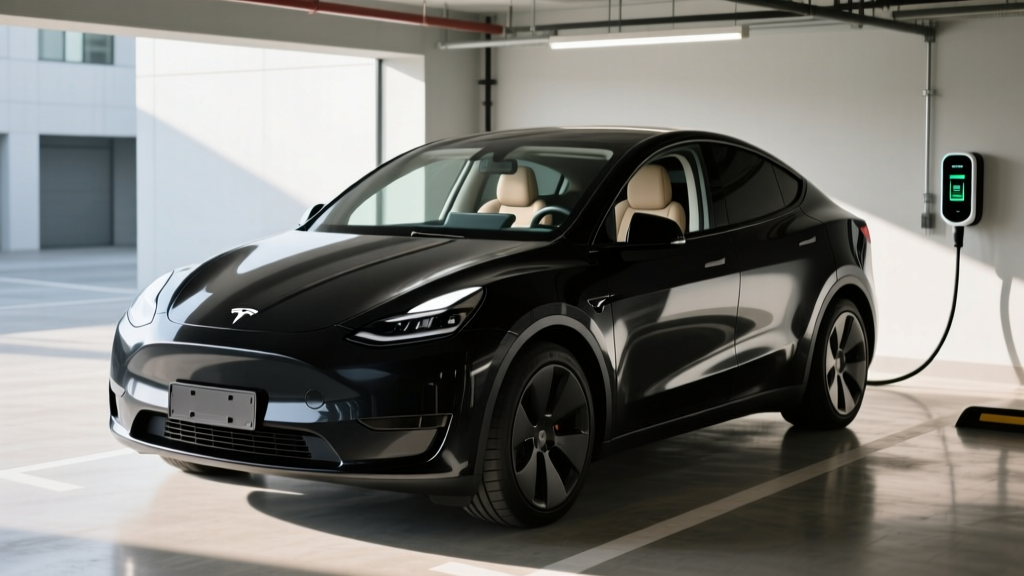
If you live in Owings Mills or anywhere in the Baltimore metro and you're considering an electric vehicle, the Tesla Model Y remains the benchmark against which every other compact electric SUV is measured. For 2026, the refreshed Model Y (internally dubbed "Juniper") brings a quieter cabin, updated suspension tuning, a rear infotainment screen, and slightly improved efficiency — but the core formula that made it the best-selling EV in America remains intact: strong range, access to the Supercharger network, and competitive pricing.
This review breaks down every number that matters — from real-world range on I-795 to DC fast-charging curves at local Superchargers — so you can decide if the Model Y fits your Owings Mills commute and lifestyle.
Range and Efficiency: EPA Numbers vs. Maryland Reality
EPA Estimated Range: 320 miles
Real-World Expectation: ~270–290 miles (mixed highway/city, 65–75 mph)
Cold-Weather Estimate (Dec–Feb, Baltimore area): ~230–255 miles
The 2026 Model Y Long Range AWD carries an EPA rating of 320 miles, which remains among the highest in its class. However, EPA tests are conducted under controlled conditions that don't fully replicate sustained highway driving or cold-weather battery behavior.
In our experience and consistent with third-party testing data from fueleconomy.gov, expect roughly 270–290 miles on a full charge during moderate-temperature mixed driving. On I-695 or I-795 at sustained 70+ mph speeds, efficiency drops to approximately 3.2–3.5 miles per kWh, pulling effective range toward the lower end of that band.
Maryland winters are a real factor. When temperatures drop below 35°F, the Model Y's heat pump helps, but battery chemistry still limits regenerative braking and increases cabin heating load. Owings Mills drivers should budget 20–25% range reduction from December through February — meaning a full charge yields roughly 230–255 miles in deep winter. Preconditioning the battery while still plugged in at home mitigates some of this loss.
| Spec | Long Range AWD | Performance AWD | RWD (Standard) |
|---|---|---|---|
| EPA Range | 320 mi | 290 mi | 280 mi |
| Battery (usable) | ~75 kWh (NMC) | ~75 kWh (NMC) | ~60 kWh (LFP) |
| MPGe (combined) | 111 MPGe | 102 MPGe | 115 MPGe |
| kWh/100 mi | 30 | 33 | 29 |
| 0–60 mph | 4.8 sec | 3.5 sec | 6.6 sec |
| Horsepower | 384 hp | 456 hp | 295 hp |
| Drivetrain | Dual-Motor AWD | Dual-Motor AWD | Rear-Wheel Drive |
| Base MSRP | $47,990 | $52,990 | $39,990 |
Charging Speed: Supercharger, Level 2, and Home Setup
Charging infrastructure access is one of Tesla's strongest ownership advantages, and Owings Mills residents benefit from proximity to multiple Supercharger stations along the I-795 and Reisterstown Road corridors, as well as the broader Baltimore network.
| Charging Level | Max Rate | Speed / Time |
|---|---|---|
| DC Fast Charge (Supercharger V4) | 250 kW peak | 10–80% in ~22 min; ~175 mi in 15 min |
| Level 2 (Tesla Wall Connector, 48A) | 11.5 kW | ~44 mi/hr added; full charge in ~7–8 hrs |
| Level 2 (Public, e.g. ChargePoint 40A) | 9.6 kW | ~36 mi/hr added |
| Level 1 (120V household outlet) | ~1.4 kW | ~4 mi/hr added (emergency/trickle only) |
The Model Y's charge curve is important to understand: it peaks near 250 kW between roughly 10–30% State of Charge (SoC), then tapers progressively. By 60% SoC, you'll see approximately 120–140 kW, and above 80%, speeds drop below 50 kW. This is why Tesla (and every EV manufacturer) quotes 10–80% times rather than 0–100% — the final 20% can take as long as the first 70%.
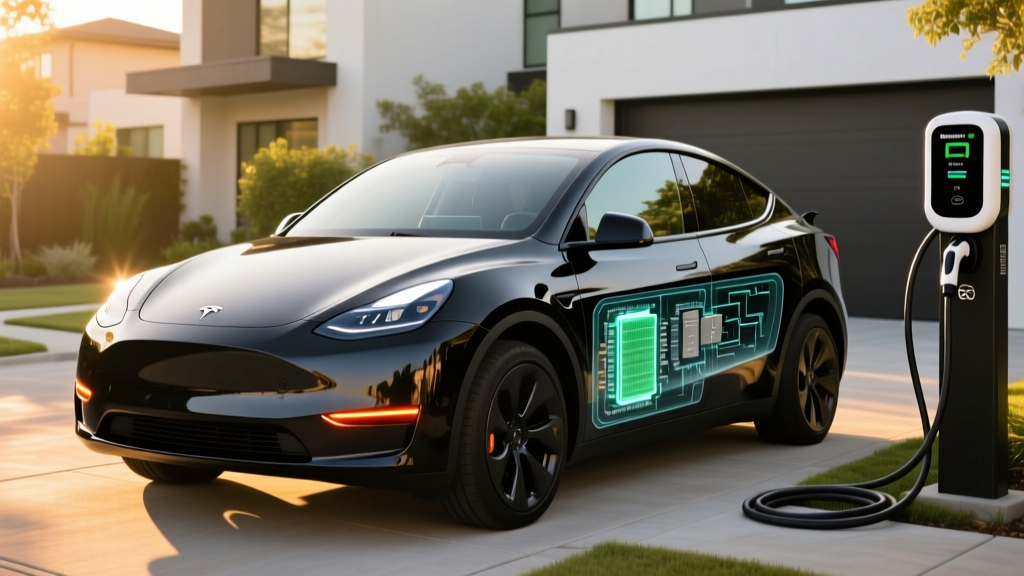
For Owings Mills homeowners, a Tesla Wall Connector on a 60-amp circuit (48 amps continuous) delivers about 44 miles of range per hour of charging. A typical overnight session from 30% to 80% takes roughly 5–6 hours. Installation costs in the Baltimore metro typically range from $800–$2,500 depending on panel capacity and run length. Homes with older 100-amp electrical panels may require a $1,500–$3,000 panel upgrade to support a dedicated 60-amp EV circuit — factor this into your budget.
The 2026 Model Y ships with the NACS (North American Charging Standard) connector natively, meaning it plugs directly into Tesla Superchargers without an adapter. It can also access the growing number of non-Tesla chargers now equipped with NACS cables (Electrify America, EVgo, and others have been converting stations since 2024–2025).
Performance, Ride, and Daily Drivability
The Model Y Long Range AWD's dual-motor setup produces 384 horsepower and achieves a 4.8-second 0–60 mph time — brisk enough to merge onto I-695 with confidence and overtake without hesitation. The Performance trim drops that to 3.5 seconds with 456 hp, though the ride becomes noticeably firmer and may not suit everyone on Owings Mills' occasional rough patches.
The 2026 Juniper refresh addressed one of the previous generation's most common criticisms: ride quality. Tesla retuned the suspension with softer damping and added acoustic glass, resulting in a measurably quieter and more compliant ride over highway expansion joints and suburban speed bumps. It's still sportier than a Hyundai Ioniq 5 or Ford Mustang Mach-E, but the gap has narrowed considerably.
Regenerative braking remains strong and adjustable, enabling effective one-pedal driving in stop-and-go traffic on Reisterstown Road or during the I-795 rush-hour crawl. The heat pump, standard on all trims, improves cold-weather efficiency and cabin warm-up times compared to resistive heating.
Interior, Cargo, and Technology
The 2026 Model Y interior is minimalist by design — some call it elegant, others sparse. Everything routes through the 15.4-inch center touchscreen: climate, mirrors, glovebox, navigation, and media. The Juniper update adds a rear 8-inch screen for second-row passengers (climate and entertainment controls) and ventilated front seats, both long-requested features.
Cargo capacity remains class-leading:
- Behind second row: 30.2 cu ft
- Second row folded: 72.1 cu ft
- Front trunk (frunk): 4.1 cu ft
- Rear legroom: 41.6 inches
- Front legroom: 41.8 inches
These dimensions comfortably accommodate two car seats, a week's groceries, or camping gear for a family of four. The flat load floor with seats folded makes it practical for bulky items like furniture or bicycles (with a hitch-mounted rack, as the roof rack is rated for 165 lbs dynamic).
Tech highlights:
- Tesla Autopilot (SAE Level 2) standard — includes adaptive cruise, lane centering, automatic emergency braking
- Full Self-Driving (Supervised) available as a $8,000 option or $99/month subscription — still requires active driver supervision at all times
- Over-the-air software updates add features continuously
- Sentry Mode dashcam recording, Dog Mode cabin climate, and remote preconditioning via app
- Native NACS charging with route-based battery preconditioning for faster Supercharger sessions
Tesla Autopilot and Full Self-Driving (Supervised) are SAE Level 2 driver-assistance systems. You must keep your hands on the wheel and eyes on the road at all times. The system does not handle all driving scenarios, construction zones, or adverse weather autonomously. Only Level 4 services like Waymo operate without a human driver — and those are not yet available in Maryland.
Pricing, Trims, and Federal Tax Credit Eligibility
The 2026 Model Y lineup starts at $39,990 for the RWD trim and tops out at $52,990 for the Performance model before options and destination fees.
| Trim | MSRP | Est. After §30D Credit | Credit Eligibility |
|---|---|---|---|
| RWD (LFP) | $39,990 | ~$32,490* | Up to $7,500 (if sourcing rules met) |
| Long Range AWD | $47,990 | ~$40,490* | Up to $7,500 (if sourcing rules met) |
| Performance AWD | $52,990 | ~$45,490* | Up to $7,500 (if sourcing rules met) |
*Estimates assume buyer meets all IRS §30D requirements. Actual credit varies. Consult a tax professional.
- MSRP cap: SUVs must be ≤$80,000 (all Model Y trims qualify)
- Income cap: Modified AGI ≤$150,000 (single), ≤$225,000 (head of household), ≤$300,000 (joint)
- Battery sourcing: Must meet critical minerals and battery component requirements (phased thresholds increase annually — verify current-year rules at IRS.gov)
- Point-of-sale transfer: Eligible buyers can transfer the credit to the dealer at purchase for an immediate price reduction
- Assembly: Must be assembled in North America (Model Y is built in Fremont, CA and Austin, TX — qualifies)
The battery sourcing requirements are the most variable element. Tesla has shifted significant battery supply chain activity to North America and allied nations, but the exact credit amount (full $7,500, partial $3,750, or $0) depends on the specific battery pack in your vehicle and the current-year threshold. Always verify with your Tesla advisor and a tax professional before finalizing a purchase.
Warranty and Long-Term Ownership Costs
Tesla's warranty coverage is competitive but not class-leading:
- Basic Vehicle: 4 years / 50,000 miles
- Battery & Drive Unit (Long Range/Performance): 8 years / 120,000 miles (whichever comes first), with minimum 70% capacity retention
- Battery & Drive Unit (RWD/LFP): 8 years / 100,000 miles, minimum 70% retention
The 70% retention threshold is standard across the industry. In practice, Tesla's NMC batteries in the Long Range and Performance trims typically degrade 8–12% over the first 100,000 miles based on fleet data, with degradation slowing significantly after the initial break-in period. The LFP battery in the RWD model degrades more slowly and tolerates regular 100% charging without harm — a practical advantage for daily commuters who want maximum available range each morning.
Insurance costs for the Model Y in the Baltimore/Owings Mills area tend to run 15–30% higher than comparable gas-powered SUVs due to repair costs and Tesla's direct-body-shop network limitations. Budget approximately $1,800–$2,600 annually depending on your driving record and coverage level.
Maintenance is minimal: no oil changes, no spark plugs, no transmission fluid. Expect to replace cabin air filters ($50–$80 annually), wiper fluid, and tires (every 30,000–40,000 miles; the Model Y's weight and instant torque accelerate tire wear). Tesla recommends brake fluid checks every 2 years and A/C desiccant replacement every 4–6 years.
Model Y vs. Key Competitors: Which Should You Choose?
| Vehicle | EPA Range | 10–80% DC Charge | Base MSRP | Advantage |
|---|---|---|---|---|
| Tesla Model Y LR AWD | 320 mi | ~22 min (250 kW) | $47,990 | Supercharger network, range, cargo space |
| Hyundai Ioniq 5 AWD | 290 mi | ~18 min (350 kW) | $48,500 | Faster peak charging, 800V architecture |
| Ford Mustang Mach-E ER AWD | 300 mi | ~30 min (150 kW) | $49,995 | Familiar dealer network, BlueCruise |
| Kia EV6 AWD | 282 mi | ~18 min (350 kW) | $49,600 | 800V charging, sporty handling |
- You rely on public fast-charging for road trips (Supercharger reliability is unmatched)
- Maximum cargo space and range per dollar are priorities
- You prefer over-the-air updates and app-based vehicle management
- You want the highest resale value retention in the EV segment
- You want the fastest possible DC charging (Ioniq 5/EV6 at 350 kW)
- You prefer traditional dealership service and support (Mach-E)
- You want a more button-rich interior or conventional styling
Who the Model Y Suits Best in Owings Mills
Ideal for: Commuters driving 30–80 miles daily (Reisterstown to downtown Baltimore, Columbia, or Towson), families needing versatile cargo space, road-trippers who value Supercharger network coverage along I-95 from Maine to Florida, and homeowners with garage or driveway access for Level 2 charging.
Less ideal for: Apartment dwellers without reliable home or workplace charging (public charging costs 2–3× more per mile than home Level 2), buyers who prioritize dealer-based service relationships, or those who frequently tow (the Model Y is rated for 3,500 lbs, but towing cuts range roughly in half).
- Class-leading 320-mile EPA range (Long Range AWD)
- Supercharger network reliability and coverage
- Spacious 72.1 cu ft cargo volume
- Strong software ecosystem and OTA updates
- Competitive pricing after federal tax credit
- LFP option (RWD) for daily 100% charging without degradation worry
- Minimalist interior not for everyone (no physical buttons)
- Insurance costs above segment average
- Service center wait times can be long in high-volume areas
- No Apple CarPlay / Android Auto (Tesla-native only)
- Ride still firmer than some competitors despite Juniper improvements
- FSD (Supervised) remains Level 2 despite the name
Frequently Asked Questions
What is the real-world range of the 2026 Tesla Model Y?
The EPA rates the Long Range AWD at 320 miles. In real-world mixed driving at highway speeds (65–75 mph), expect approximately 270–290 miles. In Maryland winter conditions (below 35°F), plan for 230–255 miles due to battery chemistry limitations and cabin heating demand. Preconditioning while plugged in helps recover some of this loss.
How fast does the Model Y charge at home and on the road?
On a Tesla Wall Connector (Level 2, 11.5 kW), the Model Y gains about 44 miles of range per hour — a full overnight session easily replenishes daily driving. At a V4 Supercharger (250 kW peak), a 10–80% session takes approximately 22 minutes, adding roughly 175 miles in 15 minutes. Charging slows significantly above 80% SoC due to the battery management system protecting cell longevity.
Does the 2026 Model Y qualify for the $7,500 federal EV tax credit?
It can, but eligibility depends on three factors per IRS §30D rules: (1) your modified adjusted gross income must fall below $150K/$225K/$300K thresholds, (2) the vehicle MSRP must be ≤$80,000 for SUVs (all trims qualify), and (3) the battery must meet critical mineral and component sourcing requirements that tighten annually. The credit can be transferred at point of sale for an immediate price reduction. Always verify current-year sourcing compliance with Tesla and a tax professional.
Is the Model Y worth buying over the Ioniq 5 or Mach-E?
The Model Y wins on range, cargo space, Supercharger access, and software. The Hyundai Ioniq 5 charges faster at compatible 350 kW stations (18 vs. 22 minutes, 10–80%). The Ford Mach-E offers a more traditional dealership experience. If road-trip charging reliability and maximum range are your top priorities, the Model Y remains the strongest choice. If you want the fastest DC charging or physical interior controls, look at the Ioniq 5.
What does it cost to own a Model Y in Owings Mills over 5 years?
Assuming 12,000 miles/year, home charging at Maryland's average residential rate of ~$0.16/kWh, and no major repairs: annual "fuel" cost is approximately $550–$650 (vs. $1,600–$1,900 for a comparable gas SUV at 25 MPG and $3.40/gallon). Insurance runs $1,800–$2,600/year. Maintenance is roughly $200–$350/year. Over 5 years, the Model Y typically saves $4,000–$7,000 in operating costs compared to a gas equivalent, even after accounting for higher insurance and potential home charger installation.
Can I charge a non-Tesla EV at a Supercharger in Owings Mills?
Yes — Tesla has opened select Supercharger stations to non-Tesla vehicles equipped with NACS connectors or using the Magic Dock CCS adapter. Check the Tesla app for station-specific availability, as not all stalls at every location support non-Tesla charging.