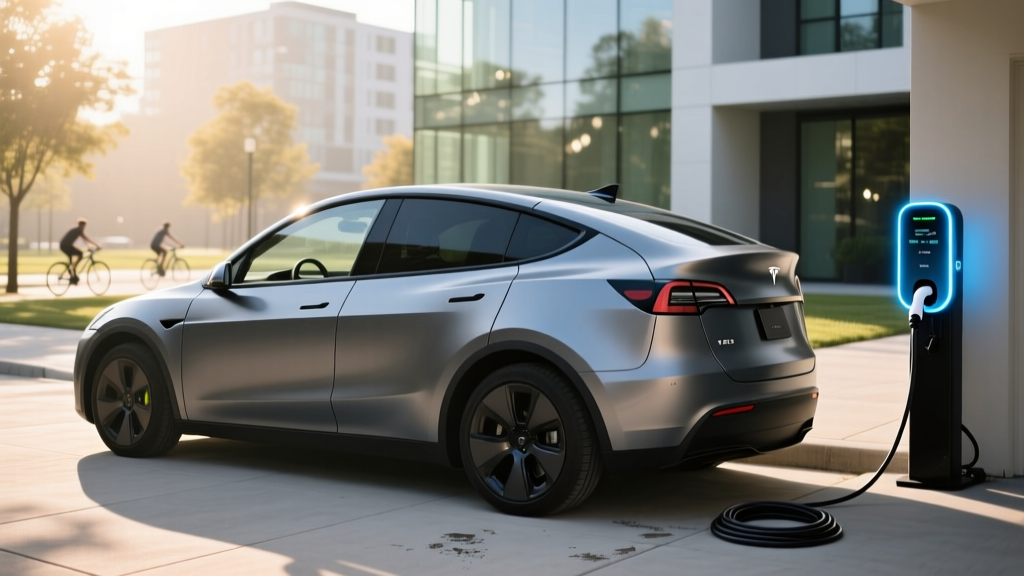
If you've spent any time researching electric SUVs, you've almost certainly landed on the Tesla Model Y. It remains the best-selling EV in the United States and the benchmark by which every other electric crossover is measured. But before you hit "order" on Tesla's configurator, you need the unvarnished numbers: what the EPA range sticker actually translates to on a cold highway morning, how fast the battery really charges once the curve tapers, and whether the federal tax credit actually applies to your household.
This guide breaks down the 2026 Tesla Model Y lineup — trims, battery chemistry, charging behavior, real-world efficiency, interior space, and total cost — so you can decide which configuration earns your money.
2026 Tesla Model Y: Quick Verdict
The refreshed Model Y (internally dubbed "Juniper") that launched in early 2025 carries forward into 2026 with minor pricing adjustments and continued NACS-native Supercharger access. It remains the default recommendation for buyers who want a spacious, efficient electric SUV with the most reliable public charging network in North America. The Long Range AWD trim is the sweet spot: over 300 miles of EPA range, dual-motor traction, and eligibility for the full §30D federal tax credit for qualifying buyers.
The Performance trim sacrifices roughly 20 miles of range for a sub-4-second 0-60 time and track-tuned suspension. The base Rear-Wheel Drive model undercuts rivals on price but is best suited for mild-climate commuters who don't need all-wheel drive.
Spec Table: 2026 Tesla Model Y Lineup
| Spec | Long Range AWD | Performance AWD | Rear-Wheel Drive |
|---|---|---|---|
| EPA Range | 320 mi | 298 mi | 295 mi |
| Battery (usable) | ~75 kWh, NMC | ~75 kWh, NMC | ~60 kWh, LFP |
| Drivetrain | Dual-Motor AWD | Dual-Motor AWD | Single-Motor RWD |
| Horsepower | 384 hp | 456 hp | 295 hp |
| 0-60 mph | 4.8 sec | 3.5 sec | 6.6 sec |
| Max DC Fast Charge | 250 kW | 250 kW | 170 kW |
| 10-80% DCFC Time | ~24 min | ~24 min | ~30 min |
| Level 2 Home Charge | 11.5 kW / 44 mi/hr | 11.5 kW / 44 mi/hr | 11.5 kW / 44 mi/hr |
| MPGe (combined) | 122 MPGe | 111 MPGe | 125 MPGe |
| Base MSRP | $48,990 | $53,990 | $44,990 |
| Battery/Drive Unit Warranty | 8 yr / 120,000 mi | 8 yr / 120,000 mi | 8 yr / 100,000 mi |
Real-World Range: What the EPA Sticker Doesn't Tell You
The Model Y's efficiency is genuinely class-leading. The Long Range AWD achieves 28 kWh/100 mi on the EPA combined cycle, which translates to roughly 3.5 miles per kWh. That efficiency advantage means you spend less at public chargers and gain more range per minute of charging than heavier, less aero-efficient competitors. According to fueleconomy.gov, the Model Y Long Range posts 122 MPGe combined — beating the Ford Mustang Mach-E Extended Range AWD (105 MPGe) and the Hyundai Ioniq 5 AWD (110 MPGe).
The LFP (lithium iron phosphate) battery in the RWD model is worth a specific callout. LFP chemistry trades energy density for longevity and thermal stability. Tesla recommends charging LFP packs to 100% at least weekly, which effectively gives you the full 295-mile EPA range for daily use — unlike NMC packs where the recommended daily limit is 80%. If your commute is predictable and you charge at home nightly, the RWD's LFP pack may actually deliver more practical daily range than the Long Range's NMC pack at 80% SoC.
Charging Speed: DC Fast Charging and Home Level 2
| Charging Level | Power | Speed (mi/hr added) | Notes |
|---|---|---|---|
| Level 1 (120V outlet) | ~1.4 kW | ~3-4 mi/hr | Emergency/trickle only; 30+ hours for full charge |
| Level 2 (240V home/public) | 11.5 kW | ~44 mi/hr | Full charge in ~7-8 hours (Long Range) |
| DC Fast Charge (Long Range/Perf) | Peak 250 kW | Up to ~1,000 mi/hr | 10-80% in ~24 min; tapers sharply above 80% |
| DC Fast Charge (RWD LFP) | Peak 170 kW | Up to ~700 mi/hr | 10-80% in ~30 min; LFP tapers earlier |
The Model Y's native NACS connector gives you direct access to the entire Tesla Supercharger network — over 6,000 stations and 60,000+ stalls in North America as of early 2026. This is the single largest practical advantage over CCS-equipped rivals: Superchargers consistently deliver their rated power, have superior uptime, and require zero fumbling with payment apps (billing is automatic via your Tesla account).
A critical detail on the charge curve: the 250 kW peak on Long Range and Performance trims is only sustained from roughly 10% to 30% SoC. Between 30-60%, expect 150-180 kW. Above 60%, power drops to 80-100 kW, and above 80% it falls below 50 kW. This is why Tesla quotes 10-80% times rather than 0-100%. For road trips, the practical strategy is to arrive at chargers near 10-15% SoC and leave at 75-80% — this keeps you in the fastest portion of the curve and minimizes stop time to roughly 20-25 minutes.
For home charging, the onboard 11.5 kW charger means a 48-amp Level 2 circuit (hardwired, 60-amp breaker) will fully replenish the Long Range overnight. If your electrical panel can only support a 32-amp circuit (common in older homes), you'll get roughly 7.7 kW, adding about 30 miles per hour — still sufficient for most daily needs. Factor in $500-$2,000 for a professional Level 2 installation depending on panel capacity and conduit runs, per licensed electrician estimates.
Pricing, Trims, and Federal Tax Credit Eligibility
| Trim | Base MSRP | Destination | Est. After §30D Credit |
|---|---|---|---|
| Rear-Wheel Drive | $44,990 | $1,390 | ~$38,880 (if eligible) |
| Long Range AWD | $48,990 | $1,390 | ~$42,880 (if eligible) |
| Performance AWD | $53,990 | $1,390 | ~$47,880 (if eligible) |
Under IRS §30D rules current for 2026, the Model Y qualifies for the full $7,500 federal tax credit — available as a point-of-sale price reduction through a registered dealer — provided the buyer meets all of the following:
- Income caps: Modified adjusted gross income (MAGI) does not exceed $150,000 (single), $225,000 (head of household), or $300,000 (married filing jointly).
- MSRP cap: The vehicle's MSRP must not exceed $80,000 for SUVs — all Model Y trims clear this threshold.
- Battery sourcing: The vehicle must meet critical mineral and battery component requirements that phase in stricter thresholds each year. Tesla's North American battery cell sourcing (via Panasonic at the Nevada Gigafactory) has historically satisfied these requirements, but verify current-year compliance on Tesla's website or with your tax professional before ordering.
- Tax liability: The credit is non-refundable if claimed on your tax return, but the point-of-sale transfer option (available since January 2024) converts it to an upfront discount regardless of tax liability, as long as the dealer is IRS-registered.
Options like Full Self-Driving (Supervised) at $8,000, premium paint colors ($1,000-$2,500), and 20-inch wheels ($2,000) can push an as-tested Performance model past $65,000. Note that FSD does not affect tax credit eligibility since it's a software add-on, not a hardware cost counted toward the MSRP cap.
Interior Space, Cargo, and Practicality
The Model Y is classified as a compact SUV but punches above its weight for interior volume. Here's how the dimensions break down:
- Cargo (rear seats up): 30.2 cu ft
- Cargo (rear seats folded): 72.1 cu ft
- Front trunk (frunk): 4.1 cu ft
- Rear legroom: 41.6 inches
- Front headroom: 41.0 inches
- Seating: 5 standard; optional 7-seat layout available on Long Range (reduces cargo to 12.2 cu ft with third row deployed)
The 7-seat option ($3,000) is genuinely usable for children or short-trip adults but eats cargo space significantly. For families with two or more kids in car seats, the 5-seat layout with the flat load floor is more practical. The rear seats fold completely flat, which makes the Model Y viable for camping or hauling long items — a real advantage over sedans and smaller crossovers.
Tech, Driver Assistance, and Safety
The Juniper refresh brought a redesigned interior with ventilated front seats, ambient lighting, a rear-seat touchscreen, and power-folding second-row seats. The 15.4-inch center touchscreen runs Tesla's proprietary infotainment system, which includes native navigation with real-time Supercharger routing, streaming media, and a robust mobile app for preconditioning and remote monitoring.
Safety ratings remain strong: the Model Y earned a 5-star overall rating from NHTSA and a TOP SAFETY PICK+ designation from IIHS for the 2025 model year, with carryover expectations for 2026.
Pros, Cons, and How It Compares to Rivals
Pros
- Class-leading efficiency (122 MPGe combined, Long Range)
- Unmatched Supercharger network access (NACS native)
- Spacious cargo area with flat fold and frunk
- Over-the-air updates continuously add features
- Strong resale value relative to most EVs
- LFP option (RWD) offers long cycle life and 100% daily charge
Cons
- Turn-signal stalks removed (steering-wheel buttons)
- No Apple CarPlay or Android Auto
- FSD (Supervised) is expensive and still requires full driver attention
- Ride quality firm on 20-inch wheels
- Service center wait times can be long in some metro areas
- DCFC peak (250 kW) trails 800V rivals like Ioniq 5 (350 kW)
Model Y vs. Hyundai Ioniq 5: The Ioniq 5 charges faster (350 kW peak on 800V architecture, 10-80% in ~18 minutes) and offers a more conventional interior with physical buttons. But it relies on the Electrify America/CCS network, which has lower reliability than Superchargers. The Model Y wins on charging infrastructure; the Ioniq 5 wins on peak charge speed and interior ergonomics.
Model Y vs. Ford Mustang Mach-E: The Mach-E offers similar range and a more engaging driving feel, but its interior is tighter (29.0 cu ft cargo) and its BlueCruise driver assist is available on fewer highway miles than Tesla's Autopilot coverage. The Model Y wins on space and software; the Mach-E wins on driving dynamics and traditional dealership service access.
Model Y vs. Rivian R1S: The R1S is a larger, more capable off-road SUV with three-row seating, but starts above $75,000 and consumes significantly more energy per mile. It's a different vehicle class — choose the R1S if you need genuine off-road capability and 7-passenger seating; choose the Model Y for efficiency and daily practicality.
Who Should Order the Tesla Model Y?
Order the Long Range AWD if: You want the best balance of range, all-weather traction, and value. This is the default choice for families, commuters, and road-trippers in most of the U.S.
Order the Rear-Wheel Drive if: You live in a mild climate, have reliable home charging, commute under 60 miles round-trip, and want the lowest entry price with LFP battery longevity.
Order the Performance if: You prioritize acceleration and handling over range and want a sport-tuned suspension. Accept the ~20-mile range penalty and higher tire replacement costs.
Look elsewhere if: You need Apple CarPlay, prefer physical buttons and stalks, live far from a Tesla service center, or need genuine 7-adult seating (consider the Kia EV9 or Rivian R1S).
Frequently Asked Questions
What is the real-world range of the Tesla Model Y?
The Long Range AWD EPA-estimates 320 miles, but real-world highway driving at 70 mph in moderate temperatures yields roughly 270-290 miles. In cold weather (below 30°F), plan for 220-250 miles. The RWD model with its smaller LFP battery delivers approximately 230-250 miles in fair weather and 190-210 miles in winter.
How fast does the Model Y charge at home and on the road?
On a 48-amp Level 2 home charger, the Model Y adds approximately 44 miles of range per hour (11.5 kW), fully charging overnight in 7-8 hours. On DC fast chargers, the Long Range and Performance models peak at 250 kW and achieve a 10-80% charge in roughly 24 minutes. The RWD model peaks at 170 kW with a 10-80% time of approximately 30 minutes.
How much does a Tesla Model Y cost after tax credits?
If you qualify for the full $7,500 §30D federal credit (meeting income, MSRP, and battery-sourcing requirements), the effective prices are approximately $38,880 for the RWD, $42,880 for the Long Range AWD, and $47,880 for the Performance. State incentives (California, Colorado, Massachusetts, and others) may stack on top — check your state's energy office for current programs.
Does the Model Y qualify for the federal EV tax credit in 2026?
Yes, all Model Y trims currently qualify for the $7,500 credit under §30D, provided the buyer's MAGI falls within limits ($150K single / $300K joint), the vehicle MSRP stays under $80,000 (it does), and the battery meets critical mineral and component sourcing requirements. Tesla's U.S.-built battery cells have historically met these thresholds, but always verify current-year compliance on the IRS website or with a tax professional before ordering.
Is the Tesla Model Y worth buying over competitors?
For most buyers, yes — primarily because of the Supercharger network advantage, class-leading efficiency, and strong software ecosystem. If charging infrastructure reliability is your top priority and you want the lowest friction ownership experience, the Model Y is still the benchmark. If you prioritize faster peak charging, physical controls, or a more conventional dealership experience, the Hyundai Ioniq 5 or Ford Mustang Mach-E are strong alternatives worth test-driving before ordering.
What is the battery warranty on the Model Y?
Tesla covers the Long Range and Performance battery and drive units for 8 years or 120,000 miles (whichever comes first), with a minimum 70% capacity retention guarantee. The RWD model carries an 8-year / 100,000-mile battery warranty with the same 70% retention threshold. The vehicle limited warranty is 4 years or 50,000 miles.