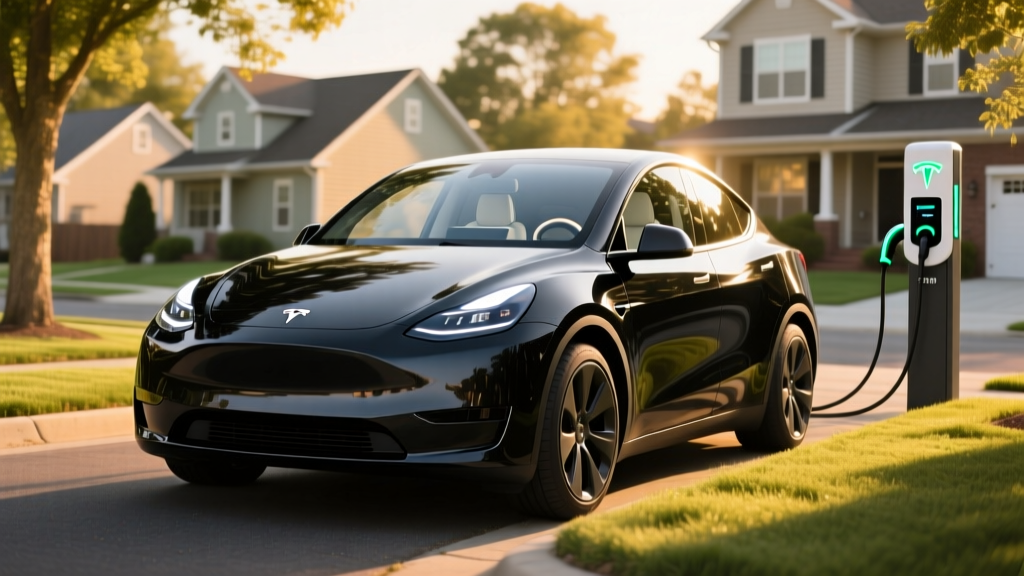
If you live in Old Bridge, New Jersey, and you're researching a Tesla, you're not alone. Middlesex County has become one of the state's densest EV-ownership corridors, thanks to a mix of suburban commuting patterns, access to Tesla Superchargers along the Route 9 and Route 18 corridors, and New Jersey's strong EV incentive landscape. The 2026 Tesla Model Y remains the default crossover for many of these buyers — but does it actually hold up under Garden State conditions?
This review breaks down the 2026 Model Y with a specific lens for Old Bridge, NJ drivers: real-world range in Northeast winters, local charging logistics, pricing after federal and state incentives, and how it stacks up against the Hyundai Ioniq 5, Ford Mustang Mach-E, and Chevrolet Equinox EV for daily use in central New Jersey.
2026 Tesla Model Y Quick Specs
| Spec | Value |
|---|---|
| EPA Range | 320 miles (Long Range AWD) |
| Battery Capacity | ~78 kWh usable (NMC chemistry) |
| Peak DC Fast Charge | 250 kW (Supercharger V3/V4) |
| 10–80% DC Charge Time | ~27 minutes (preconditioned) |
| Level 2 Home Charge Rate | 11.5 kW / ~37 mi/hr (48A Wall Connector) |
| 0–60 mph | 4.8 seconds (Long Range AWD) |
| Horsepower | 384 hp (dual motor) |
| Drivetrain | Dual-motor AWD |
| Efficiency | 122 MPGe / 28 kWh/100 mi |
| Cargo Volume | 30.2 cu ft (rear seats up) / 72.1 cu ft (folded) |
| Rear Legroom | 36.5 inches |
| Battery Warranty | 8 years / 120,000 miles |
| Base MSRP | $44,990 (Long Range AWD) |
Real-World Range: What Old Bridge Drivers Should Actually Expect
Real-World Highway (65–75 mph, 70°F): ~270–290 miles
Real-World NJ Winter (30°F, mixed driving): ~220–250 miles
City/Commuter (Route 9 stop-and-go, moderate temps): ~300–310 miles
The 320-mile EPA figure on the Long Range AWD is solid, but Old Bridge winters are the real test. Lithium-ion NMC batteries lose efficiency in cold weather due to increased internal resistance and the energy demand of cabin heating. In our experience with Model Y owners in the Northeast, expect roughly a 20–30% range reduction when temperatures hover around freezing, particularly on short trips where the cabin and battery must heat from cold repeatedly.
The 2026 Model Y includes a standard heat pump, which significantly improves cold-weather efficiency compared to resistive heating. Tesla's battery preconditioning — activated automatically when you navigate to a Supercharger — warms the pack to optimal charging temperature, reducing the taper you'd otherwise see at a cold-soaked DC fast-charge session.
For the typical Old Bridge commuter driving 25–40 miles round-trip to Metropark, New Brunswick, or even Midtown Manhattan via the NJ Turnpike, the Model Y Long Range requires home charging roughly every 4–5 days in winter and every 6–7 days in summer. Range anxiety is minimal for this use case.
Charging Speed & Infrastructure: NJ Supercharger Access
| Charging Level | Power (kW) | Speed | Notes |
|---|---|---|---|
| Level 1 (120V household) | ~1.4 kW | ~4 mi/hr | Emergency/trickle only |
| Level 2 (240V Wall Connector, 48A) | 11.5 kW | ~37 mi/hr | Full charge in ~8 hrs |
| Level 2 (240V Wall Connector, 32A) | 7.7 kW | ~25 mi/hr | Common for 40A circuits |
| DC Fast (Tesla Supercharger V3/V4) | 250 kW peak | 10–80% in ~27 min | Tapers significantly above 80% |
| DC Fast (CCS adapter, Electrify America) | ~150–200 kW | 10–80% in ~32–38 min | Depends on station output |
The Model Y's 250 kW peak DC fast-charge rate is no longer class-leading — the Hyundai Ioniq 5 and Kia EV6 can hit 350 kW on compatible chargers — but Tesla's Supercharger network reliability remains the strongest in the industry. For Old Bridge residents, the closest Superchargers include the East Brunswick station (Route 1, ~10 min away) and the Marlboro/Freehold area stations, all offering V3 250 kW stalls.
At home, the Tesla Wall Connector on a 60-amp circuit (48A continuous) delivers 11.5 kW, adding roughly 37 miles of range per hour. Most Old Bridge homes with 200-amp electrical panels can accommodate this installation, though older homes with 100-amp panels may require a panel upgrade — budget $1,500–$3,000 for that work via a licensed electrician. On a standard NEMA 14-50 outlet (40A circuit, 32A continuous), you'll get about 25 mi/hr, which is sufficient for overnight charging of most daily driving needs.
One critical note on the charge curve: the 250 kW peak only holds between roughly 10–30% State of Charge (SoC). Above 50%, the rate drops to ~100 kW, and above 80% it falls further to ~40–50 kW. This is standard for NMC chemistry but worth understanding — plan your road-trip stops to charge from 10–80%, not 0–100%.
Pricing, Tax Credits & NJ Incentives
| Trim | MSRP | Fed. Credit (est.) | Effective Price |
|---|---|---|---|
| Long Range AWD | $44,990 | Up to $7,500* | ~$37,490* |
| Performance AWD | $48,990 | Up to $7,500* | ~$41,490* |
*Federal §30D tax credit eligibility depends on buyer income caps ($150K single / $300K joint AGI), vehicle MSRP caps ($80K for SUVs), and battery critical-mineral/component sourcing requirements that shift annually. The Model Y has historically qualified for the full $7,500, but verify current-year sourcing compliance on IRS.gov. As of 2026, the credit can be transferred at point of sale as an instant discount.
New Jersey also offers additional incentives. The state's Charge Up New Jersey program has provided rebates for EV purchases, though funding availability varies — check the NJ Clean Energy Program for current status. NJ also exempts zero-emission vehicles from the state's 6.625% sales tax, which on a $44,990 Model Y saves approximately $2,978 at purchase.
Combined, a qualifying Old Bridge buyer could see the effective cost of a Long Range AWD Model Y drop to roughly $34,500–$37,500 depending on current state rebate availability — a compelling price point for a dual-motor AWD crossover with 320 miles of range.
Performance, Efficiency & Daily Driving
The dual-motor Long Range AWD produces 384 hp and hits 60 mph in 4.8 seconds — quick enough to merge confidently onto the Garden State Parkway or NJ Turnpike. The Performance trim drops that to 3.5 seconds with 456 hp, though at a $4,000 premium and slightly reduced range.
Efficiency is rated at 122 MPGe combined (28 kWh/100 mi) per fueleconomy.gov. In real-world New Jersey mixed driving — suburban arterials, highway stretches, and stop-and-go traffic — owners typically see 26–30 kWh/100 mi depending on season and driving style. At New Jersey's average residential electricity rate of ~$0.17/kWh (2026), charging at home costs roughly $0.047–$0.051 per mile, compared to ~$0.12–$0.14/mile for a 25 MPG gas crossover at $3.20/gallon.
The regenerative braking system is aggressive enough for one-pedal driving in most conditions, which is particularly useful in Route 9 and Route 516 traffic. The Model Y's ride quality has improved with the 2025 Juniper refresh, with revised damper tuning that better absorbs the expansion joints and potholes common on central NJ roads.
Interior, Cargo & Technology
The 2026 Model Y continues with Tesla's minimalist interior approach: a 15.4-inch center touchscreen handles virtually all vehicle controls, navigation, and entertainment. The Juniper update added ventilated front seats, ambient lighting, a rear-seat touchscreen, and improved sound insulation — addressing the most common complaints from pre-2025 owners.
Cargo space remains a strong point: 30.2 cubic feet behind the rear seats (expandable to 72.1 cu ft with seats folded), plus a small front trunk (frunk) for charging cables or a laptop bag. Rear legroom at 36.5 inches is adequate for adults on shorter trips, though taller passengers may find the rear seat cushion height a bit low for long-haul comfort.
Autopilot & FSD (Supervised): The Model Y comes standard with Autopilot (lane-centering + adaptive cruise), which is an SAE Level 2 driver-assistance system — you must keep your hands on the wheel and eyes on the road at all times. Tesla's Full Self-Driving (Supervised) package ($8,000 or $99/month) adds automated lane changes, traffic-light recognition, and city-street navigation, but it remains Level 2. It is not autonomous driving. The driver is legally and operationally responsible at all times.
Pros, Cons & Who Should Buy
- Supercharger network reliability is best-in-class
- Strong efficiency (122 MPGe) keeps running costs low
- Heat pump standard — critical for NJ winters
- OTA updates continuously add features
- Strong cargo capacity (72.1 cu ft max)
- Point-of-sale tax credit transfer available
- DC fast-charge peak (250 kW) trails Hyundai/Kia 800V platforms
- Rear-seat comfort still lags Ioniq 5 and Mach-E
- Minimalist interior not for everyone — no physical buttons
- FSD (Supervised) is expensive and still Level 2
- Insurance premiums in NJ tend to run 15–25% above gas equivalents
- Cold-weather range loss is real (~20–30% at freezing)
Who the Model Y Suits Best in Old Bridge
- Daily commuters to New Brunswick, Edison, Metropark, or NYC via NJ Transit park-and-ride (Glen Rock/Secaucus transfer): the 320-mi range means charging 1–2x per week at home.
- Families needing AWD for winter trips to the Shore or Poconos, with enough cargo for strollers and groceries.
- Tech-forward buyers who value OTA updates, the Supercharger ecosystem, and Tesla's app integration.
The Model Y is less ideal for buyers who prioritize rear-seat luxury (look at the Ioniq 5 or BMW iX), those who need 350 kW DC fast-charging for frequent long road trips, or anyone uncomfortable with a touchscreen-only interface.
Frequently Asked Questions
What is the real-world range of the 2026 Tesla Model Y in New Jersey winters?
Expect roughly 220–250 miles in freezing temperatures with mixed driving. The heat pump helps, but cold weather reduces battery efficiency and increases cabin-heating demand. In summer, real-world range is closer to 280–310 miles depending on highway speeds.
How fast does the Model Y charge at home and on DC fast chargers?
At home on a Tesla Wall Connector (48A/11.5 kW), you'll add ~37 miles per hour — a full overnight charge takes about 8 hours. On a Tesla Supercharger V3/V4, peak rate is 250 kW with a 10–80% charge in ~27 minutes when the battery is preconditioned.
Does the 2026 Model Y qualify for the $7,500 federal EV tax credit?
The Model Y has historically qualified for the full §30D credit, but eligibility depends on current-year battery sourcing rules, your AGI (income cap: $150K single / $300K joint), and the $80K MSRP cap for SUVs. Verify on IRS.gov before purchasing. The credit can be applied as a point-of-sale discount.
Is the Model Y worth buying vs. the Ioniq 5 or Mach-E in 2026?
The Model Y wins on Supercharger network access, cargo space, and efficiency. The Ioniq 5 charges faster (350 kW on 800V chargers) and has a more comfortable rear seat. The Mach-E offers a more traditional interior layout. If Supercharger reliability matters most to you, the Model Y remains the strongest choice.
What does home charger installation cost in Old Bridge, NJ?
A Tesla Wall Connector installation on an existing 240V/60A circuit typically runs $500–$1,200 (electrician labor + permit). If your home needs a panel upgrade from 100A to 200A, add $1,500–$3,000. Most Old Bridge homes built after 1990 have 200A panels and can accommodate the install without upgrades.
What is the Model Y's battery warranty?
Tesla covers the battery and drive unit for 8 years or 120,000 miles (whichever comes first), with a guaranteed minimum 70% capacity retention over that period. Real-world degradation data from high-mileage owners suggests most NMC Model Y packs retain 85–90% capacity at 100,000 miles.