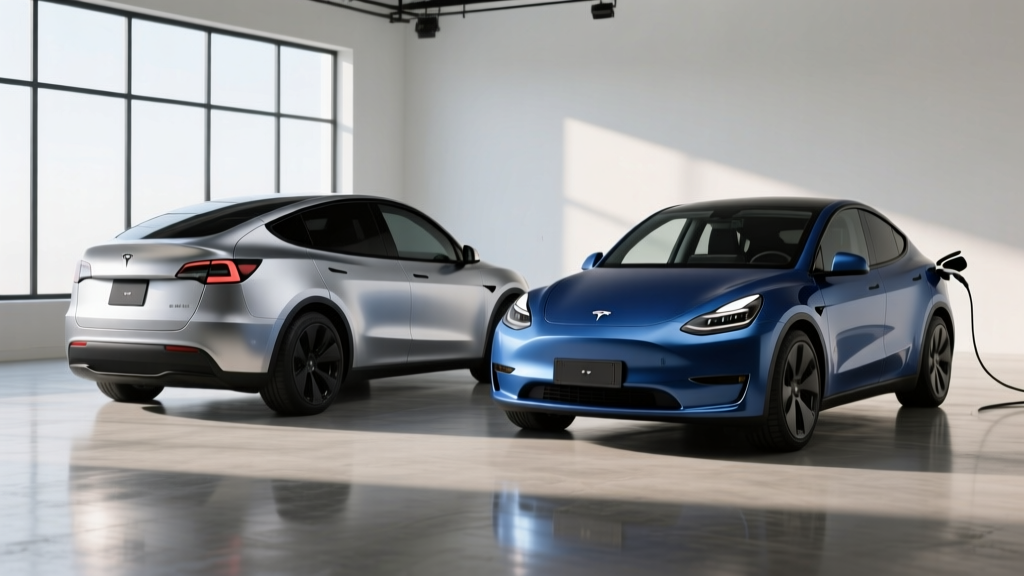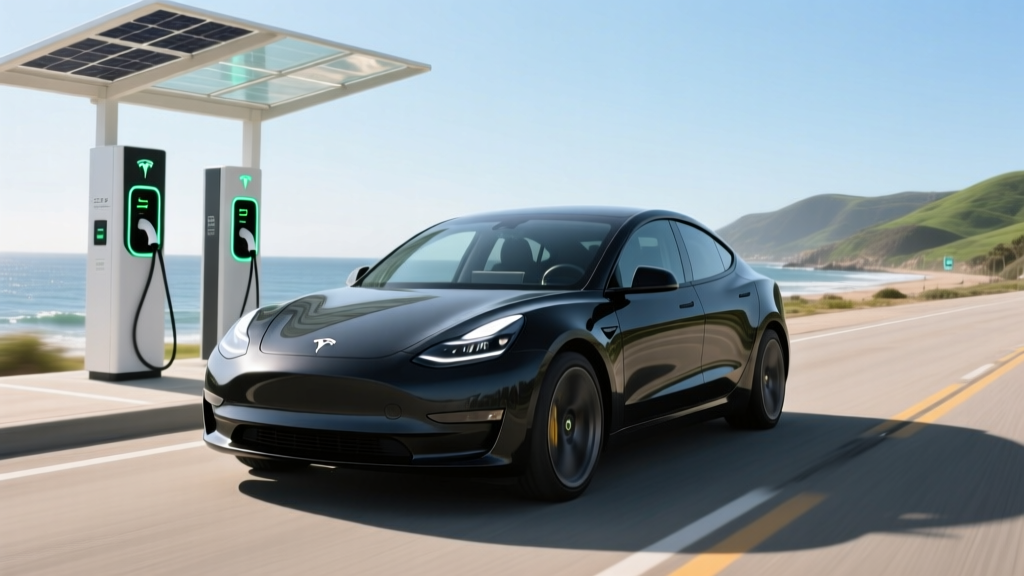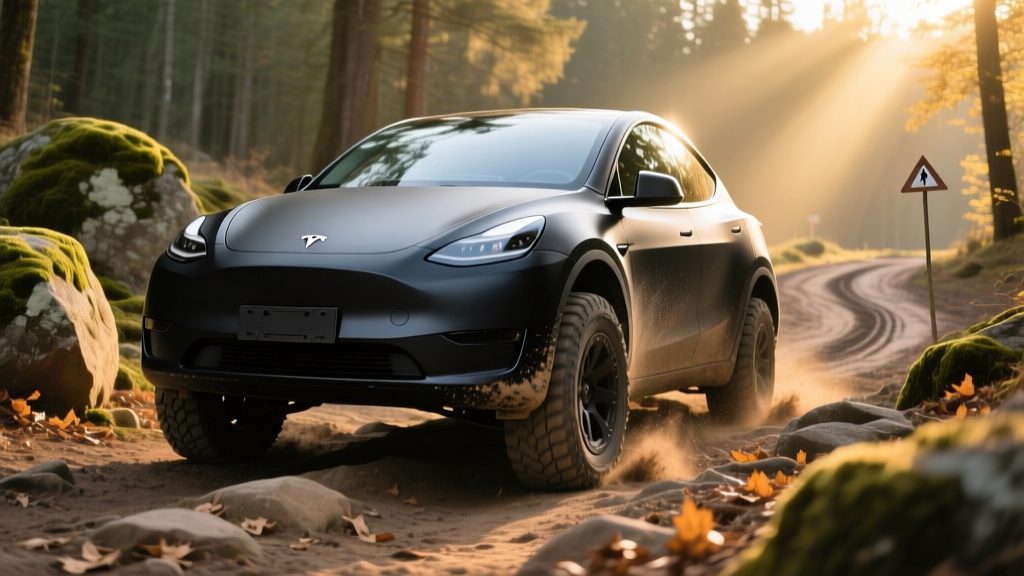
Tesla doesn't build a dedicated off-roader, and the Cybertruck's polarizing design and size keep it out of most trail discussions. But search interest in Tesla off-roading keeps climbing — owners want to know if a Model Y or Model 3 can handle forest roads, sandy washes, and rocky fire trails without ending up on a flatbed. To find out, we spent a weekend pushing a 2026 Tesla Model Y Long Range AWD down unpaved BLM roads, through sandy creek beds, and over moderate rock steps to see where the platform excels and where it falls dangerously short.
The Verdict on Tesla Off-Roading in 2026
The 2026 Model Y Long Range AWD is a competent light-trail and forest-road vehicle — not a rock crawler. Its dual-motor torque vectoring, 6.6 inches of ground clearance, and sophisticated traction control let it handle graded dirt roads, sandy fire trails, and mild rock steps with more confidence than most crossovers. What it cannot do is replace a body-on-frame SUV on technical trails. If your "off-roading" means dispersed camping, ski-resort access roads, and national forest two-tracks, the Model Y is surprisingly capable. If you're running Rubicon-grade obstacles, look at a Rivian R1S or a modified Cybertruck instead.
2026 Model Y Long Range AWD: Key Specs
| Spec | Value |
|---|---|
| EPA Range | 320 miles |
| Battery (usable) | ~78 kWh, NMC (2170 cells) |
| Drivetrain | Dual-motor AWD |
| Horsepower | 384 hp (combined) |
| 0-60 mph | 4.8 seconds |
| Ground Clearance | 6.6 in (168 mm) |
| MPGe (combined) | 111 MPGe |
| Efficiency | 28 kWh/100 mi |
| Max DC Fast Charge | 250 kW peak (V3 Supercharger) |
| 10-80% DC Time | ~27 minutes |
| Level 2 Home Charge | 11.5 kW (~44 mi/hr) |
| Cargo (rear seats up) | 30.2 cu ft |
| Cargo (rear seats folded) | 72.1 cu ft |
| Rear Legroom | 38.4 in |
| Towing Capacity | 3,500 lbs |
| Base MSRP | $47,990 |
| Battery Warranty | 8 yr / 120,000 mi |
Real-World Range on the Trail and Highway
EPA sticker: 320 miles
Real-world highway (70 mph, 75°F): ~270-285 miles
Dirt-road / trail average: ~240-260 miles (high rolling resistance, frequent low-speed torque bursts)
Cold weather (30°F, highway): ~220-240 miles
Range is the single biggest liability of Tesla off-roading. Climbing grades, soft sand, and rock crawling push consumption to 400-500+ Wh/mile — more than double the highway average. On our test loop, a 65-mile out-and-back forest trail consumed roughly 28 kWh, meaning a fully charged Model Y could cover about 175 miles of technical trail driving before needing a recharge. Plan routes around Superchargers, carry a portable Level 1 EVSE for emergencies, and precondition the battery before fast-charging stops to maintain peak charge rate.
Charging Speed: DC Fast and Home Level 2
| Charging Level | Peak Power | Miles Added per Hour | Notes |
|---|---|---|---|
| Level 1 (120V) | 1.4 kW | ~5 mi/hr | Emergency / trickle |
| Level 2 (240V, 48A) | 11.5 kW | ~44 mi/hr | Home Wall Connector |
| DC Fast (V3 Supercharger) | 250 kW peak | ~1,000 mi/hr (peak) | 10-80% in ~27 min |
| DC Fast (V4 Supercharger) | ~300 kW peak | ~1,200 mi/hr (peak) | Availability varies |
The Model Y's 250 kW peak is strong, but like all EVs, it doesn't sustain that rate. Expect the charge curve to taper above 55% SoC and drop sharply past 80%. For trail-country travel, Tesla's Supercharger network remains the decisive advantage — Tesla's Supercharger map shows dense coverage along most interstate corridors leading to trailheads, though rural spur roads often lack destination charging.
Trail Capability: What the Model Y Can (and Can't) Do
The Model Y's dual-motor AWD system reacts in milliseconds, vectoring torque to whichever axle has grip. On loose gravel and sand, this is a genuine advantage over mechanical AWD systems with center differentials. The low center of gravity from the under-floor battery pack resists rollovers on side slopes, and the instant torque means no wheel spin-up delay on steep, loose climbs.
What works:
- Graded forest roads and BLM two-tracks
- Sandy fire roads (with tire pressure dropped to ~28 psi)
- Moderate snow and ice (with winter tires)
- Mild rock steps (up to ~8 inches)
- Dispersed camping access
What doesn't:
- Deep sand washes (6.6 inches of clearance isn't enough)
- Technical rock crawling (no skid plates, no low-range gearing)
- Water crossings deeper than 8 inches (no official wading rating)
- Severe articulation trails (independent suspension limits wheel travel)
Aftermarket options are expanding: companies like Unplugged Performance and EV West offer skid plate kits, all-terrain tire fitments, and mild lift spacers. But modifying the suspension may affect warranty coverage — confirm with your service center before lifting.
Pricing, Trims, and Federal Tax Credit
| Trim | MSRP | Est. Price After §30D Credit |
|---|---|---|
| Long Range AWD | $47,990 | ~$40,490* |
| Performance | $52,490 | ~$44,990* |
*Federal tax credit eligibility under IRS §30D depends on three moving targets: buyer income caps ($150K single / $300K joint AGI), vehicle MSRP caps ($80K for SUVs), and battery critical-mineral and component sourcing rules that tighten each year. The Model Y's US-built status and battery sourcing have historically qualified it, but always verify current-year eligibility on the IRS site or with a tax professional before relying on the $7,500 credit. Point-of-sale transfer is available at participating dealers, reducing your out-of-pocket at purchase rather than waiting for tax filing.
Tech, Interior, and Ownership Realities
The 2026 Model Y retains Tesla's minimalist 15.4-inch touchscreen interface, HEPA air filtration ("Bioweapon Defense Mode" — genuinely useful on dusty trails), and available Enhanced Autopilot. Remember: Autopilot and FSD (Supervised) are SAE Level 2 driver-assist systems, not self-driving. You must remain engaged, especially on unpaved roads where lane markings don't exist and the system's camera-based perception struggles with ruts, washboards, and obscured surfaces.
Standout tech:
- Over-the-air updates continuously improve thermal management and regen calibration
- Camp Mode maintains cabin climate overnight (useful for trail camping)
- 360-degree cameras aid on tight forest trails
- Sentry Mode records trailhead parking lots
Notable drawbacks:
- No spare tire — trail flats require a plug kit or tow
- Low front air dam vulnerable to rocks
- Touchscreen-only controls are frustrating with dusty hands
- No roof rails from factory (aftermarket solutions available)
Pros
- Instant dual-motor torque ideal for loose-surface climbs
- Low center of gravity resists rollovers on side slopes
- Supercharger network reaches most trailhead corridors
- Camp Mode enables comfortable backcountry overnight stays
- HEPA filtration excels in dusty environments
Cons
- 6.6-inch ground clearance limits technical trail use
- No factory skid plates or all-terrain tire option
- Range consumption doubles on challenging terrain
- No spare tire — risky for remote trail travel
- Touchscreen controls impractical with gloves or dirt
Who Should Consider Tesla Off-Roading?
Choose the Model Y for off-roading if: Your trail use is mostly graded forest roads, dispersed camping access, ski-resort access roads, and mild two-tracks. You value the Supercharger network for road-tripping to trailheads and want a daily driver that doubles as a light adventure vehicle.
Look elsewhere if: You regularly tackle technical rock crawling, deep sand, or remote trails more than 100 miles from a charger. Consider a Rivian R1S (14.9 inches of clearance, quad-motor torque vectoring, full-size spare) or a used Cybertruck with the off-road package for serious trail work.
Frequently Asked Questions
What is the real-world range of the 2026 Model Y off-road?
On technical trails, expect 240-260 miles from a full charge under moderate conditions. Aggressive rock crawling or deep sand can reduce that to 150-180 miles. Always plan routes with a 30% buffer to the nearest charger.
How fast does it charge at a Supercharger?
The Model Y peaks at 250 kW on V3 Superchargers, adding roughly 200 miles in 15 minutes. A 10-80% session takes approximately 27 minutes with a preconditioned battery.
Does the 2026 Model Y qualify for the federal EV tax credit?
The Model Y has historically qualified for the full $7,500 §30D credit, but eligibility depends on current-year battery sourcing rules, your AGI, and the $80K SUV MSRP cap. Verify on IRS.gov before purchase.
Is it worth buying a Tesla for off-roading vs. a Rivian or Cybertruck?
For light trail use and daily commuting, the Model Y is a strong value. For serious off-roading, the Rivian R1S offers superior ground clearance, approach/departure angles, and a full-size spare. The Cybertruck offers more capability but at a significantly higher price and size.
What are the biggest risks of Tesla off-roading?
The main risks are range stranding (plan conservatively), tire punctures (no spare), and undercarriage damage from rocks (no skid plates from factory). Aftermarket skid plates mitigate the last concern.
Warranty and Long-Term Ownership
Tesla covers the 2026 Model Y's battery and drive unit for 8 years or 120,000 miles (whichever comes first), with a capacity retention threshold of 70%. The limited vehicle warranty is 4 years / 50,000 miles. Off-road use doesn't automatically void the warranty, but damage from impacts, water intrusion beyond rated limits, or suspension modifications can lead to claim denials. Document pre-trail condition with photos and keep records of any aftermarket modifications.
For the latest efficiency data, consult the EPA's fueleconomy.gov listing for the 2026 Model Y. Safety ratings are available via NHTSA.
Bottom line: Tesla off-roading in a 2026 Model Y is viable for light-to-moderate trail use — forest roads, dispersed camping, and ski-area access — where its dual-motor traction and Supercharger access shine. For technical trails, you'll want more ground clearance and armor than the Model Y offers from the factory.