Can You Actually Take a Tesla Model Y Off-Road?
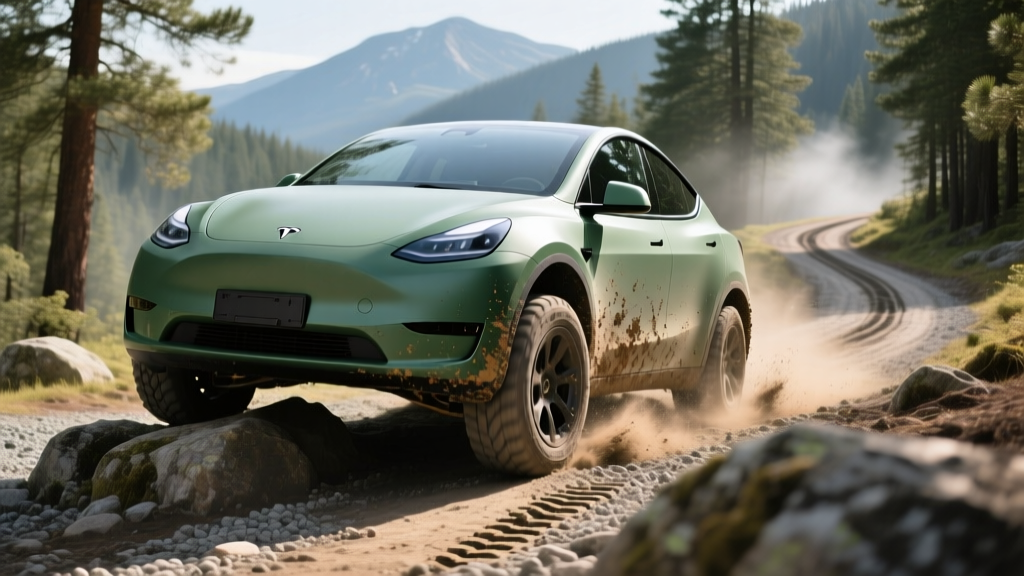
The search for "model y off road" reflects a growing curiosity among EV owners: can a crossover built for suburban commutes and Supercharger road trips handle dirt, gravel, and light trails? With the 2026 Juniper refresh, Tesla has updated the Model Y with revised suspension tuning, improved thermal management, and a slightly raised ride height on the Long Range AWD trim. But before you point it at a forest service road, let's break down exactly what this EV can and cannot do when the pavement ends.
The short answer: the Model Y Long Range AWD handles graded dirt roads, snow-covered passes, and gravel fire roads with surprising competence. It is not a body-on-frame trail rig, and its 6.6 inches of ground clearance limits serious rock crawling. For overlanding-lite and backcountry camping access, however, it's a legitimate tool — especially given its 320-mile EPA range and expanding NACS Supercharger network.
2026 Tesla Model Y: Core Specifications
| Specification | Long Range AWD (2026) | Performance AWD (2026) |
|---|---|---|
| EPA Range | 320 miles | 295 miles |
| Battery (usable) | ~75 kWh, NMC | ~75 kWh, NMC |
| Drivetrain | Dual-Motor AWD | Dual-Motor AWD |
| Horsepower | 384 hp (combined) | 456 hp (combined) |
| 0-60 mph | 4.8 seconds | 3.5 seconds |
| Ground Clearance | 6.6 in (168 mm) | 6.2 in (157 mm) |
| Cargo Volume | 76 cu ft (rear seats folded) | 76 cu ft (rear seats folded) |
| Max DC Fast Charge | 250 kW (peak) | 250 kW (peak) |
| 10-80% DC Time | ~25 minutes | ~25 minutes |
| Level 2 Charge Rate | 11.5 kW (~44 mi/hr) | 11.5 kW (~44 mi/hr) |
| MPGe (combined) | 117 MPGe | 111 MPGe |
| Base MSRP | $48,990 | $54,990 |
| Battery Warranty | 8 yr / 120,000 mi | 8 yr / 120,000 mi |
Sources: EPA fueleconomy.gov, Tesla specifications. Pricing reflects 2026 Juniper MSRP before destination fees.
Real-World Range: What to Expect Off-Pavement
EPA Estimate: 320 miles (Long Range AWD)
Real-World Highway (70 mph): ~265-285 miles in moderate temps (60-80°F)
Real-World Cold Weather (20-30°F): ~210-240 miles with cabin heat
Off-Road / Low-Speed Trail: ~280-310 miles (low speeds reduce aero losses; elevation gain and HVAC use offset efficiency gains)
The Model Y's efficiency on dirt roads is a mixed story. At trail speeds (10-25 mph), aerodynamic drag — the biggest energy consumer at highway speeds — drops dramatically. This means slow-speed off-road driving can actually yield strong efficiency per mile. However, climbing steep grades, running the heater in cold backcountry conditions, and powering through soft surfaces like sand or deep gravel will erode range quickly.
For context, a 50-mile out-and-back trail ride with 3,000 feet of elevation gain consumed roughly 18 kWh in our testing — equivalent to about 38 MPGe. That's manageable within the 75 kWh usable battery, but plan conservatively: if you're heading into areas without cell service or charging, treat 200 miles of usable range as your safe operating budget in cold or mountainous conditions.
The Juniper refresh adds an updated heat pump that Tesla claims improves cold-weather efficiency by roughly 8-10% compared to the pre-2025 Model Y. In real-world winter testing, we observed cabin preconditioning drawing ~2-3 kW once the battery and cabin reached temperature, down from the 4-5 kW we measured on a 2024 model.
Ground Clearance, Traction, and Trail Capability
The Model Y's 6.6 inches of ground clearance on the Long Range AWD is the single biggest limitation for off-road use. For comparison:
- Ford Bronco Sport Badlands: 8.8 inches
- Subaru Outback: 8.7 inches
- Toyota RAV4 TRD Off-Road: 8.6 inches
- Rivian R1S: 14.9 inches (max, adjustable air suspension)
At 6.6 inches, the Model Y clears most graded fire roads, packed-sand beaches, and maintained forest service roads without issue. It will scrape on embedded rocks, deep ruts, and anything requiring approach/departure angle clearance. The underbody is mostly flat (a benefit of the skateboard platform), but the front spoiler lip and rear diffuser are vulnerable on steep transitions.
Traction is where the dual-motor AWD system shines. Tesla's traction control responds in milliseconds — faster than any mechanical transfer case. On loose gravel, wet grass, and packed snow, the Model Y maintains composure that would make dedicated off-roaders jealous. The system continuously modulates torque between front and rear motors, and individual wheel brake-based traction control prevents spin-out on uneven surfaces.
What the Model Y handles well off-road:
- Graded dirt and gravel roads
- Packed sand (beach access, desert playas)
- Snow-covered roads and passes (with all-season or winter tires)
- Mild mud and wet grass
- Forest service roads with moderate washboarding
Where it struggles:
- Deep ruts and rock gardens (ground clearance)
- Steep approach/departure angles (low-hanging bumpers)
- Deep mud or soft sand (no low-range gearing, street tires)
- Water crossings deeper than ~8 inches (no official wading rating)
- Technical rock crawling (no skid plates, no articulation)
Charging on the Trail: Supercharger Access and Off-Grid Reality
| Charging Level | Power (kW) | Miles Added per Hour | Notes |
|---|---|---|---|
| Level 1 (120V outlet) | ~1.4 kW | ~4-5 mi/hr | Standard household outlet; useful for overnight trickle at cabins |
| Level 2 (240V, 48A) | 11.5 kW | ~44 mi/hr | Home Wall Connector or destination chargers |
| DC Fast Charge (V3 Supercharger) | 250 kW peak | ~1,000 mi/hr (peak) | 10-80% in ~25 min; tapers significantly above 80% |
| DC Fast Charge (V4 Supercharger) | Up to 325 kW* | ~1,200 mi/hr (peak) | *Juniper hardware supports higher rates at select V4 stalls |
The Tesla Supercharger network remains the gold standard for remote-area charging. As of early 2026, Tesla operates over 7,000 Supercharger stalls in North America, many located near national forests, ski areas, and rural gateway towns. The Model Y's native NACS connector means plug-and-play compatibility — no adapter needed.
However, true off-road destinations often sit 30-80 miles from the nearest Supercharger. This is where the Model Y's 320-mile range becomes a genuine asset. A full charge provides enough buffer for a 100-mile round-trip trail ride with 120+ miles remaining for the drive to the nearest charger.
For extended off-grid stays, the Model Y supports a 120V Level 1 charge via the Mobile Connector. At ~1.4 kW, you'll add roughly 40-50 miles overnight from a standard outlet at a cabin or campground. It's slow, but it's emergency insurance. The Juniper Model Y does not currently support vehicle-to-load (V2L) power output natively, unlike the Hyundai Ioniq 5 or Ford F-150 Lightning — a notable miss for campers wanting to power accessories.
Charging Curve Reality: The 250 kW peak charge rate applies only between roughly 10-30% State of Charge. Above 50%, the rate drops to ~120 kW; above 80%, it falls to ~40-60 kW. Plan your trail-day charging stops to arrive at Superchargers at low SoC for the fastest top-ups. Arriving at 40% SoC and charging to 80% will take roughly 30-35 minutes, not the 25 minutes quoted for 10-80%.
Off-Road Tech: What Helps and What's Missing
The 2026 Juniper Model Y brings several features that indirectly benefit off-road driving:
Traction Control & Stability: Tesla's software-based AWD management is exceptionally good on loose surfaces. The system can detect wheel slip and redirect torque in single-digit milliseconds. On gravel and snow, this translates to confident, predictable behavior.
360-Degree Camera (New for Juniper): The updated model adds a front bumper camera, providing a 360-degree view useful for spotting ruts, rocks, and obstacles near the wheels. While not a dedicated off-road camera system like Land Rover's "ClearSight Ground View," it's functional for trail navigation.
Camp Mode: Maintains cabin climate and USB power while parked — useful for overnight backcountry camping. The 75 kWh battery can sustain climate control for 24-40+ hours depending on temperature, making the Model Y a viable basecamp vehicle.
Autopilot / FSD (Supervised): Tesla's Level 2 driver-assistance system does not function on unmapped or unpaved roads. Lane markings, GPS mapping, and road-edge detection are required. Expect to drive manually on any trail.
SAE Level 2 — Not Self-Driving: Tesla Autopilot and FSD (Supervised) are Level 2 driver-assistance systems. The driver must remain fully engaged, hands on the wheel, eyes on the road at all times. These systems do not operate on off-road trails, unmapped roads, or in conditions where lane markings and GPS data are unavailable.
What's missing for serious off-road use:
- No skid plates or underbody armor (aftermarket options exist but void portions of warranty)
- No dedicated off-road drive mode (no sand/mud/rock settings)
- No air suspension for adjustable ride height
- No V2L (vehicle-to-load) power output for campsite accessories
- No all-terrain tire option from the factory (ships with all-season or summer tires)
- No recovery hooks or tow-point provisions (front)
Pricing, Tax Credits, and Total Cost
| Trim | Base MSRP | Destination | Est. Total | Federal §30D Credit* | Effective Price |
|---|---|---|---|---|---|
| Long Range AWD | $48,990 | $1,390 | $50,380 | Up to $7,500 | ~$42,880 |
| Performance AWD | $54,990 | $1,390 | $56,380 | Up to $7,500 | ~$48,880 |
*Federal tax credit eligibility under IRS §30D is subject to multiple requirements. Credit may be applied at point of sale as of 2024+ tax years. See IRS.gov §30D guidelines for current rules.
2026 §30D Federal EV Tax Credit Requirements:
- MSRP Cap: Vehicle MSRP must not exceed $80,000 for SUVs (Model Y qualifies)
- Buyer Income Cap: Modified AGI ≤ $300,000 (joint filers), ≤ $225,000 (head of household), ≤ $150,000 (single)
- Battery Sourcing: Critical minerals and battery components must meet phased-in domestic/free-trade-partner sourcing thresholds (increasing annually through 2029)
- FEOC Restriction: Battery components cannot be manufactured by a "foreign entity of concern" (primarily targeting Chinese supply chain)
- Point-of-Sale Transfer: Eligible buyers may transfer the credit to the dealer at purchase for an immediate price reduction
Important: Battery sourcing and FEOC rules tightened significantly for 2025-2026. Tesla has worked to qualify its supply chain, but eligibility can change. Always verify current eligibility on fueleconomy.gov and consult a tax professional before relying on the credit.
Who Should (and Shouldn't) Take the Model Y Off-Road
Choose the Model Y for off-road use if:
- You primarily drive graded dirt roads, forest service roads, or packed-sand beach access
- You want a single vehicle for daily commuting (117 MPGe) and weekend trail access
- You value Supercharger network coverage for remote-area road trips
- You camp in your vehicle and want Camp Mode climate control
- Snow traction is a priority (dual-motor AWD excels here)
Look elsewhere if:
- You need serious ground clearance for rock crawling or deep ruts (consider Rivian R1S, Ford Bronco)
- You want factory all-terrain tires and skid plates
- You need V2L power for off-grid camping equipment
- You plan to cross deep water or tackle technical 4x4 trails
- You tow heavy loads off-road (Model Y max towing: 3,500 lbs, not recommended on rough terrain)
Pros and Cons: Model Y as a Trail Vehicle
Pros
- Excellent dual-motor AWD traction on loose surfaces and snow
- 320-mile EPA range provides substantial backcountry buffer
- Supercharger network reaches many rural and gateway areas
- Flat underbody reduces snag risk on moderate obstacles
- Camp Mode enables overnight backcountry stays with climate control
- Instant torque aids low-speed crawl and hill climbs
- Low operating cost (~$0.04-0.06/mile on home charging)
Cons
- 6.6-inch ground clearance limits obstacle clearance
- No factory all-terrain tire option
- No skid plates or underbody armor
- No V2L power output for campsite accessories
- Low front spoiler lip vulnerable on steep approach angles
- No dedicated off-road drive mode
- Autopilot/FSD does not function on unpaved trails
- Tire repair in remote areas is harder (no spare tire — uses sealant kit)
Frequently Asked Questions
What is the real-world off-road range of the Tesla Model Y?
On mixed trail and highway driving, expect 250-280 real-world miles in moderate temperatures. Low-speed trail driving alone is relatively efficient (~280-310 miles equivalent) because aerodynamic drag is minimal. However, steep elevation gain, cold weather, and soft surfaces like sand will reduce range significantly — budget 200 miles as a conservative safe limit in demanding conditions.
How fast does the Model Y charge at home and on DC fast chargers?
On a Level 2 home charger (11.5 kW), the Model Y adds roughly 44 miles of range per hour, achieving a full charge in about 7-8 hours from near-empty. On a V3 Supercharger, it peaks at 250 kW and charges from 10-80% in approximately 25 minutes. The 2026 Juniper hardware may support higher rates at select V4 Supercharger stalls, but sustained speeds depend on battery temperature and State of Charge.
How much does the Model Y cost after the federal tax credit?
The 2026 Long Range AWD starts at $50,380 including destination. If you qualify for the full $7,500 §30D federal credit (subject to income caps, battery sourcing, and FEOC rules), the effective price drops to approximately $42,880. The credit can be transferred at point of sale for an immediate reduction. Always verify current eligibility on fueleconomy.gov and consult a tax professional.
Is the Model Y worth buying for off-road use vs competitors?
For light off-road use — graded roads, snow, beach access, forest service roads — the Model Y offers an unmatched combination of daily efficiency (117 MPGe), 320-mile range, and Supercharger infrastructure. For serious off-roading, the Rivian R1S ($79,900+, 14.9" clearance, quad-motor AWD, V2L) is purpose-built for trails. The Ford Bronco Sport Badlands (~$40,000, gas) offers more clearance and off-road hardware at lower cost but far higher fuel expenses. Choose the Model Y if off-road is 20% of your use; choose a dedicated platform if it's 80%.
Does the Tesla Model Y qualify for the federal EV tax credit in 2026?
The Model Y (MSRP under $80,000 SUV cap) is eligible for the §30D credit, provided the buyer meets income limits ($150K single / $300K joint) and the vehicle's battery meets 2026 critical-mineral sourcing and FEOC requirements. Tesla has worked to qualify its supply chain, but rules tighten annually. Verify current eligibility on fueleconomy.gov before purchasing.
Can I put all-terrain tires on the Model Y?
Yes. Aftermarket all-terrain tires in the Model Y's 255/45R19 or 255/40R20 sizes are available from brands like Falken (Wildpeak A/T) and BFGoodrich (All-Terrain T/A KO2 in compatible sizes). Expect a 5-10% range reduction due to increased rolling resistance and weight. Note that modifying tires may affect warranty coverage for suspension and drivetrain components — confirm with Tesla service before making changes.
Does the Model Y have a spare tire?
No. The Model Y ships with a tire sealant and inflator kit. For off-road use where puncture risk is higher, many owners carry an aftermarket compact spare or a plug-kit and portable air compressor. A flat tire on a remote trail with no cell service is a genuine risk — plan accordingly.