Quick Verdict: The Efficiency Benchmark in the Compact EV SUV Segment
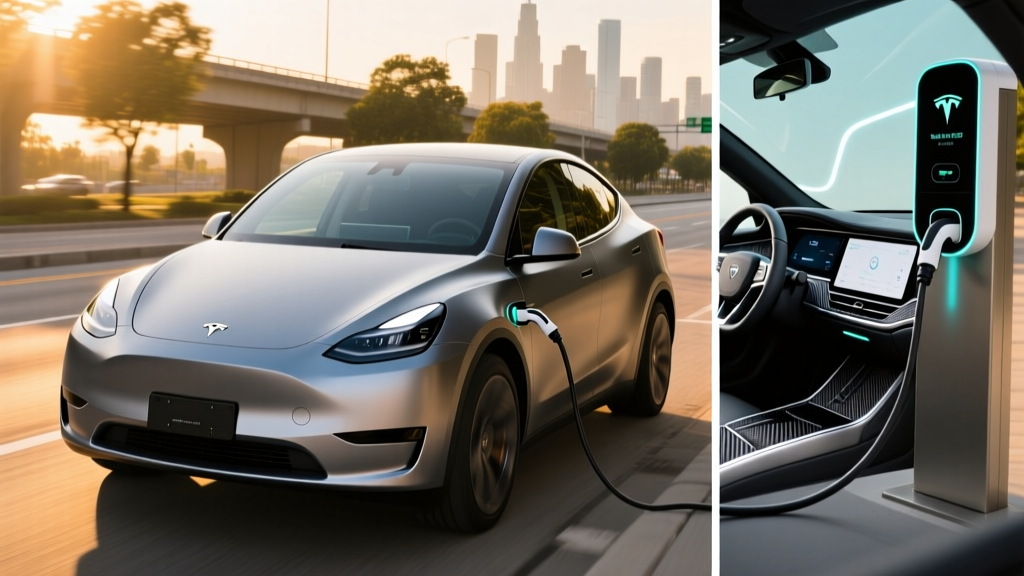
The Tesla Model Y remains the compact electric SUV to beat on efficiency, interior volume, and charging infrastructure access. For 2026, the Long Range AWD model delivers an EPA-estimated 320 miles of range and 122 MPGe combined — figures that translate into lower per-mile electricity costs than nearly every rival in the segment. The addition of the Standard Range RWD trim at $44,990 (before incentives) broadens the lineup, while the Performance AWD variant drops to 3.3 seconds 0-60 mph for buyers who prioritize acceleration over maximum range.
But MPGe stickers and EPA range estimates only tell part of the story. This review reconciles Tesla's official numbers with real-world driving data — highway efficiency, cold-weather losses, sustained DC fast-charge rates, and the actual cost-per-mile you'll pay at home versus on the road.
Tesla Model Y MPGe and kWh/100mi: The Efficiency Numbers
When EV shoppers search for "Tesla Model Y MPG," they're looking for the electric equivalent of miles-per-gallon. The EPA expresses EV efficiency as MPGe (miles per gallon of gasoline equivalent), where 33.7 kWh of electricity equals one gallon of gas. Here's how the 2026 Model Y lineup stacks up per fueleconomy.gov:
| Trim | MPGe (City / Hwy / Combined) | kWh per 100 Miles | EPA Range | Battery (Usable) |
|---|---|---|---|---|
| Long Range AWD | 127 / 115 / 122 | 28 | 320 mi | ~78 kWh (NMC) |
| Performance AWD | 122 / 110 / 117 | 29 | 303 mi | ~78 kWh (NMC) |
| Standard Range RWD | 130 / 117 / 124 | 27 | 280 mi | ~60 kWh (LFP) |
The Long Range AWD's 28 kWh/100mi means you spend roughly $3.92 to drive 100 miles at the national average residential electricity rate of $0.14/kWh. Compare that to a 28 MPG gas crossover at $3.40/gallon — $12.14 per 100 miles. The Model Y costs about one-third as much per mile to fuel at home.
The EPA 320-mile rating for the Long Range AWD assumes a mixed driving cycle. In sustained 70-75 mph highway driving at moderate temperatures, expect 265-285 miles before needing a charge. In sub-freezing winter conditions (below 30°F), plan for 220-250 miles of usable range due to cabin heating loads and battery impedance. City driving with regenerative braking can push actual range to 300-330 miles. The heat pump standard on all 2026 trims mitigates cold-weather losses compared to older resistive-heating EVs.
Battery Chemistry: LFP vs NMC Across the Lineup
Tesla segments the Model Y battery by trim, which has direct implications for longevity, charging habits, and usable capacity.
| Attribute | Standard Range (LFP) | Long Range / Performance (NMC) |
|---|---|---|
| Chemistry | Lithium Iron Phosphate | Nickel Manganese Cobalt |
| Usable Capacity | ~60 kWh | ~78 kWh |
| Energy Density | Lower (heavier pack for same kWh) | Higher (lighter, more range) |
| Cycle Life | 3,000+ cycles to 80% SoH | 1,500-2,000 cycles to 80% SoH |
| Recommended Daily Charge | 100% (LFP prefers full charges) | 80% (charge to 100% before trips) |
| Cold-Weather Performance | More range loss below freezing | Better cold tolerance |
| Cost to Replace (out of warranty) | ~$10,000-$13,000 | ~$13,000-$16,000 |
The LFP pack in the Standard Range model trades range for exceptional cycle life and the ability to charge to 100% daily without accelerating degradation. If you have reliable home charging and a sub-250-mile daily commute, the LFP Model Y is arguably the more durable long-term choice. The NMC packs in the Long Range and Performance trims deliver higher energy density for road-trip range but benefit from daily charge limits of 80%.
Charging Speed: DC Fast Charge, Level 2, and the Supercharger Advantage
Charging speed determines road-trip viability and daily convenience. Here's the 2026 Model Y charging profile across all levels:
| Charging Level | Max Rate | Miles Added per Hour | Notes |
|---|---|---|---|
| Level 1 (120V household) | 1.4 kW | ~4-5 mi/hr | Emergency/trickle only; adds ~50 mi overnight |
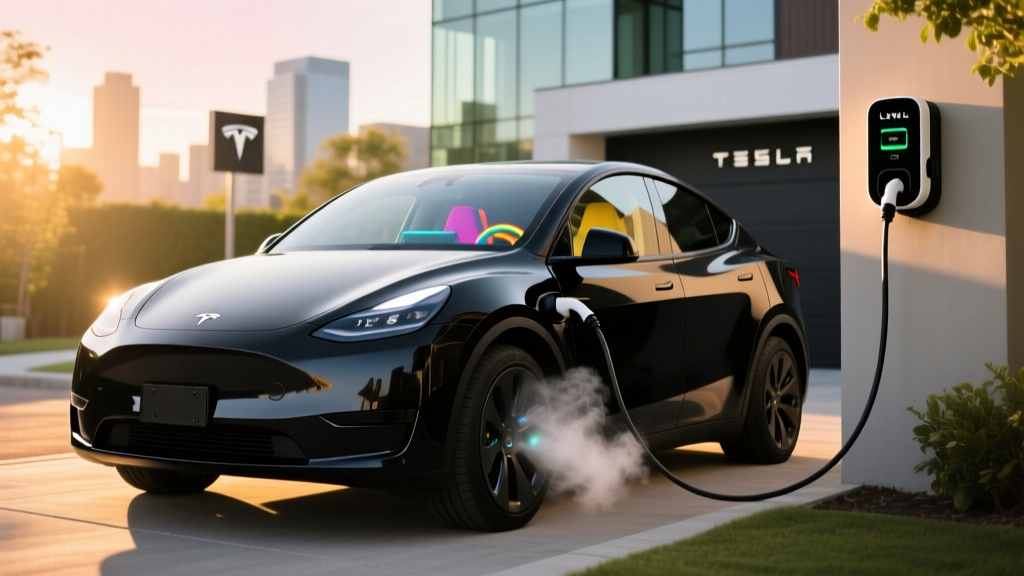
| Level 2 (240V home) | 11.5 kW (48A) | ~37-44 mi/hr | Full charge in ~7-8 hrs (Long Range); requires 60A circuit |
| DC Fast Charge (Tesla Supercharger V4) | 250 kW peak (LR/Perf) | ~162 mi in 15 min | 10-80% in ~25 min; tapers significantly above 80% |
| DC Fast Charge (Standard Range) | 170 kW peak | ~110 mi in 15 min | 10-80% in ~30 min; LFP charge curve is flatter |
Charging curve reality: The Long Range Model Y peaks at 250 kW only between roughly 10-30% State of Charge. From 30-60%, it sustains around 150-180 kW. Above 60%, the rate tapers to under 100 kW, and above 80% it drops below 50 kW. A "15-minute charge" claim applies to a low starting SoC — if you arrive at 40% and charge to 80%, expect closer to 20 minutes at an average of ~120 kW. This taper behavior is why Tesla's navigation system recommends charging to 80%, not 100%, on road trips.
The Model Y uses the NACS (North American Charging Standard) connector natively, giving it direct access to over 25,000 Tesla Supercharger stalls in North America. With the included adapter (or optional CCS adapter for third-party networks), you can also use Electrify America, EVgo, and other CCS-equipped stations, though plug-and-charge reliability is consistently highest on the Supercharger network.
Performance, Drivetrain, and Practicality
| Spec | Long Range AWD | Performance AWD | Standard Range RWD |
|---|---|---|---|
| Drivetrain | Dual-Motor AWD | Dual-Motor AWD | Single-Motor RWD |
| Horsepower | ~384 hp | ~456 hp | ~295 hp |
| 0-60 mph | 4.8 sec | 3.3 sec | 6.6 sec |
| Top Speed | 135 mph | 155 mph | 135 mph |
| Towing Capacity | 3,500 lbs | 3,500 lbs | 2,300 lbs |
| Cargo Volume (rear seats up) | 30.2 cu ft | 30.2 cu ft | 30.2 cu ft |
| Cargo Volume (rear seats folded) | 72.1 cu ft | 72.1 cu ft | 72.1 cu ft |
| Frunk | 4.1 cu ft | 4.1 cu ft | 4.1 cu ft |
| Rear Legroom | 40.5 in | 40.5 in | 40.5 in |
The dual-motor AWD trims deliver confident all-weather traction and genuinely quick acceleration. The Performance trim's 3.3-second 0-60 time outpaces most sports sedans, though the ride is firmer and range drops by 17 miles versus the Long Range. For family duty, the Long Range AWD hits the sweet spot: dual-motor grip, 3,500-lb towing (enough for a small camper or utility trailer), and 72+ cu ft of cargo space with seats folded — more than a Toyota RAV4.
Pricing, Trims, and Federal Tax Credit Eligibility
| Trim | Base MSRP | As-Tested (Typical Options) | §30D Credit Eligibility | Effective Price (with credit) |
|---|---|---|---|---|
| Standard Range RWD | $44,990 | $46,490 (w/ paint + FSD) | Eligible — up to $7,500 | ~$37,490 - $38,990 |
| Long Range AWD | $48,990 | $52,490 (w/ paint + wheels + FSD) | Eligible — up to $7,500 | ~$41,490 - $44,990 |
| Performance AWD | $52,490 | $55,990 (w/ paint + FSD) | Eligible — up to $7,500 | ~$44,990 - $48,490 |
Federal tax credit rules (§30D, per irs.gov): The Model Y qualifies for up to $7,500 in federal clean vehicle credits, but eligibility is not automatic for every buyer. Requirements include:
- MSRP Cap: The Model Y is classified as an SUV, so the cap is $80,000. All current trims clear this threshold.
- Buyer Income Cap: Modified AGI must not exceed $150,000 (single), $225,000 (head of household), or $300,000 (joint). Income is tested in the year of delivery or the prior year — whichever is lower.
- Battery Sourcing: The $7,500 credit splits into $3,750 for critical-minerals sourcing and $3,750 for battery-component manufacturing. Tesla's supply chain has increasingly met both requirements for US-built Model Y vehicles, but sourcing rules tighten annually. Verify current-year compliance on Tesla's website or with your tax professional before purchase.
- Point-of-Sale Transfer: As of 2024, the credit can be transferred to the dealer at purchase, reducing your out-of-pocket cost immediately rather than waiting for a tax refund.
Destination fees ($1,390) and optional paint colors ($1,000-$2,000) push real transaction prices higher. Full Self-Driving (Supervised) adds $8,000 or $99/month — and it is a Level 2 driver-assist system that requires constant driver engagement, not autonomous driving.
Tech, Driver Assistance, and Ownership Experience
The 2026 Model Y's 15.4-inch center touchscreen handles all vehicle controls — there is no traditional instrument cluster. The interface is responsive, and over-the-air updates regularly add features. Apple CarPlay and Android Auto are not supported; Tesla's native infotainment includes streaming apps, navigation with real-time Supercharger routing, and a mobile app with remote climate control, charging status, and vehicle location.
Standard driver-assist features include Tesla Autopilot (adaptive cruise + lane centering, SAE Level 2). The optional Enhanced Autopilot ($6,000) adds automatic lane changes, Navigate on Autopilot, and Smart Summon. Full Self-Driving (Supervised) adds traffic-light and stop-sign recognition and city-street autosteer — but the driver must remain fully attentive at all times. This is not Level 4 autonomy; it is an advanced Level 2 system with a misleading name.
Tesla Autopilot and FSD (Supervised) are SAE Level 2 systems. The driver must keep hands on the wheel, eyes on the road, and be prepared to take over instantly. These systems do not handle construction zones, unmapped roads, severe weather, or erratic traffic reliably. NHTSA has issued multiple investigations into Autopilot-related incidents. Treat these features as convenience aids, not replacements for attentive driving.
Notable drawbacks: the absence of Apple CarPlay/Android Auto frustrates some buyers; the all-touchscreen interface lacks physical buttons for climate and volume; rear-seat headroom is tighter than the Hyundai Ioniq 5; and panel-gap quality, while improved, still lags legacy automakers on some units.
Warranty and Long-Term Ownership
| Coverage | Terms |
|---|---|
| Basic Vehicle Limited Warranty | 4 years / 50,000 miles |
| Battery & Drive Unit Warranty | 8 years / 120,000 miles (Long Range, Performance) |
| Battery & Drive Unit Warranty | 8 years / 100,000 miles (Standard Range) |
| Battery Capacity Guarantee | Minimum 70% retention over warranty period |
Tesla's 8-year battery warranty with a 70% capacity-retention floor is competitive with Hyundai's 10-year/100,000-mile coverage. Real-world data from Tesla's fleet indicates average degradation of roughly 12-15% over 150,000 miles for NMC packs, with LFP packs showing slower degradation curves. Out-of-warranty battery replacement runs $10,000-$16,000 depending on chemistry — a cost worth factoring into 10+ year ownership plans.
Who the Tesla Model Y Suits Best
- You regularly drive 200+ miles between charges (road trips, rural commutes)
- You need AWD for snow/ice and 3,500-lb towing
- Supercharger network access is your top charging priority
- You want the highest efficiency (MPGe) in an AWD electric SUV
- Your daily commute is under 150 miles and you charge at home nightly
- You prioritize lowest purchase price and LFP battery longevity
- You live in a mild climate where cold-weather range loss is minimal
- You don't need AWD or high towing capacity
- Apple CarPlay/Android Auto is non-negotiable
- You prefer physical buttons and a traditional instrument cluster
- You want 800V ultra-fast charging (Ioniq 5/EV6: 10-80% in ~18 min)
- Rear-seat headroom and ride comfort outweigh range-per-dollar
Frequently Asked Questions
What is the real-world range of the Tesla Model Y?
The Long Range AWD's EPA estimate is 320 miles. In real-world highway driving at 70-75 mph, expect 265-285 miles. In winter conditions below 30°F, plan for 220-250 miles. City driving with regenerative braking can reach 300-330 miles. The Standard Range RWD's 280-mile EPA rating translates to roughly 230-250 miles highway, 190-210 miles in cold weather.
How fast does the Tesla Model Y charge at home and on the road?
At home on a 240V Level 2 charger (11.5 kW), the Long Range adds about 37-44 miles per hour and fully charges in 7-8 hours. On a Tesla Supercharger V4, the Long Range peaks at 250 kW and charges 10-80% in approximately 25 minutes. The Standard Range peaks at 170 kW with a 10-80% time of about 30 minutes. Charging slows significantly above 80% SoC due to battery-protection tapering.
How much does the Model Y cost after the federal tax credit?
With the full $7,500 §30D credit applied at point of sale, the Standard Range RWD drops to approximately $37,490, the Long Range AWD to about $41,490, and the Performance AWD to around $44,990. However, eligibility depends on your income (AGI caps apply), the vehicle's battery-sourcing compliance in the delivery year, and the $80,000 SUV MSRP cap. Confirm eligibility with your tax professional and Tesla's current credit documentation before purchasing.
Does the Tesla Model Y qualify for the federal EV tax credit?
Yes, the US-built Model Y currently qualifies for up to $7,500 under IRS §30D, provided the buyer meets income caps ($150K single / $300K joint), the vehicle's battery meets critical-mineral and component-sourcing requirements for the delivery year, and MSRP stays under $80,000 (all trims do). The credit can be transferred to the dealer at purchase as a point-of-sale discount. Rules tighten annually — verify on irs.gov before ordering.
Is the Tesla Model Y worth buying versus key competitors?
The Model Y wins on efficiency (122 MPGe combined), Supercharger network access, cargo volume (72.1 cu ft), and price after incentives. The Hyundai Ioniq 5 and Kia EV6 counter with 800V architecture (faster DC charging at non-Tesla stations), Apple CarPlay/Android Auto, and more comfortable rides. The Ford Mustang Mach-E offers a more traditional SUV feel and BlueCruise hands-free driving on mapped highways. If Supercharger reliability and lowest cost-per-mile matter most, the Model Y remains the default. If charging flexibility and interior comfort outweigh those factors, test-drive the Ioniq 5 and Mach-E before committing.
What are the biggest pros and cons of the Tesla Model Y?
- Best-in-class efficiency (122 MPGe combined, 28 kWh/100mi)
- Supercharger network — most reliable DC charging in the US
- Spacious cargo area (72.1 cu ft) with front trunk
- Strong performance across all trims (4.8s to 3.3s 0-60)
- OTA updates continuously add features
- Competitive pricing after $7,500 federal credit
- No Apple CarPlay or Android Auto
- All-touchscreen controls — no physical buttons for climate/volume
- Rear-seat headroom tighter than some rivals
- FSD name is misleading — it's Level 2, not self-driving
- Insurance costs run 15-25% higher than comparable gas SUVs
- Panel-gap quality inconsistent on some units
What is the Tesla Model Y MPGe in city vs highway driving?
The Long Range AWD achieves 127 MPGe city and 115 MPGe highway. EVs are typically more efficient in city driving because regenerative braking recaptures energy during stops, and there's no aerodynamic drag penalty at lower speeds. Highway MPGe drops because sustained high speeds demand more energy to overcome air resistance. The Standard Range RWD rates slightly higher at 130 MPGe city / 117 MPGe highway due to its lighter single-motor drivetrain.