If you've been searching for detailed Tesla measurements on the 2026 Model Y, you're not alone. The refreshed "Juniper" Model Y — which replaced the prior generation in early 2025 — introduced new exterior proportions, a reworked interior, and updated battery and powertrain tuning. For buyers comparing the Model Y against rivals like the Hyundai Ioniq 5, Ford Mustang Mach-E, or Chevrolet Equinox EV, having exact numbers on range, cargo volume, charging speed, and pricing is essential before signing a purchase agreement.
This profile pulls together every measurement that matters: from EPA range and real-world highway expectations, to battery chemistry and usable capacity, to the exterior dimensions that determine whether it fits your garage. We'll also break down federal tax credit eligibility under IRS §30D rules, because the headline $7,500 figure doesn't apply to every buyer or every trim.
2026 Tesla Model Y Spec Table: The Numbers at a Glance
| Specification | Long Range AWD | Performance AWD | Rear-Wheel Drive (Standard) |
|---|---|---|---|
| EPA Range | 320 mi | 298 mi | 280 mi (est.) |
| Battery (Usable) | ~75 kWh, NMC | ~75 kWh, NMC | ~60 kWh, LFP |
| Peak DC Fast Charge | 250 kW | 250 kW | 170 kW |
| 10–80% DCFC Time | ~25 min | ~25 min | ~30 min |
| Level 2 Home Charge | 11.5 kW (~44 mi/hr) | 11.5 kW (~44 mi/hr) | 7.6 kW (~30 mi/hr) |
| 0–60 mph | 4.8 sec | 3.5 sec | 6.5 sec (est.) |
| Horsepower | 384 hp | 456 hp | 295 hp (est.) |
| Drivetrain | Dual-Motor AWD | Dual-Motor AWD | RWD |
| MPGe (Combined) | 111 MPGe | 104 MPGe | ~115 MPGe (est.) |
| Base MSRP | $48,990 | $53,990 | $44,990 |
Sources: EPA fueleconomy.gov, Tesla.com order pages. RWD figures reflect the anticipated 2026 US-spec Standard trim; confirm at order time.
Real-World Range: What the EPA Sticker Doesn't Tell You
EPA sticker: 320 miles. Real-world expectation: plan for ~260–285 miles on highway road trips (70–80 mph sustained), and ~220–250 miles in sub-freezing winter conditions. City and suburban driving with frequent regenerative braking opportunities gets you closer to the EPA figure, often 300+ miles in mild weather.
The Model Y Long Range's 320-mile EPA figure is competitive, but efficiency in a crossover SUV is heavily influenced by speed, temperature, and terrain. Tesla's heat pump — standard on all 2026 trims — recovers waste heat from the drivetrain to warm the cabin, reducing winter range loss compared to resistive-heater EVs. Still, LFP-equipped RWD models may see slightly more cold-weather degradation because LFP chemistry has higher internal resistance at low temperatures than NMC.
For road-trippers, the practical rule is to plan charging stops at roughly 200–220 miles apart in summer and 160–180 miles apart in winter. Tesla's onboard trip planner handles this automatically, but understanding the real math behind the EPA number prevents unpleasant surprises on I-70 in January.
Battery Chemistry and Capacity: LFP vs. NMC in the Model Y Lineup
Tesla uses two distinct battery chemistries across the 2026 Model Y range, and the choice affects more than just range:
| Attribute | LFP (RWD Standard) | NMC (Long Range / Performance) |
|---|---|---|
| Energy Density | Lower — heavier pack for same kWh | Higher — more range per kg |
| Usable Capacity | ~60 kWh | ~75 kWh |
| Recommended Daily Charge | 100% (LFP benefits from full charges) | 80% daily; 100% for trips only |
| Cycle Life | 3,000+ cycles typical | 1,500–2,000 cycles typical |
| Cold-Weather Performance | Moderate loss at <32°F | Better low-temp discharge |
| Cobalt Content | Zero cobalt | Contains cobalt/nickel |
If you're a daily commuter who charges at home every night, the LFP RWD model's ability to sit at 100% State of Charge without accelerated degradation is a genuine ownership advantage. The Long Range NMC pack delivers more range and better cold-weather usability, but Tesla's app recommends capping daily charging at 80% to preserve long-term State of Health.
Charging Speed: DC Fast Charging and Home Level 2
Charging speed is where Tesla's Supercharger network advantage meets hard physics. The 2026 Model Y Long Range and Performance peak at 250 kW on DC fast chargers — specifically at V3 and V4 Supercharger stalls. However, peak kW is not sustained kW. The charge curve tapers significantly above 50% State of Charge, which is why the 10–80% metric matters more than the headline number.
| Charging Method | Power (kW) | Speed | Notes |
|---|---|---|---|
| DC Fast Charge (Supercharger V3/V4) | Up to 250 kW (LR/Perf) | ~25 min (10–80%) | Peak rate sustained to ~45% SoC, then tapers |
| DC Fast Charge (RWD LFP) | Up to 170 kW | ~30 min (10–80%) | Lower peak due to LFP charge acceptance |
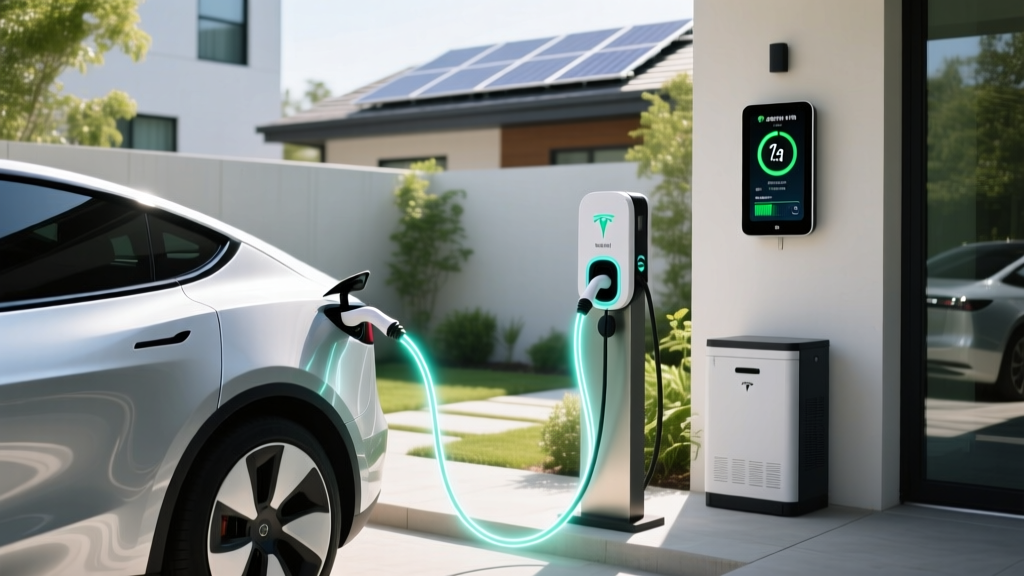
| Level 2 Home (Wall Connector, 48A) | 11.5 kW | ~44 mi/hr added | Requires 60A circuit; full charge in ~7 hr (LR) |
| Level 2 Home (RWD, 32A mobile) | 7.6 kW | ~30 mi/hr added | Sufficient for overnight top-ups on smaller pack |
| Level 1 (120V household) | ~1.4 kW | ~4 mi/hr added | Emergency/trickle only |
Preconditioning matters. If you navigate to a Supercharger in the Tesla app or onboard nav, the battery thermal management system begins warming the pack 10–20 minutes before arrival. Without preconditioning — for example, plugging into a third-party CCS station using a NACS-to-CCS adapter without pre-routing — peak charge rates can drop by 30–50%, especially in cold weather.
Home charging installation typically requires a NEMA 14-60 outlet or a hardwired Tesla Wall Connector. Budget $500–$1,500 for a standard installation on an existing 200A panel; older homes may need a panel upgrade adding $1,500–$3,000. Always get a quote from a licensed electrician before purchasing equipment.
Exterior and Interior Dimensions: Will It Fit Your Life?
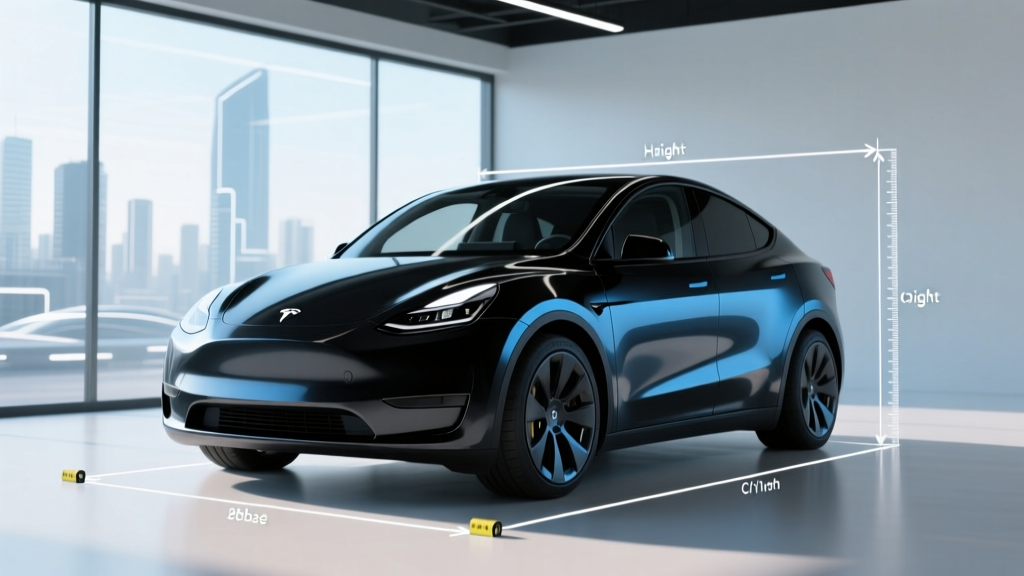
The Juniper refresh added roughly 1.8 inches to the Model Y's overall length compared to the pre-2025 model, primarily from revised front and rear fascias. Here are the key measurements buyers need:
- Overall Length: 188.0 inches
- Wheelbase: 113.8 inches
- Overall Width (mirrors folded): 77.3 inches
- Overall Height: 63.9 inches
- Curb Weight: ~4,300 lbs (LR AWD)
- Ground Clearance: 6.6 inches
Cargo Volume: The 2026 Model Y offers approximately 30.2 cubic feet behind the second row and 72.1 cubic feet with the rear seats folded flat. The front trunk (frunk) adds roughly 4.1 cubic feet — enough for a charging cable bag and a small duffel. Rear legroom measures approximately 38.5 inches, adequate for adults on longer trips, though the sloping roofline cuts into headroom for passengers over 6 feet tall.
If garage fitment is a concern, the 77.3-inch width with mirrors folded is the critical number. Standard single-car garages are typically 96–108 inches wide, leaving roughly 10–15 inches of clearance per side — tight but workable. Power-folding mirrors are standard on 2026 trims.
Pricing, Trims, and Federal Tax Credit Eligibility
| Trim | Base MSRP | Est. After §30D Credit | Destination Fee |
|---|---|---|---|
| RWD (Standard) | $44,990 | ~$37,490* | $1,390 |
| Long Range AWD | $48,990 | ~$41,490* | $1,390 |
| Performance AWD | $53,990 | ~$46,490* | $1,390 |
*Effective price assumes full $7,500 §30D credit eligibility. Actual credit depends on battery sourcing, buyer income, and MSRP caps — see checklist below.
Under current IRS §30D rules, the federal clean vehicle credit offers up to $7,500, split between a $3,750 battery-component requirement and a $3,750 critical-minerals requirement. As of 2026, buyers can transfer the credit to the dealer at point of sale, reducing the purchase price directly rather than waiting for a tax refund.
- MSRP must not exceed $80,000 for SUVs — all Model Y trims qualify on price
- Buyer AGI must not exceed $150,000 (single) / $300,000 (joint) / $225,000 (head of household)
- Battery components must meet North American manufacturing thresholds (phasing in annually)
- Critical minerals must meet US or FTA-partner sourcing thresholds
- Vehicle must undergo final assembly in North America (Fremont and Austin plants qualify)
- Credit is non-refundable — you must have sufficient tax liability unless using point-of-sale transfer
Tesla's battery-sourcing compliance has been in flux as supply chains shift. The Long Range and Performance models with NMC packs have historically met the full $7,500 threshold, but the RWD LFP variant — which sources cells from CATL in China — may qualify for only $3,750 or potentially $0 depending on the model year's specific sourcing rules. Always verify current eligibility on fueleconomy.gov before purchasing.
Performance, Efficiency, and Driving Dynamics
The 2026 Model Y Long Range AWD hits 0–60 mph in 4.8 seconds with 384 combined horsepower from its dual-motor setup. The Performance trim drops that to 3.5 seconds with 456 hp and includes a lowered sport suspension, larger brakes, and a track mode. The RWD model targets efficiency over acceleration at an estimated 6.5-second 0–60.
Efficiency-wise, the Long Range returns 111 MPGe combined (roughly 30 kWh/100mi), which is strong for a dual-motor AWD crossover but trails the Hyundai Ioniq 5's 114 MPGe and the single-motor Equinox EV's 120+ MPGe. The Model Y's advantage is the Supercharger network: 250 kW peak charging on over 30,000 stalls nationwide means road-trip charging infrastructure remains unmatched, even as CCS networks from Electrify America and others expand.
Regenerative braking in the Model Y is aggressive by default, enabling one-pedal driving in most scenarios. Tesla removed the user-adjustable regen setting in recent model years, so expect to adapt to the strong deceleration when lifting off the accelerator.
Technology, Driver Assistance, and Warranty
The Juniper interior features a 15.4-inch center touchscreen, ventilated front seats, ambient lighting, and a rear-seat 8-inch touchscreen for climate and entertainment controls. Tesla's infotainment runs on a proprietary Linux-based OS — no Apple CarPlay or Android Auto, though Bluetooth audio, native navigation, and streaming apps are built in.
Tesla's Autopilot (standard) and Full Self-Driving Supervised ($8,000 option or $99/month subscription) are SAE Level 2 driver-assistance systems. The driver must remain attentive, keep hands on the steering wheel, and be prepared to take over at any moment. FSD is not autonomous driving — only Level 4 services like Waymo operate without a human driver.
Autopilot includes adaptive cruise control and lane-centering on highways. FSD Supervised adds automatic lane changes, on/off-ramp navigation, traffic-light recognition, and city-street steering assistance. In practice, FSD handles many suburban routes competently but still requires intervention for construction zones, complex intersections, and adverse weather. It is not a substitute for an attentive driver.
Warranty coverage:
- Vehicle Limited Warranty: 4 years / 50,000 miles
- Battery & Drive Unit: 8 years / 120,000 miles (Long Range / Performance); 8 years / 100,000 miles (RWD)
- Battery capacity retention threshold: 70% minimum over warranty period
Tesla's battery warranty is competitive but not class-leading — Hyundai backs the Ioniq 5's battery for 10 years / 100,000 miles. That said, real-world Tesla battery degradation data from fleet studies shows most Model Y packs retain 90%+ capacity at 100,000 miles, with the degradation curve flattening significantly after the first 20,000 miles.
- Supercharger network: 30,000+ stalls, 250 kW, highest reliability in public charging
- Strong real-world efficiency for an AWD crossover
- Best-in-class cargo volume among electric compact SUVs
- Over-the-air updates continuously add features
- Point-of-sale tax credit transfer reduces upfront cost
- No Apple CarPlay or Android Auto
- FSD is expensive and still requires full driver attention
- Ride quality on Performance trim is firm over rough pavement
- LFP RWD model may not qualify for full $7,500 tax credit
- No physical buttons — all climate and mirror adjustments via touchscreen
Who Should Buy the 2026 Tesla Model Y?
Choose the Model Y Long Range AWD if: You regularly road-trip 200+ miles and need Supercharger reliability, you live in a climate with real winters, and you need AWD traction plus family cargo space.
Choose the Model Y RWD if: You're a daily commuter with home charging, you want the lowest entry price, and you don't need AWD or maximum range.
Choose the Model Y Performance if: Acceleration and handling matter to you, you'll use track mode on canyon roads, and you accept a firmer ride and reduced range for the sport suspension.
Look elsewhere if: You want Apple CarPlay, prefer physical buttons, need 300+ miles of real-world highway range without charging (consider the Lucid Gravity), or need 3-row seating (consider the Kia EV9).
Frequently Asked Questions
What is the real-world range of the 2026 Tesla Model Y?
The Long Range AWD carries a 320-mile EPA rating. Expect roughly 260–285 miles on sustained highway driving in mild weather, and 220–250 miles in freezing temperatures. The RWD model's real-world highway range is closer to 230–250 miles in mild conditions.
How fast does the Model Y charge at home and on road trips?
On a Tesla Supercharger (V3/V4), the Long Range peaks at 250 kW and charges from 10–80% in about 25 minutes. At home on a 48A Wall Connector (11.5 kW), a full charge takes roughly 7 hours. The RWD model peaks at 170 kW DC and charges at 7.6 kW on Level 2.
Does the 2026 Model Y qualify for the $7,500 federal EV tax credit?
It depends on the trim and your income. All trims fall under the $80,000 SUV MSRP cap and are assembled in the US. However, the LFP battery in the RWD model may not meet critical-minerals sourcing requirements, potentially reducing the credit to $3,750 or $0. Income caps apply: $150K single / $300K joint. Verify on fueleconomy.gov at purchase time.
Is the Model Y worth buying vs. the Hyundai Ioniq 5 or Ford Mustang Mach-E?
The Model Y wins on Supercharger network access, cargo volume, and software. The Ioniq 5 offers faster 10–80% charging on 350 kW CCS chargers (~18 min), a longer battery warranty, and CarPlay. The Mach-E offers a more traditional interior with physical controls. If public charging reliability is your top priority, Tesla's network advantage is difficult to match in 2026.
What are the biggest drawbacks of the 2026 Model Y?
No smartphone integration (CarPlay/Android Auto), touchscreen-only controls for climate and mirrors, a firm ride on the Performance trim, and uncertainty around the full tax credit on the LFP RWD variant. FSD's $8,000 cost is hard to justify given it remains a Level 2 system requiring constant supervision.
How long will the Model Y battery last?
Tesla warranties the battery for 8 years / 120,000 miles (Long Range) with a 70% capacity-retention floor. Fleet data suggests most packs retain over 90% capacity at 100,000 miles. Replacement cost, if needed out of warranty, ranges from $12,000–$18,000 depending on pack size and labor, though full replacements are rare before 200,000 miles.
Data sourced from EPA fueleconomy.gov, Tesla.com, and IRS.gov §30D guidance. Specifications and tax credit rules are subject to change; verify at time of purchase.