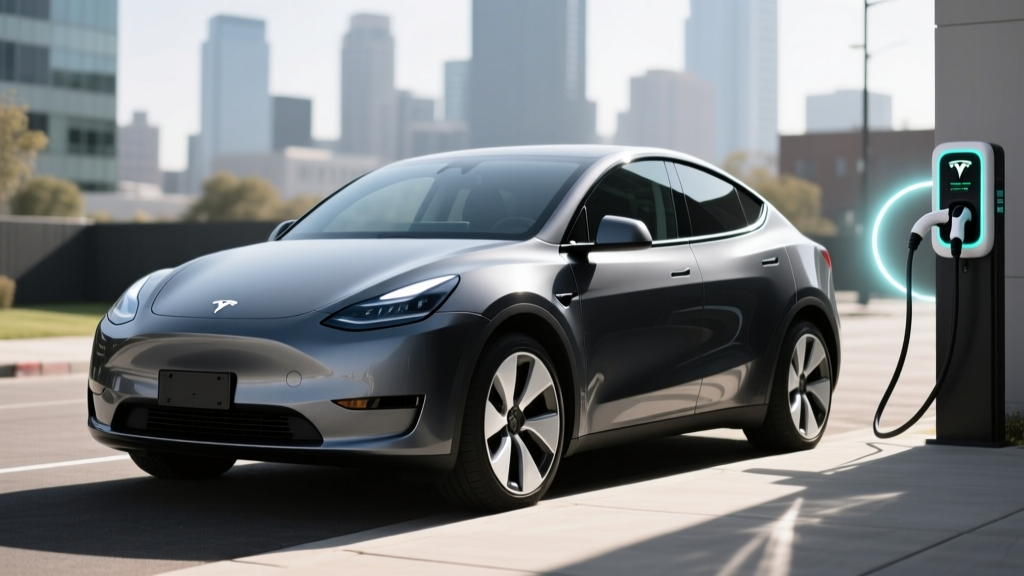
The Tesla Model Y remains the best-selling electric vehicle in the United States, but its dominance hasn't come without scrutiny. Search forums, owner groups, or NHTSA databases and you'll find the phrase Tesla malfunction attached to everything from phantom braking events to 12V battery failures and panel-gap complaints. For buyers in 2026, the question isn't whether the Model Y is a capable EV — it's whether Tesla's quality control and software reliability have caught up to the hardware.
We've spent extensive time with the current-generation Model Y (the "Juniper" refresh introduced in early 2025), tracking its EPA efficiency, charging behavior, and the most commonly reported issues. Here's what the data actually shows.
2026 Tesla Model Y: Quick Verdict
The refreshed Model Y Long Range AWD delivers 320 miles of EPA-estimated range, peaks at 250 kW on DC fast charging, and starts at $44,990 before incentives. It is still the default EV crossover for buyers who prioritize Supercharger access and over-the-air updates. However, owners should go in with eyes open about Tesla's inconsistent build quality, the ongoing transition from CCS to NACS connectors across the public network, and the reality that driver-assist features like Autopilot remain SAE Level 2 — not self-driving.
| Spec | Value |
|---|---|
| EPA Range | 320 miles |
| Battery Capacity | 75 kWh usable (NMC lithium-ion) |
| Drivetrain | Dual-motor AWD |
| Horsepower | 384 hp |
| 0–60 mph | 4.8 seconds |
| DC Fast Charge (peak) | 250 kW |
| 10–80% DC Time | ~27 minutes |
| Level 2 Home Charge | 11.5 kW (~44 mi/hr) |
| EPA Efficiency | 117 MPGe combined / 29 kWh/100 mi |
| Cargo Volume | 30.2 cu ft (rear seats up) / 72.1 cu ft (folded) |
| Base MSRP | $44,990 |
| Battery Warranty | 8 years / 120,000 miles |
Real-World Range: What the EPA Sticker Doesn't Tell You
EPA Estimate: 320 miles
Real-World Highway (70 mph, mild weather): ~270–285 miles
Real-World Highway (32°F / 0°C): ~230–250 miles
City / Mixed Commute: ~290–310 miles (regen-friendly)
Tesla's heat pump gives the Model Y an edge over many competitors in cold weather, but physics still wins. Expect a 15–25% range reduction in freezing temperatures at sustained highway speeds, according to testing data aggregated by fueleconomy.gov. City driving with frequent stops lets regenerative braking recapture energy, pushing real-world efficiency closer to the EPA sticker.
The Model Y's 75 kWh usable battery pack uses NMC (nickel manganese cobalt) chemistry, which offers higher energy density than LFP but is more sensitive to sustained high states of charge. Tesla recommends daily charging to 80–90% for NMC packs and 100% only before long trips. This is a meaningful ownership nuance that new EV buyers often overlook.
Charging Speed: Supercharger Network vs. Third-Party DC Fast Charging
| Charging Level | Power (kW) | Speed (miles added/hr) | Notes |
|---|---|---|---|
| Level 1 (120V household) | ~1.4 kW | ~5 mi/hr | Emergency / trickle only |
| Level 2 (240V home Wall Connector) | 11.5 kW | ~44 mi/hr | Overnight full charge in ~7 hrs |
| DC Fast (Tesla Supercharger V3) | 250 kW peak | ~175 mi in 15 min | NACS native; CCS via adapter |
| DC Fast (third-party CCS station) | Up to 250 kW | Varies by station | Requires CCS adapter (included on new models) |
The Model Y's charge curve peaks at 250 kW from roughly 10–30% state of charge, then tapers progressively. Expect sustained rates around 150 kW through 50% SoC, dropping to ~80 kW by 70%, and ~40 kW above 85%. This taper is normal for NMC chemistry and thermal management behavior — but it means a 10–80% session takes roughly 27 minutes, not the "15 minutes" marketing sometimes implies.
With Tesla opening its Supercharger network to non-Tesla EVs (via NACS or Magic Dock adapters), congestion at popular corridors has increased. Plan road trips with buffer: arriving at a Supercharger with 10% SoC in peak travel season can mean a 10–15 minute queue before plugging in.
Performance and Driving Dynamics
The Long Range AWD's dual-motor setup delivers 384 horsepower and a 4.8-second 0–60 mph time. Acceleration is immediate and linear — typical of EV torque delivery. The Juniper refresh improved ride quality with retuned dampers and additional sound insulation, narrowing the gap with the Hyundai Ioniq 5 and BMW iX in cabin quietness.
Handling is competent but not sporty. The Model Y's 4,400-pound curb weight is noticeable on twisty roads, and the steering remains numb compared to a Porsche Macan Electric or even a Ford Mustang Mach-E GT. This is a comfort-oriented crossover, not a driver's car.
Reported Tesla Malfunction Issues: What Owners Actually Experience
The term "Tesla malfunction" covers a broad spectrum. Based on NHTSA complaint databases, IIHS reliability surveys, and owner community reports, here are the most frequently cited issues for 2024–2026 Model Y vehicles:
- Phantom Braking (Autopilot): The vehicle unexpectedly applies brakes when no obstacle is present. This has been the subject of an ongoing NHTSA investigation. Tesla has issued multiple over-the-air software updates to address it, but reports persist intermittently.
- 12V Battery Failures: The auxiliary 12V lithium battery (which powers electronics, door handles, and the touchscreen) can fail prematurely, leaving the vehicle unable to unlock or start. Tesla switched from lead-acid to lithium 12V batteries in 2022, but failures still occur, often without warning.
- Panel Gaps and Paint Quality: While improved post-2024, inconsistent body panel gaps and paint defects remain more common than on equivalently priced legacy-brand EVs. This is cosmetic, not mechanical, but affects resale perception.
- Heat Pump Failures (pre-2025 models): Earlier Model Y heat pumps had a higher failure rate in extreme cold. The Juniper refresh addressed this with a redesigned unit, but owners of 2022–2024 models should check service bulletins.
- Touchscreen / MCU Glitches: Occasional screen freezes or reboots, typically resolved via OTA updates or a soft reset (holding both scroll wheels).
None of these issues are universal — the vast majority of Model Y owners report no major malfunctions — but the frequency is higher than what Toyota or Hyundai owners typically experience. Tesla's mobile service and over-the-air fix capability partially offset this, reducing the need for service-center visits.
Pricing, Trims, and Federal Tax Credit Eligibility
| Trim | MSRP | Est. Price After §30D Credit* |
|---|---|---|
| Long Range AWD | $44,990 | $37,490 |
| Performance AWD | $48,990 | $41,490 |
*Federal §30D credit eligibility requires buyer income ≤$150K single / $300K joint, vehicle MSRP ≤$55,000 (SUVs), and compliance with battery critical-mineral and component sourcing rules. Credit can be transferred to the dealer at point of sale as a price reduction. Verify current-year rules at irs.gov before purchase. Eligibility varies by VIN and production date.
The Model Y qualifies for up to $7,500 under the §30D clean vehicle credit for eligible buyers, provided the specific VIN meets the battery-sourcing requirements that phase in progressively each year. Tesla publishes a tax-credit eligibility page on its website, and the point-of-sale transfer option means you can apply the credit as an instant discount rather than waiting for a tax refund.
However, income caps are strict: modified adjusted gross income (MAGI) must not exceed $150,000 for single filers, $225,000 for heads of household, or $300,000 for joint filers. If your income exceeds these thresholds, the used-EV credit (§25E) may apply if you purchase a qualifying pre-owned Model Y instead.
Interior, Tech, and Daily Usability
The Juniper interior is markedly improved over the pre-2025 Model Y. Ambient lighting, ventilated front seats, a rear-seat touchscreen, and a power-folding second row are now standard on Long Range trims. Cargo capacity remains a strong point: 30.2 cubic feet behind the rear seats and 72.1 cubic feet with them folded, plus a small front trunk (frunk) for charging cables or a backpack.
The 15.4-inch center touchscreen handles all vehicle controls — there are no physical buttons for climate, mirrors, or glovebox. This minimalist approach divides opinion. Returning Tesla owners adapt quickly; first-time EV buyers from legacy brands often find the lack of tactile controls frustrating, particularly for climate adjustments while driving.
Autopilot (basic) is standard and includes traffic-aware cruise control and lane centering. Full Self-Driving (Supervised) remains a $8,000 add-on or $99/month subscription. Important: FSD is SAE Level 2, meaning the driver must remain fully engaged, hands on or near the wheel, and eyes on the road at all times. It is not autonomous driving. Tesla's marketing terminology has drawn regulatory scrutiny, and buyers should evaluate FSD based on its current capabilities — capable highway lane changes and navigation assist — not its aspirational name.
How the Model Y Stacks Up Against Key Competitors
The Model Y's primary rivals in 2026 are the Hyundai Ioniq 5, Kia EV6, Ford Mustang Mach-E, and the upcoming BMW iX2. Here's a functional comparison:
- Hyundai Ioniq 5 (Long Range AWD): 305 mi EPA, 350 kW peak DC charging (10–80% in ~18 min), $49,500. Faster charging, 800V architecture, but slightly less range and no NACS native port (CCS, with NACS adapter available).
- Ford Mustang Mach-E (Extended Range AWD): 312 mi EPA, 150 kW peak DC, $48,095. More engaging to drive, but slower charging and smaller Supercharger-equivalent network access.
- Kia EV6 (GT-Line AWD): 292 mi EPA, 350 kW peak DC, $52,500. Similar 800V fast-charge advantage to Ioniq 5, premium interior, but higher starting price.
The Model Y's enduring advantage is the Supercharger network. While competitors now access Tesla Superchargers via adapters (NACS or Magic Dock), the experience is still most seamless in a native Tesla: plug in, walk away, billing is automatic. For road-trip-heavy buyers, this remains a meaningful differentiator — though the gap is closing as Electrify America, EVgo, and other networks expand and improve reliability.
Who Should Buy the 2026 Model Y — and Who Should Look Elsewhere
Choose the Model Y if:
- You road-trip frequently and value seamless Supercharger access
- You want the longest proven OTA update track record in the EV market
- You prioritize cargo space and efficiency over sporty handling
- You're comfortable with a touchscreen-only control interface
Look at competitors if:
- Build quality consistency is a top priority (consider Hyundai/Kia)
- You want the fastest DC charging available (Ioniq 5 / EV6 at 350 kW)
- You prefer physical buttons and a more traditional cockpit layout
- You want a more engaging driving experience (Mach-E GT, BMW iX2)
Frequently Asked Questions
What is the real-world range of the 2026 Tesla Model Y?
The EPA estimates 320 miles for the Long Range AWD. In real-world highway driving at 70 mph in mild weather, expect 270–285 miles. In freezing temperatures, highway range drops to roughly 230–250 miles. City commuting with regenerative braking can approach 290–310 miles.
How fast does the Model Y charge at home and on the road?
On a Level 2 home charger (11.5 kW), the Model Y adds roughly 44 miles of range per hour, fully charging overnight in about 7 hours. On a Tesla Supercharger V3, it peaks at 250 kW and charges from 10–80% in approximately 27 minutes, though the rate tapers significantly above 50% state of charge.
Does the 2026 Model Y qualify for the $7,500 federal EV tax credit?
It can, but eligibility depends on three factors: your income (MAGI must be ≤$150K single / $300K joint), the vehicle MSRP (must be ≤$55,000 for SUVs), and battery-sourcing compliance (critical minerals and component manufacturing requirements that tighten annually). Check irs.gov and Tesla's own credit eligibility page for the specific VIN you're considering. The credit can be applied at point of sale as an instant price reduction.
Is the Tesla Model Y worth buying over the Hyundai Ioniq 5 or Ford Mach-E?
If Supercharger network access and OTA software updates are your top priorities, yes. If you value faster DC charging (Ioniq 5 at 350 kW), more traditional interior controls, or stronger build-quality consistency, the Ioniq 5 or Mach-E may be a better fit. All three are excellent EVs — the decision comes down to your charging access, driving preferences, and tolerance for Tesla's minimalist interface.
What are the most common Tesla malfunction reports for the Model Y?
The most frequently reported issues include phantom braking under Autopilot (subject to ongoing NHTSA review), 12V auxiliary battery failures, inconsistent panel gaps, and occasional touchscreen freezes. Most are addressable via over-the-air updates or mobile service. The Juniper refresh (2025+) has improved build quality and heat-pump reliability over earlier model years.
What is the battery warranty on the 2026 Model Y?
Tesla covers the battery and drive unit for 8 years or 120,000 miles (whichever comes first), with a minimum 70% capacity retention guarantee. If the battery degrades below 70% of its original capacity within the warranty period, Tesla will repair or replace it at no cost.