Tesla Model Y Long-Term Ownership Review: What Life Is Really Like With the Best-Selling EV
The Tesla Model Y has become one of the most popular electric vehicles on the planet, and for good reason. It blends practicality, range, performance, and access to Tesla's Supercharger network into a package that appeals to families, commuters, and road-trippers alike. But how does it hold up after tens of thousands of miles? In this long-term ownership review, we dig deep into real-world experiences covering range, charging, interior quality, driving dynamics, and the true cost of owning a Model Y over an extended period. Whether you are considering a new or used Model Y, this comprehensive breakdown will help you make an informed decision.
If you are also exploring other electric SUVs, be sure to check out our best electric SUVs roundup and our head-to-head EV comparison tool to see how the Model Y stacks up against rivals.
Vehicle Overview
The Tesla Model Y is a compact electric crossover built on the same platform as the Tesla Model 3 sedan. Available in Long Range, Performance, and (in select markets) a Standard Range rear-wheel-drive configuration, the Model Y offers seating for up to seven passengers with an optional third row. Its fastback-inspired silhouette gives it a sporty look while preserving generous cargo space behind the second row.
According to fueleconomy.gov, the Long Range AWD variant carries an EPA-estimated range of up to 330 miles, while the Performance trim is rated at approximately 303 miles. Both versions feature dual-motor all-wheel drive, heat pump climate control, and access to Tesla's extensive Supercharger network — a significant advantage that continues to shape the ownership experience.
Over a long-term test spanning well beyond 30,000 miles, we evaluated every aspect of daily life with the Model Y, from stop-and-go commuting and grocery runs to cross-country road trips and winter driving in sub-freezing temperatures. Below is our detailed analysis.
Real-World Range & Efficiency
EPA range estimates provide a useful baseline, but real-world results depend heavily on driving style, terrain, temperature, and climate control usage. Over the course of our long-term test, the Model Y Long Range AWD consistently delivered between 270 and 310 miles on a full charge during moderate weather (60–80°F). Highway driving at sustained speeds of 70–75 mph typically yielded around 260–280 miles, while mixed city and suburban driving pushed efficiency closer to the EPA figure.
Winter conditions tell a different story. In temperatures below 32°F, range dropped by roughly 20–30%, landing between 210 and 250 miles on a full charge. The integrated heat pump helps mitigate this loss compared to older EVs that rely on resistive heating, but cold weather remains a factor for all battery-electric vehicles. Preconditioning the battery while plugged in — a feature Tesla handles elegantly through scheduled departure settings — recovers a meaningful amount of that lost range.
Efficiency measured in watt-hours per mile averaged around 260–280 Wh/mi in fair conditions, which is impressive for a crossover of this size and weight. Independent testing by Edmunds has corroborated similar figures, placing the Model Y among the most efficient vehicles in its class. Regenerative braking, which can be set to standard (one-pedal driving), contributes significantly to city efficiency and reduces brake wear over time.
For a broader look at how range compares across competitors, see our EV range comparison guide.
Charging Speed & Infrastructure
One of the Tesla Model Y's strongest selling points is access to the Supercharger network. At a V3 Supercharger (capable of delivering up to 250 kW), the Model Y can add approximately 200 miles of range in about 15 minutes under ideal conditions. In our experience, a typical 10–80% session took roughly 25–30 minutes, which translates to a comfortable rest stop on road trips.
Charging curves matter, and Tesla manages them well. Peak charging rates of around 240–250 kW are achievable when the battery state of charge is low (below 20%) and the battery is properly preconditioned — something the car handles automatically when you navigate to a Supercharger. As the battery fills, the rate tapers progressively, which is standard behavior for lithium-ion packs.
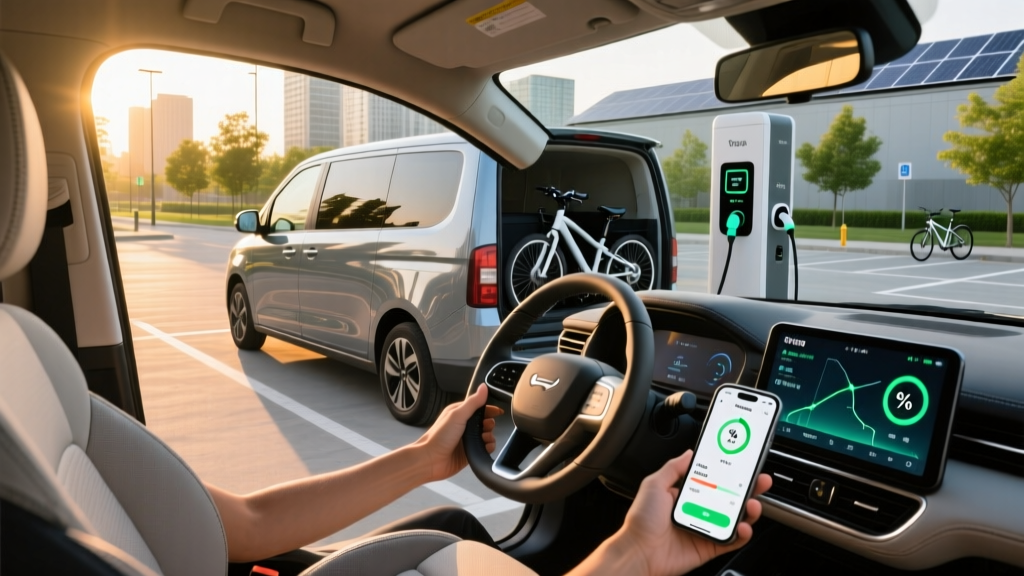
At home, charging on a 240-volt Level 2 wall connector (up to 48 amps) adds approximately 44 miles of range per hour, meaning a full overnight charge from 20% to 100% takes roughly 7–8 hours. For most owners, plugging in each evening and waking up to a full or nearly full battery eliminates range anxiety entirely during daily use.
With Tesla opening the Supercharger network to non-Tesla EVs via the NACS standard, the competitive landscape is shifting. However, Tesla owners still benefit from the most seamless plug-and-charge experience available — no apps, no RFID cards, just plug in and walk away. For more on charging infrastructure, visit our home EV charging guide.
Interior, Technology & Daily Usability
The Model Y's interior follows Tesla's minimalist philosophy: a single 15-inch touchscreen dominates the dashboard, and nearly all vehicle functions — from climate control to mirror adjustment — are managed through it. This approach polarizes opinion. Some owners appreciate the clean, uncluttered aesthetic, while others miss physical buttons for frequently used controls like fan speed and temperature.
Build quality has been a point of contention in earlier production years, with reports of panel gaps, paint imperfections, and rattles. In our long-term vehicle, build quality was noticeably improved, with tight panel gaps and no significant interior squeaks or rattles after extended use. Tesla's ongoing manufacturing refinements at Gigafactories appear to be paying dividends.
The 15-inch touchscreen runs Tesla's proprietary infotainment software, which is responsive, intuitive, and regularly updated via over-the-air (OTA) software improvements. Features like navigation with real-time Supercharger routing, streaming media (Spotify, Apple Music, Netflix, YouTube), a built-in web browser, and even games make the Model Y feel like a tech-forward lounge on wheels. The premium audio system with 14 speakers delivers excellent sound quality that rivals luxury-brand competitors.
Cargo space is generous: 30.2 cubic feet behind the second row and up to 72.1 cubic feet with the rear seats folded. The front trunk (frunk) adds another 4.1 cubic feet of secure, weatherproof storage. The optional third row is best suited for small children and significantly reduces cargo capacity when deployed, but it provides flexibility that many competing electric SUVs lack.
For a closer look at how the Model Y's interior compares to rivals, read our best electric SUVs comparison.
Driving Dynamics & Performance
The Model Y Long Range AWD produces approximately 384 horsepower and 376 lb-ft of torque from its dual electric motors, enabling a 0–60 mph sprint in about 4.8 seconds. The Performance variant shaves that to roughly 3.5 seconds, putting it firmly in sports-car territory despite its crossover proportions. Instant torque delivery makes the Model Y feel quick in everyday driving, especially during highway merges and city acceleration.
Ride quality has historically been on the firmer side, which benefits handling but can transmit more road imperfections than some competitors. Tesla has made incremental suspension updates over successive production runs, and our long-term test vehicle exhibited a more compliant ride than earlier examples we have driven. Body roll is well-controlled for a tall vehicle, and the low center of gravity afforded by the floor-mounted battery pack gives the Model Y a planted, confident feel through corners.
Steering is precise and offers three selectable modes (Comfort, Standard, Sport), though feedback remains somewhat numb — a common trait in electric vehicles with electric power steering. Braking performance is strong, and the one-pedal driving experience enabled by aggressive regenerative braking means you rarely need to touch the brake pedal in normal driving. As a result, brake pad and rotor wear is minimal; many Tesla owners report original brake pads lasting well beyond 80,000 miles.
Tesla's Autopilot and optional Full Self-Driving (FSD) capability remain industry benchmarks for driver-assistance technology. While FSD does not deliver true autonomous driving, features like Navigate on Autopilot, automatic lane changes, and Smart Summon add genuine convenience on highway journeys. However, drivers must remain attentive at all times, and the system's performance can vary depending on road markings and weather conditions.
Ownership Costs & Maintenance
One of the most compelling arguments for the Tesla Model Y is its relatively low cost of ownership compared to internal-combustion rivals. Without an engine, transmission, or exhaust system, the Model Y eliminates oil changes, spark plugs, timing belts, and many other routine maintenance items. Tesla's recommended service schedule is minimal: cabin air filter replacement every 2–3 years, brake fluid checks every 3 years, and tire rotations every 6,250 miles.
Electricity costs vary by region, but charging at home at an average rate of $0.13–$0.16 per kWh translates to roughly $0.04–$0.05 per mile — significantly less than the $0.12–$0.15 per mile most gasoline-powered compact SUVs cost to fuel. Supercharger pricing is higher (typically $0.25–$0.40 per kWh depending on location), but most owners do the bulk of their charging at home.
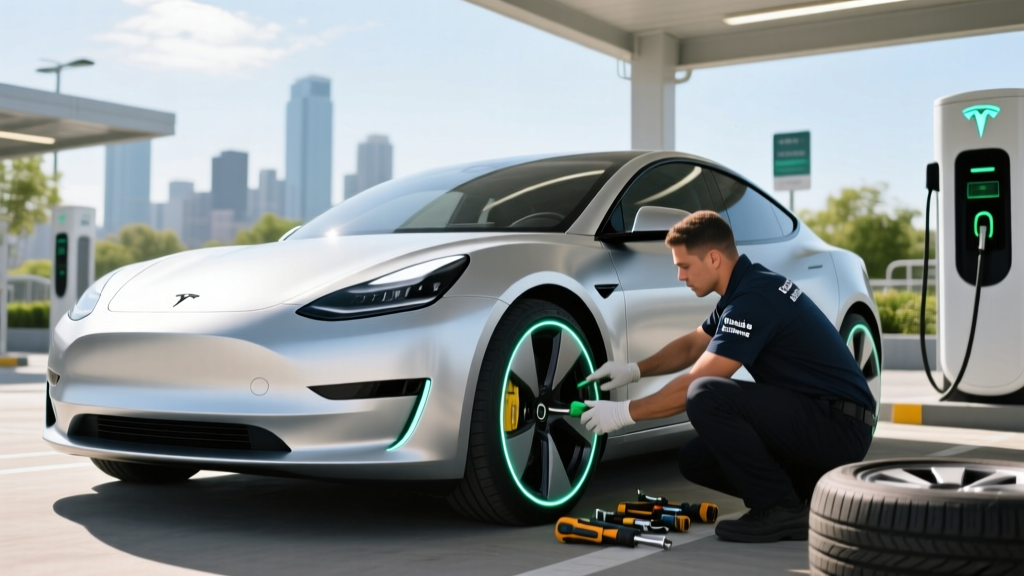
Tire wear is the most notable ongoing expense. The Model Y's weight (approximately 4,400 lbs) and instant torque can accelerate tire wear, particularly on the rear axle. Expect to replace tires every 25,000–40,000 miles depending on driving habits and tire compound. A set of quality all-season or touring tires typically costs between $800 and $1,200 installed.
Insurance premiums for the Model Y tend to be higher than average for its class, reflecting the vehicle's performance capabilities and repair costs. Shopping around and leveraging Tesla's own insurance program (available in many states) can yield competitive rates. Depreciation has historically been favorable compared to many EVs, though market fluctuations and price cuts on new models can affect resale values.
Overall, total cost of ownership over a typical five-year period is competitive with — and often lower than — comparably priced gasoline crossovers when fuel savings and reduced maintenance are factored in. For a detailed breakdown, explore our EV total cost of ownership calculator.
Pros & Cons
Pros
- Class-leading range and efficiency — The Model Y Long Range delivers up to 330 miles of EPA-estimated range, outpacing most rivals in the compact electric SUV segment.
- Supercharger network access — Tesla's proprietary charging infrastructure remains the most reliable and widespread fast-charging network available.
- Over-the-air updates — Continuous software improvements add new features, refine performance, and enhance the ownership experience without dealership visits.
- Low maintenance costs — Fewer moving parts mean fewer things to break and less money spent on routine servicing.
- Strong performance — Even the Long Range variant delivers brisk acceleration and confident handling.
- Spacious, practical interior — Generous cargo capacity and optional third-row seating make it a versatile family vehicle.
Cons
- Minimalist interior isn't for everyone — The lack of physical buttons and a traditional instrument cluster requires an adjustment period.
- Firm ride quality — Despite improvements, the suspension can feel stiff over rough pavement compared to comfort-oriented rivals.
- Higher insurance costs — Premiums can be elevated relative to similarly priced gasoline crossovers.
- Tire wear — The vehicle's weight and torque delivery lead to faster tire consumption than lighter vehicles.
- Cold-weather range loss — While mitigated by the heat pump, winter range drops remain a consideration for owners in cold climates.
- Visibility — The sloping roofline and thick rear pillars create blind spots that the camera system only partially addresses.
Key Specifications Comparison
| Specification | Model Y Long Range AWD | Model Y Performance |
|---|---|---|
| EPA-Estimated Range | 330 miles | 303 miles |
| Drivetrain | Dual Motor AWD | Dual Motor AWD |
| Horsepower | ~384 hp | ~456 hp |
| 0–60 mph | 4.8 seconds | 3.5 seconds |
| Top Speed | 135 mph | 155 mph |
| Max Charging Rate (DC Fast) | 250 kW | 250 kW |
| Cargo Volume (rear seats up) | 30.2 cu ft | 30.2 cu ft |
| Cargo Volume (rear seats down) | 72.1 cu ft | 72.1 cu ft |
| Curb Weight | ~4,398 lbs | ~4,398 lbs |
| Seating Capacity | 5 (optional 7) | 5 |
| Warranty (Basic / Battery) | 4 yr / 50k mi & 8 yr / 120k mi | 4 yr / 50k mi & 8 yr / 120k mi |
For a detailed side-by-side look at how these specs compare to competitors, try our EV comparison tool.
Frequently Asked Questions
How long does the Tesla Model Y battery last?
Tesla warranties the Model Y battery for 8 years or 120,000 miles (whichever comes first), guaranteeing a minimum of 70% capacity retention. Real-world data from high-mileage owners suggests that Tesla's battery management system preserves pack health effectively, with many vehicles exceeding 150,000 miles with less than 10% degradation. Proper charging habits — such as keeping the state of charge between 20% and 80% for daily use and only charging to 100% for long trips — can further extend battery longevity.
Is the Tesla Model Y expensive to insure?
Insurance costs for the Model Y are generally higher than the segment average, reflecting the vehicle's performance, technology density, and repair costs. Average annual premiums can range from $1,800 to $2,800 depending on your location, driving record, and coverage level. Tesla's own insurance product, available in many regions, uses real-time driving data to offer competitive rates for safe drivers. Shopping quotes from multiple providers is always recommended.
How does the Model Y handle in winter and snow?
The dual-motor all-wheel-drive system provides excellent traction in snow and ice, and the low center of gravity enhances stability. The heat pump efficiently warms the cabin without the extreme range penalty seen in older EVs. However, range still decreases by 20–30% in freezing temperatures, and regenerative braking can feel abrupt on slippery surfaces until the battery warms up. Equipping the Model Y with dedicated winter tires transforms it into a highly capable snow vehicle.
What are the most common problems with the Tesla Model Y?
The most frequently reported issues include minor panel-gap inconsistencies, occasional phantom braking events with Autopilot, and touchscreen glitches that are typically resolved via OTA updates. Earlier production models had more reports of wind noise and suspension-related concerns, but Tesla has addressed many of these through running production changes. Overall, the Model Y's reliability has improved significantly, and its simpler powertrain means fewer mechanical failure points compared to internal-combustion vehicles.
Is the Tesla Model Y worth it as a long-term purchase?
For most buyers seeking a practical, efficient, and tech-forward electric SUV, the Model Y represents an outstanding long-term value. Low maintenance costs, excellent range, access to the Supercharger network, and continuous software improvements create an ownership experience that improves over time rather than degrading. While it is not perfect — the minimalist interior and firm ride won't suit everyone — its strengths far outweigh its weaknesses for the majority of EV shoppers. If you are cross-shopping, be sure to explore our best electric SUVs list and our total cost of ownership guide to make the most informed decision.
Final Verdict
After living with the Tesla Model Y for an extended period, it is easy to understand why it has become a global bestseller. It excels where it matters most for daily use: efficiency, practicality, charging convenience, and software integration. The real-world range is competitive, the Supercharger network removes long-distance anxiety, and the minimal maintenance schedule keeps ownership costs in check.
The Model Y is not without compromises. The touchscreen-centric interface demands adaptation, the ride can feel firm on broken pavement, and winter range loss is a reality of battery-electric ownership. But when measured against the totality of what it offers — performance, space, technology, and long-term value — the Tesla Model Y remains the benchmark against which all other compact electric SUVs are judged.
Ready to explore more? Browse our best electric SUVs rankings, compare models with our EV comparison tool, or read our home charging setup guide to prepare for your electric journey.