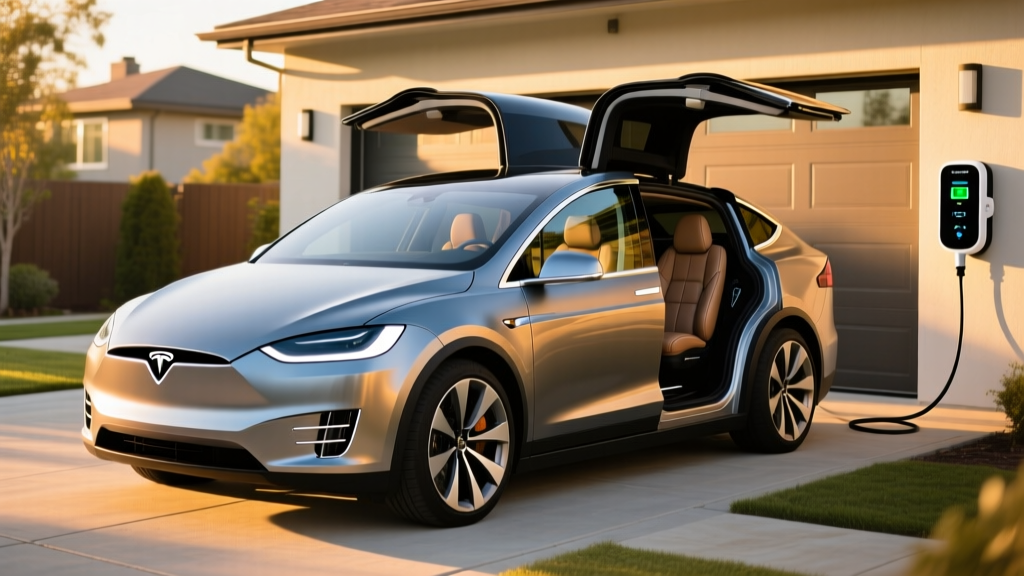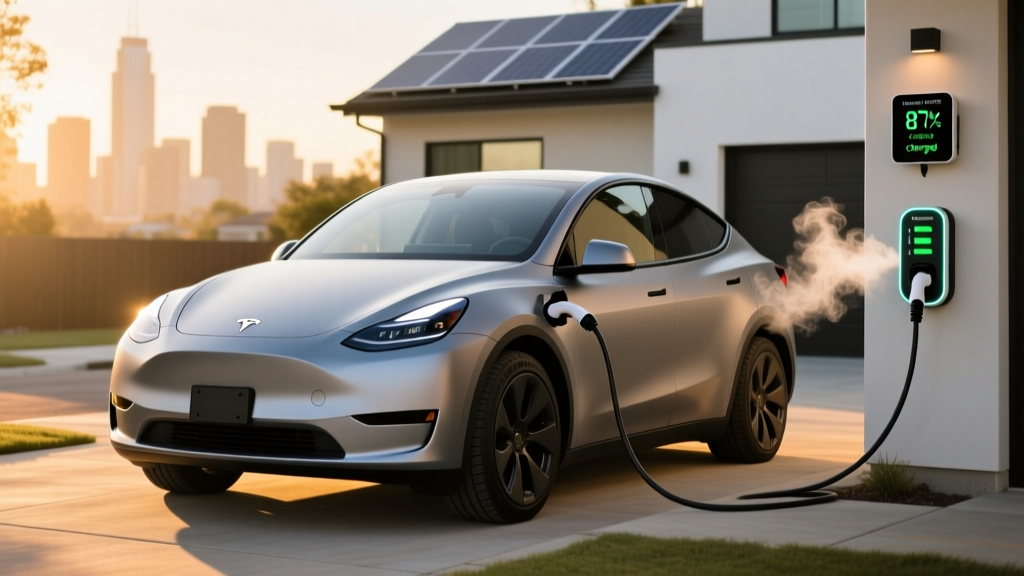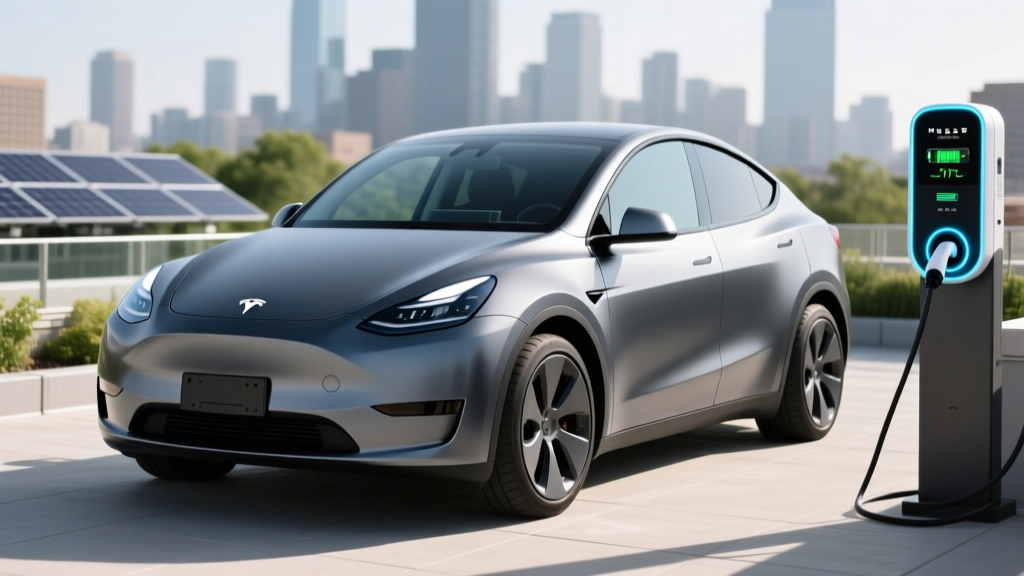
The Tesla Model Y remains the best-selling electric vehicle in the United States for good reason: it threads the needle between range, practicality, charging speed, and price better than almost anything else on the market. For 2026, Tesla introduced the refreshed "Juniper" update — revised styling, a quieter cabin, ventilated front seats, ambient lighting, and a rear touchscreen for passengers — while retaining the core powertrain that made the Model Y a category benchmark.
If you've been searching for Tesla Model Y Long Range details, this profile covers every spec that matters: real-world range, battery chemistry, DC fast-charging behavior, home charging speed, tax credit eligibility under IRS §30D, and how it stacks up against rivals like the Hyundai Ioniq 5, Ford Mustang Mach-E, and Chevrolet Equinox EV.
2026 Tesla Model Y Long Range: Core Specifications
| Spec | Value |
|---|---|
| EPA Range | 320 miles |
| Battery (usable) | ~78 kWh, NMC (nickel manganese cobalt) |
| Drivetrain | Dual-motor AWD |
| Horsepower | 384 hp (combined) |
| 0–60 mph | 4.8 seconds |
| Peak DC Fast Charge | 250 kW (Supercharger V3) |
| 10–80% DC Charge Time | ~25 minutes |
| Level 2 Home Charge Rate | 11.5 kW / ~44 mi/hr |
| MPGe (combined) | 111 MPGe |
| Efficiency | 30 kWh/100 mi |
| Cargo Volume (rear seats up) | 30.2 cu ft |
| Cargo Volume (rear seats folded) | 72.0 cu ft |
| Base MSRP | $44,990 |
| Battery Warranty | 8 years / 120,000 miles |
| Basic Vehicle Warranty | 4 years / 50,000 miles |
Real-World Range: What to Actually Expect
Real-World Highway (70–75 mph): ~260–280 miles
Real-World City / Mixed: ~290–310 miles
Cold Weather (below 30°F): ~210–250 miles (20–35% reduction)
The 320-mile EPA estimate is a useful baseline, but your actual range will depend heavily on driving style, speed, and temperature. At sustained highway speeds of 70–75 mph, expect to see closer to 260–280 miles before needing a charge. The Model Y's aerodynamic efficiency helps, but EV range drops noticeably at higher speeds because wind resistance scales with the square of velocity.
In city driving with frequent regenerative braking opportunities, you'll recover more energy and approach the EPA figure — or even exceed it in mild weather at moderate speeds. Cold weather is the real range killer: below 30°F, battery chemistry becomes less efficient, cabin heating draws significant energy (the Model Y uses a heat pump, which helps, but doesn't eliminate the loss), and you should plan for 210–250 miles of usable range. Preconditioning the battery while plugged in mitigates some of this loss and is essential before DC fast charging in cold conditions.
According to fueleconomy.gov, the Model Y Long Range AWD achieves 111 MPGe combined (28 kWh/100 mi as measured by EPA testing cycles), though real-world highway efficiency typically runs closer to 30–32 kWh/100 mi.
Charging Speed: DC Fast, Level 2, and the Charge Curve
| Charging Level | Power / Rate | Miles Added per Hour | Notes |
|---|---|---|---|
| Level 1 (120V outlet) | ~1.2 kW | ~4 mi/hr | Emergency/trickle only |
| Level 2 (240V home) | 11.5 kW | ~44 mi/hr | Full charge in ~7–8 hours |
| DC Fast (Tesla V3 Supercharger) | Up to 250 kW peak | Up to ~1,000 mi/hr (peak) | 10–80% in ~25 min |
| DC Fast (CCS adapter, non-Tesla) | Up to ~150–170 kW | Varies | Adapter required; speed limited by station |
The Model Y Long Range peaks at 250 kW on Tesla's V3 Superchargers using the native NACS connector. However — and this is critical for trip planning — peak rate is not sustained rate. The charging curve tapers significantly above 50–60% state of charge. You'll see 250 kW only briefly at low SoC (roughly 10–20%), after which the rate progressively drops to protect battery longevity. A 10–80% session takes approximately 25 minutes; an 80–100% top-off can add another 20+ minutes due to the taper.
For home charging, the onboard charger accepts up to 11.5 kW on a 48-amp Level 2 circuit (requiring a 60-amp breaker). This adds roughly 44 miles of range per hour, meaning a depleted battery fully replenishes overnight in about 7–8 hours. Tesla's Wall Connector costs around $475 and is the simplest path to home charging, though any J1772 Level 2 station will work with the included adapter, or natively with NACS as more third-party chargers adopt the connector.
Tesla's Supercharger network remains the most reliable DC fast-charging ecosystem in the U.S., with over 25,000 stalls. The Model Y also supports CCS charging via an adapter, though non-Tesla networks (Electrify America, EVgo) show more variable uptime.
Battery Chemistry, Degradation, and Warranty
The Model Y Long Range uses an NMC (nickel manganese cobalt) lithium-ion battery pack with approximately 78 kWh of usable capacity. NMC chemistry offers higher energy density than LFP (lithium iron phosphate), which is why the Long Range achieves 320 miles in a relatively compact pack. The trade-off: NMC batteries degrade slightly faster over time and Tesla recommends daily charging to 80–90% rather than 100% for routine use, reserving full charges for road trips.
By contrast, the base Model Y RWD (Standard Range) uses LFP chemistry, which tolerates regular 100% charging and offers longer cycle life but at a lower energy density — hence its shorter ~260-mile range.
Tesla's battery warranty covers the Long Range for 8 years or 120,000 miles (whichever comes first), guaranteeing a minimum of 70% capacity retention over that period. Real-world data from owner surveys and fleet analyses suggest typical NMC degradation of roughly 10–12% over the first 100,000 miles, meaning most owners will retain well above the warranty threshold. Battery replacement out of warranty is estimated at $12,000–$16,000, though this is rarely needed within the vehicle's typical ownership lifecycle.
Performance and Driving Dynamics
The dual-motor AWD powertrain delivers 384 combined horsepower and launches the Model Y Long Range from 0–60 mph in 4.8 seconds. That's genuinely quick for a family crossover and provides confident highway merging and passing. The single-speed transmission means power delivery is linear and instant — no gear hunting, no turbo lag.
Ride quality improved noticeably with the Juniper refresh: revised suspension tuning, acoustic glass, and additional sound deadening make the 2026 cabin substantially quieter than pre-2025 models. The steering is precise but heavy by default (adjustable through the touchscreen). One-pedal driving via regenerative braking is strong enough to bring the car to a complete stop in most traffic situations, though Tesla removed the adjustable regen setting — it's max-regen only, which most EV owners prefer but newcomers may need a week to acclimate.
The Model Y Long Range is not a performance vehicle in the Model 3 Performance sense, but it strikes a compelling balance: fast enough to be fun, efficient enough to maximize range, and comfortable enough for daily commuting and long road trips alike.
Pricing, Trims, and Federal Tax Credit Eligibility
| Trim | Base MSRP | Est. Price After §30D Credit* |
|---|---|---|
| Long Range AWD | $44,990 | ~$37,490 |
| Performance AWD | $48,990 | ~$41,490 |
*Federal tax credit eligibility depends on multiple factors. See checklist below.
- Vehicle MSRP cap: SUVs/crossovers must be ≤ $80,000 (Model Y qualifies)
- Buyer income cap: Modified AGI ≤ $150,000 (single) / $225,000 (head of household) / $300,000 (joint)
- Battery sourcing: Must meet critical minerals and battery component requirements that phase in annually — verify current-year compliance at irs.gov
- Point-of-sale transfer: Eligible buyers can transfer the credit to the dealer at purchase, reducing the purchase price directly rather than waiting for a tax refund
- Assembly: Must be assembled in North America (Model Y is built in Austin, TX and Fremont, CA)
The Model Y Long Range at $44,990 sits well under the $80,000 SUV MSRP cap. If you meet the income and battery-sourcing requirements, the available credit (up to $7,500) can be applied at point of sale, effectively reducing the Long Range to approximately $37,490 before destination fees, state registration, and any applicable state incentives. Always confirm current-year sourcing compliance on the IRS website or with a tax professional, as critical-mineral requirements tighten annually.
Interior, Cargo, and Technology
The Juniper-refreshed interior is a meaningful step forward. The minimalist cabin now features ventilated front seats, power-folding second-row seats, ambient lighting, and a 8-inch rear touchscreen for rear passengers to control climate and entertainment. The 15.4-inch front touchscreen runs Tesla's latest software with wireless Apple CarPlay (introduced for the first time in the Juniper generation) and native navigation with real-time Supercharger routing.
Cargo space is a Model Y strength: 30.2 cubic feet behind the second row and 72.0 cubic feet with the rear seats folded — enough for a week's worth of camping gear or a Costco haul that would overwhelm most sedans. The front trunk (frunk) adds modest additional storage for charging cables and small bags. Rear legroom measures 41.6 inches, adequate for adults on long trips, though the panoramic glass roof reduces headroom slightly for taller passengers.
Autopilot comes standard and includes adaptive cruise control, lane-keeping assist, and automatic emergency braking — this is an SAE Level 2 driver-assistance system, meaning you must keep your hands on the wheel and eyes on the road at all times. Full Self-Driving (Supervised) is an optional $8,000 add-on (or $99/month) that adds automated lane changes, traffic-light recognition, and Navigate on Autopilot, but it remains a Level 2 system that requires active driver supervision. It is not autonomous driving.
Pros, Cons, and Who Should Buy
- 320-mile EPA range covers most commutes and road trips without frequent charging
- Access to Tesla Supercharger network — the most reliable DC fast-charging ecosystem
- Strong efficiency (111 MPGe) keeps per-mile electricity costs low
- Excellent cargo versatility with 72 cu ft max and standard frunk
- Over-the-air updates continuously add features post-purchase
- Point-of-sale tax credit can reduce effective price to ~$37,500
- Minimalist interior won't appeal to buyers who prefer physical buttons and traditional gauges
- No Apple CarPlay on pre-Juniper models; Juniper adds it but only wirelessly (no wired option)
- NMC battery requires 80–90% daily charge limit for longevity
- FSD (Supervised) remains Level 2 and is not hands-free autonomous driving
- Insurance costs tend to run 15–25% higher than comparable gas crossovers
- Rear visibility is compromised by the sloping roofline; camera-reliant
Who the Model Y Long Range suits best: This is the ideal EV for a two-adult household (with or without young children) that needs a daily commuter capable of occasional 300+ mile road trips without drama. If you have home Level 2 charging access, the Model Y Long Range can serve as a sole vehicle with minimal lifestyle compromise. Families with older children or frequent cargo needs may prefer the larger rear cabin and boxier cargo area of a Kia EV9 or Rivian R1S, but for the majority of EV buyers, the Model Y's combination of range, charging speed, and practicality is difficult to beat at this price point.
Frequently Asked Questions
What is the real-world range of the 2026 Tesla Model Y Long Range?
The EPA rates it at 320 miles, but real-world highway driving at 70–75 mph typically yields 260–280 miles. City driving with regenerative braking can approach or slightly exceed 300 miles. In cold weather below 30°F, expect 210–250 miles due to battery chemistry limitations and cabin heating demand.
How fast does the Model Y Long Range charge at home and on road trips?
At home on a 240V Level 2 charger (11.5 kW), you add about 44 miles per hour, fully recharging overnight in 7–8 hours. On a Tesla V3 Supercharger (250 kW peak), a 10–80% session takes approximately 25 minutes, though the charge rate tapers above 60% SoC.
Does the 2026 Tesla Model Y qualify for the $7,500 federal EV tax credit?
The Model Y Long Range ($44,990 MSRP) is under the $80,000 SUV cap and is assembled in North America. Eligibility for the full $7,500 credit depends on your income (≤$150K single / $300K joint), the battery's critical-mineral and component sourcing compliance for the current tax year, and your tax liability. Verify at irs.gov and consult a tax professional. The credit can be transferred at point of sale to reduce your purchase price directly.
Is the Model Y Long Range worth buying over the Hyundai Ioniq 5 or Ford Mach-E?
The Model Y wins on Supercharger network access, cargo space (72 cu ft vs. ~56 in the Ioniq 5), and software integration. The Ioniq 5 charges faster on paper (peak 350 kW on 800V architecture, 10–80% in ~18 min) and offers a more conventional interior with physical controls. The Mach-E provides a sportier driving feel but trails on range and charging infrastructure. If Supercharger reliability and cargo versatility are your priorities, the Model Y remains the strongest all-around choice.
What's the difference between NMC and LFP batteries in the Model Y lineup?
The Long Range uses NMC (nickel manganese cobalt) for higher energy density and 320 miles of range, but Tesla recommends daily charging to 80–90%. The base RWD model uses LFP (lithium iron phosphate), which tolerates regular 100% charging and offers longer cycle life, but at a lower energy density — yielding roughly 260 miles of range. Choose Long Range for maximum distance; choose RWD/LFP if you prefer simpler charging habits and a lower price.
How much does it cost to charge a Model Y Long Range at home?
At the U.S. average residential electricity rate of ~$0.17/kWh, fully charging the 78 kWh battery costs approximately $13.26. That equates to roughly $0.04–$0.05 per mile — compared to $0.12–$0.15 per mile for a gas crossover getting 25–28 MPG at $3.50/gallon. Over 15,000 miles per year, home charging saves roughly $1,200–$1,500 annually versus gasoline.