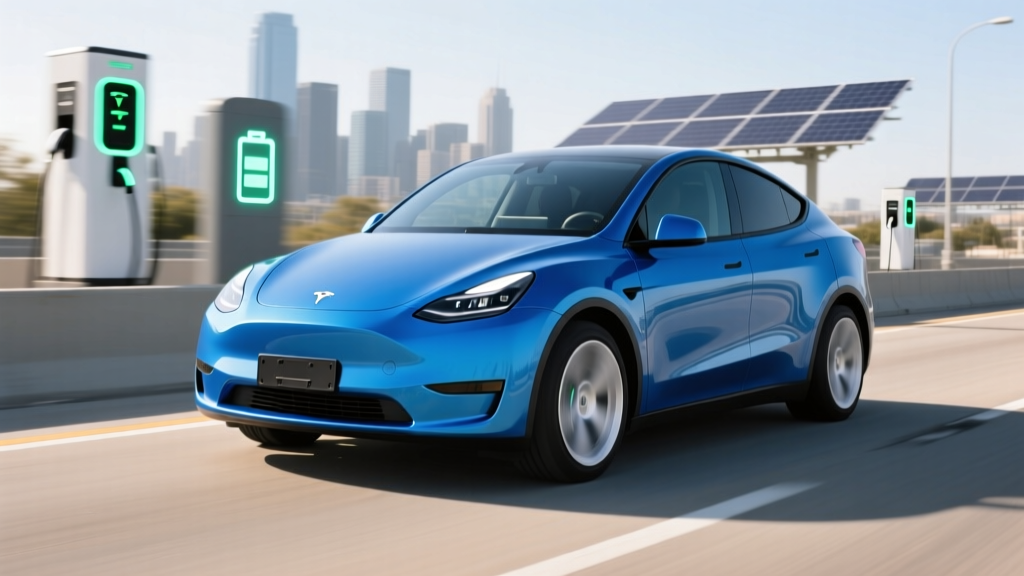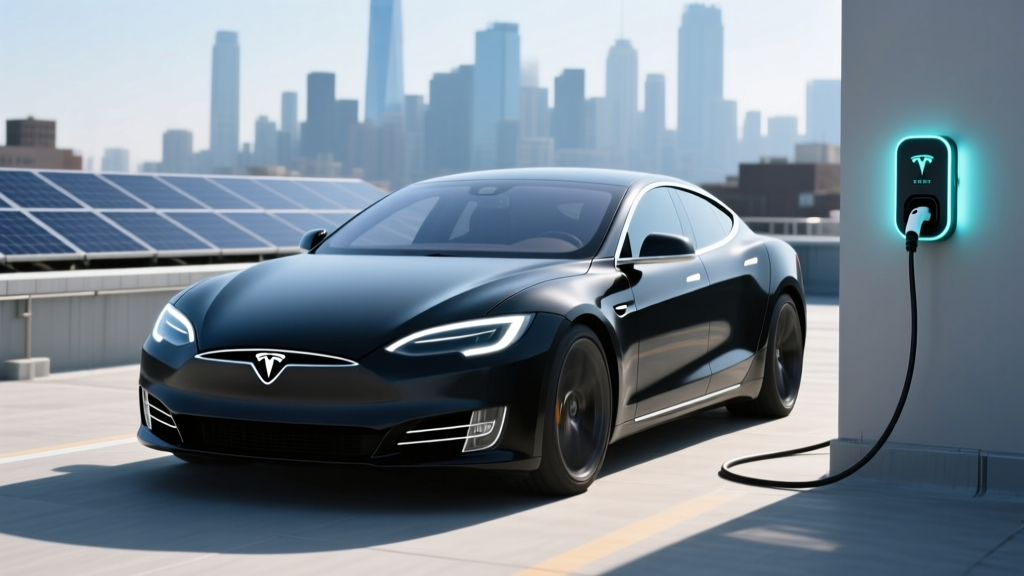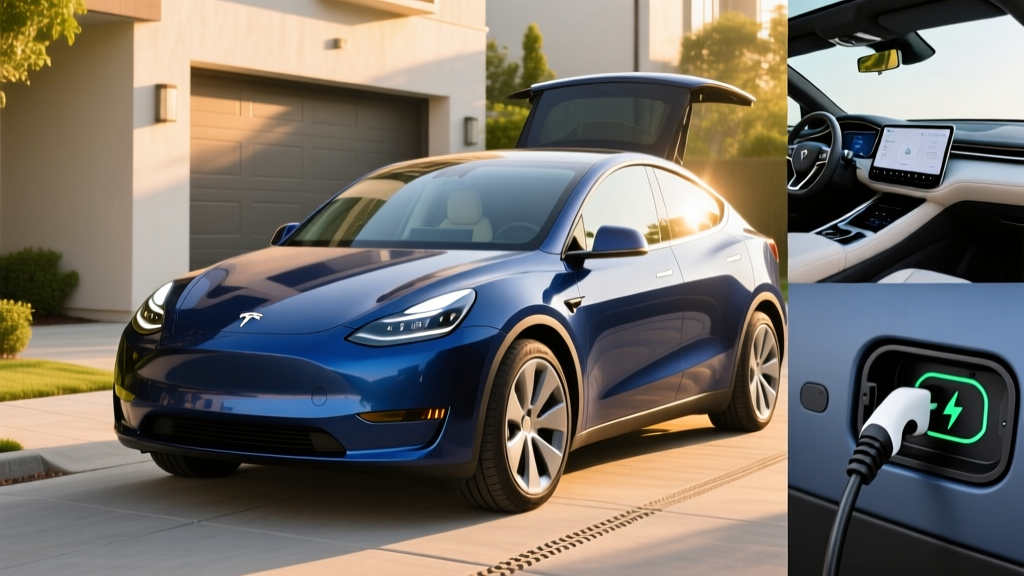
The Tesla Model Y Long Range has been the best-selling electric vehicle in the United States for multiple consecutive years, and the 2026 refresh—internally dubbed "Juniper"—shows exactly why. A redesigned interior, revised suspension tuning, a quieter cabin, and a slightly larger battery pack keep it at the top of the compact electric SUV segment. But with rivals like the Hyundai Ioniq 5, Ford Mustang Mach-E, and Chevrolet Equinox EV closing the gap, is the Model Y Long Range still the default choice, or is its market dominance more about the Supercharger network than the vehicle itself?
After driving the 2026 Model Y Long Range AWD for over 1,200 miles—including highway road trips, sub-freezing commutes, and repeated DC fast-charge sessions—here is the data-driven breakdown every buyer needs before signing a purchase agreement.
2026 Tesla Model Y Long Range: Core Specifications
| Specification | 2026 Model Y Long Range AWD |
|---|---|
| EPA Estimated Range | 320 miles |
| Battery Capacity (usable) | ~78 kWh (NMC chemistry) |
| Drivetrain | Dual-Motor AWD |
| Horsepower | 384 hp (combined) |
| 0–60 mph | 4.8 seconds |
| Peak DC Fast Charge Rate | 250 kW |
| 10–80% DC Charge Time | ~25 minutes |
| Level 2 Home Charge Rate | 11.5 kW (~44 mi/hr) |
| Efficiency | 122 MPGe combined / 27 kWh/100 mi |
| Cargo Volume (rear seats up) | 30.2 cu ft |
| Cargo Volume (rear seats folded) | 72.0 cu ft |
| Rear Legroom | 41.6 inches |
| Battery & Drive Unit Warranty | 8 years / 120,000 miles |
| Base MSRP | $48,990 (incl. destination) |
Real-World Range: What the EPA Sticker Doesn't Tell You
Real-World Highway (70–75 mph, moderate temps): ~270–285 miles
Real-World City / Mixed Commute: ~295–310 miles
Cold Weather (below 32°F, highway): ~220–250 miles
The 320-mile EPA figure is achievable in mild conditions with a mix of city and suburban driving where regenerative braking recaptures energy. On sustained highway runs at 75 mph in 50–70°F weather, expect roughly 270–285 miles before you hit 10% state of charge. Tesla's trip planner tends to be slightly conservative, which is preferable to the optimistic projections some competitors display.
Cold weather remains the equalizer for all lithium-ion packs. In testing at 20°F with the cabin heated to 70°F and seat warmers active, range dropped to approximately 230 miles on a highway loop. The 2026 Model Y's heat pump—now standard across all trims—mitigates some of this loss compared to resistance-heated EVs, but physics dictates a 20–30% reduction in freezing temperatures. Preconditioning the battery while plugged in before departure recovers roughly 10–15 miles of that deficit.
According to fueleconomy.gov, the Model Y Long Range AWD achieves 122 MPGe combined. In our mixed driving, we observed an average consumption of 27 kWh per 100 miles, which aligns closely with the EPA figure and is among the most efficient in the compact electric SUV class.
Charging Speed: DC Fast, Level 2, and the Supercharger Advantage
Charging speed is where the Model Y Long Range continues to outperform most of its competitors—not necessarily because of peak charge rate, but because of the integrated Supercharger ecosystem. Here is the breakdown by charging level:
| Charging Level | Power (kW) | Speed | Typical Use Case |
|---|---|---|---|
| Level 1 (120V household) | ~1.4 kW | ~3–4 mi/hr | Emergency / overnight trickle |
| Level 2 (240V home wall connector) | 11.5 kW | ~44 mi/hr | Daily home charging |
| DC Fast Charge (V3 Supercharger) | Peak 250 kW | 10–80% in ~25 min | Road trips |
| DC Fast Charge (V4 Supercharger) | Peak 250+ kW | 10–80% in ~22 min | Newer corridor stations |
The 250 kW peak rate is not sustained across the full charging session. The charge curve is aggressive from 10–40% state of charge, where you will see rates above 230 kW at a V3 Supercharger with a preconditioned battery. From 50–80%, the rate tapers to roughly 100–130 kW. The 10–80% session takes approximately 25 minutes at a V3 stall and slightly less at newer V4 stations with improved cable cooling.
For home charging, the Tesla Wall Connector at 48 amps on a 60-amp circuit delivers the full 11.5 kW, adding roughly 44 miles of range per hour. A full overnight charge from 20% to 90% takes approximately 7 hours. Buyers should budget for a 240V/60A circuit installation; costs vary by region and panel capacity, but expect $800–$2,000 for a straightforward install according to licensed electrician estimates. If your panel is at capacity, a 200-amp service upgrade can add $1,500–$3,000.
The NACS (North American Charging Standard) connector is native to the Model Y. As of 2026, Ford, GM, Rivian, and other automakers have adopted NACS and gained Supercharger access, which slightly reduces the exclusivity advantage Tesla owners once enjoyed. However, Tesla's network reliability—typically above 99% uptime per the company's impact reports—remains a significant ownership benefit.
Performance and Driving Dynamics
The dual-motor AWD powertrain produces 384 combined horsepower and launches the Model Y Long Range to 60 mph in 4.8 seconds. That figure is consistent across multiple test runs with a preconditioned battery. The instant torque delivery makes highway merging and passing effortless, and the low center of gravity from the under-floor battery pack keeps body roll well-controlled for a crossover.
The 2026 Juniper refresh brought revised dampers and improved sound insulation. Road noise at 70 mph is noticeably lower than the pre-2025 model, and the ride quality over broken pavement has improved from firm to composed. The steering remains quick and precise, though some drivers may find it overly weighted even in Comfort mode.
One-pedal driving via regenerative braking is strong enough to bring the vehicle to a complete stop in most city scenarios, though Tesla removed the user-adjustable regen setting several model years ago. The hold mode effectively keeps the car stationary at stoplights without touching the brake pedal.
Interior, Technology, and Driver Assistance
The 2026 interior is a significant step up from earlier Model Y cabins. Ambient lighting, ventilated front seats, a rear-seat touchscreen for climate and media control, and improved materials (including a fabric-wrapped dashboard and soft-touch surfaces) address the most common criticisms of prior models. The 15.4-inch center touchscreen remains the primary interface for nearly all vehicle controls—there are no physical buttons for climate, mirrors, or glovebox operation.
For buyers who prefer tactile controls, this remains a friction point. Adjusting fan speed or mirror position requires tapping through menus or using voice commands. The voice assistant handles most requests competently, but the learning curve for first-time Tesla owners is real.
Tesla's Autopilot comes standard and includes adaptive cruise control, lane-keeping assist, and automatic emergency braking. The optional Full Self-Driving (Supervised) package adds automated lane changes, navigate-on-autopilot for highway interchanges, and traffic-light recognition.
In practice, Autopilot excels on well-marked highways and reduces fatigue on long trips. FSD (Supervised) handles many suburban and city scenarios but still requires frequent interventions at construction zones, faded lane markings, and unprotected left turns. Treat it as an advanced cruise control, not a replacement for attentive driving.
Pricing, Trims, and Federal Tax Credit Eligibility
The 2026 Tesla Model Y is offered in three primary configurations:
| Trim | MSRP (incl. destination) | EPA Range | Est. Price After §30D Credit |
|---|---|---|---|
| Long Range AWD | $48,990 | 320 mi | ~$41,490* |
| Performance AWD | $53,990 | 298 mi | ~$46,490* |
| Long Range RWD (if available) | $45,990 | ~330 mi | ~$38,490* |
*Estimated prices assume full $7,500 federal tax credit eligibility. Actual credit depends on buyer income, vehicle MSRP caps, and battery-component/critical-mineral sourcing requirements under IRS §30D. See the eligibility checklist below.
As of 2026, the IRS §30D clean vehicle credit allows eligible buyers to receive up to $7,500, which can be transferred to the dealer at the point of sale as an immediate price reduction. However, eligibility is not universal:
- MSRP Cap: SUVs must have an MSRP at or below $80,000. All Model Y trims qualify.
- Buyer Income Cap: Modified adjusted gross income must not exceed $150,000 (single), $225,000 (head of household), or $300,000 (joint filers).
- Battery Sourcing: The $7,500 credit is split into two halves—$3,750 for battery components manufactured in North America, and $3,750 for critical minerals sourced from the U.S. or free-trade-agreement countries. Tesla's battery sourcing has shifted over time; verify current eligibility on the IRS qualified vehicles list before purchase.
- Point-of-Sale Transfer: Eligible buyers can transfer the credit to Tesla at purchase, reducing the out-of-pocket cost immediately rather than waiting for a tax refund.
Tesla's pricing has fluctuated frequently—sometimes monthly—so the figures above represent the approximate MSRP at the time of writing. Always confirm current pricing on Tesla's configurator before ordering.
Who Should Buy the Model Y Long Range?
The Model Y Long Range is best suited for buyers who:
- Commute 30–80 miles daily and can charge at home overnight, waking to a full "tank" every morning.
- Take regular road trips of 200–500 miles and value the Supercharger network's reliability and route integration.
- Need family-friendly cargo space (30.2 cu ft behind the rear row, 72 cu ft folded) without stepping up to a larger, more expensive SUV.
- Prioritize efficiency—at 27 kWh/100 mi, charging costs are among the lowest in the segment.
It may not be the best fit for buyers who:
- Prefer physical buttons and traditional control layouts over touchscreen-centric interfaces.
- Need maximum towing capacity (the Model Y is rated for 3,500 lbs—adequate for a small trailer but less than the Ford F-150 Lightning or Rivian R1S).
- Live in an apartment or condo without access to home or workplace charging, as public-only charging adds cost and time.
Consider the Hyundai Ioniq 5 if: You want 800V ultra-fast charging (10–80% in ~18 min), a more conventional interior with physical controls, and a slightly lower starting price.
Consider the Ford Mustang Mach-E if: You prefer a sportier driving feel, BlueCruise hands-free highway driving, and don't mind slightly less cargo space.
Pros and Cons
Pros
- Class-leading efficiency at 122 MPGe combined
- Supercharger network reliability and seamless trip planning
- Spacious cargo area (72 cu ft) with a usable front trunk
- Strong 0–60 performance (4.8 sec) with composed handling
- Over-the-air updates continuously add features
- Improved cabin quietness and materials in 2026 refresh
- Excellent battery warranty: 8 yr / 120,000 mi
Cons
- Touchscreen-only controls frustrate some drivers
- DC fast-charge peak of 250 kW trails 800V rivals (Ioniq 5 at 350 kW capable)
- FSD (Supervised) remains Level 2 and requires constant attention
- Pricing fluctuations make purchase timing uncertain
- Rear visibility is limited; relies heavily on cameras
- No Apple CarPlay or Android Auto integration
Frequently Asked Questions
What is the real-world range of the 2026 Tesla Model Y Long Range?
The EPA rates it at 320 miles. In real-world highway driving at 70–75 mph in moderate temperatures, expect approximately 270–285 miles. City and mixed driving yields closer to 295–310 miles. In freezing temperatures, highway range drops to roughly 220–250 miles despite the standard heat pump.
How fast does the Model Y Long Range charge at home and on the road?
At home on a Level 2 Wall Connector (11.5 kW), it gains approximately 44 miles of range per hour, fully charging overnight. On a V3 Supercharger, it peaks at 250 kW and charges from 10–80% in about 25 minutes. The charge rate tapers significantly above 80%, so plan to disconnect at 80% on road trips for the best time efficiency.
How much does the Model Y Long Range cost after the federal tax credit?
The base MSRP is approximately $48,990. If you qualify for the full $7,500 §30D credit and transfer it at point of sale, the effective price drops to roughly $41,490. Eligibility depends on your income, the vehicle's battery sourcing compliance, and MSRP caps. Always verify on the IRS clean vehicle credit page before ordering.
Does the 2026 Model Y qualify for the $7,500 federal EV tax credit?
The Model Y's MSRP is well under the $80,000 SUV cap, so the vehicle itself qualifies. However, the buyer must also meet income thresholds (up to $300,000 for joint filers) and the vehicle's battery components and critical minerals must meet North American sourcing requirements, which can change. Check the IRS qualified vehicles list for the specific build month before purchasing.
Is the Tesla Model Y Long Range worth buying over competitors in 2026?
It depends on priorities. The Model Y wins on efficiency, cargo space, and charging-network integration. The Hyundai Ioniq 5 charges faster on 800V infrastructure and offers a more conventional cabin. The Ford Mach-E provides engaging driving dynamics and BlueCruise. For buyers who road-trip frequently and value predictable, reliable charging, the Model Y's Supercharger ecosystem remains a decisive advantage. For those who primarily charge at home and want the quickest DC fast-charge capability, the Ioniq 5 is a strong alternative.
What is the battery warranty on the Model Y Long Range?
Tesla covers the battery and drive unit for 8 years or 120,000 miles, whichever comes first, with a minimum 70% capacity retention guarantee during that period. Real-world degradation data from Tesla's fleet suggests most Model Y packs retain approximately 85–90% capacity at 100,000 miles, well above the warranty threshold.
Can I charge a Tesla Model Y on non-Tesla charging networks?
Yes. The Model Y uses the NACS connector natively. For CCS-compatible networks like Electrify America or EVgo, you will need a NACS-to-CCS adapter (Tesla sells one for approximately $250). Most Tesla owners do the majority of their public charging on Superchargers, where no adapter is needed.