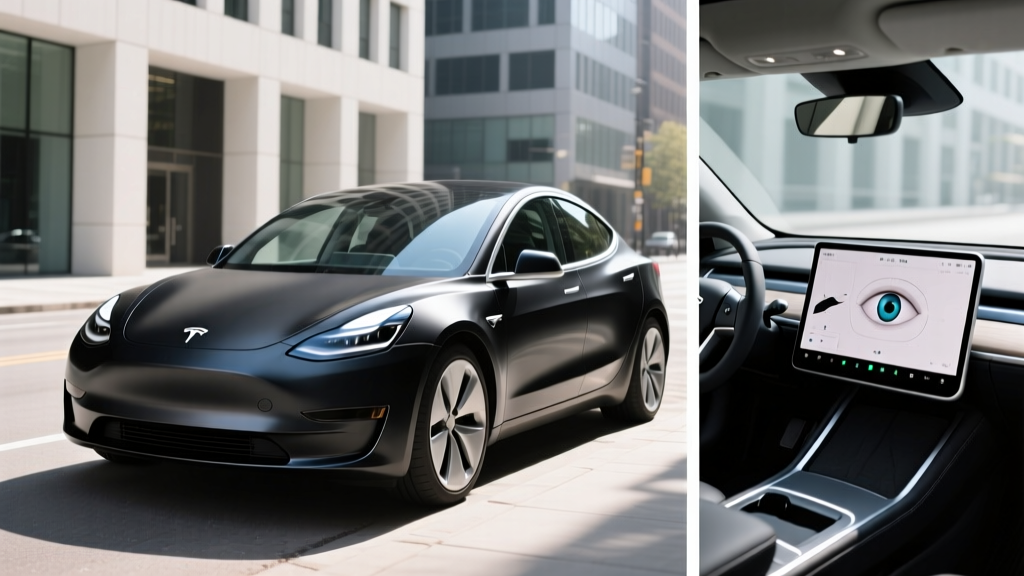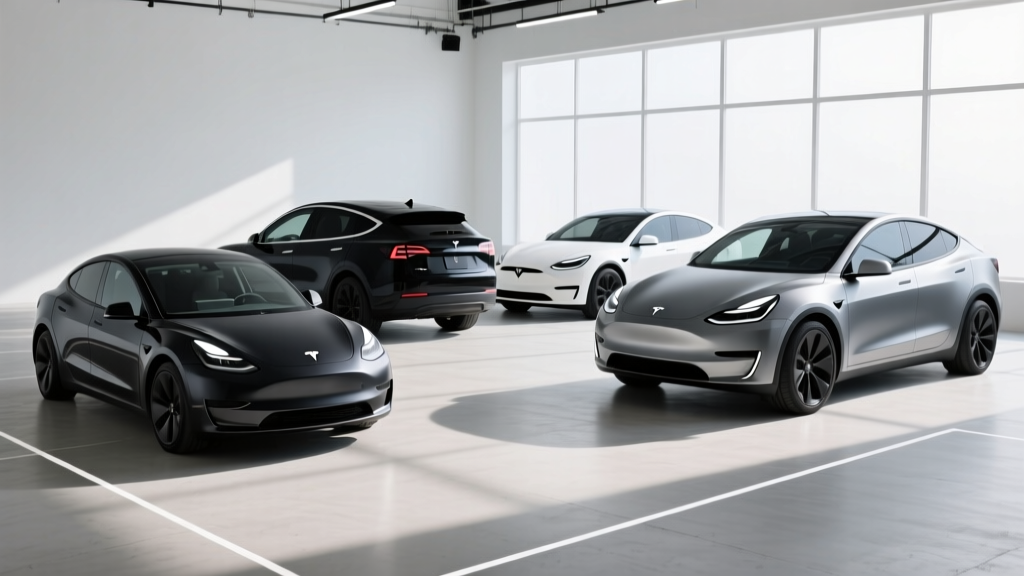
The Tesla Model Y Long Range remains one of the most consequential electric vehicles on American roads, and the refreshed 2026 model arriving at US dealerships carries meaningful updates to efficiency, charging architecture, and interior refinement. For buyers searching for details on the Tesla Model Y Long Range US release, this review breaks down every spec that matters — from real-world range to federal tax credit eligibility — with the exact numbers you need before signing a purchase agreement.
Quick Verdict: Who the 2026 Model Y Long Range Is For
The 2026 Model Y Long Range AWD targets families and commuters who need a practical, spacious electric crossover with access to Tesla's Supercharger network and strong resale value. If your daily driving involves 40–80 miles of mixed city/highway commuting with occasional 300-mile road trips, this trim hits the sweet spot. Buyers who prioritize maximum performance should look at the Performance trim; those on a tighter budget may consider the rear-wheel-drive Standard Range variant.
Range, Efficiency, and Real-World Expectations
The 2026 Model Y Long Range AWD carries an EPA-estimated range of 320 miles on a full charge, according to fueleconomy.gov. That figure is achieved on the combined driving cycle, and Tesla's efficiency improvements from the Juniper refresh — including a more aerodynamic front fascia, low-rolling-resistance tires, and refined heat pump calibration — helped push this number higher than the outgoing 2025 model.
EPA sticker: 320 miles
Expect in real-world highway driving (70–80 mph, moderate temps): ~265–285 miles
Cold-weather highway driving (below 32°F / 0°C): ~210–240 miles
City/commuter driving with regen braking: ~300–320 miles (close to EPA)
Highway efficiency at 75 mph averages roughly 3.8–4.0 miles per kWh, translating to about 26–28 kWh/100mi. Cold weather can increase consumption by 15–30% due to cabin heating and battery thermal management demands.
The Model Y Long Range achieves an EPA-rated 122 MPGe combined (city 128 / highway 116 MPGe), which places it among the most efficient all-wheel-drive electric crossovers available. In practical terms, that translates to roughly 27 kWh per 100 miles under mixed driving conditions.
Battery Specs: Capacity, Chemistry, and Longevity
Tesla equips the 2026 Model Y Long Range with an NMC (nickel manganese cobalt) lithium-ion battery pack with approximately 75 kWh of usable capacity (roughly 78–82 kWh gross, with a buffer to protect longevity). The NMC chemistry provides higher energy density than LFP (lithium iron phosphate), which is why Tesla reserves it for Long Range and Performance trims where maximizing range per kilogram matters.
| Spec | Value |
|---|---|
| EPA Range | 320 miles |
| Battery Usable Capacity | ~75 kWh (NMC) |
| Drivetrain | Dual-Motor AWD |
| Horsepower | 384 hp (combined) |
| 0–60 mph | 4.8 seconds |
| MPGe (Combined) | 122 MPGe |
| kWh/100 mi | ~27 |
| Max DC Fast Charge | 250 kW peak |
| 10–80% DC Charge Time | ~25 minutes |
| Level 2 Home Charge Rate | 11.5 kW (44 mi/hr) |
| Cargo Volume (rear seats up) | 30.2 cu ft |
| Cargo Volume (rear seats folded) | 72.1 cu ft |
| Rear Legroom | 41.6 inches |
| Base MSRP | $44,990 |
| Battery Warranty | 8 years / 120,000 miles |
Battery care note: NMC packs benefit from daily charging to 80% rather than 100%. Tesla's infotainment system defaults to an 80% daily limit for Long Range models — follow this recommendation to minimize long-term degradation. Expect roughly 8–12% capacity loss over 150,000 miles based on fleet data from earlier Model Y generations. Tesla's battery warranty guarantees at least 70% capacity retention over 8 years or 120,000 miles, whichever comes first.
Charging Speed: DC Fast Charging and Home Level 2
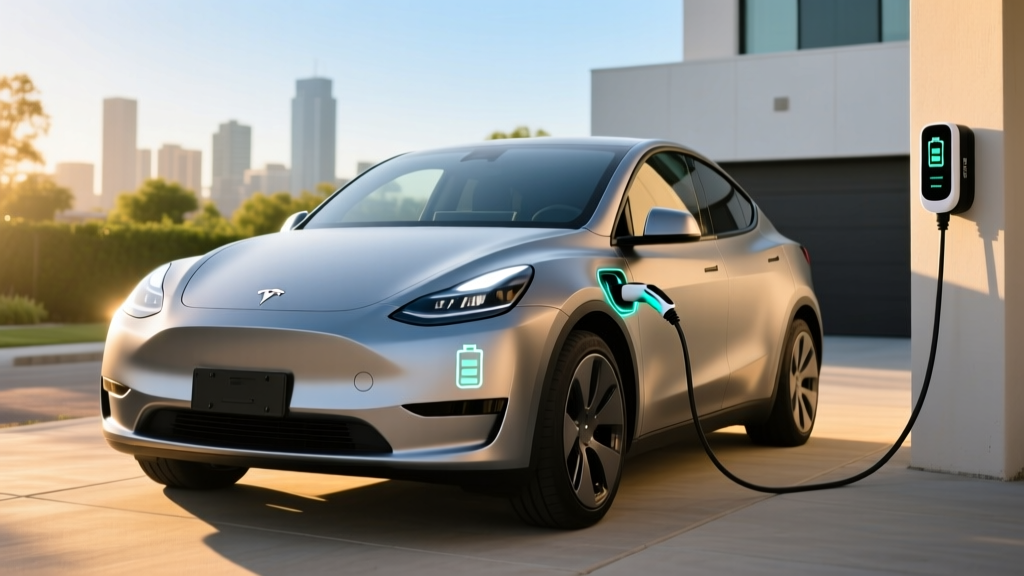
Charging speed is where ownership satisfaction lives or dies. The 2026 Model Y Long Range supports a peak DC fast-charge rate of 250 kW at V3 and V4 Tesla Superchargers (which use the NACS connector natively). Here is what the charge curve actually looks like in practice:
| Charging Level | Power | Speed / Time | Notes |
|---|---|---|---|
| Level 1 (120V household) | ~1.4 kW | ~4–5 miles per hour | Emergency/trickle only |
| Level 2 (240V, 48A Wall Connector) | 11.5 kW | ~44 miles per hour | Full charge in ~7 hours |
| Level 2 (240V, 32A mobile connector) | 7.7 kW | ~30 miles per hour | Standard outlet adapter |
| DC Fast (Supercharger V3/V4) | Up to 250 kW peak | 10–80% in ~25 min | Tapers above 80% |
| DC Fast (CCS adapter, 3rd-party) | Up to ~150–175 kW | 10–80% in ~35–40 min | Varies by network |
Charging-curve reality: The 250 kW peak is achieved only between roughly 10–30% State of Charge (SoC) with a preconditioned battery. From 50–80%, expect sustained rates closer to 80–120 kW. Above 80%, charging slows dramatically to protect the battery — plan your road-trip stops around 10–80% sessions rather than topping off to full.
For home charging, Tesla's Wall Connector on a 60-amp circuit (48 amps continuous) delivers 11.5 kW, adding roughly 44 miles of range per hour. Most owners charging overnight from 20% to 80% will wake to a full daily allotment in under 5 hours. Installation costs for a Level 2 home charger typically range from $800–$2,000 depending on panel proximity and local permitting; if your electrical panel needs an upgrade to 200 amps, budget an additional $1,500–$3,000.
Performance and Driving Dynamics
The dual-motor AWD powertrain produces 384 horsepower and launches the Model Y Long Range from 0–60 mph in 4.8 seconds. That is brisk for a family crossover and sufficient for confident highway merging and passing. The all-wheel-drive system provides excellent traction in rain and light snow, with torque vectoring between front and rear motors.
Ride quality in the Juniper-refreshed Model Y is noticeably improved over pre-2025 models. Tesla revised the suspension tuning, added acoustic laminated glass, and improved seat cushioning — addressing the most common complaints from earlier owners. The steering remains quick and direct, though some drivers find it overly heavy in Sport mode. Regenerative braking is strong enough for one-pedal driving in most city conditions, though Tesla now offers a low-regen "Chill" mode for drivers transitioning from gas vehicles.
Interior, Cargo, and Technology
The 2026 Model Y Long Range continues Tesla's minimalist interior philosophy, now with an updated 15.4-inch center touchscreen running the latest Tesla software. The ventilated front seats, ambient lighting, and premium audio (14 speakers with immersive sound) are standard on Long Range trims.
Cargo and passenger space:
- Rear cargo (seats up): 30.2 cubic feet
- Rear cargo (seats folded): 72.1 cubic feet
- Front trunk (frunk): 4.1 cubic feet
- Rear legroom: 41.6 inches
- Front headroom: 41.0 inches
The cargo area easily accommodates two large suitcases and a stroller with the rear seats in place. The optional third-row seat (available on some configurations) reduces cargo space significantly and is best suited for small children only.
Driver-assistance technology: The Model Y ships with Tesla's Basic Autopilot (adaptive cruise control and lane-centering). Full Self-Driving (Supervised) remains a $8,000 add-on or $99/month subscription. It is critical to understand that FSD is an SAE Level 2 system — the driver must remain fully attentive, keep hands on the wheel, and be prepared to take over at any moment. It is not autonomous driving.
Tesla Autopilot and FSD (Supervised) are SAE Level 2 driver-assist systems, not self-driving. You must keep your hands on the steering wheel and eyes on the road at all times. The system can fail to detect stationary objects, construction zones, and emergency vehicles. NHTSA has investigated multiple incidents involving Autopilot — use these features as aids, not replacements for attentive driving.
Pricing, Trims, and Federal Tax Credit Eligibility
The 2026 Tesla Model Y Long Range AWD starts at a base MSRP of $44,990, including destination. Common configurations with premium paint ($1,000–$2,500), 20-inch wheels ($2,000), and FSD ($8,000) push as-tested prices to $52,000–$58,000.
| Configuration | MSRP | Est. After §30D Credit |
|---|---|---|
| Base (White, 19" wheels, no FSD) | $44,990 | $37,490* |
| Mid (Blue paint, 19" wheels) | $45,990 | $38,490* |
| Loaded (Red, 20" wheels, FSD) | $57,490 | $49,990* |
*Assumes full $7,500 federal tax credit eligibility. See below for requirements.
- MSRP cap: Vehicle must be under $80,000 for SUVs/crossovers (Model Y qualifies)
- Buyer income cap: AGI must not exceed $150,000 (single), $225,000 (head of household), or $300,000 (joint filers)
- Battery sourcing: Critical minerals and battery components must meet phased-in domestic/free-trade-agreement thresholds — Tesla has worked to qualify US-built Model Y variants, but eligibility can vary by production batch
- Point-of-sale transfer: As of 2024+, buyers can transfer the credit to the dealer at purchase, reducing the upfront price rather than waiting for a tax refund
- Verify before buying: Always confirm current eligibility on IRS.gov's qualified vehicle list — eligibility can change mid-year
Tesla also offers the Model Y through leasing, which may qualify for the $7,500 commercial clean vehicle credit passed through to the lessee regardless of income caps — consult a tax professional for your specific situation.
Pros, Cons, and Competitive Position
- 320-mile EPA range covers most road trips with one stop
- Tesla Supercharger network: 6,000+ US stations with reliable plug-and-charge
- Class-leading efficiency (122 MPGe) keeps charging costs low
- Over-the-air updates continuously add features
- Strong resale value relative to EV segment
- Spacious cargo area (72 cu ft) with seats folded
- Minimalist interior not to everyone's taste; no physical buttons
- Ride firmness still noticeable on rough pavement despite Juniper improvements
- FSD is expensive ($8,000) and remains Level 2, not autonomous
- No Apple CarPlay or Android Auto integration
- Insurance premiums run 15–30% higher than comparable gas crossovers
- Third-row seat is cramped and impractical for adults
How it stacks up against key competitors: The Ford Mustang Mach-E Extended Range AWD (EPA ~305 miles, ~$48,995) offers a more engaging drive and physical controls but trails on efficiency and charging network access. The Hyundai Ioniq 5 AWD (EPA ~290 miles, ~$47,500) charges faster on 800V architecture (10–80% in ~18 min on 350 kW chargers) and offers a more comfortable ride, but has less cargo space and no front trunk. The Chevrolet Equinox EV RS AWD (EPA ~307 miles, ~$44,900) undercuts on price but charges slower and lacks the Supercharger ecosystem (though GM's adoption of NACS helps close this gap in 2026).
- You rely on road-trip charging and want the most reliable DC fast-charging network
- You value efficiency and want the lowest cost-per-mile in the segment
- You prefer over-the-air feature updates and Tesla's software ecosystem
- You need 320+ miles of EPA range with AWD capability
- You want Apple CarPlay/Android Auto (consider Ioniq 5 or Mach-E)
- You prioritize ride comfort over sporty handling (Ioniq 5 is smoother)
- You want physical climate and volume controls (Mach-E or Equinox EV)
Warranty and Ownership Costs
Tesla provides a 4-year/50,000-mile basic vehicle warranty and an 8-year/120,000-mile battery and drive unit warranty that guarantees at least 70% capacity retention. This battery warranty is competitive with the segment — Hyundai offers 10 years/100,000 miles, while Ford matches at 8 years/100,000 miles.
Estimated 5-year total cost of ownership for a Model Y Long Range (assuming 15,000 miles/year, home charging at $0.14/kWh, and no major repairs):
- Electricity cost: ~$2,835 over 5 years (75,000 miles at 27 kWh/100mi)
- Comparable gas vehicle fuel cost: ~$7,500+ (at 25 MPG combined, $3.50/gal)
- Maintenance savings: ~$2,000–$3,000 (no oil changes, fewer brake replacements due to regen)
- Insurance premium premium: ~$800–$1,500 more than a gas RAV4 over 5 years
Net savings versus a comparable gas-powered compact SUV typically range from $4,000–$7,000 over five years when the federal tax credit applies, though this varies significantly with local electricity rates, annual mileage, and insurance costs. Check fueleconomy.gov for personalized cost comparisons.
Frequently Asked Questions
What is the real-world range of the 2026 Tesla Model Y Long Range?
The EPA rates it at 320 miles combined. In real-world highway driving at 70–80 mph in moderate temperatures, expect roughly 265–285 miles. In freezing weather, highway range can drop to 210–240 miles due to increased battery and cabin heating demands. City driving with regenerative braking gets you closest to the EPA sticker.
How fast does the Model Y Long Range charge at home and on the road?
At home on a 240V/48A Tesla Wall Connector, it charges at 11.5 kW, adding about 44 miles of range per hour — a full overnight session covers most needs. On DC fast charging, it peaks at 250 kW at a V3/V4 Supercharger, reaching 10–80% in approximately 25 minutes with a preconditioned battery. Charging slows considerably above 80%.
How much does the 2026 Model Y Long Range cost after tax credits?
The base MSRP is $44,990. If you qualify for the full $7,500 federal §30D tax credit (meeting income caps, MSRP limits, and battery-sourcing requirements), your effective price drops to $37,490. Point-of-sale transfer lets you apply this at purchase rather than waiting for tax season. Always verify current eligibility on IRS.gov before buying.
Is the Model Y Long Range worth buying versus competitors in 2026?
If Supercharger network access, segment-leading efficiency, and strong resale value matter to you, yes. The Ioniq 5 charges faster on compatible chargers and rides more comfortably; the Mach-E offers more engaging driving dynamics and CarPlay. But for all-around practicality, range, and charging infrastructure reliability, the Model Y Long Range remains the benchmark electric crossover.
Does the 2026 Model Y qualify for the $7,500 federal EV tax credit?
The US-built Model Y has generally qualified for the full or partial §30D credit, but eligibility depends on battery-sourcing requirements that shift over time, as well as your personal income (AGI caps apply: $150K single / $300K joint) and the vehicle's MSRP (must be under $80K for SUVs). Confirm on the IRS qualified vehicles list before purchase, as eligibility can change by production month.
What are the biggest drawbacks of the Model Y Long Range?
The minimalist interior lacks physical buttons and does not support Apple CarPlay or Android Auto. Ride quality, while improved in the Juniper refresh, is still firmer than some competitors. Insurance costs run higher than gas equivalents. FSD remains a Level 2 driver-assist system despite its name and $8,000 price tag. The optional third row is only practical for small children.