The 2026 Tesla Model Y Standard Range: A Value Reckoning
When Tesla introduced the lithium iron phosphate (LFP) battery to the Model Y lineup, it was a masterstroke in cost reduction — cheaper chemistry, no cobalt, and a lower entry price that undercut nearly every compact electric SUV on the market. But throughout 2025 and into 2026, aggressive price cuts across the EV industry and shifting federal incentive rules have complicated the value picture. The question buyers are asking now isn't whether the LFP Model Y is cheap — it's whether the deal still holds up against a wave of well-equipped competitors.
This review dissects the 2026 Tesla Model Y Standard Range RWD (the LFP-equipped variant) with hard numbers: real-world range, charging behavior, total cost after tax credits, and where it wins or loses against rivals like the Hyundai Ioniq 5, Ford Mustang Mach-E, and Chevrolet Equinox EV.
Core Specifications at a Glance
| Specification | 2026 Model Y Standard Range RWD |
|---|---|
| EPA Estimated Range | 290 miles |
| Battery Capacity (Usable) | ~60 kWh (LFP chemistry) |
| Drivetrain | Rear-Wheel Drive (single motor) |
| Horsepower | 295 hp |
| 0–60 mph | 6.6 seconds |
| Peak DC Fast Charge Rate | 170 kW |
| 10–80% DC Fast Charge Time | ~28 minutes |
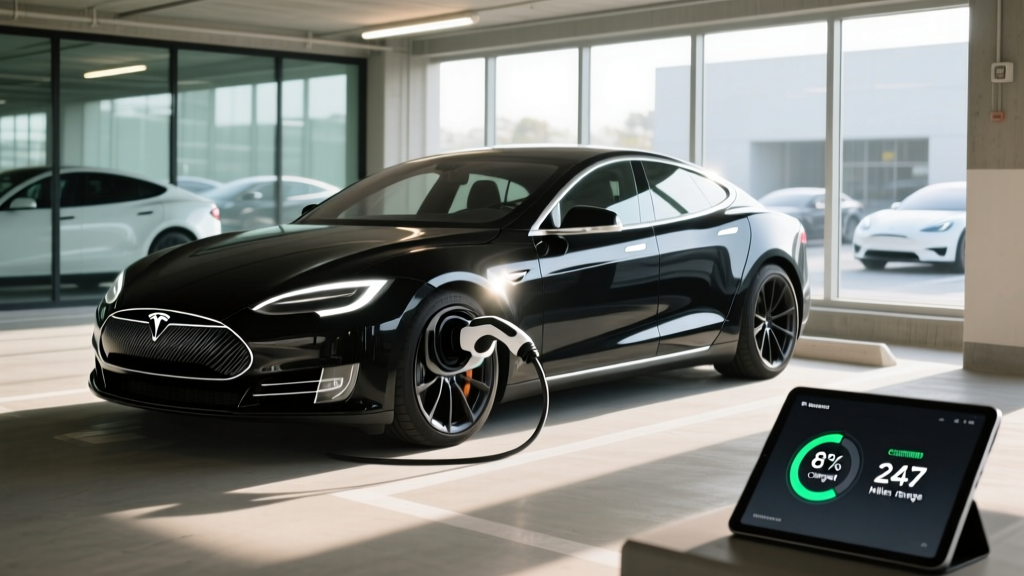
| Level 2 Home Charge Rate | 11.5 kW (~44 miles/hr) |
| Combined MPGe | 123 MPGe |
| Efficiency | 27 kWh/100 mi |
| Cargo Volume (rear seats up / folded) | 30.2 / 72.1 cu ft |
| Rear Legroom | 38.4 inches |
| Battery & Drive Unit Warranty | 8 years / 100,000 miles (70% retention) |
| Base MSRP | $44,990 (including destination) |
Real-World Range: What the EPA Sticker Doesn't Tell You
EPA Estimate: 290 miles
Real-World Expectation: 245–265 miles at sustained highway speeds (70–80 mph); 220–240 miles in freezing temperatures (below 32°F). City driving with regenerative braking can approach or slightly exceed the EPA figure.
The LFP chemistry in the Standard Range Model Y trades energy density for longevity and cost. You get a smaller ~60 kWh usable pack compared to the 75 kWh NMC pack in the Long Range AWD model, which means fewer total miles between charges. According to fueleconomy.gov, the combined efficiency rating of 123 MPGe is competitive, but the smaller battery is the limiting factor on road trips.
In practical terms, a 300-mile interstate drive at 75 mph in 40°F weather will require at least one DC fast-charge stop. LFP batteries also have a flatter voltage curve, which means the car's range estimator can be less precise at mid-state-of-charge — Tesla recommends periodically charging to 100% to recalibrate the BMS, which is actually beneficial for LFP longevity.
Charging Performance: Speed, Curve, and Home Setup
Charging speed is where the LFP Model Y shows its most visible compromise compared to the Long Range variant and competitors built on 800V architectures.
| Charging Level | Power | Speed (Miles Added/Hour) | Notes |
|---|---|---|---|
| Level 1 (120V household) | ~1.4 kW | ~5 mi/hr | Emergency/trickle only |
| Level 2 (240V, 48A) | 11.5 kW | ~44 mi/hr | Full overnight charge in ~6 hours |
| DC Fast Charge (peak) | 170 kW | ~650 mi/hr (peak) | 10–80% in ~28 min; tapers sharply above 80% |
| Tesla Supercharger V4 | Up to 170 kW (car-limited) | Varies | Widely available; reliable network |
The 170 kW peak charge rate is adequate but not class-leading. The Hyundai Ioniq 5 peaks at 240 kW on a 350 kW charger and hits 10–80% in roughly 18 minutes. The Model Y LFP's charge curve holds near peak from roughly 10–50% SoC, then steps down progressively — expect 50–80% to take nearly as long as 10–50%.
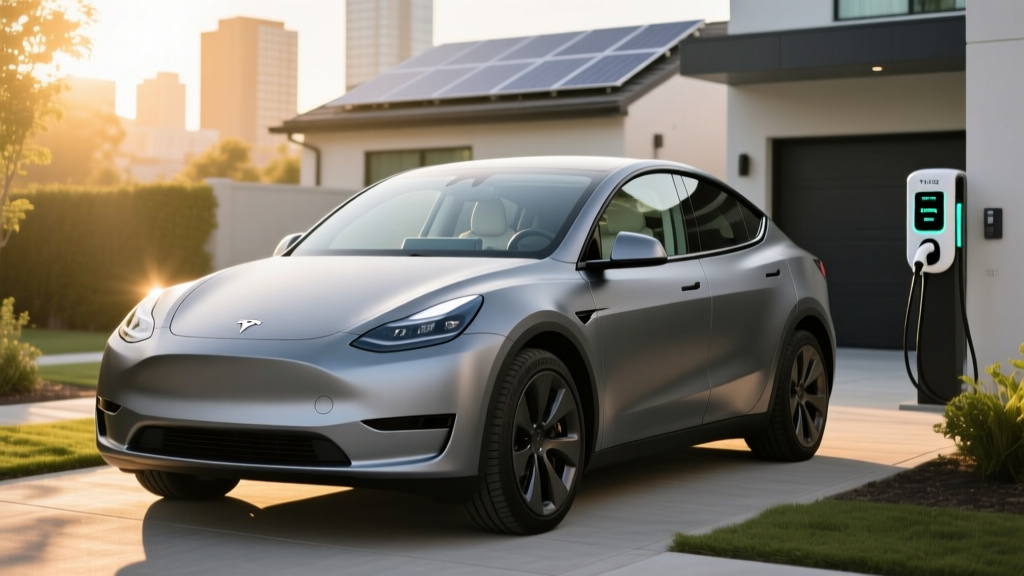
For home charging, a Level 2 wall connector on a 60A circuit (48A continuous) delivers a full charge overnight. Installation costs vary widely: expect $800–$2,000 for a straightforward install near the panel, or $2,500–$5,000+ if a panel upgrade (200A service) is needed. Always consult a licensed electrician for final specifications.
Preconditioning matters. Navigating to a Supercharger via the car's built-in navigation triggers battery preconditioning — warming the pack to optimal temperature for faster charging. If you pull up to a charger without preconditioning (especially in cold weather), your peak charge rate may be cut in half for the first several minutes.
Pricing, Tax Credits, and the Value Equation
The headline price of the 2026 Model Y Standard Range RWD is $44,990 including destination — a figure that has fluctuated significantly over the past two years as Tesla adjusted pricing in response to demand and competition. But the effective price depends heavily on federal incentive eligibility.
| Scenario | Effective Price |
|---|---|
| Base MSRP (no credit) | $44,990 |
| With $7,500 §30D credit (point-of-sale) | $37,490 |
| With $3,750 partial credit (sourcing phase) | $41,240 |
| As-tested with FSD Supervised ($8,000) | $52,990 (before credit) |
Under current IRS §30D rules, the full $7,500 federal tax credit requires the vehicle to meet both critical-mineral sourcing and battery-component manufacturing requirements. Tesla's LFP cells are manufactured in the U.S., but the critical-minerals supply chain compliance can shift based on annual regulatory updates. Check the latest eligibility list at IRS.gov before purchasing.
Additionally, §30D imposes buyer income caps ($150,000 single / $300,000 joint for modified AGI), an MSRP cap of $80,000 for SUVs (the Model Y qualifies), and the credit can now be transferred to the dealer as a point-of-sale discount. Always verify your personal eligibility with a tax professional — rules are subject to legislative change.
Driving Dynamics, Tech, and Daily Livability
The single-motor RWD Model Y delivers 295 horsepower and a 6.6-second 0–60 time. That's brisk by any compact SUV standard, though noticeably a step behind the dual-motor Long Range (5.0 seconds) and the Performance variant (3.5 seconds). For daily commuting and highway merging, the RWD model has more than adequate thrust.
Interior and cargo: The refreshed interior features ventilated front seats, ambient lighting, and a rear-seat touchscreen. Cargo space is generous at 30.2 cu ft behind the second row and 72.1 cu ft with seats folded — competitive with the Ioniq 5 (56.2 cu ft max) and significantly more than the Mach-E (59.7 cu ft max). The front trunk (frunk) adds 4.1 cu ft for charging cables or small bags.
Driver assistance: Basic Autopilot (traffic-aware cruise control and lane centering) is standard. Full Self-Driving (Supervised) remains a $8,000 option — and it is critical to understand this is an SAE Level 2 system requiring continuous driver supervision. It is not autonomous driving. The system excels on well-marked highways but can struggle with construction zones, faded lane markings, and complex urban intersections.
ADAS Reality Check: Tesla Autopilot and FSD (Supervised) are SAE Level 2 driver-assistance systems. You must keep your hands on the wheel and eyes on the road at all times. The car will not drive itself. For true driverless operation (Level 4), only Waymo's robotaxi service currently qualifies — and it's limited to specific metro areas.
Standout tech: Over-the-air updates continue to add features post-purchase. The 15.4-inch center touchscreen handles all vehicle controls (no physical buttons for climate or mirrors). Sentry Mode, Dog Mode, and the Tesla app ecosystem remain industry benchmarks. However, the lack of Apple CarPlay/Android Auto and the absence of physical stalks (turn signals are on the steering wheel) continue to polarize buyers.
Competitive Comparison: Where the LFP Model Y Stands
The value-drop narrative only makes sense in context. Here's how the Model Y Standard Range RWD stacks up against three key rivals at similar price points:
| Metric | Tesla Model Y Std Range | Hyundai Ioniq 5 SE Std Range | Ford Mach-E Select RWD | Chevy Equinox EV 2LT |
|---|---|---|---|---|
| Base MSRP | $44,990 | $42,600 | $42,995 | $43,900 |
| EPA Range | 290 mi | 240 mi | 250 mi | 315 mi |
| Peak DC Charge | 170 kW | 240 kW | 150 kW | 190 kW |
| 10–80% Time | ~28 min | ~18 min | ~37 min | ~30 min |
| Cargo (max) | 72.1 cu ft | 56.2 cu ft | 59.7 cu ft | 63.5 cu ft |
| NACS Native | Yes | Yes (2026) | No (adapter) | No (adapter) |
The Model Y wins decisively on cargo space and Supercharger network access. The Ioniq 5 dominates on DC charging speed. The Equinox EV offers the most EPA range in this group. None of these comparisons have a clear single winner — the right choice depends on your priorities.
Pros and Cons
Pros
- Class-leading cargo volume (72.1 cu ft) and practical liftback design
- Native NACS connector with full Tesla Supercharger network access — still the most reliable DC charging ecosystem
- LFP battery chemistry offers excellent cycle life (2,000+ cycles to 80% SoH) and no cobalt
- Strong over-the-air update cadence keeps the car improving post-purchase
- Competitive efficiency at 27 kWh/100 mi keeps charging costs low
- Comprehensive Tesla app and mobile service infrastructure
Cons
- 170 kW peak charge rate is below class average; road-trip stops take longer than Ioniq 5 or Ioniq 6
- No Apple CarPlay or Android Auto — all navigation and media through Tesla's proprietary system
- LFP battery performs poorly in extreme cold — expect 20–30% range loss below freezing
- Turn signals on steering wheel (no stalks) require re-learning for many drivers
- Ride quality is firm; road noise is noticeable on coarse pavement
- FSD Supervised at $8,000 remains a Level 2 system — questionable value for most buyers
Who Should Buy the 2026 Model Y LFP — and Who Shouldn't
Choose the Model Y Standard Range LFP if:
- You charge primarily at home and need a daily driver with 240+ real-world miles
- Cargo space and passenger comfort are top priorities (families, gear-haulers)
- You value the Supercharger network for road-trip reliability
- You plan to keep the car 8+ years and want LFP's superior cycle life
- You qualify for the full $7,500 §30D credit, bringing the effective price near $37,500
Look elsewhere if:
- You regularly drive in sub-freezing climates and need maximum cold-weather range
- DC charging speed is critical (frequent long road trips with tight schedules)
- You want Apple CarPlay/Android Auto integration
- You need AWD — the Standard Range is RWD only; step up to Long Range AWD ($49,990+)
Frequently Asked Questions
What is the real-world range of the 2026 Tesla Model Y Standard Range?
The EPA rates it at 290 miles. In real-world highway driving at 70–80 mph, expect 245–265 miles. In freezing temperatures, that can drop to 220–240 miles. City driving with frequent regenerative braking can match or slightly exceed the EPA figure.
How fast does the Model Y LFP charge at home and on DC fast chargers?
At home on a Level 2 (240V, 48A) charger, it adds roughly 44 miles per hour, reaching a full charge in about 6 hours. On a DC fast charger, it peaks at 170 kW and charges from 10–80% in approximately 28 minutes, with significant tapering above 80% SoC.
Does the 2026 Model Y qualify for the $7,500 federal EV tax credit?
It can, but eligibility depends on current-year IRS §30D rules including battery critical-mineral sourcing, buyer income caps ($150K single / $300K joint), and the $80,000 MSRP cap for SUVs. The credit can be applied as a point-of-sale discount. Always verify at IRS.gov and consult a tax professional before purchasing.
Is the LFP battery better or worse than NMC?
LFP offers significantly longer cycle life (2,000+ full cycles vs. ~1,000–1,500 for NMC), better thermal stability, and no cobalt. The trade-off is lower energy density (fewer miles per kWh of battery weight) and worse cold-weather performance. For daily commuting and long ownership horizons, LFP is arguably the better choice. For maximum range and cold-climate driving, NMC wins.
Is the Model Y LFP worth buying over the Hyundai Ioniq 5 or Chevrolet Equinox EV?
The Model Y wins on cargo space, Supercharger access, and LFP longevity. The Ioniq 5 wins on DC charging speed (18 min vs. 28 min, 10–80%). The Equinox EV wins on EPA range (315 mi vs. 290 mi). If road-trip charging reliability and cargo volume matter most, the Model Y holds its value proposition — especially at $37,490 after the tax credit.
What is the battery warranty on the Model Y Standard Range?
Tesla covers the battery and drive unit for 8 years or 100,000 miles (whichever comes first), with a minimum 70% capacity retention guarantee. If the battery degrades below 70% State of Health within that period, Tesla will repair or replace it. LFP chemistry typically degrades more slowly than NMC in daily use, especially if charged to 100% regularly as Tesla recommends for this pack.