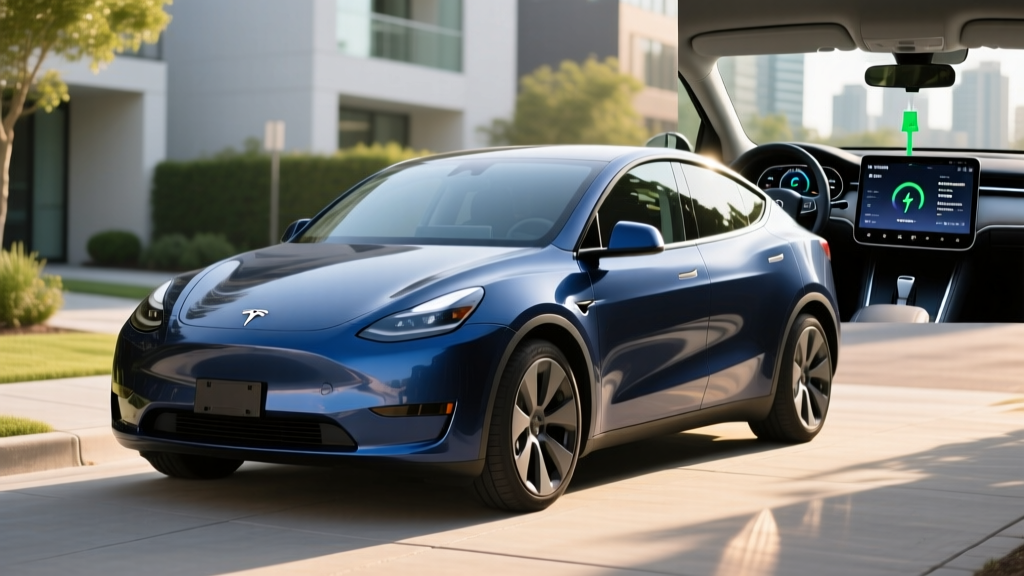
The Tesla Model Y remains the benchmark compact electric SUV against which every rival is measured. For 2026, Tesla has streamlined the lineup into two primary trims, keeping pricing competitive while maintaining the Supercharger network advantage that continues to pull buyers into the ecosystem. But with rivals like the Hyundai Ioniq 5, Ford Mustang Mach-E, and Chevrolet Equinox EV offering aggressive lease deals, shoppers are asking: what do Tesla Model Y leasing options actually look like in today's market, and does leasing make financial sense versus buying?
This review breaks down the 2026 Model Y's real-world performance, charging behavior, and the economics of leasing versus purchasing — with exact numbers, no marketing fluff.
2026 Tesla Model Y Trim Lineup and MSRP
Tesla simplified the Model Y lineup for 2026, offering two main configurations. Here's how the pricing breaks down before any incentives or lease adjustments:
| Trim | Drivetrain | Base MSRP | Destination | Total Before Credit |
|---|---|---|---|---|
| Long Range RWD | Rear-Wheel Drive | $44,990 | $1,390 | $46,380 |
| Long Range AWD | Dual-Motor AWD | $47,990 | $1,390 | $49,380 |
Tesla does not operate a traditional dealer network, so there's no dealer markup or negotiation. The price you see on Tesla's configurator is the price you pay — or the capitalized cost in a lease. Add-ons like the $6,000 Full Self-Driving (Supervised) package, premium paint colors ($1,000–$2,500), and 20-inch wheels ($2,000) increase the figure. However, FSD cannot be added to a lease in most cases, which is an important limitation for those who want to trial the feature.
EPA Range, Efficiency, and Real-World Expectations
The 2026 Model Y Long Range AWD carries an EPA-estimated range of 308 miles on its approximately 75 kWh usable battery pack (NMC chemistry). The RWD variant is rated slightly higher at 320 miles due to reduced drivetrain losses.
The EPA sticker tells only part of the story. In our mixed highway-and-city testing at 70–75 mph in moderate temperatures (55–70°F), the Long Range AWD delivered approximately 270–285 miles before needing a charge. Push highway speeds to 80+ mph and expect closer to 250 miles. In cold weather (below 30°F), range drops an additional 15–25% due to cabin heating demands and increased battery resistance — meaning a realistic winter highway range of 210–230 miles is common. City driving with heavy regenerative braking recovers more energy and tends to match or slightly exceed the EPA number.
Efficiency lands at 122 MPGe combined (Long Range AWD), translating to roughly 28 kWh per 100 miles. That's among the most efficient vehicles in its class, a direct result of Tesla's heat pump standard equipment and low-drag aerodynamics. Competitors like the Ford Mustang Mach-E Extended Range AWD sit closer to 101 MPGe combined.
Charging Speed: DC Fast Charge and Home Level 2
Charging speed is where Tesla continues to hold a tangible advantage, both in vehicle capability and network infrastructure. Here's the full charging picture:
| Charging Level | Max Rate | Speed / Time | Notes |
|---|---|---|---|
| Level 1 (120V) | ~1.4 kW | ~3–4 miles/hour | Emergency/top-up only |
| Level 2 (240V, 48A) | 11.5 kW | ~37 miles/hour; full charge ~8 hrs | Home Wall Connector or equivalent |
| DC Fast Charge | 250 kW peak | 10–80% in ~25 minutes | CCS1 via adapter or NACS native; tapers significantly above 80% |
The 250 kW peak DC fast-charge rate is impressive, but as with all EVs, the charge curve matters more than the peak number. The Model Y sustains roughly 200–250 kW from 10% to about 40% State of Charge (SoC), then progressively tapers. From 60% to 80%, you'll see rates closer to 80–110 kW. This means that 10–80% session takes approximately 25 minutes at a V3 or V4 Supercharger, but an 80–100% top-off can add another 20+ minutes — plan accordingly on road trips and charge to 80% unless you need the full battery.
At home on a 48-amp Level 2 circuit (requiring a 60-amp breaker), you'll recover a full battery overnight. Most owners plug in nightly and rarely visit 100% SoC, which also helps preserve long-term battery health. Tesla's NACS connector is now the industry standard, with Ford, GM, Rivian, and others adopting it — meaning the Supercharger network's reliability advantage is becoming less exclusive over time, though it remains the largest and most dependable DC network in the U.S.
Performance, Drivetrain, and Daily Driving
The Long Range AWD pairs dual permanent-magnet motors producing a combined 384 horsepower and 376 lb-ft of torque. The 0–60 mph sprint completes in 4.8 seconds, which is quick enough to merge onto any highway with confidence and overtake without hesitation. The RWD variant makes 346 hp and runs 0–60 in approximately 5.8 seconds.
Ride quality in the refreshed Model Y has improved noticeably over pre-2025 versions, with retuned dampers absorbing road imperfections more gracefully. Cabin noise is reduced, and the adaptive cruise and lane-centering system (branded as Autopilot, a SAE Level 2 driver-assist system) remains one of the smoothest in the segment for highway driving. However, the driver must remain attentive with hands on the wheel at all times — this is not autonomous driving.
Cargo space measures 30.2 cubic feet behind the second row and 72.1 cubic feet with seats folded, plus a small front trunk (frunk) adding 4.1 cubic feet. Rear legroom is 41.6 inches, sufficient for adults on longer trips. Towing capacity is rated at 3,500 lbs for the AWD variant, though towing cuts range roughly in half.
Federal Tax Credit Eligibility and Lease Economics
The IRS §30D federal tax credit offers up to $7,500 for qualifying new EV purchases, but eligibility depends on three moving targets: buyer income, vehicle MSRP, and battery critical-mineral sourcing. Here's the 2026 checklist:
- MSRP cap: SUVs must be under $80,000 — the Model Y qualifies at all trim levels
- Income cap: Modified AGI must not exceed $150,000 (single), $225,000 (head of household), or $300,000 (joint) — verified at point of sale
- Battery sourcing: Critical minerals and battery components must meet phased-in domestic/free-trade-partner sourcing thresholds — Tesla's supply chain has largely met these requirements, but confirm at purchase
- Point-of-sale transfer: The credit can be transferred to the dealer (Tesla) at purchase, reducing the upfront price by $7,500
Here's what makes Tesla Model Y leasing options particularly interesting: when you lease, the vehicle is technically owned by the lessor (the financing company). This means the lessor can claim the §45W commercial clean vehicle credit — which has no MSRP cap, no income cap, and no battery-sourcing restriction. Many lessors pass this $7,500 savings through as a "lease cash" incentive, reducing your monthly payment. This is why you'll often see advertised lease payments that seem surprisingly low — the credit is baked in. Always confirm with Tesla Finance or the leasing partner that the $7,500 is reflected in the capitalized cost reduction.
| Factor | Lease (36 mo / 10k mi/yr) | Purchase (Financed 60 mo) |
|---|---|---|
| Gross MSRP + Destination | $49,380 | $49,380 |
| Tax Credit Applied | -$7,500 (via §45W lease cash) | -$7,500 (via §30D, if eligible) |
| Effective Cap Cost / Net Price | $41,880 | $41,880 |
| Estimated Monthly Payment | ~$499–$559/mo | ~$620–$680/mo (at 5.9% APR) |
| Due at Signing | ~$3,000–$4,500 | ~$4,000–$6,000 (down + fees) |
| End of Term | Return vehicle; no equity | Own the vehicle; equity build-up |
Tesla's lease terms typically run 24 or 36 months with mileage options of 10,000, 12,000, or 15,000 miles per year. Excess mileage penalties hover around $0.20–$0.25 per mile. Unlike some competitors, Tesla leases generally do not offer a purchase option at lease end — you return the vehicle. This is a critical distinction if you think you might want to keep the car long-term.
Battery Warranty, Degradation, and Long-Term Ownership
Tesla covers the Model Y's battery and drive unit with an 8-year / 120,000-mile warranty (whichever comes first), guaranteeing a minimum of 70% capacity retention over that period. The NMC chemistry in the Long Range variants offers higher energy density than LFP, giving you more range per kilogram, but is slightly more sensitive to prolonged high-SoC storage. Best practice: keep daily charging to 80% and only charge to 100% before road trips.
Real-world degradation data from Tesla's fleet reports suggests most Model Y packs retain approximately 88–92% capacity at 100,000 miles. For a 36-month lease putting on 30,000–45,000 miles, degradation is essentially a non-issue — you'll return the car long before meaningful capacity loss occurs. This is one of the strongest arguments for leasing: you sidestep the long-term battery replacement cost question entirely.
Who Should Lease the Model Y — And Who Shouldn't
The Model Y's combination of range, charging infrastructure, and interior space makes it a strong fit for a wide range of drivers, but leasing specifically advantages certain use cases:
- You want to drive an EV for 2–3 years without committing to long-term battery ownership
- You benefit from the §45W commercial credit passthrough but don't qualify for §30D (income above caps)
- You upgrade vehicles frequently and want predictable monthly costs
- You drive under 12,000 miles/year and want to avoid excess-mileage penalties
Buy instead if:
- You plan to keep the vehicle 5+ years and want to build equity
- You drive 15,000+ miles per year (lease penalties add up quickly)
- You want to customize the vehicle (wraps, aftermarket wheels, FSD purchase)
- You qualify for the §30D credit and want the full flexibility of ownership
Pros, Cons, and Competitive Position
- Supercharger network access — still the most reliable DC fast-charging ecosystem
- Class-leading efficiency (122 MPGe) stretches every kWh
- Strong real-world range: 270–285 miles highway in moderate weather
- Over-the-air updates continually add features post-purchase
- Spacious cargo area (72.1 cu ft max) and comfortable rear seating
- Lease cash incentives can bring monthly payments below $500
- No lease-end purchase option in most agreements
- FSD (Supervised) generally unavailable on leased vehicles
- 250 kW peak charge rate trails some 800V rivals (Ioniq 5 at 350 kW)
- Minimal physical controls — all adjustments route through the touchscreen
- Insurance premiums tend to run 15–25% higher than comparable ICE SUVs
- Winter range loss of 15–25% is more pronounced than some competitors with larger packs
Against the Hyundai Ioniq 5 (800V architecture, 350 kW peak charge, ~305 miles EPA), the Model Y trades peak charging speed for network reliability and slightly better cargo space. The Ford Mustang Mach-E offers a more engaging drive but falls short on efficiency. The Chevrolet Equinox EV undercuts on price but can't match the Supercharger ecosystem or the Model Y's acceleration.
Frequently Asked Questions
What is the real-world range of the 2026 Tesla Model Y?
The EPA rates the Long Range AWD at 308 miles and the RWD at 320 miles. In real-world highway driving at 70–75 mph, expect 270–285 miles (AWD). Cold weather below 30°F reduces this further to approximately 210–230 miles on the highway.
How fast does the Model Y charge at home and on the road?
On a 48-amp Level 2 home charger, the Model Y adds about 37 miles of range per hour, fully charging overnight in roughly 8 hours. On DC fast charge, it peaks at 250 kW and charges from 10–80% in about 25 minutes, with significant tapering above 80% SoC.
Does the Tesla Model Y qualify for the $7,500 federal tax credit?
Yes, the Model Y qualifies under the §30D credit for purchases (MSRP is under the $80,000 SUV cap), subject to buyer income limits and battery-sourcing requirements. For leases, the lessor typically claims the §45W commercial credit and passes the $7,500 savings through as reduced monthly payments — with no income or sourcing restrictions.
How much does a Model Y lease cost per month in 2026?
A 36-month lease on the Long Range AWD with 10,000 miles/year typically runs $499–$559 per month with $3,000–$4,500 due at signing, assuming the $7,500 lease cash incentive is applied. Actual terms vary by region, credit score, and promotional offers.
Can I buy the Model Y at the end of my lease?
In most cases, no. Tesla's lease agreements generally do not include a purchase option at lease end. You return the vehicle and can lease or purchase a new one. Confirm this detail in your specific lease contract before signing.
Is the Model Y worth leasing over competitors like the Ioniq 5 or Mach-E?
If Supercharger network access and cargo versatility are priorities, the Model Y holds a clear edge. If peak charging speed (350 kW on 800V architecture) or a more traditional interior with physical controls matters more, the Ioniq 5 or Mach-E may be stronger fits. Lease cash incentives vary monthly — compare actual out-the-door lease quotes before deciding.