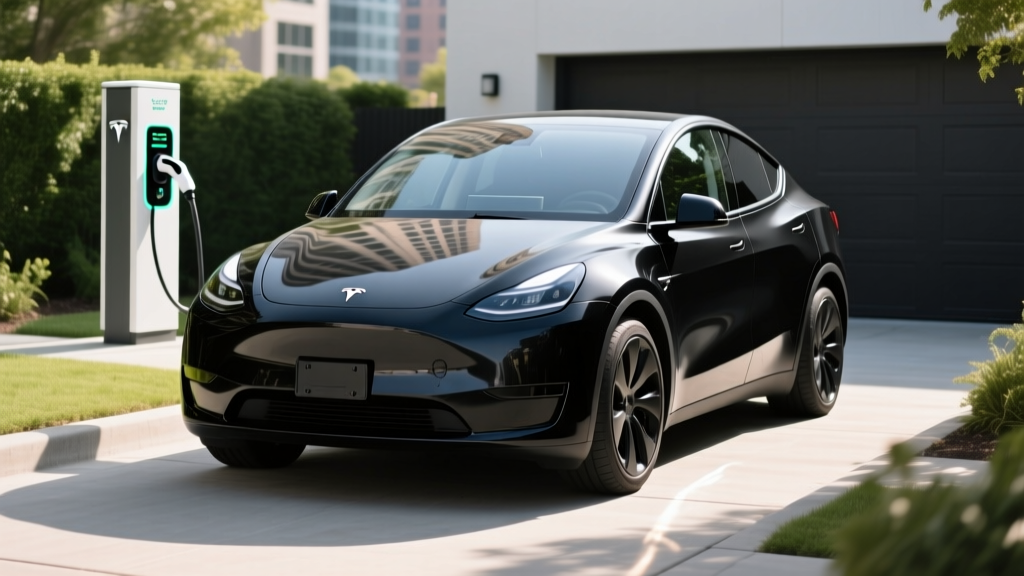
The Tesla Model Y remains the best-selling electric vehicle in the United States for good reason: it pairs crossover practicality with a mature Supercharger network and competitive efficiency. But for buyers weighing a lease versus a purchase in 2026, the financial picture is more nuanced than a simple monthly payment. Federal tax credit rules under IRS §30D, Tesla's own leasing structure, and fluctuating incentive programs all shape what you'll actually pay. This review breaks down the 2026 Model Y's real-world capabilities alongside the leasing incentives and tax credit mechanics that determine its true cost.
2026 Tesla Model Y: Quick Verdict
The refreshed Model Y (internally dubbed "Juniper") carries over the core formula that made it a segment leader while adding a slightly larger battery, revised suspension tuning, and a quieter cabin. For lessees, the critical question isn't just whether the car is good — it's whether leasing captures more value than buying, especially given how the federal EV tax credit applies differently to leases versus purchases. In 2026, Tesla's lease deals periodically include subsidized money factors and loyalty incentives, but the §30D credit's treatment under a lease requires careful attention to dealer structuring.
Range, Efficiency, and Real-World Expectations
Real-World Expectation: Plan for 260–290 miles on highway road trips at 70–75 mph. In freezing temperatures (below 30°F), expect a 15–25% reduction, bringing effective range to roughly 210–250 miles for the Long Range variant. City driving with regenerative braking recovers closer to the EPA sticker.
The 2026 Long Range AWD Model Y uses a ~78 kWh usable battery pack with NMC (nickel manganese cobalt) chemistry, balancing energy density with longevity. The RWD Standard trim uses a ~60 kWh LFP (lithium iron phosphate) pack — heavier but more durable over thousands of charge cycles, and Tesla recommends charging LFP packs to 100% regularly, unlike NMC where 80–90% daily limits are preferred.
Efficiency ratings land at 122 MPGe combined (Long Range AWD) and roughly 27 kWh per 100 miles, making the Model Y one of the most efficient electric crossovers available. That efficiency translates directly into lower charging costs and more usable miles per session.
| Specification | RWD Standard | Long Range AWD | Performance AWD |
|---|---|---|---|
| EPA Range | 280 mi | 320 mi | 295 mi |
| Battery (usable) | ~60 kWh (LFP) | ~78 kWh (NMC) | ~78 kWh (NMC) |
| Efficiency | 127 MPGe / 26 kWh/100mi | 122 MPGe / 27 kWh/100mi | 115 MPGe / 29 kWh/100mi |
| 0–60 mph | 6.6 sec | 4.8 sec | 3.5 sec |
| Horsepower | 295 hp | 384 hp | 456 hp |
| Drivetrain | RWD single motor | AWD dual motor | AWD dual motor |
| Base MSRP | $44,990 | $49,990 | $54,990 |
Charging Speed: DC Fast, Level 2, and the Supercharger Advantage
Charging speed is where the Model Y continues to outperform many competitors, thanks to Tesla's thermal management system and the maturity of the Supercharger network (now open to NACS-equipped vehicles from other brands as well).
| Charging Level | Power | Speed / Time | Notes |
|---|---|---|---|
| DC Fast Charge (Peak) | 250 kW | 10–80% in ~22 min | Peak rate sustained to ~50% SoC; tapers significantly above 80% |
| DC Fast Charge (Average 10–80%) | ~170 kW avg | ~180 miles added in 15 min | Realistic session average accounting for curve taper |
| Level 2 (Home / Destination) | 11.5 kW (48A) | ~37 miles per hour | Full charge in ~7–8 hours (Long Range) |
| Level 1 (120V outlet) | 1.4 kW | ~4 miles per hour | Emergency/trickle only — not viable for daily use |
A critical nuance for road-trippers: the Model Y's charge curve peaks early and tapers aggressively past 50–60% state of charge. On a 250 kW Supercharger, you'll see peak speeds briefly, but the average rate across a 10–80% session is closer to 170 kW. This is still excellent — but don't expect to sustain 250 kW for the full session. Preconditioning the battery (automatic when navigating to a Supercharger) is essential for achieving peak rates, especially in cold weather.
At home, an 11.5 kW Level 2 wall connector on a 60A circuit adds roughly 37 miles of range per hour of charging. Most owners charging overnight from 20–80% will wake to a full daily-ready battery in about 5 hours. Installation costs for a home Level 2 setup typically range from $500 (simple outlet near panel) to $2,500+ if a panel upgrade or long conduit run is needed.
Leasing Incentives, Pricing, and the §30D Tax Credit Question
This is where 2026 Model Y shoppers need to pay close attention. Tesla does not traditionally offer the aggressive lease subsidies that legacy automakers sometimes use to move metal, but periodic leasing incentives do appear — typically in the form of reduced money factors (the lease equivalent of an interest rate), complimentary Supercharging credits, or loyalty discounts for existing Tesla owners.
Federal Tax Credit: Lease vs. Purchase
Under IRS §30D rules, the $7,500 federal EV tax credit is available to qualifying buyers who purchase a new Model Y, subject to several constraints:
- MSRP Cap: The Model Y qualifies as an SUV under IRS guidelines, so the cap is $80,000 — all current trims clear this easily.
- Buyer Income Cap: Modified adjusted gross income must not exceed $150,000 (single), $225,000 (head of household), or $300,000 (joint filers).
- Battery Sourcing: Critical minerals and battery components must meet phased-in domestic/free-trade-agreement sourcing thresholds. As of 2026, most Model Y variants built at Giga Texas or Giga Fremont meet these requirements, but always verify the specific VIN's eligibility via the IRS's dealer portal at the time of purchase.
- Point-of-Sale Transfer: Buyers can elect to transfer the credit to the dealer at purchase, reducing the purchase price by $7,500 upfront rather than waiting for a tax refund. (Source: IRS.gov)
What About Leasing?
When you lease a Model Y, the federal §30D credit technically goes to the lessor (Tesla Finance or the leasing entity), not to you. However, many lessors pass the credit's value through as a capitalized cost reduction — effectively lowering your monthly payment by the credit's equivalent. This "lease loophole" (also known as the commercial clean vehicle credit passthrough under §45W) has been a standard practice, but its availability depends on Tesla's current lease structuring. Always confirm with the leasing desk whether the $7,500 equivalent is being applied to your lease's cap cost.
| Trim | Base MSRP | Est. Monthly Lease (36 mo, $4,500 down)* | After §30D Credit (Purchase) |
|---|---|---|---|
| RWD Standard | $44,990 | ~$549/mo | ~$37,490 effective |
| Long Range AWD | $49,990 | ~$619/mo | ~$42,490 effective |
| Performance AWD | $54,990 | ~$699/mo | ~$47,490 effective |
*Lease estimates are illustrative based on typical Tesla Finance money factors and residual values for 2026. Actual offers vary by region, credit tier, and current incentive programs. Always verify current terms on Tesla.com.
Interior, Cargo, and Daily Practicality
The Model Y's cabin is minimalist in the extreme — a single 15.4-inch touchscreen handles navigation, climate, media, and vehicle settings. The 2026 Juniper refresh added ambient lighting, ventilated front seats, a rear-seat touchscreen for passengers, and improved acoustic glass that noticeably reduces highway wind noise.
Cargo space remains a strong suit:
- Rear seats up: 30.2 cu ft behind the second row
- Rear seats folded: 72.1 cu ft of total cargo volume
- Front trunk (frunk): 4.1 cu ft — useful for charging cables or a small bag
- Rear legroom: 41.6 inches — generous for adults on longer trips
The Model Y is rated to tow up to 3,500 lbs when equipped with the optional tow hitch, adequate for a small trailer or a pair of dirt bikes but not for heavy boat or camper duty.
Technology, Driver Assistance, and Safety
Every Model Y comes with Tesla Autopilot as standard, which includes adaptive cruise control, lane-keeping assist, and automatic emergency braking. This is an SAE Level 2 driver-assistance system — it does not make the car self-driving. You must keep your hands on the wheel and your eyes on the road at all times.
The optional Full Self-Driving (Supervised) package ($8,000 or $99/month subscription in 2026) adds features like automatic lane changes, navigate-on-autopilot, and traffic-light recognition. Despite the name, FSD remains a Level 2 system. Its real-world performance has improved significantly, but it still requires attentive supervision and can struggle with construction zones, faded lane markings, and complex intersections.
Safety ratings are excellent: the Model Y earned a 5-star overall rating from NHTSA and IIHS Top Safety Pick+ designation, with top marks in crashworthiness and crash avoidance. (Source: NHTSA.gov)
Warranty and Long-Term Ownership Costs
Tesla's warranty coverage is competitive but not class-leading:
- Basic Vehicle: 4 years / 50,000 miles
- Battery & Drive Unit: 8 years / 120,000 miles (Long Range/Performance) — guaranteed to retain at least 70% capacity during the warranty period
- Battery & Drive Unit (RWD): 8 years / 100,000 miles — same 70% retention threshold
Battery degradation data from Tesla's fleet reports and third-party tracking shows that Model Y packs typically lose about 10–12% capacity over the first 100,000 miles, with the curve flattening significantly afterward. LFP packs in the RWD model tend to degrade even more slowly, though they start with less total capacity.
For lessees, battery longevity is largely a moot point — you'll return the car before degradation becomes meaningful. For buyers planning to keep the vehicle 8+ years, the warranty provides solid peace of mind, though out-of-warranty battery replacement costs remain steep ($12,000–$16,000 based on current service estimates).
Pros
- Best-in-class Supercharger network access (17,000+ stalls in North America)
- Top-tier efficiency — 122 MPGe combined means lower fuel costs
- Strong 0–60 performance across all trims (3.5–6.6 sec)
- Over-the-air updates continuously add features
- Excellent safety ratings (NHTSA 5-star, IIHS TSP+)
- Generous cargo space (72.1 cu ft max) with practical frunk
Cons
- Minimalist interior lacks physical buttons — not for everyone
- FSD (Supervised) is expensive and still requires full driver attention
- Lease terms less flexible than some competitors (mileage penalties, no early buyout option in some states)
- Ride quality firm on larger wheel options (20" Induction wheels)
- No Apple CarPlay or Android Auto — Tesla's native UI only
Is the Model Y Worth Leasing Over Key Competitors?
The Model Y's competitive set has grown significantly. Here's how it stacks up against three popular alternatives:
| Category | Tesla Model Y LR AWD | Hyundai Ioniq 5 Limited | Ford Mustang Mach-E Premium | Kia EV6 GT-Line AWD |
|---|---|---|---|---|
| EPA Range | 320 mi | 305 mi | 300 mi | 282 mi |
| Peak DC Charge | 250 kW | 240 kW | 150 kW | 240 kW |
| 10–80% Time | ~22 min | ~18 min | ~38 min | ~18 min |
| Cargo (rear up) | 30.2 cu ft | 27.2 cu ft | 29.7 cu ft | 24.4 cu ft |
| Charging Network | Supercharger (native) | NACS adapter / EA | NACS adapter / varied | NACS adapter / EA |
| Base Price | $49,990 | $53,500 | $48,995 | $54,400 |
The Model Y wins on range, cargo space, and charging-network convenience. The Ioniq 5 and EV6 charge faster on paper (their 800V architecture enables steeper charge curves in the mid-range), and both offer Apple CarPlay. The Mach-E is the value play but charges noticeably slower. If Supercharger reliability and maximum range are your top priorities, the Model Y remains the default choice. If you prefer a more traditional interior with physical controls and faster mid-session charging, the Ioniq 5 or EV6 are compelling alternatives.
Who Should Lease the 2026 Model Y?
The Model Y lease makes the most sense for:
- Daily commuters driving 30–60 miles round-trip who can charge at home overnight and want minimal fuel cost.
- Small families needing car-seat space, cargo flexibility, and strong safety ratings without stepping up to a larger (and pricier) SUV.
- Tech-forward buyers who value OTA updates, the Tesla app ecosystem, and Supercharger convenience over traditional dealership service experiences.
- Lessee-optimizers who want to drive a new EV every 3 years without worrying about long-term battery depreciation or out-of-warranty repair risk.
It's a less ideal fit for buyers who need more than 3,500 lbs of towing capacity, those in extreme-cold climates without garage charging (range loss is real), or anyone who strongly prefers physical dashboard controls and smartphone integration via CarPlay.
Frequently Asked Questions
What is the real-world range of the 2026 Tesla Model Y?
The EPA rates the Long Range AWD at 320 miles and the RWD Standard at 280 miles. In real-world highway driving at 70–75 mph, expect roughly 260–290 miles. In cold weather (below 30°F), range can drop 15–25%, so plan for 210–250 miles in winter conditions with the Long Range model.
How fast does the Model Y charge at home and on the road?
On a DC fast charger, the Model Y peaks at 250 kW and charges from 10–80% in approximately 22 minutes, though the average session rate is closer to 170 kW due to charge-curve taper. At home on a Level 2 (11.5 kW / 48A) wall connector, it adds about 37 miles of range per hour, fully recharging overnight.
How much does the Model Y cost after the federal tax credit?
If you purchase and qualify for the full $7,500 §30D credit (meeting income, MSRP, and battery-sourcing requirements), the effective price drops to approximately $37,490 for the RWD, $42,490 for the Long Range, and $47,490 for the Performance trim. Lease structures may pass through equivalent savings as a cap-cost reduction, but this is not guaranteed — confirm with the lessor.
Does the 2026 Model Y qualify for the federal EV tax credit?
Yes, the Model Y qualifies under §30D as an SUV (MSRP cap of $80,000), and all current trims fall well below that threshold. Buyer income must not exceed $150K/$225K/$300K (single/HOH/joint). Battery sourcing requirements must also be met — most US-built Model Y variants comply, but always verify via the IRS eligible vehicle list at time of purchase. (Source: fueleconomy.gov)
Is it worth buying the Model Y over competitors like the Ioniq 5 or EV6?
If you prioritize maximum range (320 mi EPA), cargo volume (30.2 cu ft), and the most reliable public charging network (Supercharger), the Model Y is still the segment benchmark. The Ioniq 5 and EV6 offer faster mid-session charging (800V architecture), Apple CarPlay, and more conventional interiors. The choice depends on whether network convenience and efficiency matter more to you than cabin ergonomics and charge speed.
What are the biggest drawbacks of the Model Y?
The most common complaints are the buttonless minimalist interior (everything runs through the touchscreen), the high cost of the FSD package for a system that still requires full driver supervision, firm ride quality on 20-inch wheels, and the lack of Apple CarPlay/Android Auto. Lease terms can also be less flexible than some competitors, with strict mileage limits and limited early-buyout options in certain states.
Should I lease or buy the Model Y in 2026?
Leasing makes sense if you want lower monthly payments, plan to upgrade every 3 years, and want to avoid long-term battery depreciation risk. Buying makes sense if you qualify for the $7,500 tax credit, drive under 15,000 miles per year, and plan to keep the car 5+ years to amortize the higher upfront cost. Run the numbers both ways using Tesla's online calculator and your local tax situation before deciding.