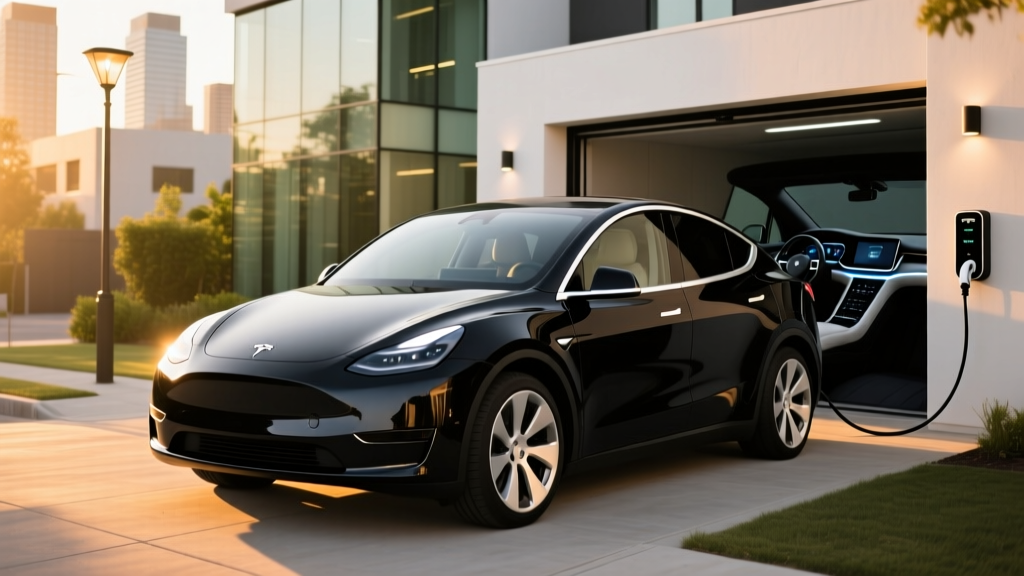
Tesla Model Y Leasing: The 2026 Numbers That Actually Matter
If you've searched "Tesla Model Y leasing" recently, you're not alone. The Model Y remains one of the most leased EVs in America, and for good reason: it pairs a practical crossover form factor with Tesla's Supercharger network and strong software. But lease deals change monthly, tax-credit pass-through rules add complexity, and the real-world ownership picture is more nuanced than the sticker suggests. This profile breaks down the 2026 Tesla Model Y with leasing in mind — range, charging, pricing, and whether signing a 36-month deal makes financial sense versus buying or choosing a competitor.
Spec Snapshot: 2026 Tesla Model Y at a Glance
| Attribute | Value |
|---|---|
| EPA Range | 308 miles (Long Range AWD) |
| Battery (usable) | ~75 kWh, NMC chemistry |
| Peak DC Fast Charge | 250 kW (V3 Supercharger) |
| 10–80% DC Charge Time | ~27 minutes |
| Level 2 Home Charge | 11.5 kW (~44 mi/hr) |
| 0–60 mph | 4.8 seconds (Long Range AWD) |
| Horsepower | ~384 hp (dual-motor) |
| Drivetrain | Dual-motor AWD |
| Efficiency | 122 MPGe combined / 28 kWh/100mi |
| Cargo (rear seats up) | 30.2 cu ft |
| Cargo (rear seats folded) | 72.0 cu ft |
| Rear Legroom | 38.0 inches |
| Battery Warranty | 8 years / 120,000 miles |
| Base MSRP (Long Range AWD) | $44,990 |
Real-World Range: Beyond the EPA Sticker
Real-World Expectation: ~260–280 miles highway at 70 mph; ~230–250 miles in freezing weather with cabin heat
The EPA's 308-mile figure is achievable in mild conditions with mixed city/highway driving and moderate climate use. On a 70-mph highway run in 75°F weather, expect to see roughly 260–280 miles before you need to plug in. In cold weather (below 32°F), range can drop 15–25% due to battery resistance and cabin heating demands — a common trait across all NMC lithium-ion packs, not unique to Tesla.
The Long Range AWD uses a ~75 kWh usable NMC (nickel manganese cobalt) battery. NMC offers higher energy density than LFP (lithium iron phosphate), which is why the Long Range achieves its higher EPA figure compared to the Standard Range RWD trim, which uses a ~60 kWh LFP pack rated at 260 miles EPA. LFP packs tolerate daily 100% charging better and degrade more slowly, while NMC is best held between 20–80% for daily use to maximize longevity — something the Tesla app makes easy to set.
For leaseholders, battery degradation matters less than it does for buyers. Over a typical 36-month, 36,000-mile lease, most Model Y packs lose only 5–8% of original capacity, well within Tesla's warranty threshold of 70% retention over 8 years/120,000 miles. Source: fueleconomy.gov.
Charging Speed: DC Fast, Level 2, and the Supercharger Advantage
| Charge Level | Power (kW) | Miles Added per Hour | Typical Use Case |
|---|---|---|---|
| Level 1 (120V) | ~1.4 kW | ~5 mi/hr | Emergency / overnight trickle |
| Level 2 (240V, 48A) | 11.5 kW | ~44 mi/hr | Home / workplace daily |
| DC Fast (V3 Supercharger) | 250 kW peak | ~1,000 mi/hr (peak) | Road trips, quick top-ups |
The Model Y's peak 250 kW charge rate on V3 Superchargers is strong but not class-leading — the Hyundai Ioniq 5 peaks at 350 kW on compatible chargers. The critical detail is the charge curve: the Model Y sustains roughly 200+ kW from 10–30% SoC, then tapers progressively. By 60% SoC, you're seeing ~120 kW; above 80%, speeds drop sharply to protect the battery. The 10–80% time of ~27 minutes is realistic if you precondition the battery via the car's navigation system (always navigate to a Supercharger before arriving).
At home on a Wall Connector or equivalent Level 2 station at 48 amps, you'll recover about 44 miles of range per hour. A full overnight charge from 20% adds roughly 250 miles in 6–7 hours. Home charging is where leasing intersects with practicality: if your lease includes a home charger credit or if you already have a 240V/50A circuit, daily fueling costs roughly $0.04–0.06 per mile depending on your electricity rate, versus $0.12–0.15 per mile for a comparable gas crossover.
With Tesla's Supercharger network now open to other brands via NACS adapters, the exclusivity advantage has narrowed. But Tesla's integrated navigation-to-charger preconditioning and stall availability remain best-in-class for hassle-free road trips.
Lease Pricing, Tax Credits, and the Buy-vs-Lease Math
The 2026 Model Y Long Range AWD starts at a base MSRP of $44,990 before destination. A typical as-tested price with common options (Midnight Cherry paint, 19" wheels) lands around $47,000–$48,500. The Performance trim, with a 3.5-second 0–60 time and track-oriented suspension, starts at $51,490.
| Trim | Base MSRP | §30D Credit Eligible? | Effective Price (if eligible) |
|---|---|---|---|
| Long Range RWD | $42,990 | Yes (meets MSRP cap) | ~$35,490 |
| Long Range AWD | $44,990 | Yes (meets MSRP cap) | ~$37,490 |
| Performance AWD | $51,490 | No (exceeds $55K SUV cap after options may push over) | $51,490 |
Federal §30D tax credit rules for 2026: The $7,500 credit applies to new EVs under the SUV MSRP cap of $80,000 (the Model Y qualifies as an SUV per the IRS). However, buyer income limits apply ($150K single / $300K joint modified AGI), and the vehicle must meet critical-mineral and battery-component sourcing requirements that tighten annually. Tesla's US-built Model Y has generally met these requirements, but always verify current eligibility at irs.gov or through the point-of-sale transfer at the dealer.
Leasing changes the credit equation. Under IRC §179A and IRS guidance, the $7,500 commercial clean-vehicle credit flows to the lessor (Tesla Finance or a third-party leasing company), not the lessee directly. In practice, most manufacturers pass this savings through as a lease cash incentive — reducing your monthly payment or capitalized cost. Tesla has historically applied this as a lease discount, but the exact pass-through amount varies by month and region. Always confirm the current lease offer includes the credit pass-through before signing.
A typical 2026 Model Y Long Range AWD lease through Tesla runs approximately $399–$499/month for 36 months with $3,500–$5,000 due at signing, depending on the money factor and residual value. Compare this to buying with the $7,500 credit applied at point of sale: the purchase route builds equity but exposes you to depreciation risk. For many shoppers, leasing a Model Y makes sense because EV residual values have been volatile — a 36-month lease lets you walk away when the next generation arrives without worrying about trade-in value.
Interior, Tech, and Daily Livability
The Model Y's cabin is minimalist by design — a single 15.4-inch touchscreen handles navigation, climate, media, and vehicle settings. There's no instrument cluster; speed and range live in the upper-left corner of the display. Rear passengers get a small 8-inch screen for climate and entertainment, a welcome addition for family duty.
Cargo space is a genuine strength. With 30.2 cubic feet behind the second row and 72.0 cubic feet with seats folded, the Model Y out-cargoes the Ford Mustang Mach-E (29.7/59.7 cu ft) and rivals midsize SUVs. The rear trunk plus a modest front trunk (frunk) combine to make this a legitimate grocery-hauler and road-trip rig. Rear legroom at 38.0 inches is adequate for adults, though the sloping roofline cuts into headroom for passengers over 6 feet.
Driver assistance: The Model Y comes standard with Tesla Autopilot, a Level 2 SAE driver-assist system that includes adaptive cruise control and lane centering. Full Self-Driving (Supervised) is an optional $8,000 upgrade (or $99/month subscription) that adds automatic lane changes, traffic-light recognition, and city-street navigation — but it remains a Level 2 system requiring full driver attention and hands on the wheel. This is not autonomous driving; Waymo-style Level 4 robotaxis operate only in geofenced urban areas and are a fundamentally different technology class.
How the Model Y Stacks Up Against Key Competitors
Leasing a Model Y means comparing it against the EVs you could lease instead. Here's how the numbers shake out:
| Model | EPA Range | Peak DC kW | 10–80% Time | Starting MSRP |
|---|---|---|---|---|
| Tesla Model Y LR AWD | 308 mi | 250 kW | ~27 min | $44,990 |
| Hyundai Ioniq 5 LR AWD | 290 mi | 350 kW | ~18 min | $49,500 |
| Ford Mustang Mach-E ER AWD | 312 mi | 150 kW | ~38 min | $48,995 |
| Kia EV6 LR AWD | 282 mi | 350 kW | ~18 min | $48,700 |
The Model Y leads on range and has the strongest charging-network ecosystem. The Ioniq 5 and EV6 charge significantly faster on 350 kW stations but have fewer dedicated fast-charging locations. The Mach-E offers a more traditional interior layout but charges more slowly. For lease shoppers, monthly payments are often comparable across these models because manufacturers adjust lease cash incentives to stay competitive — the deciding factor usually comes down to charging convenience and software preference.
Pros, Cons, and Who Should Lease the Model Y
Pros
- Class-leading 308-mile EPA range in the crossover segment
- Supercharger network with seamless navigation preconditioning
- Excellent cargo capacity (72 cu ft max) for a compact EV SUV
- Over-the-air updates continuously add features
- Strong lease residual values reduce monthly payments
- Low running costs (~$0.05/mile on home electricity)
Cons
- Minimalist interior lacks physical buttons; climate controls are screen-only
- No Apple CarPlay or Android Auto integration
- Ride quality is firm; road noise is noticeable on rough pavement
- FSD subscription cost adds up without delivering full autonomy
- NMC battery requires 20–80% daily charging discipline
- Insurance premiums run 15–25% higher than comparable gas crossovers
Best suited for: Commuters with home charging access, small families needing cargo flexibility, and road-trippers who value the Supercharger network's reliability. If you drive 200+ miles daily on highways in extreme cold, the real-world range may require mid-trip charging. If you prefer physical controls, Apple CarPlay, or a softer ride, the Ioniq 5 or Mach-E may be a better lease fit.
Frequently Asked Questions
What is the real-world range of the Tesla Model Y?
The EPA rates the 2026 Model Y Long Range AWD at 308 miles. In real-world highway driving at 70 mph, expect 260–280 miles. In freezing temperatures, plan for 230–250 miles due to battery and cabin-heating demands.
How fast does the Model Y charge at home and on the road?
On a V3 Supercharger, it peaks at 250 kW and charges from 10–80% in approximately 27 minutes. At home on a Level 2 (240V, 48A) charger, it recovers about 44 miles of range per hour, fully replenishing overnight.
Does the Tesla Model Y qualify for the federal EV tax credit?
The Long Range RWD and AWD trims generally qualify for the $7,500 §30D credit, subject to buyer income limits ($150K single/$300K joint), MSRP caps ($80K for SUVs), and battery-sourcing requirements. Verify current eligibility at irs.gov. When leasing, the credit goes to the lessor but is typically passed through as a lease discount.
How much does a Tesla Model Y lease cost per month?
As of early 2026, typical Model Y Long Range AWD leases run $399–$499/month for 36 months with $3,500–$5,000 due at signing, depending on the money factor, residual, and whether the $7,500 lease credit is applied as a cap-cost reduction.
Is it better to lease or buy the Model Y?
Leasing is advantageous if you want lower monthly payments, plan to upgrade in 3 years, and want to avoid EV depreciation risk. Buying makes sense if you drive under 12,000 miles/year, want to build equity, and qualify for the full $7,500 point-of-sale credit. Run both scenarios with your local tax situation in mind.
Is the Model Y worth leasing over competitors?
If the Supercharger network and Tesla's software ecosystem matter to you, yes. If you prioritize faster DC charging speeds (Ioniq 5/EV6 at 350 kW), a traditional interior with physical buttons, or Apple CarPlay, consider the Hyundai Ioniq 5 or Ford Mustang Mach-E instead.