Quick Verdict: The Model Y Lease Equation in 2026
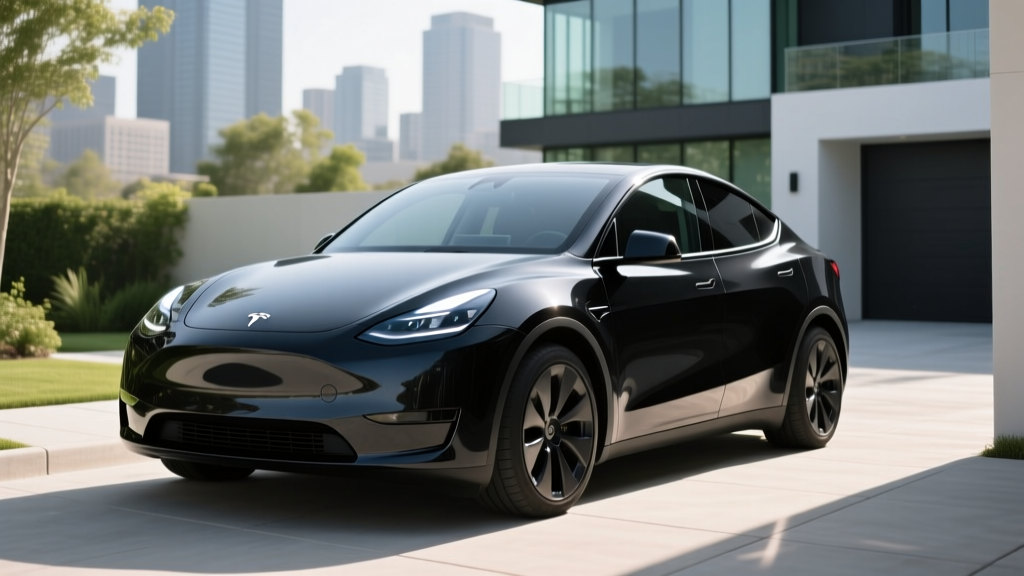
The Tesla Model Y remains the best-selling electric vehicle in the United States for good reason: it pairs a practical crossover footprint with access to the Supercharger network, class-leading efficiency, and continuous over-the-air improvements. But for 2026, the calculus has shifted. Aggressive price cuts on competing EVs, a refreshed "Juniper" platform rollout, and the mechanics of the federal §30D tax credit at the point of sale have made the lease-versus-buy decision more nuanced than ever.
If you're researching Tesla Model Y lease specials, you're likely weighing monthly affordability against long-term equity, mileage limits against your commute, and whether Tesla's current incentives beat what you'd get buying outright with the $7,500 federal credit. This review gives you the exact numbers — range, charging, pricing, and ownership economics — so you can decide whether a 2026 Model Y lease is the right move for your garage.
2026 Tesla Model Y Specs at a Glance
| Spec | Long Range AWD | Performance AWD | Standard Range RWD |
|---|---|---|---|
| EPA Range | 320 mi | 295 mi | 280 mi (est.) |
| Battery (usable) | ~75 kWh, NMC | ~75 kWh, NMC | ~57.5 kWh, LFP |
| Max DC Fast Charge | 250 kW | 250 kW | 250 kW |
| 10-80% DC Time | ~22 min | ~22 min | ~20 min |
| Level 2 Home Charging | 11.5 kW (~44 mi/hr) | 11.5 kW (~44 mi/hr) | 11.5 kW (~44 mi/hr) |
| 0-60 mph | 4.8 sec | 3.5 sec | 5.8 sec (est.) |
| Horsepower | 384 hp | 456 hp | 295 hp (est.) |
| Drivetrain | Dual-Motor AWD | Dual-Motor AWD | RWD |
| MPGe (combined) | 111 MPGe | 102 MPGe | 119 MPGe (est.) |
| Efficiency | 28 kWh/100mi | 30 kWh/100mi | 26 kWh/100mi (est.) |
| Base MSRP | $44,990 | $50,990 | $39,990 |
Sources: EPA / fueleconomy.gov, Tesla Specifications. Standard Range RWD figures are estimated based on prior model-year data and may vary.
Real-World Range: What the EPA Sticker Doesn't Tell You
EPA Estimated: 320 miles (Long Range AWD)
Real-World Expectation: 260-290 miles highway at 70-75 mph; 230-260 miles in freezing temperatures; up to 310+ miles in mild city driving with regen.
The Model Y Long Range AWD carries an EPA rating of 320 miles, which is competitive in the midsize electric SUV segment. But EPA testing uses a mix of city and highway driving cycles at moderate temperatures. In our experience — and consistent with third-party testing — sustained highway driving at 70-75 mph reduces range by roughly 10-15%, putting real-world highway range at approximately 270-290 miles on a full charge.
Cold weather is the bigger variable. Lithium-ion batteries lose efficiency below freezing, and cabin heating draws significant energy. Expect 20-30% range reduction in sub-30°F conditions, bringing effective range to roughly 225-260 miles. The 2026 Juniper refresh includes an improved heat pump that partially mitigates this loss compared to prior model years, but physics still applies.
For daily commuting under 80 miles round-trip, any Model Y trim provides ample buffer. For road trips, plan charging stops around 200-230 miles of usable range to keep state of charge above 15% and avoid the steep portion of the charge-curve taper above 80%.
Charging Speed: Supercharger Network Advantage
| Charging Level | Power (kW) | Speed (mi/hr added) | Use Case |
|---|---|---|---|
| Level 1 (120V household) | ~1.4 kW | ~4-5 mi/hr | Emergency/trickle only |
| Level 2 (240V home, 48A) | 11.5 kW | ~44 mi/hr | Daily overnight charging |
| DC Fast (V3 Supercharger) | 250 kW peak | ~1,000 mi/hr peak | Road trips, 10-80% in ~22 min |
| DC Fast (V4 Supercharger) | 250+ kW | Similar | Newer stations, same vehicle limit |
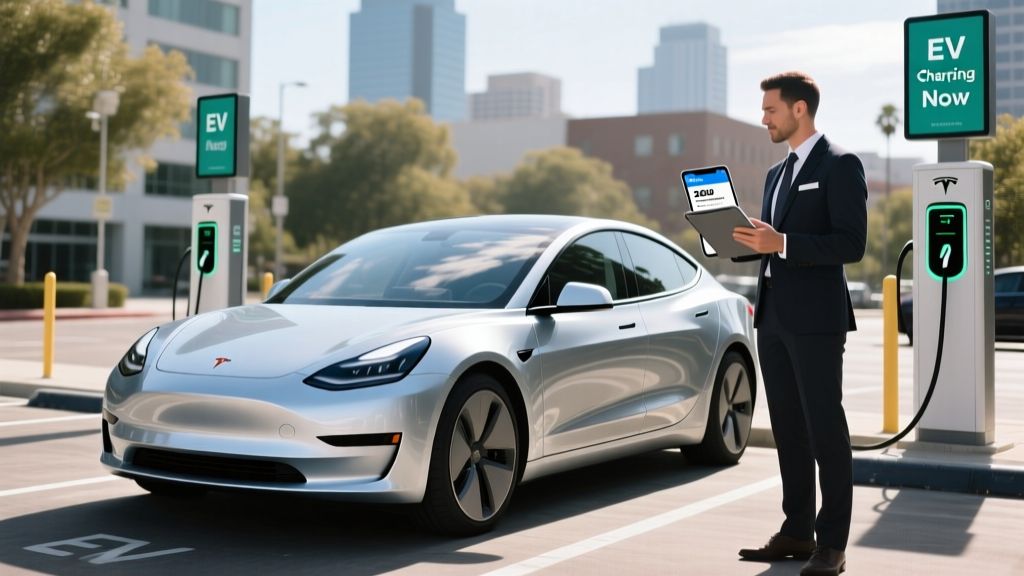
The Model Y supports a peak DC fast-charge rate of 250 kW on Tesla's V3 and V4 Superchargers using the NACS connector (now the North American Charging Standard). In real-world conditions, you'll see peak rates of 240-250 kW between 10-30% state of charge, tapering to roughly 150 kW by 50%, and dropping further to 50-70 kW above 80%. A 10-80% session takes approximately 22 minutes under ideal battery preconditioning.
Preconditioning matters. Navigate to a Supercharger using the Tesla navigation system and the car will warm the battery en route, enabling peak charge rates upon arrival. Without preconditioning — for example, pulling into a charger with a cold battery — peak rates may be limited to 100-150 kW, extending your 10-80% time to 30+ minutes.
For home charging, a Level 2 Wall Connector on a 60-amp circuit delivers up to 11.5 kW (48 amps continuous), adding roughly 44 miles of range per hour. An overnight session from 20% to 80% takes about 5-6 hours. Installation costs for a Level 2 home charger typically range from $500 to $2,000 depending on panel capacity and run length — always consult a licensed electrician for a site-specific quote.
With the NACS connector now adopted by Ford, GM, Rivian, and others, the Model Y also benefits from growing third-party network compatibility, though Tesla's own Supercharger network remains the most reliable for long-distance travel with over 6,000 U.S. stalls as of early 2026.
Lease Pricing vs. Purchase: 2026 Model Y Specials Breakdown
| Scenario | Long Range AWD | Performance AWD |
|---|---|---|
| Base MSRP | $44,990 | $50,990 |
| Destination Fee | $1,390 | $1,390 |
| Est. Lease (36 mo / 10K mi/yr)* | $499-$579/mo | $599-$689/mo |
| Lease Due at Signing | $3,500-$5,500 | $4,500-$6,500 |
| Purchase w/ §30D Credit | ~$37,880 (after $7,500) | ~$43,880 (after $7,500) |
| Money Factor (est.) | 0.0025-0.0030 | 0.0025-0.0030 |
| Residual Value (36 mo) | ~55-58% | ~52-55% |
*Lease estimates are illustrative based on typical money factors and residuals for 2026. Actual Tesla lease offers vary monthly and by region. Always verify current terms on Tesla's order page.
Tesla periodically offers lease specials — typically in the form of reduced money factors, loyalty incentives for existing owners, or subsidized residuals — to move inventory during slower quarters. In early 2026, Tesla has been adjusting pricing aggressively in response to increased competition from the Hyundai Ioniq 5, Ford Mustang Mach-E, and Chevrolet Equinox EV. These price adjustments flow through to lease calculations, meaning a lower capitalized cost directly reduces your monthly payment.
The §30D tax credit complication for leases: When you purchase a Model Y, you may qualify for the $7,500 federal EV tax credit under IRS §30D, which can now be transferred to the dealer at the point of sale as an instant price reduction. However, eligibility depends on your adjusted gross income (single filers: ≤$150,000; joint filers: ≤$300,000), vehicle MSRP (SUVs like the Model Y: ≤$80,000 cap), and battery component/critical mineral sourcing requirements that have tightened significantly since 2023.
When you lease, the tax credit technically goes to the lessor (Tesla's financing arm), not to you. Some lessors pass this benefit through as a capitalized cost reduction, lowering your monthly payment. Others retain it. Tesla has historically passed the credit through on leases, effectively reducing payments by roughly $150-$200/month over a 36-month term, but this is not guaranteed and should be confirmed in your lease agreement before signing.
Lease vs. Buy Math: If you plan to keep the vehicle 5+ years and drive under 15,000 miles annually, purchasing with the $7,500 credit is generally more economical long-term — you build equity and avoid perpetual payments. If you prefer a new vehicle every 3 years, want to avoid depreciation risk (EV resale values have been volatile), or your income exceeds the §30D caps (making purchase less attractive), leasing may make sense despite higher total cost over time.
Federal Tax Credit Eligibility Checklist (§30D)
- MSRP Cap: Model Y qualifies as an SUV — must be ≤$80,000 (all current trims qualify)
- Income Cap: Modified AGI ≤$150,000 (single) or ≤$300,000 (married filing jointly) for purchase credit
- Battery Sourcing: Critical minerals and battery components must meet escalating domestic-sourcing thresholds — verify current-year compliance on IRS.gov
- Point-of-Sale Transfer: Available for purchases — reduces out-of-pocket cost at delivery
- Lease Treatment: Credit goes to lessor; confirm pass-through in lease documents
- One Vehicle Per Taxpayer: Limit of one new clean vehicle credit per 3-year period
Tax rules change frequently. Consult a tax professional and verify current eligibility at IRS.gov before making a purchase or lease decision.
Interior, Cargo & Daily Practicality
The 2026 Model Y Juniper refresh brings a more refined interior with ventilated front seats, ambient lighting, improved sound insulation, and a rear-seat touchscreen for climate and entertainment control. The minimalist cabin remains polarizing — no physical buttons, no traditional instrument cluster — but the 15.4-inch center touchscreen handles all vehicle functions with responsive performance.
Cargo capacity: 30.2 cubic feet behind the second row, expanding to 72.1 cubic feet with the rear seats folded. The front trunk (frunk) adds 4.1 cubic feet — useful for charging cables, a laptop bag, or groceries you want to keep separate. Total cargo volume is competitive with the Toyota RAV4 and Honda CR-V, making it practical for families, Costco runs, and weekend gear.
Passenger space: Front legroom is generous at 41.8 inches. Rear legroom measures 37.7 inches — adequate for adults on shorter trips but tighter than the Hyundai Ioniq 5 (39.4 inches rear). The panoramic glass roof creates an airy feel but does reduce headroom slightly compared to vehicles with conventional steel roofs.
Towing: The Model Y Long Range AWD is rated for 3,500 pounds when equipped with the factory tow hitch — sufficient for a small utility trailer or a pair of jet skis, but not for larger boat or camper trailers. Towing significantly reduces range; expect a 30-40% reduction at highway speeds with a loaded trailer.
Tech, Driver Assistance & Safety
SAE Automation Level: Tesla Autopilot and Full Self-Driving (Supervised) are Level 2 driver-assistance systems. The driver must remain fully engaged, hands on or near the wheel, and eyes on the road at all times. These are NOT self-driving systems.
Every Model Y includes Tesla's Basic Autopilot: adaptive cruise control and lane-centering assist that works well on divided highways. The optional Full Self-Driving (Supervised) package ($8,000 or $99/month) adds automated lane changes, city-street traffic light and stop sign recognition, and more assertive navigation-based routing. FSD has improved substantially through neural-network-based "end-to-end" training, but it still requires active supervision and occasionally makes unexpected decisions in construction zones, complex intersections, or poor weather.
The infotainment system runs on Tesla's proprietary software with built-in navigation, streaming (Netflix, YouTube, Spotify while parked), a dashcam viewer, and Sentry Mode surveillance. There is no Apple CarPlay or Android Auto — a deliberate choice by Tesla that frustrates some buyers accustomed to phone projection. The phone-as-key system works reliably via Bluetooth, and the Tesla app provides remote climate control, charging status, and vehicle location.
Safety: The Model Y earns a 5-star overall rating from NHTSA and a Top Safety Pick+ designation from IIHS (verify current-year ratings at time of purchase). Standard active safety includes automatic emergency braking, blind-spot monitoring, and lane-departure warning.
Warranty & Battery Longevity
Tesla provides a 4-year/50,000-mile limited vehicle warranty and an 8-year/120,000-mile battery and drive unit warranty for the Long Range and Performance trims (8-year/100,000-mile for the Standard Range RWD). The battery warranty guarantees at least 70% capacity retention over the warranty period — if degradation falls below this threshold, Tesla will repair or replace the battery pack.
Real-world degradation data from fleet analytics shows that NMC packs (Long Range/Performance) typically lose 8-12% capacity over the first 100,000 miles, with the steepest drop in the first 20,000 miles before stabilizing. The LFP pack in the Standard Range RWD demonstrates slower long-term degradation and can be charged to 100% regularly without the same longevity concerns as NMC chemistry. For lease customers, degradation is largely a moot point — you'll return the vehicle before it becomes a concern.
Pros and Cons: 2026 Tesla Model Y
Pros
- Access to the Supercharger network — still the most reliable DC fast-charging ecosystem in North America
- Class-leading energy efficiency (28 kWh/100mi) keeps charging costs low
- Spacious cargo area (30.2 cu ft rear / 72.1 cu ft max) with practical frunk
- Strong 0-60 performance across all trims (3.5-5.8 seconds)
- Continuous OTA updates add features and refinements post-purchase
- Excellent safety ratings (5-star NHTSA, Top Safety Pick+ IIHS)
Cons
- No Apple CarPlay or Android Auto — Tesla's ecosystem is closed
- Rear legroom (37.7 in) trails key competitors like Ioniq 5
- FSD (Supervised) is expensive ($8,000) and still requires full driver attention
- Minimalist interior lacks physical controls for climate, volume, and glovebox
- Insurance premiums run 15-25% higher than comparable gas SUVs
- Lease residual uncertainty — EV depreciation has been unpredictable
Is the Model Y Worth It vs. Key Competitors?
Choose the Tesla Model Y if: You prioritize Supercharger network access for road trips, value energy efficiency and low per-mile charging costs, want OTA feature updates, and prefer Tesla's software ecosystem over phone projection.
Choose the Hyundai Ioniq 5 if: You want 800V ultra-fast charging (10-80% in ~18 min at 350 kW), more rear legroom, Apple CarPlay/Android Auto, and a more conventional interior layout with physical buttons.
Choose the Ford Mustang Mach-E if: You prefer a sportier driving feel, want a traditional dealership experience for service, or find Ford's current lease incentives more attractive than Tesla's.
Choose the Chevrolet Equinox EV if: Budget is the primary driver — with an MSRP starting around $33,000 and full §30D eligibility, it offers 300+ miles of range at a significantly lower price point, though with slower DC charging.
Frequently Asked Questions
What is the real-world range of the 2026 Tesla Model Y?
The Long Range AWD is EPA-rated at 320 miles. In real-world highway driving at 70-75 mph, expect 260-290 miles. In freezing temperatures, expect 225-260 miles. The Standard Range RWD offers approximately 280 miles EPA, with similar proportional reductions in real-world use.
How fast does the Model Y charge at home and on road trips?
At home on a Level 2 (240V/48A) charger, the Model Y adds approximately 44 miles of range per hour, with a full 10-80% session taking about 5-6 hours. On a V3 Supercharger (250 kW DC), a 10-80% session takes roughly 22 minutes with proper battery preconditioning. Without preconditioning, add 8-12 minutes.
How much does a Model Y lease cost after tax credits in 2026?
Typical 36-month/10,000-mile-per-year leases for the Long Range AWD range from $499 to $579 per month with $3,500-$5,500 due at signing. If Tesla passes the $7,500 §30D credit through as a capitalized cost reduction (historically they have), this reduces monthly payments by approximately $150-$200 compared to a lease without the credit. Always confirm the credit pass-through in your lease agreement.
Does the 2026 Model Y qualify for the $7,500 federal EV tax credit?
The Model Y qualifies as an SUV under the $80,000 MSRP cap, and all current trims fall well below this threshold. However, buyer eligibility depends on income caps (≤$150,000 single / ≤$300,000 joint) and battery sourcing compliance with §30D critical mineral and component requirements. For leases, the credit goes to the lessor — confirm that Tesla applies it to reduce your capitalized cost. Verify current rules at IRS.gov.
Is it better to lease or buy the Model Y in 2026?
Buying is generally more cost-effective over 5+ years if you qualify for the $7,500 tax credit and drive under 15,000 miles annually — you build equity and benefit from lower per-mile fuel and maintenance costs. Leasing makes sense if you want a new vehicle every 3 years, want to avoid EV depreciation risk, drive under 10,000-12,000 miles per year (typical lease limits), or if your income exceeds the §30D caps (making the purchase credit unavailable to you).
What are the biggest drawbacks of the Model Y?
The main complaints from owners include the absence of Apple CarPlay/Android Auto, a minimalist interior that lacks physical buttons (climate and volume are screen-controlled), tighter rear legroom than some competitors, and higher insurance premiums compared to gas-powered SUVs. FSD's $8,000 cost is also a point of contention given that it remains a Level 2 system requiring full driver supervision.