The Tesla Model Y remains the default electric crossover for American families navigating the transition from gas to electrons. For 2026, the refreshed "Juniper" Model Y brings a quieter cabin, updated suspension tuning, ambient lighting, and a ventilated front row — but the core value proposition still hinges on efficiency, the Supercharger network, and monthly affordability. If you've been searching for Tesla Model Y lease offers, you've likely noticed that Tesla does not advertise traditional leases the way legacy automakers do. Instead, Tesla periodically offers what it terms a "lease-like" financing product or limited promotional APRs, while most lessees actually secure their Model Y through third-party banks or credit unions that treat the transaction as a closed-end lease. This review dissects the numbers behind the 2026 Model Y — range, charging, pricing, tax-credit math — so you can determine whether a lease (or purchase) makes sense for your household.
2026 Tesla Model Y: Quick Verdict
The 2026 Model Y Long Range AWD is the sweet spot: 320 miles of EPA range, dual-motor all-wheel drive, and access to the most reliable DC fast-charging network in North America. The base Rear-Wheel-Drive trim undercuts rivals on price but sacrifices 40 miles of range and the confidence of AWD in wet or snowy climates. Performance trims are thrilling but penalize efficiency and ride comfort. For lessees, the key variable is the money factor (lease interest rate) and residual value — Tesla's residuals have softened since 2023's price cuts, which actually helps lessees by lowering the capitalized cost, but high money factors from third-party banks can erode the monthly savings versus a low-APR purchase. If you can secure a lease with a money factor under 0.0020 (roughly 4.8% APR equivalent) and apply the $7,500 federal tax credit as a point-of-sale cap-cost reduction, the Model Y becomes one of the most compelling lease values in the EV segment.
Range, Battery & Real-World Efficiency
The 2026 Model Y lineup uses two distinct battery chemistries depending on trim, and this matters for both range and long-term ownership behavior:
| Trim | EPA Range | Battery (usable) | Chemistry | MPGe (combined) | kWh/100 mi |
|---|---|---|---|---|---|
| Rear-Wheel Drive | 280 mi | ~60 kWh | LFP (CATL) | 123 MPGe | 27 |
| Long Range AWD | 320 mi | ~75 kWh | NMC (Panasonic/LG) | 117 MPGe | 29 |
| Performance AWD | 295 mi | ~75 kWh | NMC | 111 MPGe | 30 |
The LFP (lithium iron phosphate) battery in the RWD trim is heavier and less energy-dense than the NMC (nickel manganese cobalt) packs in the Long Range and Performance, but LFP offers two significant advantages: it tolerates regular 100% charging without accelerated degradation, and it uses no cobalt or nickel, which helps Tesla meet IRS critical-mineral sourcing requirements for the federal tax credit. NMC owners are advised to set daily charge limits to 80% and only charge to 100% before long trips — this preserves long-term State of Health (SoH).
Charging Speed: DC Fast, Level 2 & Supercharger Access
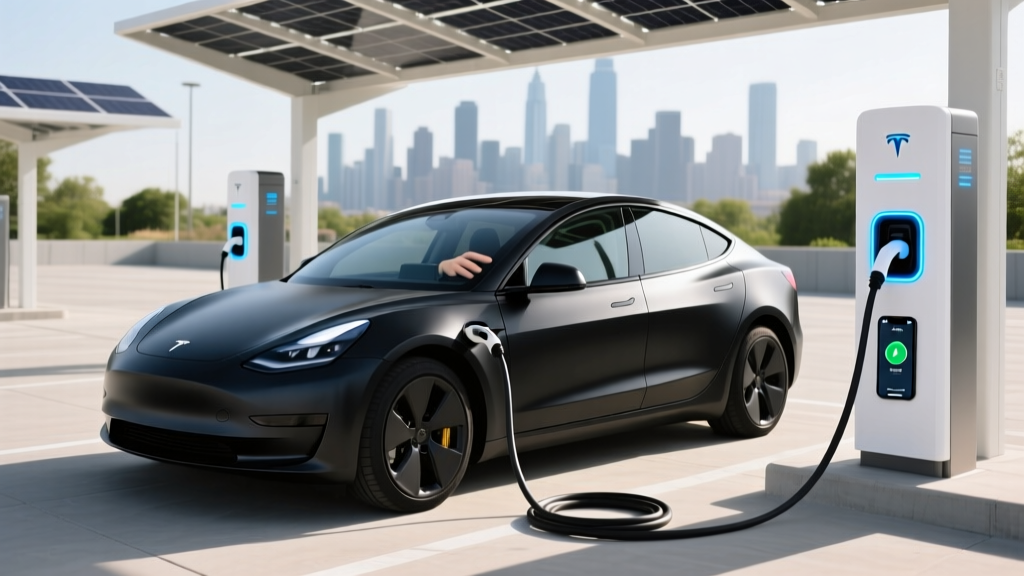
Charging speed is where the Model Y continues to lead most rivals, thanks in part to Tesla's proprietary Supercharger network (now open to other EVs via NACS adapters, but still seamless for Tesla owners). Here's what to expect across charging levels:
| Charging Level | Power / Voltage | Speed (miles of range per hour) | Notes |
|---|---|---|---|
| Level 1 (120V household) | ~1.4 kW | ~4–5 mi/hr | Emergency / overnight trickle only |
| Level 2 (240V home, 48A) | 11.5 kW | ~37–40 mi/hr | Full charge overnight (~8 hrs for LR) |
| DC Fast (V3 Supercharger) | Peak 250 kW | ~1,000 mi/hr at peak | 10–80% in ~25 min (LR AWD) |
| DC Fast (V4 Supercharger) | Peak 250+ kW | ~1,000+ mi/hr at peak | Newer stalls; same vehicle-side limit |
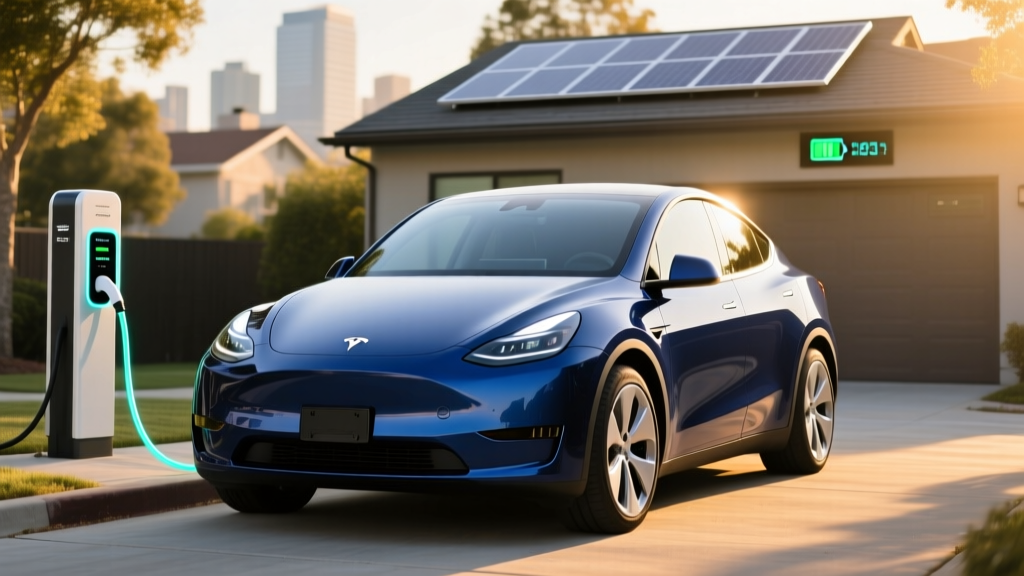
A critical nuance for lease shoppers: the Model Y's DC fast-charging curve tapers significantly above 80% State of Charge (SoC). The 250 kW peak is sustained only between roughly 10–45% SoC on the Long Range; from 80–100%, speeds drop below 50 kW. On a road trip, plan your stops around 10–80% charges (~25 minutes) rather than topping off to full, which can add another 20+ minutes for the last 20%. For daily driving, home Level 2 charging at 11.5 kW is the gold standard — a Wall Connector installed on a 60A circuit delivers a full overnight replenishment for under $10 in most utility markets. According to fueleconomy.gov, the Model Y Long Range AWD achieves 117 MPGe combined, translating to roughly 3.5–4.5 cents per mile on residential electricity rates ($0.14–$0.18/kWh national average).
Performance, Drivetrain & Ride Quality
The Juniper refresh addressed one of the pre-2025 Model Y's most common complaints: ride harshness. Revised damper tuning, acoustic glass, and additional sound deadening make the 2026 model noticeably quieter and more compliant over broken pavement. Performance figures remain class-leading:
| Trim | Drivetrain | 0–60 mph | Horsepower | Towing Capacity |
|---|---|---|---|---|
| Rear-Wheel Drive | RWD (single motor) | 6.5 sec | ~295 hp | 3,500 lbs |
| Long Range AWD | Dual-motor AWD | 4.8 sec | ~384 hp | 3,500 lbs |
| Performance AWD | Dual-motor AWD | 3.5 sec | ~456 hp | 3,500 lbs |
Regenerative braking remains strong and predictable, enabling near one-pedal driving in most conditions. Tesla removed the user-adjustable regen setting several years ago, which frustrates some drivers who prefer a softer coasting feel. Towing is rated at 3,500 pounds across all trims — adequate for a small utility trailer or a pair of jet skis, but not competitive with the Ford F-150 Lightning or Rivian R1S for serious hauling.
Interior, Cargo Space & Technology
The minimalist interior is polarizing, but the 2026 Juniper update adds tangible quality-of-life improvements: ventilated front seats, ambient lighting strips along the dash and doors, a rear-seat touchscreen for climate and media control, and power-folding second-row seats. The 15.4-inch center touchscreen remains the command center for everything — navigation, media, vehicle settings, and the optional FSD (Supervised) visualization.
Cargo and passenger dimensions:
- Cargo (behind 2nd row): 30.2 cu ft
- Cargo (2nd row folded): 72.1 cu ft
- Front trunk (frunk): 4.1 cu ft
- Rear legroom: 40.5 inches (class-competitive)
- Front headroom: 40.3 inches
On the technology front, Tesla's infotainment remains the benchmark for responsiveness and over-the-air update frequency. However, the absence of Apple CarPlay and Android Auto is a dealbreaker for some buyers — Tesla's native navigation and media apps are capable, but phone-mirroring integration is now standard on virtually every competitor. The optional Full Self-Driving (Supervised) package ($8,000 one-time or $99/month) enables automatic lane changes, traffic-light recognition, and city-street navigation, but it remains an SAE Level 2 driver-assist system — the driver must remain fully engaged, hands on or near the wheel, at all times. It is not autonomous driving. For context, only Waymo's driverless taxi service operates at SAE Level 4 in limited geofenced areas.
Lease Pricing, Tax Credits & Total Cost
Tesla's pricing has stabilized after the volatility of 2022–2024. Here's the 2026 MSRP breakdown, along with how the federal §30D tax credit affects effective cost — whether you purchase or structure the credit as a lease cap-cost reduction:
| Trim | Base MSRP | Federal §30D Credit | Effective Price (after credit) | Estimated Monthly Lease* |
|---|---|---|---|---|
| Rear-Wheel Drive | $44,990 | $7,500 (if eligible) | $37,490 | ~$429–$489/mo |
| Long Range AWD | $48,990 | $7,500 (if eligible) | $41,490 | ~$499–$569/mo |
| Performance AWD | $53,990 | $7,500 (if eligible) | $46,490 | ~$579–$649/mo |
*Lease estimates assume 36-month term, 10,000 miles/year, money factor ~0.0018, $4,000 down, and $7,500 applied as cap-cost reduction. Actual offers vary by region, credit tier, and dealer.
- Vehicle MSRP cap: SUVs/crossovers must be ≤ $80,000 (all Model Y trims qualify)
- Buyer income cap: AGI ≤ $150,000 (single) / $225,000 (head of household) / $300,000 (joint)
- Battery sourcing: Critical minerals and battery components must meet phased-in % thresholds from US/FTA countries — Tesla's LFP and NMC supply chains have largely adapted, but confirm via the dealer at point of sale
- Point-of-sale transfer: You can transfer the credit to the dealer/lender as a cap-cost reduction on a lease or down-payment reduction on a purchase — no need to wait for tax filing
- Lease loophole note: Some lenders structure EV leases so the credit flows to the lessor (who then passes it as a cap-cost reduction); verify this is explicitly reflected in your lease quote
For a direct cost comparison, a 2026 Hyundai Ioniq 5 SEL AWD leases for roughly $449–$529/month with similar credit assumptions, but its EPA range (290 mi) and charging speed (peak 235 kW, 10–80% in ~18 min) trail the Model Y Long Range. The Ford Mustang Mach-E Premium AWD offers a comparable 320-mile EPA range but has historically had less favorable lease residuals, pushing monthly payments $40–$70 higher.
Warranty, Safety & Ownership Costs
Tesla's warranty structure is competitive but not class-leading:
- Basic vehicle warranty: 4 years / 50,000 miles
- Battery & drive unit: 8 years / 120,000 miles (Long Range & Performance) or 8 years / 100,000 miles (RWD)
- Battery degradation threshold: Warranty covers replacement if capacity drops below 70% during the warranty period
Real-world battery degradation data from fleet analytics (Tessie, Recurrent) shows the average Model Y NMC pack retains ~90–92% capacity at 100,000 miles, with LFP packs showing similar or slightly better retention due to their chemistry's inherent stability. Replacement cost out of warranty is estimated at $12,000–$16,000 depending on pack size — a figure worth noting for second owners or those who plan to keep the vehicle beyond the warranty window.
Safety ratings remain strong: the Model Y earned a 5-star overall rating from NHTSA and was an IIHS Top Safety Pick in its most recent evaluation. Standard active-safety features include automatic emergency braking, lane-departure warning, blind-spot monitoring, and rear cross-traffic alert. Insurance costs are above segment average — expect $1,800–$2,400/year for a 40-year-old driver with a clean record, varying significantly by ZIP code and carrier.
- Class-leading efficiency (27–30 kWh/100 mi) and real-world range
- Seamless access to 6,000+ Supercharger stalls in North America
- Best-in-class over-the-air updates and infotainment responsiveness
- Strong residual values support competitive lease payments
- LFP battery option allows daily 100% charging without degradation concern
- Spacious cargo area (72 cu ft folded) with practical frunk
- No Apple CarPlay or Android Auto
- Touchscreen-only controls frustrate some drivers (no physical buttons for climate, volume)
- FSD (Supervised) is expensive and still requires full driver attention
- Insurance premiums 15–25% above segment average
- Ride quality improved but still firm versus Hyundai Ioniq 5 or Kia EV6
- Regen not adjustable — one-pedal or nothing
Who Should Lease the 2026 Tesla Model Y?
The Model Y Long Range AWD is the strongest lease candidate for two-adult households with home Level 2 charging access who regularly drive 30–80 miles per day and take 2–4 road trips per year. The Supercharger network removes public-charging anxiety on longer journeys, and the 320-mile EPA range means most commuters will charge at home only 2–3 times per week. Families with young children will appreciate the cargo space and rear-seat room, though the absence of rear-seat USB-C ports (only USB-A and wireless charging pad) is a minor annoyance.
The RWD trim suits budget-conscious urban commuters in mild climates who don't need AWD and can accept 280 miles of range. The Performance trim is best reserved for enthusiasts who value the 3.5-second 0–60 time and don't mind the 25-mile range penalty and firmer suspension.
Avoid leasing the Model Y if: you lack reliable home or workplace charging, you require Apple CarPlay for daily navigation, or you frequently tow more than 3,000 pounds. In those cases, consider the Hyundai Ioniq 5 (CarPlay, 800V charging), Ford Mustang Mach-E (more traditional interior controls), or Rivian R1S (serious towing and off-road capability).
Frequently Asked Questions
What is the real-world range of the 2026 Tesla Model Y?
The EPA rates the Long Range AWD at 320 miles, but real-world highway driving at 75 mph yields ~265–285 miles. In sub-freezing winter conditions, expect ~220–240 miles without preconditioning. The RWD trim starts at 280 EPA miles and delivers ~230–250 real-world miles in mixed driving.
How fast does the Model Y charge at home and on the road?
At home on a 240V Level 2 Wall Connector (48A / 11.5 kW), the Long Range adds ~37–40 miles of range per hour, reaching a full charge in about 8 hours. On a V3 Supercharger (250 kW DC), the 10–80% charge takes approximately 25 minutes, though speeds taper significantly above 80% SoC.
Does the 2026 Tesla Model Y qualify for the $7,500 federal tax credit?
Yes, all 2026 Model Y trims qualify for the full $7,500 §30D credit if the buyer meets IRS income caps (AGI ≤ $150K single / $300K joint) and the vehicle's battery sourcing meets current-year critical-mineral and component thresholds. The credit can be transferred at point of sale as a cap-cost reduction on a lease or down-payment reduction on a purchase. Always confirm eligibility with your tax professional and the dealer at signing.
Is leasing a Tesla Model Y better than buying in 2026?
Leasing makes sense if you want lower monthly payments, plan to drive under 12,000 miles/year, and prefer to upgrade every 3 years. Buying is better if you drive high annual miles (avoiding lease penalties), want to build equity, or plan to keep the vehicle 5+ years to amortize the higher upfront cost. The $7,500 tax credit benefits both structures — as a cap-cost reduction in a lease or a direct credit on a purchase.
How does the Model Y compare to the Hyundai Ioniq 5 and Ford Mach-E?
The Model Y Long Range leads on EPA range (320 vs 290–320 mi), Supercharger network access, and software. The Ioniq 5 wins on DC charging speed (10–80% in ~18 min via 800V architecture), ride comfort, and Apple CarPlay. The Mach-E offers a more traditional interior layout and competitive range but has higher lease residuals. Test-drive all three before deciding — the touchscreen-only Tesla interface is the single biggest love-it-or-hate-it differentiator.
What happens if the Model Y battery degrades during a lease?
Tesla's battery warranty covers replacement if capacity drops below 70% during 8 years / 120,000 miles (Long Range). On a typical 36-month lease, you'll accumulate 30,000–36,000 miles — well within the warranty buffer. Real-world data shows ~3–5% degradation at 36,000 miles, so battery replacement during a lease is extremely rare. At lease-end, the vehicle is inspected for excess wear and mileage; battery health is not typically a separate charge unless there's physical damage.