If you've been tracking EV deals, you've likely seen search interest spike around a Tesla Model Y lease March promotion. Tesla periodically adjusts lease terms, money factors, and residual values to stimulate demand, and the 2026 Model Y refresh (often referred to as the "Juniper" update) has reset the value proposition for the best-selling electric vehicle in the world. But before you sign a 36-month agreement, you need to understand exactly what you're getting — from real-world range and charging speed to total cost of ownership and tax-credit implications that differ fundamentally between leasing and buying.
This profile covers the 2026 Tesla Model Y in depth, with a specific lens on whether a March lease window represents a smart entry point into Tesla's ecosystem.
2026 Tesla Model Y: Quick Verdict
The refreshed Model Y remains the default midsize electric crossover for buyers who prioritize Supercharger network access, software integration, and cargo versatility. The Juniper update brought meaningful improvements to ride quality, cabin noise reduction, and interior materials — addressing the most common complaints from 2020–2024 owners. However, the base price has crept upward, and competitors like the Hyundai Ioniq 5, Kia EV6, and Ford Mustang Mach-E now match or exceed the Model Y in specific categories like charging speed and interior design.
A March lease can make sense if Tesla is offering aggressive residuals or subsidized money factors, but lessees forfeit the $7,500 federal tax credit (which goes to the leasing entity, though it may be passed through as a lower monthly payment). For buyers planning to keep the vehicle beyond four years, purchasing and claiming the credit directly often yields better long-term economics.
Specs at a Glance: 2026 Tesla Model Y Lineup
| Specification | Long Range RWD | Long Range AWD | Performance AWD |
|---|---|---|---|
| EPA Range | 320 miles | 305 miles | 285 miles |
| Battery Capacity (usable) | ~75 kWh (NMC) | ~75 kWh (NMC) | ~75 kWh (NMC) |
| Drivetrain | Rear-Wheel Drive | Dual-Motor AWD | Dual-Motor AWD |
| Horsepower | 346 hp | 384 hp | 456 hp |
| 0–60 mph | 5.8 sec | 4.8 sec | 3.5 sec |
| Max DC Fast Charge | 250 kW | 250 kW | 250 kW |
| 10–80% DC Charge Time | ~25 min | ~25 min | ~25 min |
| Level 2 Home Charging | 11.5 kW (~44 mi/hr) | 11.5 kW (~44 mi/hr) | 11.5 kW (~44 mi/hr) |
| EPA Efficiency | 123 MPGe (27 kWh/100mi) | 117 MPGe (29 kWh/100mi) | 111 MPGe (30 kWh/100mi) |
| Base MSRP | $44,990 | $47,990 | $52,490 |
| Battery Warranty | 8 yr / 120,000 mi | 8 yr / 120,000 mi | 8 yr / 120,000 mi |
Real-World Range: What the EPA Number Doesn't Tell You
EPA Estimate: 320 miles (Long Range RWD)
Real-World Expectation: 260–290 miles on a mixed highway commute; 230–255 miles in sustained cold weather (below 32°F) or at highway speeds above 75 mph.
The Model Y's EPA figures are among the most accurate in the industry thanks to Tesla's thermal management system, but physics still applies. At 75 mph on a flat interstate in 70°F weather, expect to consume roughly 280–290 watt-hours per mile, yielding about 265–275 miles from a full charge. In winter conditions, battery preconditioning helps, but cabin heating and reduced regenerative braking efficiency can drop usable range by 20–30%.
According to fueleconomy.gov, the Long Range AWD achieves 117 MPGe combined. In our experience, drivers who predominantly city-drive with frequent regenerative braking opportunities will consistently meet or exceed the EPA number, while road-trippers should plan charging stops around a 250-mile practical range to maintain a comfort buffer.
Charging Speed: Supercharger Network Advantage
| Charging Level | Power (kW) | Rate (miles/hr) | Notes |
|---|---|---|---|
| Level 1 (120V household) | 1.4 kW | ~5 mi/hr | Emergency/trickle only |
| Level 2 (240V home Wall Connector) | 11.5 kW | ~44 mi/hr | Full charge in ~7 hours |
| DC Fast Charge (V3 Supercharger) | 250 kW peak | ~1,000 mi/hr (peak) | 10–80% in ~25 min |
| DC Fast Charge (V4 Supercharger) | 250 kW (Model Y limited) | ~1,000 mi/hr (peak) | Same peak as V3 for this architecture |
The Model Y charges at a peak of 250 kW on Tesla's V3 and V4 Superchargers. However, peak rate is not sustained rate. The charge curve is aggressive between 10–40% State of Charge, then tapers progressively. Expect roughly 150 miles of range added in the first 10 minutes, with the rate dropping to under 100 kW once you pass 60% SoC. This is why Tesla's navigation system recommends charging to 80% on road trips — the time penalty from 80–100% is significant.
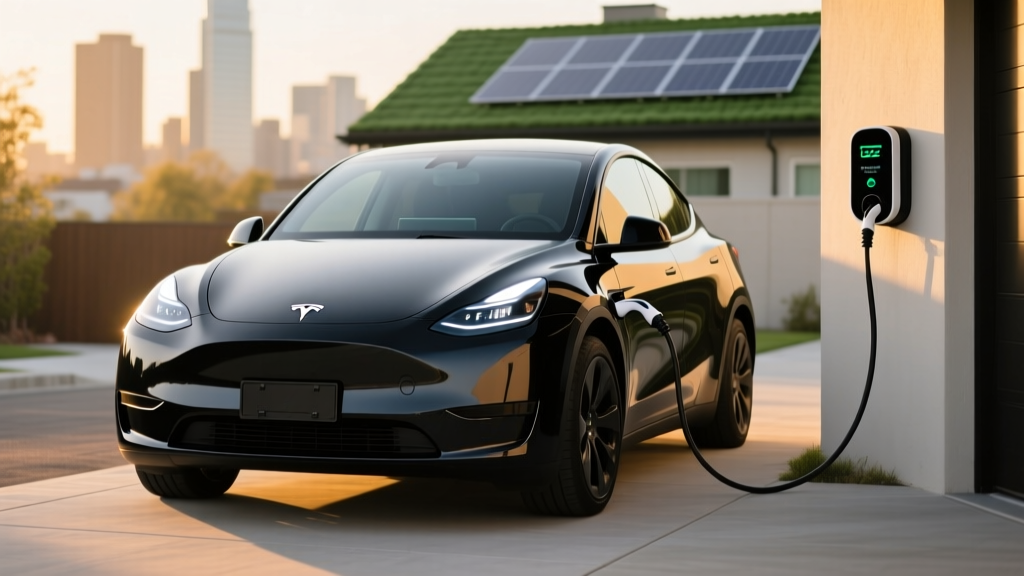
For home charging, Tesla's Wall Connector at 48 amps (11.5 kW) adds approximately 44 miles of range per hour. A typical overnight session from 30% to 80% takes about 4 hours on a dedicated 60-amp circuit. If your home electrical panel only supports a 40-amp circuit (common in older homes), charging drops to roughly 32 mi/hr — still adequate for daily use but worth factoring into installation decisions.
Pricing, Lease Economics & Federal Tax Credit Impact
The 2026 Tesla Model Y starts at $44,990 for the Long Range RWD, before destination fees ($1,390) and any add-ons. A typical as-tested price for a well-equipped Long Range AWD with premium paint and 20-inch wheels lands around $51,000–$53,000.
| Trim | Base MSRP | Destination | §30D Credit (if eligible) | Effective Price |
|---|---|---|---|---|
| Long Range RWD | $44,990 | $1,390 | −$7,500 | $38,880 |
| Long Range AWD | $47,990 | $1,390 | −$7,500 | $41,880 |
| Performance AWD | $52,490 | $1,390 | −$7,500 | $46,380 |
Critical tax credit caveat: The IRS §30D Clean Vehicle Credit has strict eligibility requirements that change frequently:
- MSRP Cap: SUVs must be under $80,000 — all Model Y trims qualify.
- Buyer Income Cap: Modified AGI must not exceed $150,000 (single) / $300,000 (joint).
- Battery Sourcing: Critical minerals and battery components must meet escalating domestic-content thresholds. Tesla has maintained eligibility through 2025–2026 by shifting supply chains, but always verify current status at the point of purchase.
- Lease Loophole: When you lease, the §30D credit goes to the leasing company (the legal owner), not you. Tesla may pass this through as a capitalized-cost reduction, lowering your monthly payment — but this is not guaranteed and varies by promotion.
March Lease Timing: Tesla historically adjusts lease offers at quarter-end to hit delivery targets. A March lease window (end of Q1) can yield lower money factors or higher residuals than mid-quarter. In recent quarters, 36-month/30,000-mile leases on the Long Range AWD have ranged from $499–$599/month depending on incentives. Compare this to a purchase at $41,880 (after credit) financed at 6.5% over 60 months, which yields roughly $820/month but builds equity.
Interior, Cargo & Tech: The Juniper Refresh Impact
The 2026 Model Y's interior represents the most significant update since the vehicle's 2020 launch. Key changes include:
- Ambient lighting strips along the dashboard and door panels
- Ventilated front seats (previously absent and a common complaint)
- Improved acoustic glass reducing cabin noise by ~20%
- Rear-seat touchscreen for climate and media control
- Power-folding second-row seats (new for Juniper)
Cargo volume: 30.2 cubic feet behind the second row; 72.1 cubic feet with seats folded. The front trunk (frunk) adds 4.1 cubic feet — useful for charging cables and small bags. Rear legroom measures 41.6 inches, competitive with the Hyundai Ioniq 5 (39.4 in) and slightly less than the Ford Mach-E (42.4 in).
Infotainment: The 15.4-inch center touchscreen runs Tesla's proprietary OS — responsive, feature-rich, but with no Apple CarPlay or Android Auto. Navigation, media, and vehicle controls are all screen-dependent, which some buyers love and others find distracting. The Tesla app integration (preconditioning, Sentry Mode clips, charging monitoring) remains best-in-class.
Driver Assistance: Basic Autopilot (lane centering + adaptive cruise) is standard. Full Self-Driving (Supervised) remains a $8,000 add-on or $99/month subscription. Per NHTSA guidance, FSD is an SAE Level 2 system — the driver must remain fully engaged and responsible at all times. It is not autonomous driving.
Pros & Cons: Honest Assessment
Pros
- Supercharger network access (17,000+ stalls in North America)
- Class-leading software, OTA updates, and app integration
- Strong real-world efficiency (27 kWh/100mi)
- Practical cargo space with power-folding rear seats
- Juniper refresh addresses ride comfort and cabin noise
Cons
- No Apple CarPlay / Android Auto
- DC fast charging limited to 250 kW (competitors hit 350 kW)
- FSD (Supervised) expensive and not truly autonomous
- Insurance premiums 15–30% above segment average
- Lease forfeits direct tax-credit claim
Who the 2026 Model Y Suits Best
Ideal for: Tech-forward commuters who value over-the-air updates, families needing versatile cargo space, and road-trippers who rely on the Supercharger network's reliability and coverage. The Long Range AWD is the sweet spot for four-season climates.
Less ideal for: Buyers who prioritize luxury interior materials (consider Genesis GV60 or BMW iX), those who want the fastest possible DC charging (Hyundai/Kia at 350 kW), or budget-conscious shoppers who might find better value in the Chevy Equinox EV or base Hyundai Ioniq 5.
Frequently Asked Questions
What is the real-world range of the 2026 Tesla Model Y?
The EPA rates the Long Range RWD at 320 miles, but expect 260–290 miles in mixed driving and 230–255 miles in cold weather or sustained highway speeds above 75 mph.
How fast does the Model Y charge at home and on the road?
At home on a Level 2 Wall Connector (11.5 kW), you'll add ~44 miles per hour. On a V3 Supercharger, peak rate is 250 kW, reaching 10–80% in about 25 minutes, though the charge curve tapers significantly above 60%.
Does the Tesla Model Y qualify for the $7,500 federal tax credit?
Yes, all 2026 Model Y trims fall under the $80,000 SUV MSRP cap. However, buyer income limits ($150K single / $300K joint) and battery-sourcing rules apply. Verify current eligibility on IRS.gov before purchasing.
Is leasing the Model Y in March a good deal?
March (end of Q1) often brings Tesla's most aggressive lease terms to hit delivery targets. However, lessees cannot directly claim the $7,500 tax credit — it goes to the leasing entity. Compare the effective lease cost against a purchase with the credit applied to determine which is cheaper over 36 months.
How does the Model Y compare to the Hyundai Ioniq 5 and Ford Mach-E?
The Model Y wins on Supercharger access, software, and efficiency. The Ioniq 5 charges faster (350 kW peak) and offers CarPlay. The Mach-E provides more rear legroom and a more traditional interior layout. All three are strong choices — your priority (charging speed vs. network vs. space) should guide the decision.
What's the battery warranty on the 2026 Model Y?
Tesla covers the battery and drive unit for 8 years or 120,000 miles (whichever comes first), with a guaranteed minimum 70% capacity retention over that period.