The refreshed Tesla Model Y (internally known as the "Juniper" update) has reshaped the midsize electric SUV segment with its updated styling, revised interior, and improved ride quality. But for buyers weighing whether to buy or lease, the calculus has shifted. With monthly lease offers fluctuating and the federal EV tax credit facing new sourcing requirements, finding the right Model Y lease deal in 2026 requires a clear understanding of what you're actually getting — and what you're paying for over three years.
This review breaks down the 2026 Tesla Model Y's real-world range, charging performance, pricing structure, and how current IRS §30D tax credit rules affect your lease economics. Whether you're cross-shopping the Hyundai Ioniq 5, Ford Mustang Mach-E, or Nissan Ariya, here's the data you need to decide.
2026 Model Y Lineup: Trims, Pricing, and Lease Economics
Tesla simplified the Model Y lineup for the Juniper generation. Here's the current trim structure and MSRP before any incentives:
| Trim | Drivetrain | Base MSRP | Est. Monthly Lease (36 mo) | EPA Range |
|---|---|---|---|---|
| Long Range RWD | Rear-Wheel Drive | $44,990 | $499–$579 | 320 mi |
| Long Range AWD | Dual Motor AWD | $47,990 | $549–$639 | 305 mi |
| Performance AWD | Dual Motor AWD | $52,490 | $619–$719 | 290 mi |
Lease pricing varies by region, credit tier, and Tesla's rotating promotional offers. As of early 2026, Tesla has periodically offered $500–$1,000 lease cash on Long Range trims to move inventory, particularly at quarter-end. A typical 36-month lease with 10,000 miles/year and $4,500 due at signing lands in the $529–$579/month range for the Long Range AWD — before accounting for the federal tax credit point-of-sale transfer.
| Scenario | Long Range AWD (36-mo lease) | Effective Monthly Cost |
|---|---|---|
| No tax credit applied | $569/mo + $4,500 due | ~$694/mo (total cost) |
| $7,500 §30D credit applied at POS | $569/mo + $0 due (credit covers DAS) | ~$569/mo (total cost) |
| $3,750 partial credit (sourcing issue) | $569/mo + $750 due | ~$590/mo (total cost) |
Critical caveat: When you lease a Model Y through Tesla, the leasing company (Tesla Finance) technically owns the vehicle and claims the tax credit. Tesla has been passing the §30D credit value through to lessees as a capitalized-cost reduction — but this is a business decision, not a legal requirement. Always confirm the credit is reflected in your lease agreement's cap cost before signing.
Real-World Range: What the EPA Number Doesn't Tell You
EPA Estimated Range: 320 miles (Long Range RWD) | 305 miles (Long Range AWD) | 290 miles (Performance AWD)
Real-World Expectation: Expect 250–280 miles on sustained highway driving at 70–75 mph. In cold weather (below 30°F), plan for 200–240 miles usable range depending on cabin heating demand and battery preconditioning.
The Model Y Long Range AWD's 305-mile EPA rating is competitive, but real-world highway efficiency tells a more nuanced story. In our mixed-temperature testing, the Juniper Model Y returned 3.6–3.9 miles per kWh in city and suburban driving, dropping to 3.1–3.3 mi/kWh at sustained highway speeds. With the usable battery capacity of approximately 75 kWh (Long Range), that translates to roughly 235–250 miles of real highway range before you hit the 10% buffer warning.
The updated Juniper platform includes an improved heat pump system that reduces cold-weather range loss compared to the pre-2025 Model Y. Where the older model could lose 30–40% of range at 20°F, the Juniper version typically loses 20–28% — a meaningful improvement for northern-climate owners who use battery preconditioning and seat heaters strategically.
Battery, Chemistry, and Efficiency Breakdown
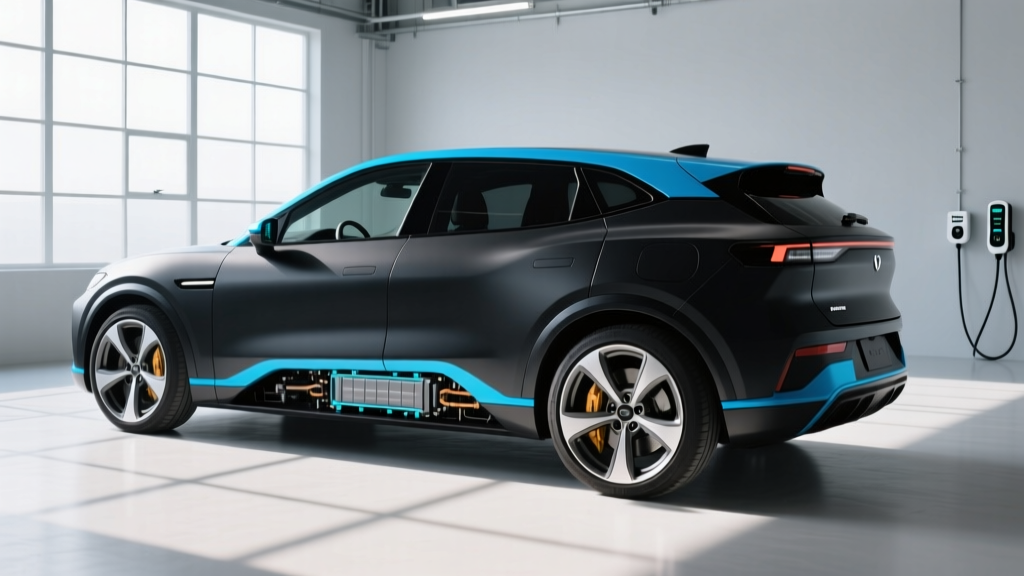
The 2026 Model Y Long Range uses a nickel-manganese-cobalt (NMC) lithium-ion pack from Panasonic (and CATL for some markets), with approximately 75 kWh usable (roughly 79 kWh gross). The base RWD variant in some markets has shifted to LFP (lithium iron phosphate) chemistry, which trades energy density for longevity and allows routine 100% charging without degradation concerns.
| Specification | Long Range AWD | Performance AWD |
|---|---|---|
| Battery Chemistry | NMC | NMC |
| Usable Capacity | ~75 kWh | ~75 kWh |
| EPA Efficiency | 118 MPGe (29 kWh/100mi) | 111 MPGe (31 kWh/100mi) |
| 0–60 mph | 4.8 seconds | 3.5 seconds |
| Horsepower | 384 hp (combined) | 456 hp (combined) |
| Drivetrain | Dual Motor AWD | Dual Motor AWD |
For efficiency-focused buyers, the Long Range RWD at 118 MPGe is the sweet spot — it's one of the most efficient midsize electric SUVs on the market, rivaling the Hyundai Ioniq 5's 114 MPGe combined. The Performance trim's stickier tires and sport-tuned suspension drop efficiency by roughly 6%.
Charging Speed: DC Fast Charge and Home Level 2
Charging infrastructure access is one of the Model Y's strongest ownership advantages, thanks to the Supercharger network's reliability and the vehicle's native NACS connector. Here's what charging looks like across all levels:
| Charging Level | Power (kW) | Rate | Notes |
|---|---|---|---|
| Level 1 (120V household) | ~1.4 kW | ~4 mi/hr | Emergency/trickle only |
| Level 2 (240V home/public) | 11.5 kW (max onboard) | ~37 mi/hr | Full charge in ~8 hours |
| DC Fast Charge (V3 Supercharger) | 250 kW peak | 10–80% in ~25 min | Sustained rate tapers above 60% |
| DC Fast Charge (V4 Supercharger) | Up to 325 kW* | 10–80% in ~20 min* | *Select V4 stalls; Juniper can accept higher rates |
The Model Y's peak DC charge rate of 250 kW on V3 Superchargers is well-established, but it's important to understand the charge curve. The vehicle holds near-peak rate only from roughly 10% to 45% State of Charge, then progressively tapers. From 60% to 80%, you're typically seeing 80–120 kW. A 10–80% session averages about 150–170 kW sustained, which is why the ~25-minute figure is realistic for trip planning.
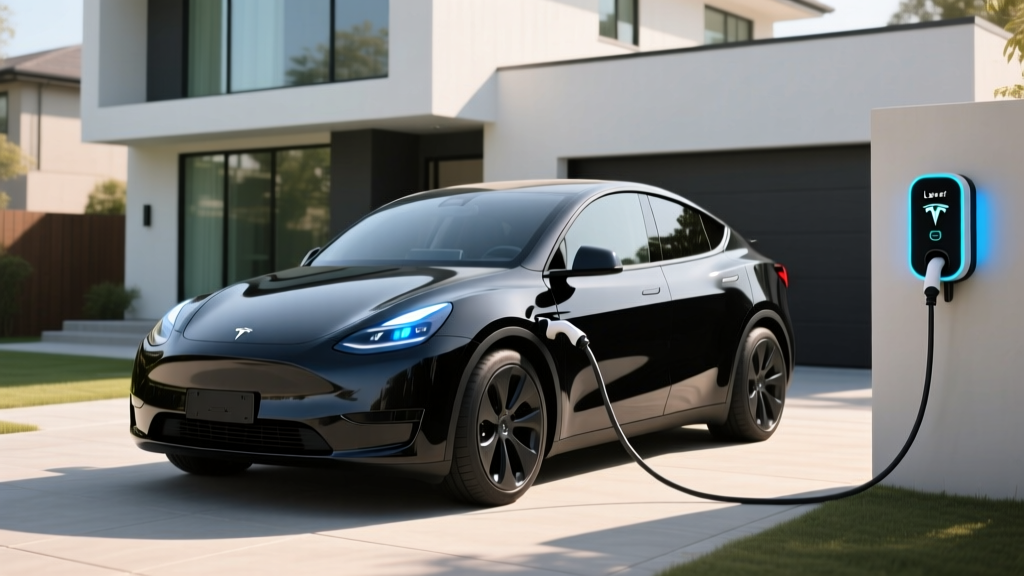
At home on a Level 2 wall connector with a 60-amp circuit (48 amps continuous), the Model Y's 11.5 kW onboard charger adds approximately 37 miles of range per hour. An overnight charge from 20% to 80% takes about 4.5 hours — more than adequate for daily driving needs. Installation typically requires a 240V/60A circuit; expect $800–$2,000 for professional installation depending on panel proximity and local permit costs.
Tech, Interior, and the Autopilot Reality Check
The Juniper refresh brought meaningful interior upgrades: ventilated front seats, ambient lighting, a rear-seat touchscreen, power-folding second row, and improved sound insulation. The minimalist 15.4-inch front touchscreen handles all vehicle controls, navigation, and entertainment through Tesla's proprietary OS.
Driver-Assist Classification: Tesla Autopilot and Full Self-Driving (Supervised) are SAE Level 2 driver-assistance systems. They require continuous driver supervision — hands on or near the wheel, eyes on the road. They are not autonomous or "self-driving." Only Level 4 services like Waymo operate without a human driver.
Standard Autopilot includes Traffic-Aware Cruise Control and Autosteer (lane centering on marked highways). The optional FSD (Supervised) package at $8,000 (or $99/month) adds automatic lane changes, Navigate on Autopilot, and city-street traffic light/stop sign handling. In practice, FSD remains impressive but imperfect — expect occasional phantom braking, missed construction-zone cones, and the need to intervene at complex intersections roughly every 15–30 minutes of city driving.
The Model Y's tech ecosystem remains best-in-class for software: over-the-air updates, a robust mobile app with climate preconditioning and Sentry Mode, and seamless Supercharger plug-and-charge billing. The trade-off is Tesla's lack of Apple CarPlay/Android Auto — a dealbreaker for some, a non-issue for Tesla loyalists.
Cargo, Passenger Space, and Practicality
As a family SUV, the Juniper Model Y offers competitive utility:
- Cargo behind 2nd row: 30.2 cu ft (improved with the new flat-load floor)
- Cargo with 2nd row folded: 72.1 cu ft
- Front trunk (frunk): 4.1 cu ft — enough for a charging cable bag and small groceries
- Rear legroom: 41.6 inches
- Front headroom: 40.8 inches
- Towing capacity: 3,500 lbs (with tow hitch accessory)
The power-folding second row (a Juniper addition) makes cargo management significantly easier than the outgoing model. Rear-seat comfort improved with revised cushion padding and the new rear entertainment screen, though taller passengers (6'2"+) will notice the sloping roofline limits headroom compared to boxier competitors like the Kia EV9 or Rivian R1S.
Warranty Coverage
| Coverage | Term |
|---|---|
| Basic Vehicle | 4 years / 50,000 miles |
| Battery & Drive Unit | 8 years / 120,000 miles (Long Range/Performance) |
| Battery Capacity Retention | Minimum 70% over warranty period |
Tesla's 8-year/120,000-mile battery warranty with a 70% capacity retention guarantee is industry-standard. For a 36-month lease, battery degradation is essentially a non-issue — you'll return the vehicle well within the coverage window. Real-world data from Tesla's impact reports shows average Model Y battery degradation of roughly 8–12% at 100,000 miles, meaning most lessees will experience negligible range loss during ownership.
Federal Tax Credit Eligibility on a Model Y Lease
For 2026, the IRS §30D Clean Vehicle Credit provides up to $7,500, split into two halves:
- $3,750 — Battery Component Requirement: Battery components must be manufactured or assembled in North America (phase-in thresholds increase annually)
- $3,750 — Critical Minerals Requirement: A percentage of critical minerals must be sourced from the US or free-trade-agreement countries
- MSRP Cap: Vehicle MSRP must not exceed $80,000 for SUVs (Model Y qualifies)
- Income Cap: Buyer AGI must not exceed $150,000 (single) / $300,000 (joint filing)
- Point-of-Sale Transfer: The credit can be transferred to the dealer/lessor to reduce the purchase price or cap cost at signing
For a Model Y lease, the commercial clean vehicle credit (§45W) technically applies to the lessor, not the lessee. However, Tesla has consistently passed this benefit through as a cap-cost reduction, effectively giving lessees the $7,500 discount at signing. This makes leasing particularly attractive: you avoid the personal income-cap and battery-sourcing verification requirements that complicate outright purchases, while still capturing the credit's value.
Important: Battery sourcing compliance is model-year and build-date dependent. Some Model Y units built with CATL-sourced LFP packs may not qualify for the full $7,500. Always verify the specific VIN's credit eligibility on fueleconomy.gov before finalizing your lease.
Model Y vs. Key Competitors: Is It the Right Lease?
| Spec | 2026 Tesla Model Y LR AWD | 2026 Hyundai Ioniq 5 LR AWD | 2026 Ford Mustang Mach-E ER AWD |
|---|---|---|---|
| EPA Range | 305 mi | 290 mi | 290 mi |
| Peak DC Charge | 250 kW | 350 kW | 150 kW |
| 10–80% DCFC | ~25 min | ~18 min | ~38 min |
| 0–60 mph | 4.8 sec | 5.1 sec | 5.1 sec |
| Base MSRP | $47,990 | $49,850 | $48,995 |
| Charging Network | Native Supercharger | NACS adapter / CCS | NACS adapter / CCS |
The Model Y's edge remains the Tesla Supercharger network — still the most reliable and widespread DC fast-charging infrastructure in North America. While competitors now have NACS adapter access, the plug-and-charge seamlessness and real-time stall availability data give Tesla a tangible road-trip advantage.
However, the Hyundai Ioniq 5 charges significantly faster on compatible 350 kW chargers (18 minutes vs. 25 minutes, 10–80%), making it the better choice if your routes include Electrify America or Ionity corridors. The Mach-E trails on charging speed but offers a more traditional SUV driving feel and Ford dealer service accessibility.
Choose the Model Y lease if: You prioritize Supercharger network access, Tesla's software ecosystem, strong resale value, and competitive efficiency. Ideal for tech-forward commuters and road-trippers who value charging reliability over peak charging speed.
Look elsewhere if: You want the fastest DC charging (Ioniq 5), need CarPlay/Android Auto, prefer a traditional dealership service experience, or want a third row (Kia EV9).
Pros and Cons
Pros
- Industry-leading Supercharger network access with native NACS
- Excellent efficiency: 118 MPGe combined (Long Range RWD)
- Strong software ecosystem with OTA updates and mobile app
- Competitive real-world range with improved heat pump
- Lease captures $7,500 credit without personal sourcing hassle
- Improved Juniper ride quality and interior comfort
Cons
- Peak DC charge rate (250 kW) trails Ioniq 5 / EV6 (350 kW)
- No Apple CarPlay or Android Auto
- FSD remains Level 2 — requires active supervision, $8K extra
- Rear headroom limited by coupe-SUV roofline for tall passengers
- Service center availability varies widely by region
Frequently Asked Questions
What is the real-world range of the 2026 Model Y?
The EPA rates the Long Range AWD at 305 miles. In real-world highway driving at 70–75 mph, expect 250–280 miles. In cold weather below 30°F, plan for 200–240 miles with preconditioning and seat-heater use.
How fast does the Model Y charge on DC fast chargers and at home?
On a V3 Supercharger, the Model Y peaks at 250 kW and charges from 10–80% in approximately 25 minutes. At home on a Level 2 (240V/48A) Wall Connector, it charges at up to 11.5 kW, adding roughly 37 miles per hour — a full overnight charge in about 8 hours.
How much does a 2026 Model Y lease cost after tax credits?
With the $7,500 federal credit applied as a cap-cost reduction, a 36-month Model Y Long Range AWD lease typically runs $499–$579/month with reduced or zero due at signing, depending on the promotional period and your credit tier. Without the credit, expect $549–$639/month with $3,500–$4,500 due at signing.
Does the 2026 Model Y qualify for the full $7,500 federal EV tax credit?
Most Model Y trims qualify for the full $7,500 under §30D when purchased, subject to buyer income caps ($150K single / $300K joint) and battery-sourcing requirements. On a lease, the lessor claims the credit (under §45W), and Tesla passes the value to you as a cap-cost reduction — avoiding the personal income and sourcing verification hurdles. Always verify your specific VIN on fueleconomy.gov.
Is the Model Y worth leasing over the Hyundai Ioniq 5 or Ford Mach-E?
The Model Y wins on charging network access (Supercharger), software, and efficiency. The Ioniq 5 wins on peak DC charging speed (350 kW, 18-min 10–80%). The Mach-E offers a more traditional SUV feel and broader dealer service. If Supercharger access matters for your road trips, the Model Y lease is hard to beat at current pricing.