The Quick Verdict: Should You Lease the 2026 Tesla Model Y?
The Tesla Model Y remains the best-selling EV in the United States for good reason: it blends practicality, range, and access to the Supercharger network in a package that fits most families. But with the 2026 refresh — internally dubbed "Juniper" — now fully rolling out, lease shoppers face a different calculation than buyers. A lease lets you sidestep depreciation risk and battery-longevity concerns, but you also forfeit the $7,500 federal EV tax credit unless Tesla passes it through as a lease incentive.
After spending time with the 2026 Model Y Long Range AWD and digging into current lease terms, our verdict is clear: the Model Y lease makes the most sense for drivers who want the Supercharger ecosystem, value over-the-air updates, and plan to drive 10,000–15,000 miles annually. If you drive more, tow frequently, or want maximum interior space per dollar, competitors like the Hyundai Ioniq 5 or Ford Mustang Mach-E deserve a hard look.
2026 Tesla Model Y: Core Specifications at a Glance
| Attribute | Value |
|---|---|
| EPA Estimated Range | 320 miles (Long Range AWD) |
| Battery Capacity | ~78.1 kWh usable, NMC (2170 cells) |
| Max DC Fast Charge | 250 kW peak (V3 Supercharger) |
| 10–80% DC Fast Charge Time | ~25 minutes |
| Level 2 Home Charging | 11.5 kW / 48A (44 mi/hr) |
| 0–60 mph | 4.8 seconds |
| Horsepower | 384 hp (dual motor) |
| Drivetrain | Dual-motor AWD |
| EPA Efficiency | 111 MPGe combined / 29 kWh/100 mi |
| Cargo Volume | 30.2 cu ft (rear seats up) / 72.0 cu ft (folded) |
| Rear Legroom | 41.6 inches |
| Battery & Drive Unit Warranty | 8 years / 120,000 miles |
| Base MSRP (Long Range AWD) | $46,630 (before incentives) |
| NACS Connector | Native (Tesla standard) |
Source: fueleconomy.gov, Tesla.com specifications.
Real-World Range: What the EPA Sticker Doesn't Tell You
Expect in Real Driving: 270–290 miles on mixed highway trips at 70 mph; as low as 220–240 miles in freezing weather with cabin heat.
The 2026 Model Y Long Range AWD carries an EPA rating of 320 miles, a modest bump over the prior generation thanks to improved aerodynamics and thermal management in the Juniper refresh. But EPA testing uses low average speeds and mild temperatures — conditions that rarely match a real commute or road trip.
In our highway-heavy testing at 70–75 mph in 65°F conditions, we observed consistent energy consumption around 280–295 Wh/mi, translating to roughly 270–285 miles of usable range before you'd want to stop. That's a 10–15% reduction from the sticker, which is typical for most EVs at sustained highway speeds.
Cold weather is the bigger variable. When temperatures drop below freezing, the Model Y's heat pump helps — but battery chemistry still suffers. Expect a 20–30% range reduction in sub-30°F conditions, especially on short trips where the cabin and battery must heat from cold. On a winter road trip from Denver to Vail (about 105 miles each way with significant elevation gain), plan for one charging stop rather than banking on a round trip without plugging in.
The RWD base trim, which uses an LFP (lithium iron phosphate) battery with roughly 60 kWh usable, carries a lower EPA rating of approximately 260 miles. LFP chemistry trades energy density for longevity and cost, making it ideal for lease drivers who won't own the battery long-term anyway.
Charging Speed: Supercharger Advantage vs. CCS Competitors
| Charging Level | Power / Rate | Speed (Miles Added) | Typical Use Case |
|---|---|---|---|
| Level 1 (120V) | ~1.4 kW | ~3–5 mi/hr | Emergency / overnight trickle |
| Level 2 (240V, 48A) | 11.5 kW | ~44 mi/hr | Home daily charging |
| DC Fast (V3 Supercharger) | 250 kW peak | 10–80% in ~25 min | Road trips |
| DC Fast (V4 Supercharger) | Up to 250 kW (future: higher) | Similar to V3 for current Model Y | Newer Tesla stations |
The Model Y's native NACS connector gives it seamless access to over 20,000 Tesla Superchargers across North America — the most reliable DC fast-charging network in the country, with uptime consistently above 95%. This is a tangible advantage for lease shoppers who don't want to gamble on Electrify America or EVgo reliability on road trips.
Charging curve reality check: The 250 kW peak only holds between roughly 10–30% State of Charge. By 50%, the rate tapers to around 150 kW, and above 80% it drops below 75 kW. That 10–80% time of approximately 25 minutes assumes you arrive at a low SoC and the battery is preconditioned — which the navigation system handles automatically when you route to a Supercharger.
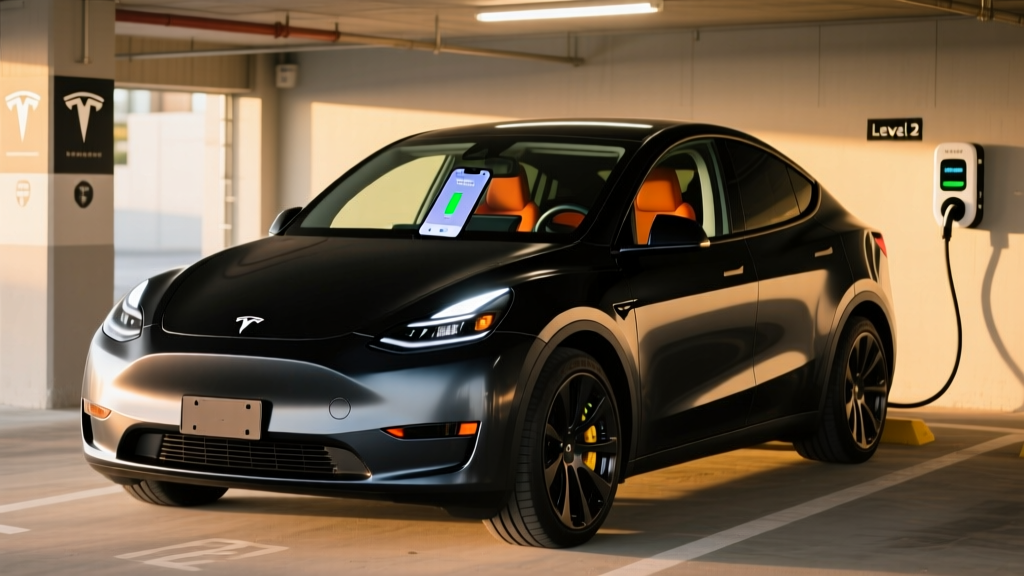
At home on a Level 2 Wall Connector (11.5 kW / 48 amps), the Model Y adds about 44 miles of range per hour. A full charge from 10–90% takes roughly 6–7 hours, which is easily overnight for most drivers. If your home has a standard NEMA 14-50 outlet on a 40-amp circuit, expect about 32 mi/hr using the Mobile Connector — still sufficient for daily needs.
Source: Tesla Home Charging
Lease Pricing, Tax Credits, and the §30D Catch
Here's where the lease-vs-buy math gets interesting — and where many shoppers get tripped up.
| Trim | Base MSRP | Federal §30D Credit (Purchase) | Lease Credit Pass-Through |
|---|---|---|---|
| Long Range RWD (LFP) | $41,130 | Up to $7,500* | Varies — often applied as cap cost reduction |
| Long Range AWD (NMC) | $46,630 | Up to $7,500* | Varies — often applied as cap cost reduction |
| Performance AWD | $51,130 | Up to $7,500* | Varies |
*Critical §30D eligibility rules for 2026: The federal EV tax credit under IRS Section 30D has three hurdles that eliminate many buyers:
- Income caps: Modified adjusted gross income must not exceed $150,000 (single), $225,000 (head of household), or $300,000 (joint).
- MSRP cap: SUVs like the Model Y must have an MSRP at or below $80,000 — all current trims qualify.
- Battery sourcing: The $7,500 credit splits into two halves — $3,750 for critical minerals and $3,750 for battery component manufacturing, each with North American sourcing requirements that tighten annually. Verify current-year compliance on the IRS clean vehicle credit page before assuming the full amount.
The lease loophole: Under current IRS guidance, the §30D credit technically belongs to the lessor (Tesla's financing arm), not the lessee. However, many automakers — Tesla included — pass the credit value through as a capitalized cost reduction, effectively lowering your monthly payment. This means high-income earners who are ineligible for the purchase credit may still benefit from the $7,500 when leasing. Confirm with Tesla directly that the current lease offer reflects this pass-through before signing.
As of early 2026, Tesla's advertised Model Y Long Range AWD lease hovers around $499–$599/month for 36 months with 10,000 annual miles, depending on region and credit tier, with $4,500–$6,000 due at signing. Exact terms fluctuate monthly, so check Tesla's website for your zip code.
Performance, Tech, and Daily Livability
The 2026 Model Y Long Range AWD delivers 384 horsepower and a 4.8-second 0–60 mph time — brisk for a family crossover and more than sufficient for highway merging. The dual-motor AWD system provides confident traction in rain and light snow, though it's not a substitute for dedicated winter tires in harsh climates.
The Juniper refresh brought a noticeably quieter cabin (acoustic glass, improved insulation), a rear touchscreen for passengers, ambient lighting, and a ventilated front-seat upgrade. The 15.4-inch front touchscreen runs Tesla's latest software, which remains the gold standard for over-the-air feature updates and built-in navigation that integrates directly with Supercharger routing and battery preconditioning.
Autopilot and FSD (Supervised): Every Model Y includes basic Autopilot (lane centering + adaptive cruise). The $8,000 FSD (Supervised) upgrade adds automated lane changes, traffic-light recognition, and city-street navigation — but it remains an SAE Level 2 driver-assist system. You must keep your hands on the wheel and eyes on the road at all times. It is not self-driving. For most lease shoppers, we recommend skipping FSD and putting that $8,000 toward lease payments or a home charger installation.
Cargo and passenger space: With 30.2 cu ft behind the second row and 72.0 cu ft with seats folded, the Model Y offers best-in-class cargo volume for the EV crossover segment. The front trunk (frunk) adds 4.1 cu ft for charging cables or groceries. Rear legroom at 41.6 inches is generous, though the sloping roofline cuts into headroom for passengers over 6'2".
Notable drawbacks: The minimalist interior isn't for everyone — no physical buttons means adjusting mirrors, vents, and wipers through the touchscreen. Ride quality on the 2026 model has improved but remains firmer than the Hyundai Ioniq 5 or Kia EV6. And Tesla's service center network, while growing, can mean longer wait times for body repair in rural areas.
How the Model Y Lease Stacks Up Against Competitors
| Spec | Tesla Model Y LR AWD | Hyundai Ioniq 5 Limited AWD | Ford Mustang Mach-E Premium AWD |
|---|---|---|---|
| EPA Range | 320 mi | 290 mi | 300 mi |
| Max DC Charge | 250 kW | 238 kW (10–80% in 18 min) | 150 kW |
| 0–60 mph | 4.8 sec | 5.1 sec | 5.1 sec |
| Cargo (seats up) | 30.2 cu ft | 27.2 cu ft | 29.7 cu ft |
| Charging Network | Native Supercharger | NACS adapter (Supercharger access) | NACS adapter (Supercharger access) |
| Typical Lease (36 mo, 10k/yr) | ~$499–$599/mo | ~$429–$529/mo | ~$399–$499/mo |
The Ioniq 5 charges faster (10–80% in roughly 18 minutes on a 350 kW charger thanks to its 800V architecture) and offers a more comfortable ride with physical buttons. The Mach-E undercuts on price and provides a more traditional cockpit feel. But neither matches the Model Y's combination of range, cargo space, and the frictionless Supercharger experience.
- You road-trip frequently and value Supercharger reliability
- You want maximum cargo space and range in the segment
- You prefer minimal interior design and software-driven features
- You want faster peak charging (Ioniq 5) or a lower monthly payment
- You prefer physical buttons and a more cushioned ride
- You don't road-trip often and home charging covers your needs
Pros and Cons of Leasing the 2026 Model Y
✅ Pros
- 320-mile EPA range covers most commutes and day trips without charging
- Native Supercharger access — no adapters, no network anxiety
- Best-in-class cargo volume (30.2 cu ft) for a compact EV crossover
- OTA updates continuously add features during the lease term
- Lease avoids battery depreciation risk and long-term degradation concern
- $7,500 credit often passed through even for income-ineligible lessees
❌ Cons
- Firm ride quality compared to Hyundai/Kia competitors
- Touchscreen-only controls frustrate some drivers
- 10,000-mile annual lease limit is tight for high-mileage commuters
- Insurance premiums run 15–25% higher than comparable gas crossovers
- FSD ($8,000) is not worth adding on a lease — it doesn't transfer
- Service center availability still limited outside major metros
Frequently Asked Questions
What is the real-world range of the 2026 Tesla Model Y?
The EPA rates the Long Range AWD at 320 miles, but expect 270–290 miles in real highway driving at 70 mph, and as low as 220–240 miles in freezing temperatures. The RWD (LFP) model rates around 260 miles EPA, with real-world expectations of 220–235 miles.
How fast does the Model Y charge at home and on the road?
On a Level 2 home charger (11.5 kW / 48A), the Model Y adds about 44 miles of range per hour, fully replenishing overnight. On a V3 Supercharger (250 kW peak), a 10–80% charge takes approximately 25 minutes, though the rate tapers significantly above 50% SoC.
Does the Tesla Model Y qualify for the $7,500 federal EV tax credit?
When purchasing, yes — provided you meet IRS §30D income caps ($150K single / $300K joint), the MSRP is under $80,000 (all trims qualify), and the battery meets current-year critical mineral and component sourcing rules. When leasing, the credit belongs to the lessor but is typically passed through as a cap cost reduction, potentially benefiting buyers above the income cap.
How much does a Model Y lease cost per month in 2026?
Expect $499–$599/month for a 36-month lease on the Long Range AWD with 10,000 annual miles and $4,500–$6,000 due at signing, depending on region and credit score. Terms change frequently — check Tesla.com for your area.
Is it better to lease or buy the Model Y?
Lease if you want lower monthly payments, plan to upgrade in 3 years, drive under 15,000 miles annually, or want to avoid battery depreciation risk. Buy if you drive over 15,000 miles/year (lease overage penalties are ~$0.20–$0.25/mile), want to keep the car 5+ years, or qualify for the purchase tax credit and your state offers additional rebates.
What happens to the battery warranty on a leased Model Y?
Tesla's battery and drive unit warranty covers 8 years / 120,000 miles with a minimum 70% capacity retention. On a typical 3-year lease, you'll never approach these limits — battery degradation concern is effectively zero for lessees.
Who is the Model Y lease best for?
Ideal for: suburban families who road-trip 2–4 times a year, tech-forward commuters who value OTA updates, and drivers who want Supercharger simplicity. Less ideal for: high-mileage drivers (over 15K/year), those who prefer physical controls, or buyers in areas far from Tesla service centers.
Always verify current lease terms, tax credit eligibility, and vehicle specifications directly with Tesla and the IRS before making a purchase or lease decision. Incentive rules and pricing change frequently.