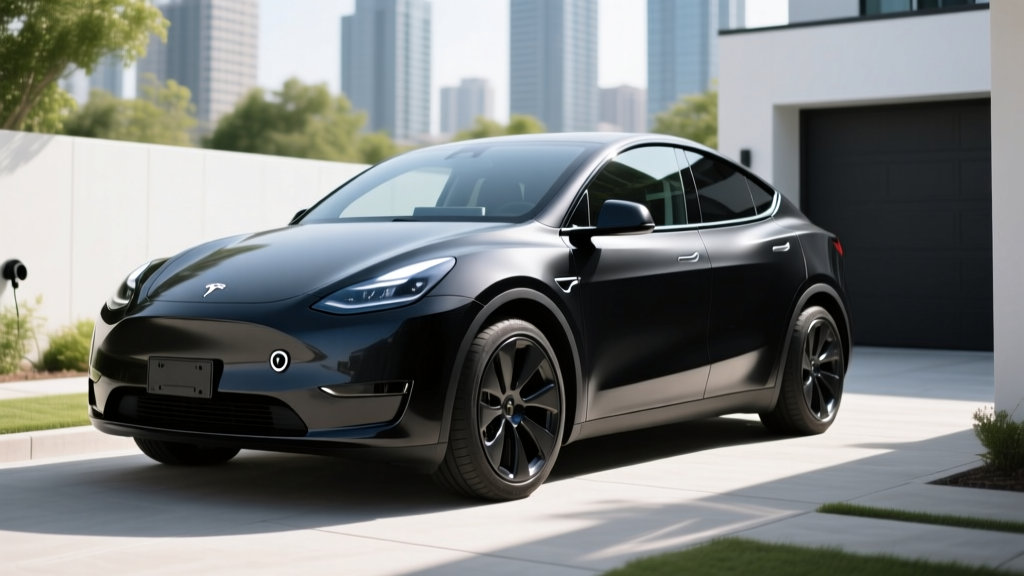
The 2025 Tesla Model Y "Launch Edition" arrived as a simplified, single-trim refresh of the best-selling EV in the world. Stripped of the sprawling trim ladder that defined earlier years, the Launch Edition packages Long Range AWD hardware, the updated Juniper interior, and a full suite of driver-assist tech into one configuration. For 2026, Tesla has continued this streamlined approach, making the Model Y Launch Edition the default entry point into the lineup. This review breaks down exactly what you get — and where the real-world experience diverges from the spec sheet.
Quick Verdict: Who Should Buy the Model Y Launch Edition
The Model Y Launch Edition targets buyers who want a practical, tech-forward electric crossover with access to the Supercharger network and minimal trim-decision fatigue. It works best for suburban families, daily commuters with home charging, and road-trippers who value route-planned fast charging. It is not the right pick if you need third-row seating (the optional 7-seat package was dropped for this single-trim approach), require a luxury badge, or want physical controls for climate and media. At its core, this is the highest-volume EV in America for a reason — but the Launch Edition's one-size-fits-all strategy leaves some buyers wishing for a cheaper RWD option or a performance-oriented variant.
Range, Battery, and Efficiency
The Model Y Launch Edition carries an EPA-estimated 320 miles of range from a usable battery capacity of approximately 75 kWh. Tesla has shifted this trim to a lithium iron phosphate (LFP) cathode chemistry for the U.S. market, sourced from CATL. LFP offers a longer cycle life and less degradation over time compared to NMC, though it sacrifices some energy density — which is why the 320-mile figure trails the older Long Range AWD's 330-mile rating on a slightly smaller pack.
EPA 320 miles is achievable in mixed suburban driving at moderate temperatures. Expect ~275–295 miles on a highway-heavy road trip at 70–75 mph, and ~240–260 miles in sub-freezing winter conditions (LFP batteries are more sensitive to cold than NMC). If your commute is mostly city driving with frequent regenerative braking, you may exceed the EPA sticker. Plan road trips around 250-mile legs for a comfortable buffer.
Efficiency lands at an EPA-rated 122 MPGe combined, translating to roughly 28 kWh per 100 miles. That's competitive with the Hyundai Ioniq 5 (117 MPGe combined for AWD) and slightly behind the class-leading efficiency of the smaller RWD Model Y variants from prior years.
| Spec | Value |
|---|---|
| EPA Range | 320 miles |
| Battery (Usable) | ~75 kWh, LFP chemistry |
| Drivetrain | Dual-Motor AWD |
| Horsepower | 384 hp (combined) |
| 0–60 mph | 4.8 seconds |
| Top Speed | 125 mph |
| Efficiency | 122 MPGe / 28 kWh/100 mi |
| Max DC Fast Charge | 250 kW peak |
| 10–80% DC Time | ~25 minutes |
| Level 2 Home Charge | 11.5 kW (~44 mi/hr) |
| Cargo (rear seats up) | 30.2 cu ft |
| Cargo (rear seats folded) | 72.0 cu ft |
| Rear Legroom | 41.6 inches |
| Base MSRP | $44,990 (before destination) |
| Battery Warranty | 8 yr / 120,000 mi |
Charging: DC Fast, Level 2, and the Charge Curve
Tesla rates the Model Y Launch Edition at a peak 250 kW on V3 Superchargers. However, peak rate is not sustained rate. The charge curve ramps quickly from 10% to roughly 50% state of charge (SoC), then tapers significantly. The 10–80% charge takes approximately 25 minutes under ideal battery-preconditioned conditions. From 80–100%, expect another 20+ minutes — Tesla's battery management system protects the LFP cells by slowing charge dramatically in the upper SoC range.
| Level | Power | Speed (Approx.) | Best Use |
|---|---|---|---|
| Level 1 (120V) | ~1.4 kW | ~5 mi/hr | Emergency top-up only |
| Level 2 (240V, 48A) | 11.5 kW | ~44 mi/hr | Daily home charging |
| DC Fast (V3 Supercharger) | Up to 250 kW | ~160 mi in 15 min (10–60%) | Road trips |
| DC Fast (CCS adapter, EA/others) | Up to 150–250 kW | Varies by station | Non-Tesla networks |
At home on a Level 2 Wall Connector (hardwired, 60-amp circuit), the onboard charger accepts up to 11.5 kW, adding roughly 44 miles of range per hour. A full 10–100% charge takes about 7.5 hours — easily an overnight session. Tesla now ships vehicles with a NACS (North American Charging Standard) port natively, and a CCS adapter is available for use on Electrify America, EVgo, and other networks. Per Tesla's home charging guide, installation costs for a Wall Connector typically run $500–$1,500 depending on panel proximity and local electrical code.
LFP care tip: Unlike NMC batteries, Tesla recommends charging LFP packs to 100% at least once per week to maintain accurate state-of-charge calibration. This is a reversal of the old "never charge to 100%" advice and is one reason LFP suits daily-driving commuters well.
Performance and Driving Dynamics
The dual-motor AWD powertrain produces 384 horsepower and launches the Model Y Launch Edition to 60 mph in 4.8 seconds. That's brisk for a family crossover — quicker than a Toyota RAV4 Prime and in the same ballpark as a BMW X3 M40i. The instant torque delivery makes highway merging effortless, and the low center of gravity (battery pack under the floor) keeps body roll controlled in corners.
Ride quality has improved with the Juniper refresh: Tesla retuned the suspension for better compliance over broken pavement, and acoustic glass reduces wind noise noticeably at highway speed. However, the steering remains artificially weighted — it's precise but lacks the feedback of a Porsche Macan or Genesis GV70 Electrified. One-pedal driving via regenerative braking is strong and predictable, though Tesla removed the user-adjustable regen setting in recent software updates, defaulting to a single aggressive regen profile.
Interior, Tech, and the Juniper Refresh
The Juniper interior update brought meaningful improvements: ventilated front seats, ambient lighting, a rear-seat touchscreen for climate and media control, and power-folding second-row seats. The 15.4-inch center display remains the command hub for everything — navigation, media, climate, vehicle settings, and the optional Full Self-Driving (Supervised) package.
Tesla's Autopilot (standard) and Full Self-Driving Supervised ($8,000 option) are SAE Level 2 driver-assistance systems. They require continuous driver engagement — hands on the wheel, eyes on the road. They are not self-driving. FSD Supervised handles highway lane changes, traffic lights, and some city streets, but it can make errors that require immediate human intervention. Only Level 4 services like Waymo operate without a human driver.
The infotainment system is fast and responsive, with native Netflix/YouTube streaming (while parked), a strong navigation system with real-time Supercharger routing, and over-the-air updates that add features regularly. However, the lack of Apple CarPlay and Android Auto remains a deal-breaker for some buyers. You're fully in Tesla's software ecosystem.
Pricing, Trims, and Federal Tax Credit Eligibility
The Model Y Launch Edition starts at $44,990 plus a $1,390 destination charge, for a total of $46,380. Because this is the only trim, there's no lower-cost RWD option (Tesla discontinued the base RWD Model Y for 2025–2026). Options are limited to paint color ($0–$2,500), 20-inch wheels ($2,000), tow hitch ($1,000), and FSD Supervised ($8,000).
| Configuration | MSRP (incl. dest.) | After §30D Credit |
|---|---|---|
| Base Launch Edition | $46,380 | ~$38,880* |
| + Pearl White Paint | $47,880 | ~$40,380* |
| + 20" Wheels + Tow | $49,380 | ~$41,880* |
| Loaded (w/ FSD) | $54,380 | ~$46,880* |
*Assumes full $7,500 federal tax credit eligibility. Per IRS §30D rules, eligibility requires:
- MSRP cap: Vehicle MSRP must not exceed $80,000 for SUVs — the Model Y qualifies.
- Buyer income cap: Modified AGI ≤ $300,000 (joint), $225,000 (head of household), $150,000 (single).
- Battery sourcing: Critical minerals and battery components must meet phased-in domestic/free-trade-partner thresholds (2026: 80% critical minerals, 100% battery components from qualifying sources).
- Point-of-sale transfer: You can transfer the credit to the dealer at purchase for an immediate price reduction, rather than claiming it on your tax return.
Important caveat: The Model Y's LFP battery cells are manufactured by CATL in China. As of 2026, the battery-component sourcing requirement is 100% from U.S. or FTA-partner countries. Tesla has restructured its supply chain for U.S.-built Model Y vehicles to meet this threshold, but always verify current eligibility on the IRS clean vehicle credit page or with your tax professional before purchasing. Credit rules can change, and Tesla's qualification status has shifted in prior years.
Ownership Costs and Warranty
Tesla covers the Model Y Launch Edition with a 4-year/50,000-mile basic warranty and an 8-year/120,000-mile battery and drive unit warranty (with a minimum 70% capacity retention threshold). LFP chemistry historically degrades more slowly than NMC, and real-world data from high-mileage Tesla owners suggests 90%+ capacity retention at 100,000 miles is common with LFP packs.
Insurance tends to run 15–25% higher than comparable gas crossovers, averaging $1,800–$2,400 annually depending on your state and driving record. Electricity costs for home charging average $0.13–$0.16/kWh nationally, putting a full charge at roughly $10–$12 — versus $45–$55 for an equivalent tank of gas in a 25-MPG crossover. Over five years and 75,000 miles, fuel savings alone can offset $8,000–$12,000 depending on local rates and driving patterns, per fueleconomy.gov comparisons.
Pros, Cons, and the Competition
- Access to 6,000+ Tesla Superchargers — the most reliable DC fast-charging network
- 320-mile EPA range covers most road trips with one stop
- Strong 250-kW peak charging speed; 10–80% in ~25 min
- Spacious cargo area (72 cu ft) and practical hatchback layout
- LFP battery offers long cycle life and 100% daily charging
- Over-the-air updates continuously add features
- Competitive pricing after $7,500 tax credit
- No Apple CarPlay / Android Auto support
- All controls via touchscreen — no physical buttons for climate/media
- FSD Supervised is expensive ($8,000) and still SAE Level 2
- Single trim: no cheaper RWD or sport Performance option
- Insurance premiums above segment average
- LFP battery loses more range in extreme cold vs. NMC
- Rear-seat visibility is compromised by sloping roofline
Against key competitors, the Model Y Launch Edition holds strong on range and charging infrastructure. The Hyundai Ioniq 5 (AWD, 290-mile EPA, ~$50,000) charges faster on 800V architecture (10–80% in ~18 minutes) but trails on range and lacks Supercharger access without an adapter. The Ford Mustang Mach-E (Extended Range AWD, ~305-mile EPA, ~$48,000) offers a more traditional interior with physical controls and CarPlay but can't match Tesla's charging network. The BMW iX xDrive50 is more luxurious and refined but starts above $85,000 — a different segment entirely.
Frequently Asked Questions
What is the real-world range of the Tesla Model Y Launch Edition?
The EPA rates it at 320 miles. In real-world highway driving at 70–75 mph, expect 275–295 miles. In cold weather (below 32°F), range can drop to 240–260 miles due to cabin heating demands and reduced LFP battery efficiency. City driving with regenerative braking can sometimes exceed the EPA number.
How fast does the Model Y Launch Edition charge?
On a Tesla V3 Supercharger, it peaks at 250 kW and charges from 10–80% in approximately 25 minutes (with a preconditioned battery). At home on a Level 2 Wall Connector (11.5 kW), a full charge takes about 7.5 hours. Level 1 (standard 120V outlet) adds only ~5 miles per hour and is best for emergencies.
How much does the Model Y Launch Edition cost after the federal tax credit?
The base price is $46,380 including destination. If you qualify for the full $7,500 §30D credit (income, sourcing, and MSRP requirements met), your effective price drops to approximately $38,880. You can transfer the credit to the dealer at the point of sale for an immediate reduction. Always verify eligibility with the IRS or a tax professional before purchase.
Does the Model Y Launch Edition qualify for the $7,500 federal EV tax credit?
As of 2026, the U.S.-built Model Y is listed as eligible on the IRS clean vehicle credit page. However, the LFP battery's Chinese-sourced cells mean eligibility depends on Tesla meeting the 100% battery-component domestic-sourcing threshold. This has been a moving target — confirm current status at fueleconomy.gov or irs.gov before committing.
Is the Model Y Launch Edition worth buying over the Ioniq 5 or Mach-E?
Choose the Model Y if you prioritize Supercharger network access, range (320 mi), and software integration. Choose the Ioniq 5 if faster DC charging (800V, ~18 min 10–80%) and CarPlay matter more. Choose the Mach-E if you prefer physical controls and a more traditional dealership experience. All three are strong — the best choice depends on your charging access and interface preferences.
What's the difference between LFP and NMC batteries in the Model Y?
LFP (lithium iron phosphate) offers longer cycle life, less degradation, and the ability to charge to 100% daily without harm. The trade-off is lower energy density (slightly less range per kWh) and greater range loss in extreme cold. NMC (nickel manganese cobalt) offers higher energy density but degrades faster and should not be routinely charged to 100%. The Launch Edition uses LFP.
Sources: fueleconomy.gov, IRS §30D Clean Vehicle Credits, Tesla Model Y configuration page.