Quick Verdict: The Model Y Launch Edition in 2026
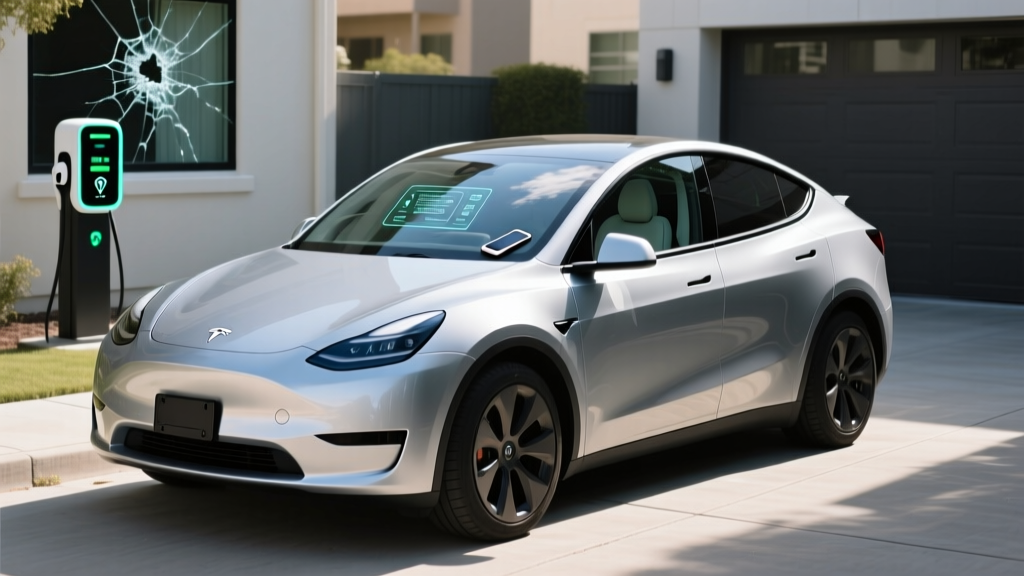
The 2026 Tesla Model Y Launch Edition arrives as Tesla's refreshed, volume-oriented crossover with a simplified trim strategy and a price point designed to undercut the competition while retaining the Supercharger network advantage. Built on the updated "Juniper" platform introduced in 2025, the Launch Edition slots between the Long Range AWD and the Performance variant, offering a compelling mix of range, charging speed, and interior refinement. For buyers who want a proven EV ecosystem without paying the Long Range premium, this trim is the sweet spot — provided you understand its real-world range trade-offs and tax-credit eligibility requirements.
EPA Estimated Range: 320 miles (Long Range AWD Launch Edition, 19" wheels)
Real-World Expectation: Plan for 265–290 miles on highway road trips at 70–75 mph. In cold weather (below 32°F), expect a 20–30% reduction, bringing usable range to roughly 220–255 miles without preconditioning. City driving with regenerative braking recovers closer to the EPA sticker.
Range, Battery & Efficiency Breakdown
The 2026 Model Y Launch Edition uses a 78.1 kWh usable lithium-ion battery pack with NMC (nickel manganese cobalt) chemistry, supplied by a mix of CATL and Panasonic cells depending on production batch. NMC offers higher energy density than LFP, which is why Tesla reserves it for Long Range and Performance trims where maximizing miles per charge matters most.
| Spec | 2026 Model Y Launch Edition |
|---|---|
| EPA Range | 320 miles |
| Battery (usable) | 78.1 kWh, NMC |
| Efficiency | 122 MPGe combined / 27 kWh/100 mi |
| Drivetrain | Dual-motor AWD |
| Horsepower | 384 hp combined |
| 0–60 mph | 4.8 seconds |
| Top Speed | 135 mph |
| Cargo (behind 2nd row) | 30.2 cu ft |
| Cargo (seats folded) | 72.1 cu ft |
| Rear Legroom | 41.6 inches |
| Battery Warranty | 8 years / 120,000 miles (70% retention) |
| Base MSRP | $44,990 |
Efficiency lands at 122 MPGe combined (27 kWh per 100 miles), per fueleconomy.gov. That's competitive with the Hyundai Ioniq 5 (114 MPGe combined) and slightly behind the smaller Tesla Model 3. On a typical 300-mile road trip, you'll consume roughly 81 kWh, meaning a single DC fast-charge stop is usually sufficient.
Charging Speed: DC Fast, Level 2 & Home Setup
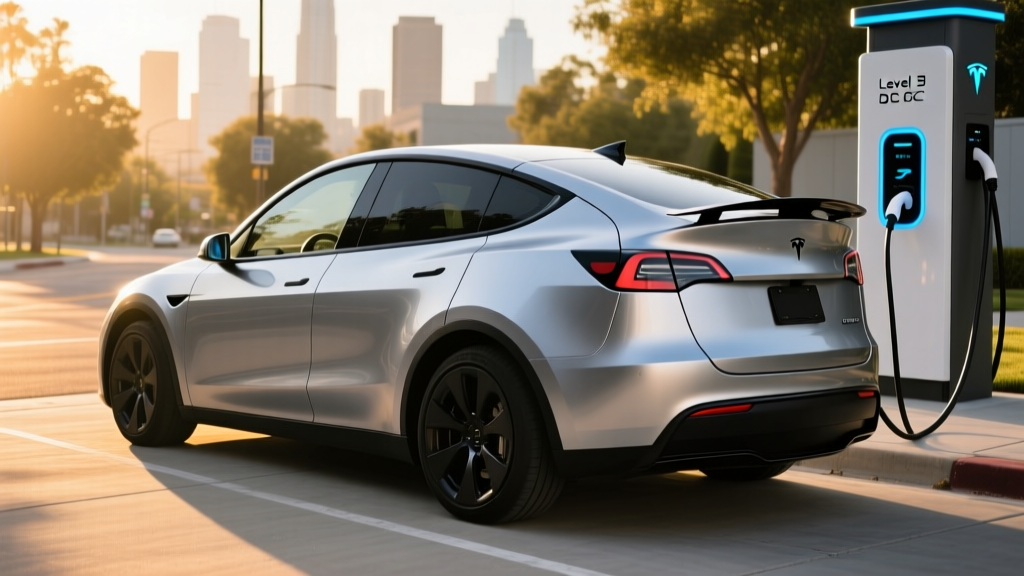
Charging remains one of Tesla's strongest advantages, thanks to both the vehicle's architecture and the Supercharger network's reliability. The 2026 Model Y Launch Edition supports:
| Charging Level | Power / Rate | Time / Miles Added |
|---|---|---|
| DC Fast Charge (peak) | 250 kW (CCS/NACS via Supercharger) | 10–80% in ~25 minutes |
| DC Fast Charge (sustained avg.) | ~170 kW avg. to 80% | Charge curve tapers sharply above 80% |
| Level 2 (Tesla Wall Connector, 48A) | 11.5 kW | ~44 miles per hour of charging |
| Level 2 (generic 32A J1772 w/ adapter) | 7.7 kW | ~30 miles per hour |
| Level 1 (120V household) | 1.4 kW | ~3–4 miles per hour |
Charging curve reality check: The 250 kW peak only holds between roughly 10–30% state of charge. From 30–60%, you'll see sustained rates around 150–180 kW. Above 80%, the rate drops to under 50 kW to protect the NMC battery. For road trips, plan your stops around the 10–80% window — charging to 100% at a Supercharger adds 20+ minutes for minimal range gain.
At home, the Tesla Wall Connector at 48 amps on a 60-amp circuit delivers a full overnight charge in roughly 7 hours from 10% SoC. Installation typically runs $800–$2,000 depending on panel proximity and whether your home needs a 200-amp service upgrade. Always consult a licensed electrician for final specs.
Performance, Ride & Daily Driving
The dual-motor AWD powertrain produces 384 horsepower and launches the Model Y Launch Edition to 60 mph in 4.8 seconds. That's quick enough for confident highway merging and passing, though it trails the Performance trim's 3.5-second sprint. The all-wheel-drive system provides excellent traction in rain and light snow, with torque vectoring that feels natural rather than intrusive.
Ride quality on the Juniper-refreshed platform is noticeably improved over the pre-2025 Model Y. Tesla retuned the suspension for better compliance over rough pavement, and the cabin is quieter thanks to acoustic glass and additional sound deadening. The 19" Gemini wheels (standard on the Launch Edition) offer a better ride than the optional 20" setups, at the cost of roughly 10–15 miles of EPA range.
Interior, Tech & Driver Assistance
The 2026 interior carries over the minimalist design language introduced with the Juniper refresh: a 15.4" center touchscreen handles virtually all controls, including climate, mirrors, and glovebox release. A rear 8" touchscreen for passengers was added in 2025, providing climate and entertainment controls. Build quality continues to improve, with tighter panel gaps and higher-quality materials than earlier Model Y generations.
Autopilot & FSD (Supervised): Standard Autopilot includes Traffic-Aware Cruise Control and Autosteer (lane centering). Full Self-Driving (Supervised) remains a $8,000 add-on or $99/month subscription. It is critical to understand that FSD is an SAE Level 2 driver-assistance system — the driver must remain fully engaged, hands on or near the wheel, and eyes on the road at all times. This is not autonomous driving; it is an advanced cruise and lane-keeping system that can handle some highway and city driving scenarios but requires constant supervision.
Tesla Autopilot and FSD (Supervised) are SAE Level 2 systems. They do NOT make the vehicle self-driving. The driver is legally and operationally responsible for all vehicle control. NHTSA continues to investigate Autopilot-related incidents. Never use these systems while distracted or fatigued.
Notable tech features include:
- Sentry Mode with live camera access via the Tesla app
- Dog Mode and Camp Mode for climate management when parked
- Over-the-air updates that add features post-purchase
- Tesla Vision (camera-only, no radar or ultrasonic sensors since 2023)
- Native Supercharger routing with battery preconditioning
Drawbacks: The camera-only parking system (no ultrasonic sensors) can struggle with low curbs and narrow obstacles compared to sensor-equipped competitors. The lack of physical buttons for climate and wipers frustrates some buyers. Apple CarPlay and Android Auto are not supported — you're locked into Tesla's native infotainment.
Pricing, Trims & Federal Tax Credit Eligibility
The 2026 Model Y Launch Edition starts at $44,990 (including destination). Here's how the lineup breaks down:
| Trim | MSRP | Est. After §30D Credit* |
|---|---|---|
| Model Y RWD (base) | $39,990 | $32,490 (if eligible) |
| Model Y Launch Edition (AWD) | $44,990 | $37,490 (if eligible) |
| Model Y Long Range AWD | $48,990 | $41,490 (if eligible) |
| Model Y Performance | $52,490 | $44,990 (if eligible) |
*Federal tax credit eligibility under IRS §30D is not guaranteed. For 2026, the following requirements apply:
- MSRP Cap: SUVs/crossovers must be under $80,000 — all Model Y trims qualify.
- Buyer Income Cap: Modified AGI must not exceed $150,000 (single), $225,000 (head of household), or $300,000 (joint filers).
- Battery Sourcing: Critical minerals and battery components must meet phased-in percentages from US or FTA-partner countries. Tesla has worked to localize supply chains, but eligibility can shift by production batch. Verify the specific VIN's eligibility at fueleconomy.gov before purchasing.
- Point-of-Sale Transfer: The credit can now be applied as a point-of-sale discount, reducing your purchase price directly rather than waiting for a tax refund.
Always confirm eligibility with your tax professional and check the latest IRS guidance at irs.gov, as sourcing rules and eligible vehicle lists are updated periodically.
How It Compares: Model Y Launch Edition vs. Key Rivals
| Spec | Tesla Model Y Launch Ed. | Hyundai Ioniq 5 SEL AWD | Chevy Equinox EV RS AWD |
|---|---|---|---|
| EPA Range | 320 mi | 290 mi | 307 mi |
| Battery | 78.1 kWh NMC | 77.4 kWh NMC | 85 kWh NMC |
| DC Fast Charge (peak) | 250 kW | 233 kW (800V) | 190 kW |
| 10–80% Time | ~25 min | ~18 min | ~32 min |
| 0–60 mph | 4.8 sec | 5.1 sec | 5.9 sec |
| MSRP (AWD) | $44,990 | $49,850 | $43,900 |
| Charging Network | Supercharger (native) | NACS adapter for Supercharger access | NACS adapter for Supercharger access |
| Battery Warranty | 8 yr / 120k mi | 10 yr / 100k mi | 8 yr / 100k mi |
Who Should Buy the Model Y Launch Edition?
Choose the Model Y Launch Edition if:
- You want native Supercharger access for stress-free road trips
- You need class-leading cargo space for family gear or road-trip luggage
- You value OTA updates and Tesla's software ecosystem
- You commute 40–80 miles daily and can charge at home overnight
- You live in a region with reliable Supercharger coverage
Look elsewhere if:
- You want the fastest DC charging (Ioniq 5's 800V system charges 10–80% ~7 minutes faster)
- You prefer physical buttons, Apple CarPlay, or a more traditional infotainment layout
- You want the longest battery warranty (Hyundai's 10-year coverage leads)
- You frequently tow heavy loads — the Model Y's 3,500-lb tow rating is modest for its class
Best use cases: Daily commuter with home charging, young families needing cargo versatility, road-trippers who value Supercharger reliability, and tech-forward buyers who want continuous feature updates. It's less ideal for heavy towing, buyers in charging-desert regions, or those who prioritize traditional automotive controls.
Pros, Cons & Ownership Reality
- Native Supercharger network — the most reliable DC fast-charging ecosystem in the US
- 320-mile EPA range covers most road trips with a single stop
- Class-leading cargo volume (72.1 cu ft) with a usable frunk
- Strong efficiency (27 kWh/100 mi) keeps charging costs low
- Continuous OTA updates add features post-purchase
- Quick 4.8-second 0–60 for daily driving confidence
- Camera-only parking lacks ultrasonic sensors — low-curb detection can be unreliable
- No Apple CarPlay or Android Auto support
- FSD (Supervised) costs $8,000 extra and remains Level 2, not autonomous
- DC charging speed trails 800V competitors like the Ioniq 5
- Insurance premiums run 15–25% higher than comparable gas crossovers
- Minimal physical controls — everything routes through the touchscreen
Ownership cost note: According to IIHS, the Model Y earns top safety ratings, but insurance costs remain elevated due to repair complexity and parts pricing. Budget $1,800–$2,800 annually for full coverage depending on your state and driving record. Electricity costs average $0.13–$0.16/kWh nationally, making home charging roughly $0.04–$0.05 per mile — about one-third the per-mile cost of a 25-MPG gas crossover at $3.50/gallon.
Frequently Asked Questions
What is the real-world range of the 2026 Model Y Launch Edition?
The EPA rates it at 320 miles, but real-world highway driving at 70–75 mph yields approximately 265–290 miles. In freezing temperatures, expect 220–255 miles without preconditioning. City driving with regen braking gets you closer to the EPA number.
How fast does the Model Y Launch Edition charge?
On a V3 Supercharger or comparable 250 kW DC fast charger, it reaches 10–80% in about 25 minutes. The charge curve tapers significantly above 80%. At home on a Level 2 Tesla Wall Connector (48A/11.5 kW), you'll add roughly 44 miles of range per hour, fully recharging overnight.
How much does the Model Y Launch Edition cost after tax credits?
The base MSRP is $44,990. If you qualify for the full $7,500 federal §30D credit (income caps, battery sourcing, and MSRP rules apply), the effective price drops to $37,490. Point-of-sale transfer lets you apply this as an immediate discount. Always verify your specific VIN's eligibility and consult a tax professional.
Is the Model Y Launch Edition worth buying over competitors?
It depends on your priorities. If Supercharger reliability, cargo space, and software ecosystem matter most, the Model Y is hard to beat. If you want faster DC charging, a longer battery warranty, or physical controls, the Hyundai Ioniq 5 or Kia EV6 may serve you better. The Chevy Equinox EV offers similar range at a lower MSRP but charges more slowly.
Does the 2026 Model Y qualify for the federal EV tax credit?
All Model Y trims fall under the $80,000 SUV MSRP cap. Eligibility then depends on your income (under $150K single / $300K joint), and the specific vehicle's battery sourcing compliance. Tesla has largely localized its supply chain, but eligibility can vary by production batch. Check fueleconomy.gov for the current eligible-vehicle list before purchasing.
Is Tesla's FSD actually self-driving?
No. FSD (Supervised) is an SAE Level 2 driver-assistance system. It can handle highway lane changes, some city intersections, and parking maneuvers, but the driver must remain fully attentive and ready to take over at any moment. You are legally responsible for the vehicle's operation at all times.