Why Las Vegas Fleet Operators Are Eyeing the Tesla Model Y
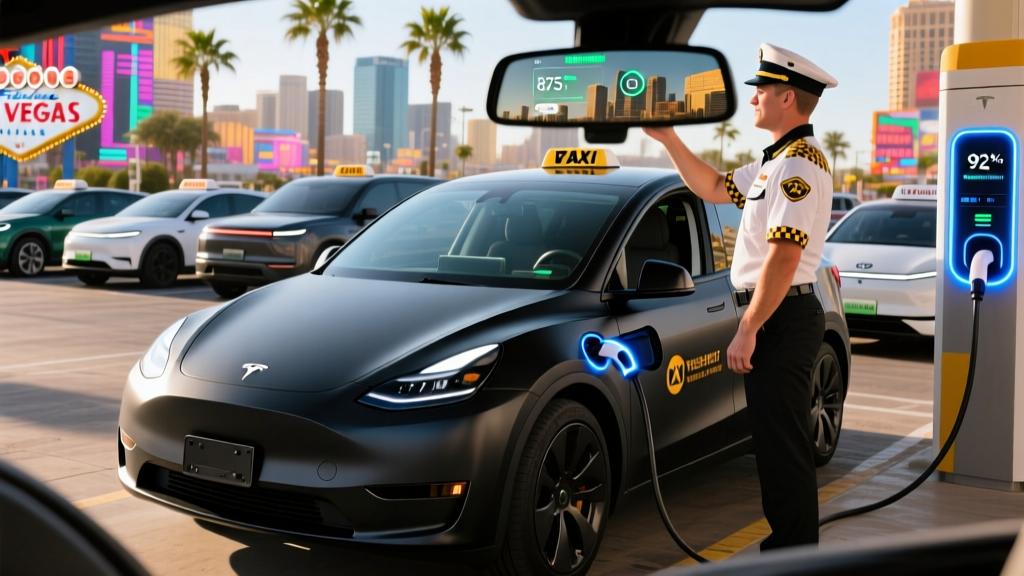
Las Vegas presents one of the most demanding environments for any vehicle: 115°F summer afternoons, stop-and-go Strip traffic, 24/7 airport runs, and passengers who expect air conditioning at full blast. For rideshare and taxi fleet operators, the 2026 Tesla Model Y Long Range AWD has emerged as a serious candidate — not because of its tech cachet, but because of per-mile energy costs that undercut gasoline by roughly 60% in Nevada's utility landscape.
This review evaluates the Model Y specifically through the lens of high-mileage commercial use in Southern Nevada: real-world range under desert heat, DC fast-charge turnaround times at Strip-adjacent chargers, total cost of ownership across 50,000+ annual miles, and whether Tesla's driver-assistance suite actually reduces driver fatigue on those endless Harry Reid International Airport loops.
2026 Tesla Model Y Long Range AWD: Core Specifications
| Specification | Value |
|---|---|
| EPA Estimated Range | 310 miles |
| Battery Capacity (usable) | ~75 kWh (NMC chemistry) |
| Drivetrain | Dual-Motor AWD |
| Horsepower | 384 hp (combined) |
| 0–60 mph | 4.8 seconds |
| Max DC Fast-Charge Rate | 250 kW (peak) |
| 10–80% DC Fast Charge | ~27 minutes |
| Level 2 Home Charging (11.5 kW) | ~44 miles/hour |
| MPGe (combined) | 117 MPGe |
| Energy Consumption | 28 kWh/100 mi |
| Cargo Volume (rear seats up) | 30.2 cu ft |
| Cargo Volume (rear seats folded) | 72.0 cu ft |
| Rear Legroom | 41.6 inches |
| Base MSRP | $44,990 |
| Battery Warranty | 8 years / 120,000 miles |
| Basic Vehicle Warranty | 4 years / 50,000 miles |
Real-World Range: What Las Vegas Heat Actually Does
Real-World Expectation (Las Vegas summer, A/C at max, mixed city/highway): ~245–265 miles
Highway-Only at 75 mph (moderate temps): ~270–285 miles
Winter (rare Las Vegas cold, ~40°F): ~280–295 miles
The EPA's 310-mile figure assumes moderate temperatures and a mix of city regenerative braking and highway cruising. In Las Vegas, the primary range killer isn't cold — it's thermal management. When ambient temperatures exceed 105°F, the Model Y's battery cooling system and cabin A/C draw substantial energy. On a July afternoon with cabin temp set to 68°F and the panoramic glass roof absorbing solar load, expect to lose roughly 15–20% from the EPA number.
For a taxi driver doing 200–250 miles per shift, this still leaves a workable buffer — but it means a mid-shift DC fast charge is mandatory, not optional. The good news: Tesla's thermal management system is among the best in the industry at preventing battery degradation from sustained heat exposure, which matters enormously for fleet vehicles accumulating 50,000+ miles annually. According to fueleconomy.gov, the Model Y LR AWD achieves 117 MPGe combined, translating to roughly $0.08–$0.10 per mile on Nevada Power's commercial EV rate — compared to $0.18–$0.22 per mile for a comparable gasoline crossover at $3.50/gallon.
Charging Speed & Infrastructure: Turnaround Times That Matter for Taxis
For a taxi or rideshare vehicle, charging speed isn't a convenience feature — it's revenue. Every minute sitting at a charger is a minute not earning a fare. The Model Y's 250 kW peak DC fast-charge capability on V3 and V4 Superchargers is one of its strongest fleet arguments.
| Charging Level | Power | Miles Added/Hour | Use Case |
|---|---|---|---|
| Level 1 (120V outlet) | ~1.4 kW | ~4–5 mi/hr | Emergency only |
| Level 2 (240V, 48A) | 11.5 kW | ~44 mi/hr | Overnight at depot or home |
| DC Fast (Tesla V3 Supercharger) | 250 kW peak | ~1,000+ mi/hr (peak) | Mid-shift top-up |
| DC Fast (CCS adapter, Electrify America) | ~150–250 kW | Variable | Non-Tesla networks |
The charging curve reality: The 250 kW peak only holds between roughly 10–30% State of Charge (SoC). By 50% SoC, the rate tapers to ~150 kW, and above 80% it drops sharply to protect the battery. A 10–80% session takes approximately 27 minutes at a V3 Supercharger. For a taxi driver, the practical play is to charge from ~20% to ~70% during a lunch break — that's about 125 miles added in roughly 15 minutes, enough to finish most shifts.
Las Vegas has robust Supercharger coverage: multiple stations near the Strip, at the airport, and along I-15. Tesla's native NACS connector also means access to the growing network of non-Tesla chargers via the included CCS adapter, though Tesla's own network remains the most reliable option. Fleet operators should install Level 2 (240V/48A) chargers at their depot for overnight top-ups — at $0.06–$0.08/kWh on off-peak commercial rates, overnight charging costs roughly $4.50–$6.00 to fill from 20% to 100%.
Performance & Drivetrain: More Than a Taxi Needs, but Useful
The dual-motor AWD powertrain produces 384 combined horsepower and rockets the Model Y to 60 mph in 4.8 seconds. No taxi needs this, but the instant torque delivery makes merging onto I-15 from the airport on-ramp effortless, and the AWD system provides traction security during Las Vegas's rare but intense monsoon downpours.
The regenerative braking system (Tesla's one-pedal driving mode) is a significant advantage in Strip traffic. Constant stop-and-go that would overheat brake pads in a gasoline vehicle instead recovers energy and extends brake life. Fleet operators report brake pad replacement intervals of 80,000–100,000+ miles on Teslas used in city-heavy driving — a substantial maintenance savings over internal-combustion competitors.
Interior, Cargo & Passenger Comfort
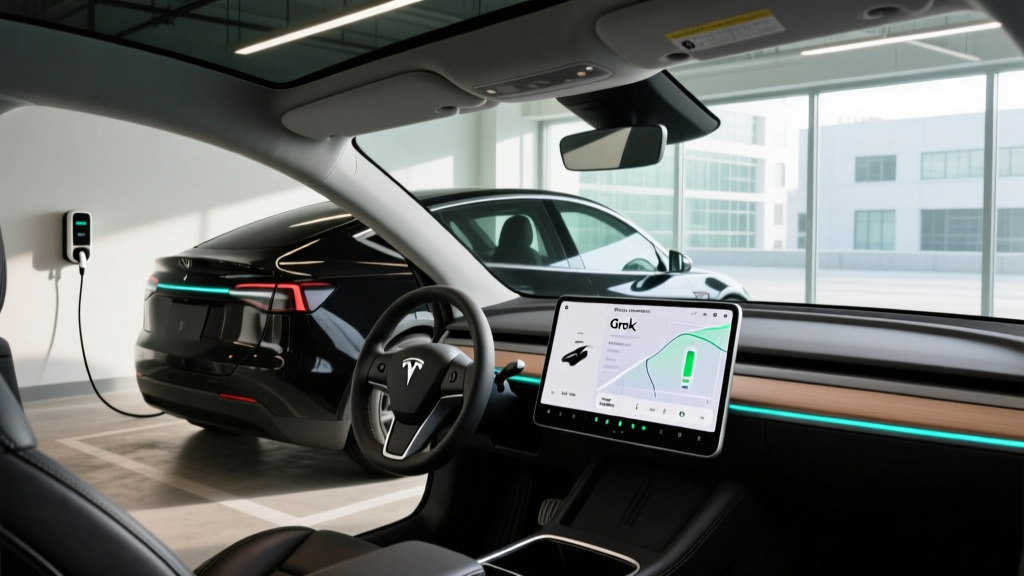
The Model Y's cabin is minimalist to a fault — a single 15.4-inch touchscreen controls virtually everything, including climate and mirror adjustments. For passengers, this means a clean, spacious rear seat with 41.6 inches of legroom (competitive with midsize sedans) and a flat floor with no transmission tunnel hump. Three adults can sit across the rear bench, though the middle position is best for shorter trips.
Cargo space is a standout: 30.2 cubic feet behind the rear seats, expanding to 72.0 cu ft with seats folded. The rear hatch opening is wide and low, making luggage loading at airport pickups far easier than a traditional sedan trunk. The front trunk (frunk) adds another 4.1 cu ft for smaller bags or driver supplies.
Notable drawbacks for taxi use: The panoramic glass roof, while visually impressive, increases cabin heat load in desert sun — drivers report running A/C higher than in vehicles with insulated metal roofs. The lack of physical climate control buttons means passengers can't adjust rear airflow without asking the driver to tap the screen. And the firm suspension tuning transmits more road imperfections than competitors like the Hyundai Ioniq 5 or Ford Mustang Mach-E, which some passengers notice on rougher surface streets.
Pricing, Tax Credits & Fleet Economics
| Trim | MSRP | Federal §30D Credit (if eligible) | Effective Price |
|---|---|---|---|
| Long Range AWD | $44,990 | Up to $7,500 | ~$37,490 |
| Performance AWD | $48,990 | Up to $7,500 | ~$41,490 |
Tax credit caveats — read carefully: The federal §30D clean vehicle credit offers up to $7,500, but eligibility depends on multiple factors that change regularly. As of 2026, the Model Y qualifies at the $44,990 Long Range price point (below the $55,000 MSRP cap for SUVs), but buyers must meet income limits ($150,000 single / $300,000 joint AGI) and the vehicle must satisfy critical-mineral and battery-component sourcing requirements outlined by the IRS. Since the Inflation Reduction Act's sourcing rules tighten annually, eligibility is not guaranteed — verify current compliance on IRS.gov or through Tesla's point-of-sale transfer process before purchasing.
For fleet buyers operating as LLCs or corporations, the §30D credit is a personal-income-tax credit and may not apply to business-entity purchases directly. However, the §45W commercial clean vehicle credit may offer an equivalent benefit for business-owned fleets. Consult a tax professional to determine which credit structure applies to your operation.
Pros for Las Vegas Taxi/Fleet Use
- Energy cost ~$0.08–$0.10/mile vs $0.18–$0.22 for gasoline
- 250 kW DC fast charging — 15-min mid-shift top-up
- Minimal brake wear from regenerative braking
- No oil changes, transmission fluid, or emissions testing
- Spacious rear seat and hatch cargo access
- Strong Supercharger network in Las Vegas metro
- Over-the-air updates continuously improve the vehicle
Cons for Las Vegas Taxi/Fleet Use
- Glass roof increases A/C load in extreme desert heat
- 15–20% range loss in sustained 110°F+ temperatures
- Firm ride quality noticeable to rear-seat passengers
- No physical rear-seat climate controls
- Insurance premiums typically 15–25% higher than gas equivalents
- Battery warranty (120K mi) may be reached in ~2.5 years at fleet mileage
- Dependence on Supercharger availability during peak tourist seasons
Driver Assistance: Autopilot and FSD (Supervised) for Commercial Drivers
Tesla Autopilot and Full Self-Driving (Supervised) require continuous driver engagement. The driver must keep hands on the steering wheel and eyes on the road at all times. These are NOT self-driving systems. Only Level 4 robotaxi services like Waymo operate without a human driver.
Tesla's Autopilot (standard) includes adaptive cruise control and lane-centering, which reduces fatigue on the I-15 airport corridor. FSD (Supervised), available as a $8,000 add-on or $99/month subscription, adds automatic lane changes, traffic-light recognition, and navigation-guided driving. For a taxi driver doing repetitive routes, FSD's lane-keeping and speed management can reduce cognitive load — but it does not replace the driver, and Nevada's regulations require a licensed, attentive operator behind the wheel at all times.
- Drive without human supervision or intervention
- Navigate construction zones reliably without driver takeover
- Handle all weather conditions (heavy rain, dust storms)
- Eliminate liability — the driver remains legally responsible
- Qualify as a "robotaxi" under any current Nevada or federal regulation
Competitor Comparison: Model Y vs. Alternatives for Fleet Duty
The Model Y isn't the only EV making a case for taxi service. Here's how it stacks up against two key competitors in the Las Vegas market:
| Attribute | Tesla Model Y LR AWD | Hyundai Ioniq 5 Long Range AWD | Ford Mustang Mach-E Ext. Range AWD |
|---|---|---|---|
| EPA Range | 310 mi | 290 mi | 305 mi |
| Battery (usable) | ~75 kWh (NMC) | 77.4 kWh (NMC) | 91 kWh (NMC) |
| Max DC Charge | 250 kW | 240 kW | 150 kW |
| 10–80% Time | ~27 min | ~18 min | ~45 min |
| Rear Legroom | 41.6 in | 39.4 in | 38.9 in |
| Cargo (seats up) | 30.2 cu ft | 27.2 cu ft | 29.7 cu ft |
| Base MSRP | $44,990 | $49,950 | $48,495 |
| Charging Network | NACS (Supercharger native) | CCS1 (adapter for NACS) | CCS1 (adapter for NACS) |
The Ioniq 5's 800V architecture delivers a faster 10–80% charge (~18 min vs ~27 min), but Tesla's Supercharger network remains more reliable and ubiquitous in Nevada. The Mach-E's slower 150 kW peak charge rate is a significant disadvantage for fleet turnaround. The Model Y's rear legroom and cargo space lead the group, and its lower MSRP makes the economics work more easily at fleet scale.
Ownership Costs: 5-Year / 150,000-Mile Fleet Projection
| Cost Category | Estimated Total |
|---|---|
| Purchase (after potential §30D credit) | ~$37,490 |
| Energy (electricity @ $0.09/mile avg) | ~$13,500 |
| Insurance (commercial EV, 5 years) | ~$18,000 |
| Maintenance (tires, cabin filter, wipers, brake fluid) | ~$4,500 |
| Tire Replacement (2 sets, high-mileage) | ~$3,200 |
| Depreciation (estimated resale at 150K mi) | ~$15,000 |
| Total 5-Year Cost | ~$61,690 |
| Cost Per Mile (all-in) | ~$0.41 |
For comparison, a gasoline Toyota Camry Hybrid running the same miles at 45 MPG and $3.50/gallon would spend roughly $11,600 on fuel alone — but the Model Y's lower maintenance costs (no oil, no transmission, minimal brake wear) and energy savings narrow the gap significantly. The critical variable is battery health: Tesla's battery warranty covers 120,000 miles with at least 70% capacity retention. At 150,000 miles, a battery replacement (currently estimated at $12,000–$16,000) could be necessary if degradation exceeds the threshold, which would substantially alter the cost equation. Most fleet operators plan for this contingency.
Frequently Asked Questions
What is the real-world range of the Tesla Model Y in Las Vegas summer heat?
Expect 245–265 miles in sustained 105°F+ conditions with A/C running at full blast. The EPA's 310-mile rating drops roughly 15–20% under extreme desert heat loads. In milder months (October–April), real-world range approaches 280–295 miles.
How fast does the Model Y charge at a Supercharger?
At a V3 or V4 Supercharger, the Model Y peaks at 250 kW and charges from 10–80% in approximately 27 minutes. A practical mid-shift top-up from 20–70% takes about 15 minutes and adds roughly 125 miles of range.
Does the Tesla Model Y qualify for the $7,500 federal EV tax credit?
It can, but eligibility depends on your income (AGI limits: $150K single / $300K joint), the vehicle's MSRP (must be under $55K for SUVs), and current-year battery sourcing compliance per IRS §30D rules. Sourcing requirements tighten annually — always verify before purchasing. Commercial fleet buyers may qualify under §45W instead.
Is it worth buying a Tesla Model Y vs. a Hyundai Ioniq 5 for taxi service?
Choose the Model Y if you prioritize Supercharger network reliability, maximum rear-seat legroom, and lower MSRP. Choose the Ioniq 5 if faster 10–80% charging (~18 min) and physical buttons for passengers matter more. For Las Vegas specifically, Tesla's Supercharger density gives the Model Y a practical edge.
How long will the Model Y battery last at taxi mileage?
Tesla warranties the battery for 8 years or 120,000 miles (whichever comes first) with at least 70% capacity retention. At 50,000 miles/year, a taxi will reach the mileage limit in roughly 2.5 years. NMC batteries in hot climates typically degrade 2–3% per year under normal use, but sustained DC fast-charging and extreme heat can accelerate this. Budget for a potential battery replacement ($12K–$16K) after 150,000+ miles.
Can Tesla's Autopilot or FSD replace a taxi driver?
No. Both are SAE Level 2 driver-assistance systems requiring full driver attention. They can reduce fatigue on highway segments but do not constitute autonomous driving. The driver remains legally responsible at all times, and Nevada law requires a licensed human operator.