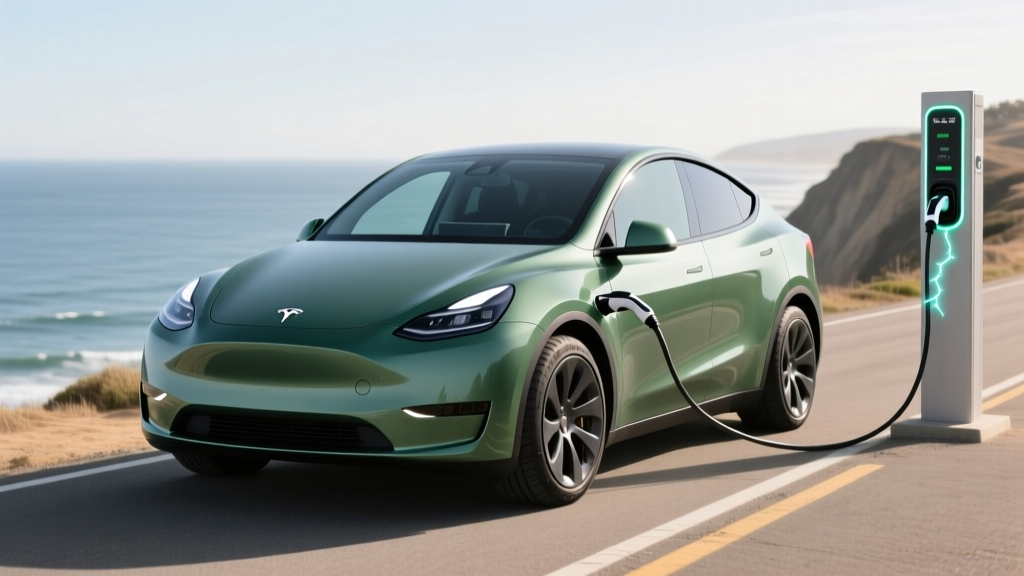
The Tesla Model Y remains one of the most popular electric vehicles on the road, blending practical SUV space with the kind of software-defined features—like Tesla Karaoke, Camping Mode, and Dog Mode—that make ownership feel distinct from a traditional car experience. For 2026, the refreshed Model Y (often referred to by enthusiasts as the "Juniper" update) brings a slightly restyled exterior, a more refined interior, and incremental efficiency gains. But beyond the party tricks, how does it stack up on the metrics that actually matter: real-world range, charging speed, cargo space, and total cost of ownership?
This review cuts through the hype and gives you the exact numbers, the real-world caveats, and the ownership practicalities you need before signing a purchase agreement.
Quick Verdict: Who Should Buy the 2026 Tesla Model Y?
Choose the Tesla Model Y if: You want access to the Supercharger network, value over-the-air software updates, need a versatile cargo area for family gear, and enjoy tech-forward features like Tesla Karaoke and theater mode for parked entertainment.
Look elsewhere if: You want physical controls for climate and volume, prefer a traditional dealership service experience, need maximum towing capacity, or want the longest possible EPA range in a midsize electric SUV.
2026 Tesla Model Y Specifications at a Glance
| Spec | Long Range AWD | Performance |
|---|---|---|
| EPA Range | 320 miles | 293 miles |
| Battery (usable) | ~75 kWh, NMC | ~75 kWh, NMC |
| Drivetrain | Dual-Motor AWD | Dual-Motor AWD |
| Horsepower | 384 hp | 456 hp |
| 0-60 mph | 4.8 sec | 3.5 sec |
| Peak DC Charge Rate | 250 kW | 250 kW |
| 10-80% DC Charge | ~27 min | ~27 min |
| Level 2 Home Charge | 11.5 kW (~44 mi/hr) | 11.5 kW (~44 mi/hr) |
| MPGe (combined) | 111 MPGe | 102 MPGe |
| Efficiency | 28 kWh/100 mi | 30 kWh/100 mi |
| Cargo (rear seats up) | 30.2 cu ft | 30.2 cu ft |
| Cargo (rear seats folded) | 72.0 cu ft | 72.0 cu ft |
| Base MSRP | $44,990 | $48,990 |
| Battery Warranty | 8 yr / 120,000 mi | 8 yr / 120,000 mi |
Real-World Range vs. EPA Estimates
EPA Estimate: 320 miles (Long Range AWD)
Real-World Expectation: Plan for approximately 260-280 miles on sustained highway driving at 70-75 mph. In cold weather (below 32°F), expect a further 15-25% reduction, bringing usable range down to roughly 210-240 miles without preconditioning.
The EPA number is useful for comparison, but it's a blended cycle. On a 300-mile road trip at highway speeds in summer conditions, the Model Y Long Range AWD typically delivers around 270 miles before you'd want to stop. The heat pump—standard on all 2026 trims—helps significantly in cold weather compared to older resistive-heating EVs, but physics still applies: battery chemistry slows in the cold, and cabin heating draws power.
City driving with heavy regenerative braking can push range closer to or even slightly above the EPA figure, since regen recaptures energy during stop-and-go traffic. If your commute is mostly urban, 300+ miles is realistic in moderate temperatures.
Charging Speed: DC Fast and Home Level 2
Charging speed is where the Model Y's 400-volt architecture shows its age against 800-volt competitors like the Hyundai Ioniq 5 and Kia EV6, which can peak above 300 kW. The Model Y caps at 250 kW on V3 Superchargers.
| Charging Level | Power (kW) | Speed (miles/hr added) | Notes |
|---|---|---|---|
| Level 1 (120V outlet) | ~1.4 kW | ~3-5 mi/hr | Emergency/trickle only |
| Level 2 (240V, 48A Wall Connector) | 11.5 kW | ~44 mi/hr | Full overnight charge in ~7-8 hrs |
| DC Fast (V3 Supercharger) | Up to 250 kW peak | Up to ~1,000 mi/hr at peak | 10-80% in ~27 min; tapers above 60% |
| DC Fast (V4 Supercharger) | Up to 250 kW (vehicle-limited) | Same as V3 for Model Y | V4 stalls support higher rates for future vehicles |
The charging curve matters. The 250 kW peak is not sustained. You'll see peak rates between roughly 10-40% State of Charge (SoC), after which the rate tapers progressively. From 60-80%, you're typically seeing 100-130 kW. Above 80%, charging slows dramatically to protect the battery—plan to charge to 80% on road trips and keep moving rather than waiting for a full charge.
At home, a Tesla Wall Connector on a 60-amp circuit delivers the full 11.5 kW (48 amps continuous). That's roughly 44 miles of range per hour of charging, meaning a depleted battery reaches full in about 7-8 hours—easily handled overnight. Installation costs for a 240V/60A circuit typically range from $500 to $2,500 depending on panel proximity and whether your home needs a panel upgrade, according to Tesla's home charging guide.
Tesla Karaoke, Camping Mode, and Standout Tech
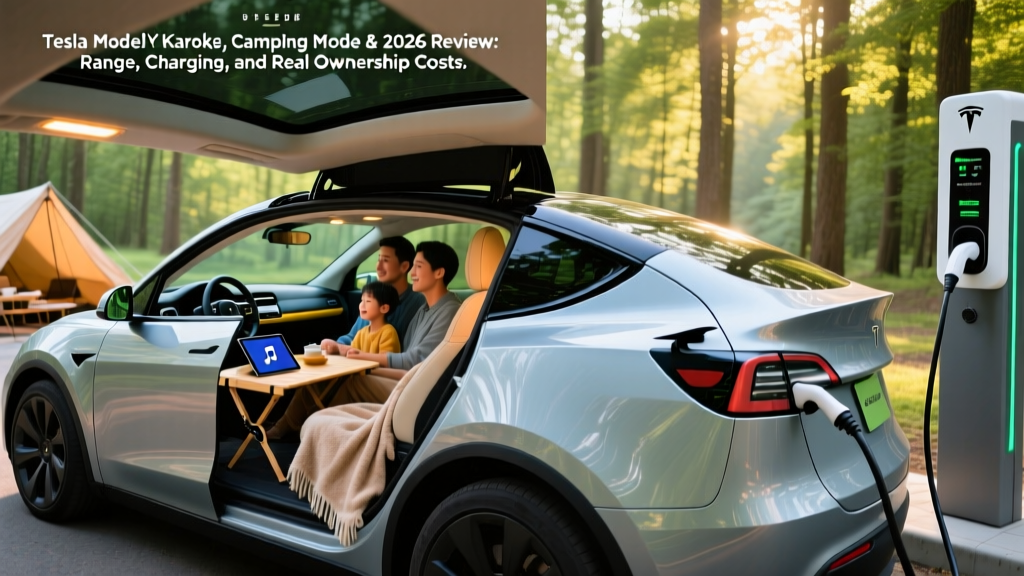
What separates the Model Y from rivals on paper isn't just range or speed—it's the software ecosystem. Tesla Karaoke (branded as "Caraoke") is a built-in karaoke app that displays lyrics on the 15.4-inch center touchscreen and uses the vehicle's premium audio system for playback. It works while parked and has become a popular feature for families and campers.
Beyond Caraoke, the Model Y's software suite includes:
- Camping Mode: Maintains climate control and airflow overnight, keeping the cabin at a set temperature while drawing power from the traction battery—ideal for car camping with the available mattress accessories.
- Dog Mode: Keeps pets safe with climate control active and a message displayed on the screen for passersby.
- Theater Mode: Streams Netflix, YouTube, and Disney+ on the main display while parked.
- Sentry Mode: Uses the vehicle's cameras to record and alert you to nearby threats while parked.
- Over-the-Air Updates: Tesla regularly pushes feature additions, not just bug fixes, meaning the car can improve after purchase.
Notable drawbacks: The 2026 Model Y continues with a minimalist interior that eliminates physical stalks for turn signals (now on the steering wheel buttons) and relies on the touchscreen for nearly all climate and vehicle controls. There's no head-up display, and the rear-seat entertainment screen from some rivals is absent. The lack of Apple CarPlay and Android Auto remains a dealbreaker for some buyers accustomed to phone-mirrored interfaces.
Driver Assistance: Autopilot and FSD (Supervised)
SAE Level 2 — Driver Assistance, NOT Self-Driving. Tesla Autopilot and Full Self-Driving (Supervised) are Level 2 systems per the SAE J3016 standard. The driver must remain fully engaged, hands on or near the wheel, eyes on the road, and ready to take over at any moment. These systems assist with steering, acceleration, and braking but do not replace the driver.
Standard Autopilot includes Traffic-Aware Cruise Control and Autosteer (lane centering). FSD (Supervised), available as an $8,000 add-on or monthly subscription, adds features like automatic lane changes, Navigate on Autopilot, and Smart Summon. While impressive in capability, FSD requires constant supervision and its real-world reliability varies significantly by road type, weather, and complexity.
Pricing, Trims, and Federal Tax Credit Eligibility
| Trim | Base MSRP | Est. After §30D Credit* | Destination |
|---|---|---|---|
| Long Range AWD | $44,990 | $37,490 | $1,390 |
| Performance AWD | $48,990 | $41,490 | $1,390 |
*Federal tax credit estimates assume full eligibility. Actual credit amount depends on battery sourcing, critical mineral content, buyer income, and MSRP caps under current IRS §30D rules.
For 2026, the Tesla Model Y qualifies for a partial or full federal EV tax credit under IRS §30D, but eligibility is not automatic or universal. Here's what determines your actual credit:
- MSRP Cap: The Model Y qualifies as an SUV, so the MSRP cap is $80,000 (not the $55,000 sedan cap). All current trims fall well under this.
- Buyer Income Limits: Modified adjusted gross income must not exceed $150,000 (single), $225,000 (head of household), or $300,000 (joint filing).
- Battery Component Sourcing: A percentage of battery components must be manufactured or assembled in North America, and critical minerals must be sourced from the U.S. or free-trade-agreement countries. Tesla has shifted significant supply chain to meet these rules, but the exact credit amount (up to $7,500, split between $3,750 for components and $3,750 for minerals) can change as sourcing requirements tighten annually.
- Point-of-Sale Transfer: As of 2024, buyers can transfer the credit to the dealer at purchase, reducing the upfront price rather than waiting for a tax refund. This is available on the Model Y if you qualify.
Important: Tax credit rules are subject to change. Consult a tax professional and check the latest fueleconomy.gov listing before purchasing to confirm the current credit amount for your specific configuration and delivery date.
Interior Space, Cargo, and Practicality
The Model Y's cargo area is one of its strongest selling points. With 30.2 cubic feet behind the second row and 72.0 cubic feet with the rear seats folded, it outpaces many gas-powered compact SUVs and competes favorably with the Ford Mustang Mach-E (29.7 cu ft / 59.7 cu ft) and Hyundai Ioniq 5 (27.2 cu ft / 59.3 cu ft).
The front trunk (frunk) adds additional sealed storage for charging cables or a small bag. Rear legroom measures 41.6 inches, comfortable for adults on longer trips. The panoramic glass roof creates an airy feel but can cause heat buildup in summer—Tesla includes a tinted panel, but many owners purchase an aftermarket sunshade.
Pros and Cons
Pros
- Access to the Tesla Supercharger network (17,000+ stalls in North America), the most reliable public DC fast-charging network
- Strong real-world efficiency (28 kWh/100 mi Long Range) keeps charging costs low
- Best-in-class cargo space among electric midsize SUVs
- Continuous OTA updates add features post-purchase
- Heat pump standard for better cold-weather range retention
- Tesla Karaoke, Camping Mode, and Theater Mode add unique lifestyle value
Cons
- 400V architecture limits peak DC charging to 250 kW vs. 800V rivals at 300+ kW
- No physical controls for climate, turn signals, or wipers—everything is touchscreen or steering-wheel button
- No Apple CarPlay or Android Auto
- Ride quality on the Performance trim can feel firm on rough pavement
- FSD (Supervised) requires constant driver attention despite its name
- Insurance costs tend to run 15-25% higher than comparable gas SUVs
How the Model Y Compares to Key Competitors
The Model Y's closest competitors in 2026 are the Hyundai Ioniq 5, Ford Mustang Mach-E, and Kia EV6. The Ioniq 5 and EV6 charge faster thanks to their 800V architecture (10-80% in roughly 18 minutes at a 350 kW charger). The Mach-E offers a more traditional interior layout with physical controls and CarPlay support.
Where the Model Y wins: Supercharger access (though competitors now have growing access via adapters), cargo volume, software ecosystem, and efficiency. Where it loses: charging speed, interior material luxury at this price point, and the availability of phone-mirroring infotainment.
Frequently Asked Questions
What is Tesla Karaoke and how does it work?
Tesla Karaoke (officially "Caraoke") is a built-in app that displays song lyrics on the center touchscreen while playing music through the vehicle's audio system. You select songs from a curated library, and passengers sing along. It works while parked and is popular during camping trips and family outings. An internet connection (via Tesla's built-in connectivity or a phone hotspot) is required to access the full song library.
What is the real-world range of the 2026 Tesla Model Y?
The EPA rates the Long Range AWD at 320 miles. In real-world highway driving at 70-75 mph in moderate temperatures, expect approximately 260-280 miles. In cold weather below freezing, plan for 210-240 miles unless you precondition the battery. City driving with regenerative braking can achieve closer to the EPA figure.
How fast does the Model Y charge at home and on road trips?
At home on a 240V Level 2 Wall Connector, the Model Y charges at up to 11.5 kW, adding roughly 44 miles of range per hour—a full charge takes about 7-8 hours. On a V3 Supercharger, it peaks at 250 kW and charges from 10-80% in approximately 27 minutes, though the rate tapers significantly above 60% SoC.
Does the Tesla Model Y qualify for the $7,500 federal EV tax credit?
The Model Y can qualify for up to $7,500 under IRS §30D, but the exact amount depends on battery component sourcing and critical mineral content, which change annually. The buyer must also meet income limits ($300,000 joint / $150,000 single) and the vehicle MSRP must be under $80,000 (SUV cap). The credit can be transferred at point of sale to reduce the purchase price. Always verify current eligibility on fueleconomy.gov before buying.
Is the Model Y worth buying over the Hyundai Ioniq 5 or Ford Mustang Mach-E?
If Supercharger network access, cargo space, and software features like Tesla Karaoke and Camping Mode are priorities, the Model Y is hard to beat. If you want faster DC charging (800V architecture), physical controls, or Apple CarPlay, the Ioniq 5 or Mach-E may be better fits. Test-drive all three and compare total cost of ownership, including insurance and charging costs in your area.
What is the battery warranty on the 2026 Model Y?
Tesla covers the battery and drive unit for 8 years or 120,000 miles (whichever comes first) on the Long Range and Performance trims, with a minimum 70% capacity retention guaranteed over that period. Tesla's NMC batteries have demonstrated strong long-term degradation curves in fleet data, typically retaining 85-90% capacity after 100,000 miles.