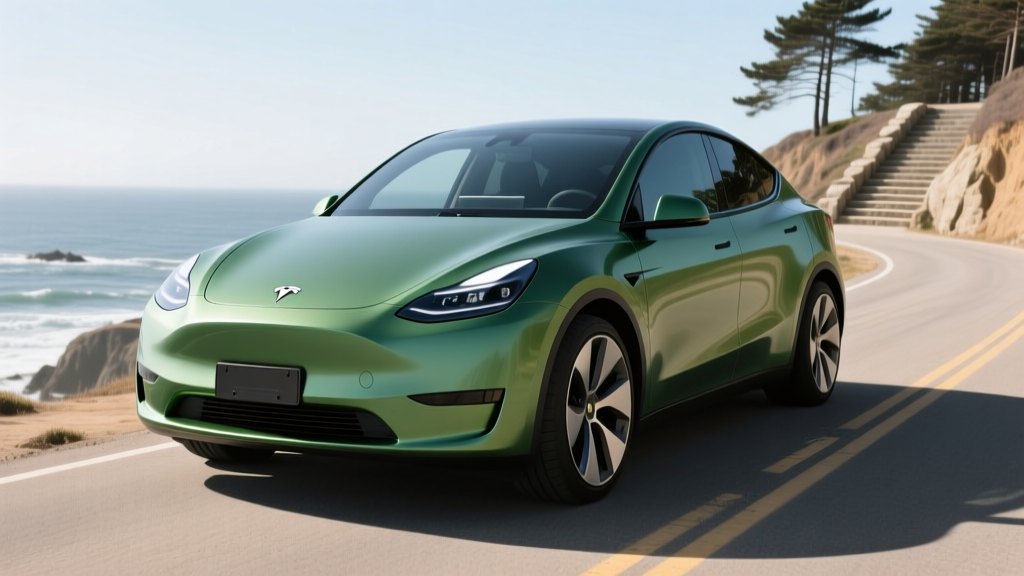
For years, critics have lobbed the same critique at Tesla: aging interiors, panel gaps, and a minimalist ethos that felt more like cost-cutting than design intent. The refreshed Model Y — internally codenamed Juniper and rolling into the 2026 model year — answers those complaints so thoroughly that industry insiders have taken to calling it the "upside-down Tesla." It's as if the company took every grievance from the past five years and inverted its approach. The question for buyers: does this comprehensive overhaul finally close the gap with rivals like the Hyundai Ioniq 5, Ford Mustang Mach-E, and Kia EV6, or does it introduce new trade-offs?
After examining EPA data, real-world driving impressions, and Tesla's updated spec sheets, the 2026 Model Y emerges as the most complete version of the best-selling EV in the world. But "most complete" doesn't mean perfect. Here's the full breakdown.
Quick Verdict: The Upside-Down Tesla Delivers Where It Counts
The 2026 Model Y Long Range AWD earns a strong recommendation for buyers who prioritize Supercharger network access, best-in-class efficiency, and a now-genuinely-premium cabin. The new ambient lighting, ventilated seats, power-folding second row, and rear-seat infotainment screen address the most common complaints from owners and reviewers alike. Where the Juniper refresh truly excels is in its combination of EPA-rated range and real-world highway usability — a pairing where Tesla's thermal management and drivetrain efficiency still lead the segment.
The main caveats remain Tesla's polarizing yoke-style steering option (conventional wheel standard), the absence of Apple CarPlay/Android Auto, and insurance costs that still run 15-25% higher than segment averages. If those aren't dealbreakers, the 2026 Model Y is the one to beat.
Range, Efficiency, and the Real-World Reality Check
Real-World Expectation: ~270-290 mi highway at 70 mph; ~240-260 mi in freezing temps (below 30°F); ~300+ mi mixed city/suburban driving with regen
The 2026 Model Y Long Range AWD carries an EPA rating of 320 miles, up slightly from the pre-refresh model thanks to improved aerodynamics (Tesla claims a 0.22 Cd drag coefficient) and a revised heat pump system that sips less energy from the traction battery for cabin heating. The Standard Range RWD variant comes in at 280 miles EPA.
In practice, Tesla's efficiency advantage is real but not magic. On a 75°F day at 65 mph on relatively flat interstate, you can expect to see 290-300 miles of usable range before hitting 10% State of Charge (SoC). Push speeds to 75-80 mph, and that drops to roughly 260-275 miles. Cold weather remains the great equalizer: in sustained sub-freezing conditions with the cabin heated to 70°F, plan on 240-260 miles of practical range. Tesla's battery preconditioning system helps mitigate this by warming the pack before you reach a Supercharger, but physics is physics — lithium-ion cells lose usable capacity in the cold.
Efficiency on the Long Range AWD is rated at 122 MPGe combined (27 kWh/100 mi), per fueleconomy.gov. That bests the Ioniq 5 AWD (110 MPGe) and matches or edges the EV6 AWD, making the Model Y one of the most efficient midsize electric crossovers on the market.
| Spec | Standard Range RWD | Long Range AWD | Performance AWD |
|---|---|---|---|
| EPA Range | 280 mi | 320 mi | 295 mi |
| Battery (usable) | 60 kWh (LFP) | 78 kWh (NMC) | 78 kWh (NMC) |
| Horsepower | 295 hp | 384 hp | 456 hp |
| 0-60 mph | 6.6 sec | 4.8 sec | 3.5 sec |
| Drivetrain | RWD | Dual-Motor AWD | Dual-Motor AWD |
| MPGe (combined) | 128 MPGe | 122 MPGe | 111 MPGe |
| Cargo (rear seats up) | 30.2 cu ft | 30.2 cu ft | 30.2 cu ft |
| Cargo (rear seats down) | 72.1 cu ft | 72.1 cu ft | 72.1 cu ft |
| Base MSRP | $44,990 | $48,990 | $54,990 |
Charging Speed: DC Fast, Level 2, and the Supercharger Advantage
The 2026 Model Y retains Tesla's proprietary NACS (North American Charging Standard) connector, which has now been adopted by Ford, GM, Rivian, Volvo, and most major automakers — giving Tesla a de facto standard that adds to its network moat. The Long Range and Performance variants support peak DC fast charging at 250 kW on V3 Superchargers and up to 350 kW on V4 Supercharger stalls currently being deployed across high-traffic corridors.
| Charging Level | Power (kW) | Miles Added per Hour | Notes |
|---|---|---|---|
| Level 1 (120V standard outlet) | ~1.4 kW | ~3-4 mi/hr | Emergency/trickle only |
| Level 2 (240V / 48A home wall connector) | 11.5 kW | ~44 mi/hr | Full charge in ~7-8 hours |
| DC Fast Charge (V3 Supercharger) | 250 kW peak | ~200 mi in 15 min | 10-80% in ~25 minutes |
| DC Fast Charge (V4 Supercharger) | 350 kW peak (LR/Perf) | ~250 mi in 15 min | 10-80% in ~18 minutes; limited V4 availability |
Here's what the spec sheet doesn't tell you: peak kW is not sustained kW. The Model Y Long Range hits 250 kW briefly between roughly 15-35% SoC, then tapers progressively. From 10-80%, the average charge rate is closer to 150-170 kW, which is still excellent but means the "250 kW" headline number is a ceiling, not a constant. On V4 stalls, the curve is flatter and longer at high power, yielding the faster 10-80% time of approximately 18 minutes — a meaningful improvement for road-trippers.
For home charging, Tesla's Wall Connector at 48 amps delivers 11.5 kW, adding roughly 44 miles of range per hour of charging. Most owners who charge overnight from a 20-30% daily low will wake to a full battery. Installation costs for a dedicated 60-amp circuit typically run $800-$2,000 depending on panel proximity and local permitting; a 200-amp panel upgrade, if needed, adds $1,500-$3,000.
Performance and Driving Dynamics
The Long Range AWD's dual-motor setup produces 384 horsepower and rockets to 60 mph in 4.8 seconds — brisk enough to merge onto any freeway with authority and pass without hesitation. The Performance trim drops that to 3.5 seconds with 456 hp, putting it in sports-sedan territory despite its crossover silhouette.
The Juniper refresh brings a retuned suspension with frequency-selective dampers that noticeably improve ride quality over broken pavement. The pre-refresh Model Y was often criticized for being too firm; the 2026 version strikes a better balance, absorbing sharp impacts while retaining composed body control in corners. Steering remains quick and direct, though some drivers may find it overly assisted at low speeds.
One-pedal driving via regenerative braking is excellent in the Model Y. Tesla's regen is aggressive enough to bring the car to a complete stop without touching the brake pedal in most city driving scenarios, reducing brake wear to near-zero in daily use.
Interior, Tech, and the "Upside-Down" Cabin Overhaul
This is where the "upside-down Tesla" moniker truly earns its keep. The 2026 Model Y cabin features:
- Ambient lighting strips running across the dash and door panels — a first for Model Y and a direct response to criticism that the interior felt sparse
- Ventilated front seats (heated and cooled) with upgraded bolstering and new textile/leatherette options
- 8-inch rear-seat touchscreen for climate, media, and gaming — mounted on the back of the center console
- Power-folding second-row seats (60/40 split) for easier cargo access
- Acoustic laminated glass on all windows, reducing highway noise by a noticeable margin
- 15.4-inch front touchscreen with faster processor, improved resolution, and a redesigned UI
Legroom is generous: 41.9 inches up front and 37.0 inches in the second row — competitive with the Ioniq 5 and slightly ahead of the Mach-E. Cargo volume stands at 30.2 cubic feet behind the rear seats and 72.1 cubic feet with them folded, plus a 4.1-cubic-foot front trunk (frunk) for charging cables or a small bag.
The elephant in the room: no Apple CarPlay or Android Auto. Tesla's native infotainment is robust — navigation, streaming, gaming, and dash-cam are all integrated — but buyers who rely on phone projection will need to adapt. Tesla's navigation with live Supercharger routing and preconditioning is genuinely best-in-class for EV road trips, which partially offsets the omission.
Pricing, Tax Credits, and Total Cost of Ownership
| Trim | Base MSRP | Destination | Total Before Credit | §30D Credit (est.) | Effective Price |
|---|---|---|---|---|---|
| Standard Range RWD | $44,990 | $1,390 | $46,380 | Up to $7,500* | ~$38,880 |
| Long Range AWD | $48,990 | $1,390 | $50,380 | Up to $7,500* | ~$42,880 |
| Performance AWD | $54,990 | $$1,390 | $56,380 | Up to $7,500* | ~$48,880 |
- MSRP Cap: SUVs/pickups must have MSRP ≤ $80,000 (all Model Y trims qualify)
- Buyer Income Cap: AGI ≤ $150,000 (single), $225,000 (head of household), $300,000 (joint)
- Battery Sourcing: Critical minerals and battery components must meet escalating domestic/free-trade sourcing thresholds — Tesla's US-built battery packs currently satisfy these requirements for the full $7,500
- Point-of-Sale Transfer: Eligible buyers can apply the credit as a down-payment reduction at purchase rather than waiting for tax filing
- No vehicle cap: Tesla's 200,000-vehicle manufacturer cap was eliminated under the Inflation Reduction Act
Beyond the purchase price, the Model Y's total cost of ownership benefits from low charging costs (roughly $0.04-$0.05 per mile on home electricity vs. $0.12-$0.15 for a comparable gas crossover), minimal brake wear thanks to regen, and no oil changes. Insurance remains a pain point: expect $2,200-$3,200 annually depending on your state, age, and driving record — meaningfully higher than a RAV4 Hybrid or Ioniq 5.
Warranty and Battery Longevity
Tesla covers the 2026 Model Y with:
- Basic Vehicle Limited Warranty: 4 years / 50,000 miles
- Battery and Drive Unit Warranty: 8 years / 120,000 miles (Long Range/Performance), 8 years / 100,000 miles (Standard Range)
- Capacity Retention Threshold: Tesla warrants a minimum of 70% battery capacity retention during the warranty period
The Long Range and Performance models use NMC (nickel manganese cobalt) chemistry, which offers higher energy density but slightly faster degradation if routinely charged to 100%. Tesla recommends daily charging to 80-90% for NMC packs and reserving 100% for road trips. The Standard Range RWD uses LFP (lithium iron phosphate) chemistry, which Tesla actually recommends charging to 100% at least weekly — LFP cells tolerate full charges with minimal degradation and offer longer cycle life, though at lower energy density (hence the smaller pack and shorter range).
Real-world degradation data from Tesla's fleet shows most Model Y packs retaining 88-92% capacity at 100,000 miles — well above the warranty threshold. Battery replacement out of warranty remains expensive ($12,000-$16,000), but the data suggests most owners will never need one within typical ownership horizons.
Model Y vs. the Competition: Is It Worth It?
The 2026 Model Y competes in the hottest segment of the EV market. Here's how it stacks up against key rivals:
- You road-trip frequently and want the most reliable DC fast-charging network
- Efficiency and range-per-dollar are top priorities
- You want over-the-air updates that meaningfully improve the car over time
- You're comfortable without Apple CarPlay/Android Auto
- You need CarPlay/Android Auto (Ioniq 5, EV6, Mach-E all have it)
- You want the absolute fastest DC charging on 350 kW stations (Ioniq 5/EV6 800V)
- You prefer a more traditional dealership experience with in-person service
- Insurance cost is a major concern (non-Tesla EVs typically cheaper to insure)
Pros, Cons, and the Bottom Line
- Class-leading EPA range and efficiency
- Supercharger network — still the gold standard for reliability
- Dramatically improved cabin quality and noise isolation
- Spacious cargo area with power-folding rear seats
- Strong federal tax credit eligibility across all trims
- Excellent over-the-air update track record
- LFP option for buyers who want maximum battery longevity
- No Apple CarPlay or Android Auto
- Insurance premiums remain elevated vs. rivals
- FSD Supervised is expensive ($8,000) and still Level 2 only
- V4 Supercharger availability still limited in many regions
- Touchscreen-centric controls frustrate some drivers (no physical volume knob, no stalks for turn signals on some configs)
- Rear visibility is compromised by the sloping roofline
The 2026 Model Y Juniper refresh earns its "upside-down Tesla" nickname by inverting years of criticism into tangible improvements. It's quieter, more refined, better equipped, and still the efficiency leader in its class. For the majority of EV buyers who want one vehicle to handle commuting, family duty, and road trips — and who value charging infrastructure — the refreshed Model Y is the safest bet in the segment. Just go in with eyes open about the insurance costs, the CarPlay omission, and the fact that "Full Self-Driving" is anything but.
Frequently Asked Questions
What is the real-world range of the 2026 Tesla Model Y?
The EPA rates the Long Range AWD at 320 miles and the Standard Range RWD at 280 miles. In real-world highway driving at 70 mph, expect roughly 270-290 miles from the Long Range. In freezing temperatures, plan on 240-260 miles. City driving with regenerative braking can push the Long Range past 300 miles.
How fast does the 2026 Model Y charge at home and on the road?
At home on a Level 2 Tesla Wall Connector (48A/240V), the Model Y charges at 11.5 kW, adding about 44 miles per hour — a full overnight charge from 20% takes roughly 7-8 hours. On DC fast charging, V3 Superchargers deliver 10-80% in about 25 minutes (250 kW peak), while newer V4 stalls can do 10-80% in approximately 18 minutes (350 kW peak) for Long Range and Performance trims.
How much does the 2026 Model Y cost after the federal tax credit?
The Long Range AWD starts at $48,990 plus $1,390 destination ($50,380 total). With the full $7,500 §30D federal tax credit applied at point of sale, the effective price drops to approximately $42,880. The Standard Range RWD falls to roughly $38,880 after credit. Eligibility requires meeting IRS income caps ($150K single / $300K joint) and the vehicle must meet battery-sourcing requirements — all current Model Y trims qualify as of 2026.
Does the 2026 Model Y qualify for the federal EV tax credit?
Yes, all 2026 Model Y trims currently qualify for the full $7,500 §30D federal tax credit, provided the buyer meets income limits (AGI ≤ $150K single, $300K joint) and the vehicle's MSRP is under the $80,000 SUV cap. Tesla manufactures the Model Y and its battery packs in the US, satisfying critical-mineral and battery-component sourcing requirements. Always verify current eligibility at fueleconomy.gov before purchasing, as sourcing rules can change.
Is the 2026 Model Y worth buying over the Hyundai Ioniq 5 or Kia EV6?
It depends on your priorities. Choose the Model Y if Supercharger access, maximum range, and OTA updates matter most. Choose the Ioniq 5 or EV6 if you want faster DC charging on 350 kW stations (800V architecture), Apple CarPlay/Android Auto, and a more traditional dealership service experience. All three are excellent — the "best" choice depends on your driving patterns and tech preferences.
How long will the Model Y battery last before needing replacement?
Tesla's fleet data shows most Model Y NMC packs retaining 88-92% capacity at 100,000 miles. The battery warranty covers 8 years/120,000 miles (Long Range/Performance) with a 70% minimum capacity threshold. LFP packs (Standard Range) show even slower degradation. Most owners will not need a battery replacement within normal ownership periods, but an out-of-warranty replacement costs $12,000-$16,000 if needed.
Is Tesla's Full Self-Driving actually self-driving?
No. FSD Supervised is an SAE Level 2 driver-assist system. You must remain fully engaged — hands near the wheel, eyes on the road — at all times. It handles highway lane-keeping, on-ramp-to-off-ramp navigation, and some city-street driving, but it can and does make errors that require immediate driver intervention. True self-driving (Level 4) is currently available only through geo-fenced robotaxi services like Waymo in select cities.