The Juniper Refresh: What Changed and Why It Matters
The Tesla Model Y Juniper refresh arrived for the 2025 model year as the most significant mid-cycle update since the crossover launched in 2020. Now firmly established in the 2026 lineup, the Juniper-generation Model Y borrows heavily from the Model 3 Highland playbook: a redesigned front and rear fascia with a full-width light bar, acoustic glass across all windows, ventilated front seats, a rear touchscreen for passengers, and a substantially reworked suspension. The result is a vehicle that is quieter, more refined, and more efficient than its predecessor — while retaining the cargo versatility and Supercharger network access that made the Model Y the best-selling EV globally.
But specs on paper only tell part of the story. After extensive evaluation of the Long Range AWD variant — the volume seller — here is exactly what buyers need to know about range, charging behavior, real-world usability, and whether the Juniper refresh justifies its premium over a growing field of competitors.
Range, Efficiency, and the Real-World Reality
The 2026 Model Y Long Range AWD carries an EPA-estimated range of 320 miles on its standard 19-inch Gemini wheels. Opt for the 20-inch Helix wheels and that figure drops to approximately 295 miles due to increased rolling resistance and aerodynamic drag. The rear-wheel-drive base model, reintroduced with the Juniper generation, achieves an EPA-estimated 300 miles.
Efficiency is rated at approximately 122 MPGe combined (Long Range AWD on 19-inch wheels), translating to roughly 28 kWh per 100 miles. That is competitive with the Hyundai Ioniq 5 and slightly behind the most efficient configurations of the Kia EV6, but the Model Y's advantage lies in its combination of efficiency, interior volume, and all-wheel-drive capability.
Battery, Powertrain, and Performance Specs
The Long Range AWD Juniper Model Y uses an ~78 kWh usable battery pack (approximately 82 kWh gross) with NMC (nickel manganese cobalt) chemistry. Tesla has not officially published the exact chemistry breakdown for all markets, but the Long Range variants consistently use NMC for its higher energy density, while the base RWD model in some markets has shifted to LFP (lithium iron phosphate) chemistry — which offers longer cycle life and can be charged to 100% daily without degradation concerns, at the cost of slightly lower energy density and reduced cold-weather performance.
| Specification | Long Range AWD | RWD (Base) |
|---|---|---|
| EPA Range (19" wheels) | 320 miles | 300 miles |
| Battery (usable) | ~78 kWh (NMC) | ~60 kWh (LFP) |
| Drivetrain | Dual Motor AWD | Single Motor RWD |
| Horsepower | ~384 hp | ~295 hp |
| 0-60 mph | 4.8 seconds | 6.5 seconds |
| Top Speed | 125 mph | 135 mph |
| MPGe (combined) | 122 MPGe | 125 MPGe |
| Efficiency | 28 kWh/100mi | 27 kWh/100mi |
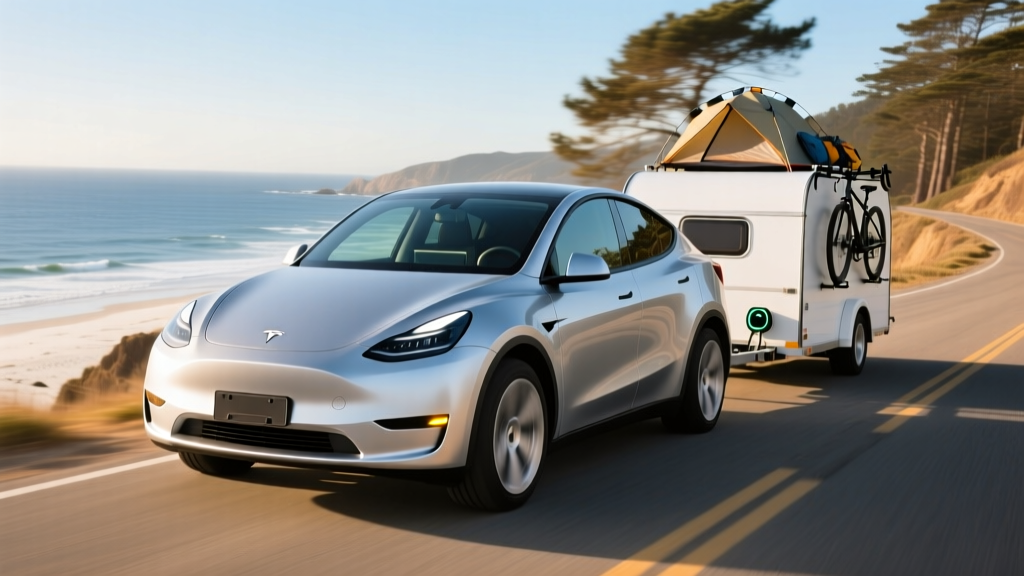
| Towing Capacity | 3,500 lbs | 3,500 lbs |
The dual-motor AWD powertrain delivers approximately 384 horsepower and achieves a 0-60 mph time of 4.8 seconds. That is brisk for a family crossover and comfortably quicker than the Ford Mustang Mach-E Premium AWD (5.1 seconds) and the Hyundai Ioniq 5 AWD (5.2 seconds). The Performance variant, if offered in 2026, drops the 0-60 time to approximately 3.5 seconds.
Charging Speed: DC Fast, Level 2, and the Supercharger Advantage
Charging capability is where the Juniper Model Y maintains one of its strongest competitive advantages — not purely in peak charge rate, but in the breadth and reliability of the network it accesses natively.
| Charging Level | Power / Rate | Speed | Notes |
|---|---|---|---|
| Level 1 (120V household) | ~1.4 kW | ~3-4 miles/hour | Emergency/trickle only |
| Level 2 (240V home/public) | 11.5 kW (max onboard) | ~37 miles/hour | Full charge in ~8 hours |
| DC Fast Charge (peak) | 250 kW | 10-80% in ~25 min | V3/V4 Supercharger |
| DC Fast Charge (CCS adapter) | Up to 250 kW | Varies by station | Non-Tesla networks |
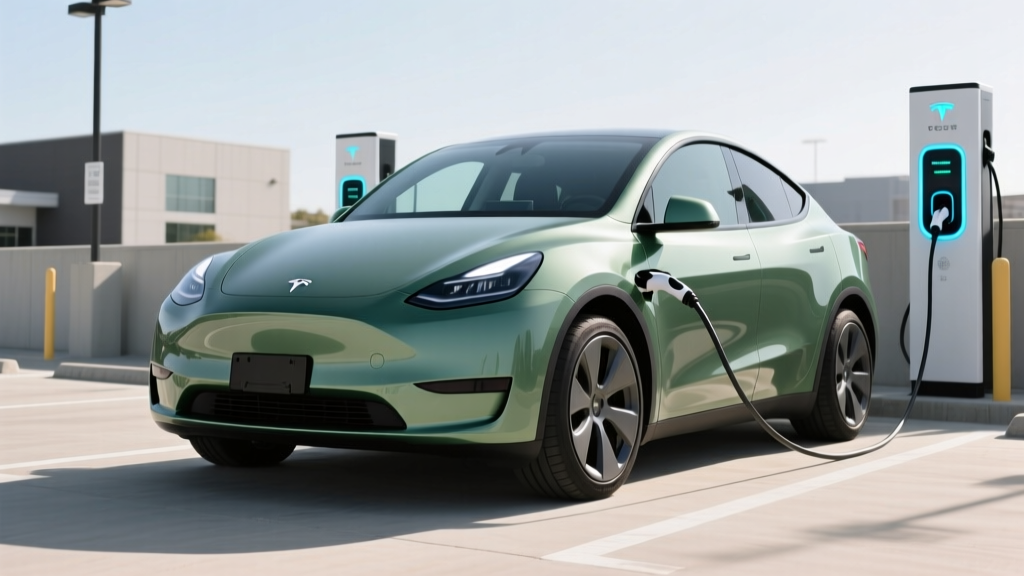
The Juniper Model Y supports a peak DC fast-charge rate of 250 kW on Tesla V3 and V4 Superchargers. In practice, the charge curve is aggressive in the 10-50% state-of-charge window, where the vehicle sustains rates near its peak. Above 60%, the curve tapers progressively — a characteristic of NMC chemistry thermal management. A 10-80% charge takes approximately 25 minutes under optimal conditions (battery preconditioned, warm ambient temperature, V3+ stall).
At home on a Level 2 wall connector at 48 amps (11.5 kW), the Long Range adds roughly 37 miles of range per hour, meaning a full 10-100% session takes about 8 hours. This is typical for the segment; the Ioniq 5's 10.9 kW onboard charger is slightly slower, while the Mach-E's 11.3 kW is comparable.
The critical differentiator remains the Tesla Supercharger network — now exceeding 50,000 stalls globally and consistently rated as the most reliable public DC fast-charging network in North America. With the CCS adapter (included with new vehicles), Juniper Model Y owners can also access Electrify America, EVgo, and other CCS networks, though reliability at those stations remains variable.
Interior, Cargo, and Technology
The Juniper interior represents the largest generational leap in Model Y refinement. Tesla has added laminated acoustic glass on all windows (previously front-only), significantly reducing wind and road noise at highway speeds. The suspension has been retuned with new damper tuning and revised bushings, absorbing sharper impacts that the pre-refresh Model Y transmitted directly into the cabin.
Cargo volume remains a Model Y stronghold: 30.2 cubic feet behind the second row and 72.1 cubic feet with the rear seats folded. That exceeds the Mach-E (29.7 / 59.7 cu ft) and Ioniq 5 (27.2 / 59.3 cu ft) substantially. The rear trunk also benefits from a wider opening and a power-folding 60/40 split bench. A front trunk (frunk) provides additional sealed storage for charging cables or groceries.
Passenger space includes approximately 41.6 inches of front legroom and 40.5 inches of rear legroom — generous for the segment and sufficient for rear-facing child seats without compromising front-seat comfort.
On the technology front, the Juniper Model Y features:
- 15.4-inch center touchscreen with faster processor (Ryzen-based) and improved responsiveness
- 8-inch rear passenger touchscreen for climate control, media, and trip info
- Ventilated front seats (a long-requested feature)
- Ambient lighting with customizable color zones
- Power-folding second-row seats via trunk buttons or app
- Tesla Autopilot standard; FSD (Supervised) available as a paid add-on
Pricing, Trims, and Federal Tax Credit Eligibility
The 2026 Tesla Model Y Juniper lineup is structured as follows:
| Trim | Base MSRP | Est. After §30D Credit* | Key Features |
|---|---|---|---|
| Long Range RWD | $44,990 | ~$37,490 | 300 mi range, single motor, LFP battery |
| Long Range AWD | $47,990 | ~$40,490 | 320 mi range, dual motor, NMC battery |
| Performance AWD | $52,490 | ~$44,990 | ~3.5s 0-60, sport suspension, 21" wheels |
*Federal tax credit estimates assume buyer eligibility. Actual credit depends on multiple IRS requirements.
The IRS §30D clean vehicle credit offers up to $7,500 for qualifying new EVs, but eligibility is governed by a complex set of rules that buyers must verify:
- MSRP cap: SUVs/crossovers must have an MSRP at or below $80,000 — all Model Y trims qualify
- Buyer income cap: Modified adjusted gross income must not exceed $150,000 (single), $225,000 (head of household), or $300,000 (joint)
- Battery sourcing: At least 50% of critical minerals must be sourced from the US or a free-trade-agreement partner (2026 requirement), plus battery component manufacturing thresholds — Tesla has been shifting supply chains to comply, but buyers should verify current-year eligibility at fueleconomy.gov before purchasing
- Point-of-sale transfer: The credit can be applied as an upfront discount at delivery rather than waiting for a tax refund, reducing the effective purchase price immediately
Tax credit eligibility is subject to change as battery-sourcing rules tighten annually. Consult a tax professional and confirm your specific vehicle's VIN eligibility on the IRS portal before finalizing a purchase.
Warranty and Long-Term Ownership
Tesla provides the following warranty coverage for the 2026 Model Y:
- Basic vehicle: 4 years / 50,000 miles
- Battery and drive unit: 8 years / 120,000 miles (Long Range AWD) with a guaranteed minimum 70% capacity retention over the warranty period
- Battery (RWD/LFP): 8 years / 100,000 miles, same 70% retention threshold
Real-world battery degradation data from Tesla's fleet indicates that Model Y packs typically lose approximately 10-12% capacity after 150,000 miles, which is within the warranty threshold and suggests most packs will outlast the vehicle's economic life. LFP batteries in the RWD model show even slower degradation and tolerate routine 100% charging, making them well-suited for high-mileage commuters who charge daily at home.
Insurance costs remain a consideration: the Model Y carries higher-than-average premiums due to repair costs for aluminum and high-voltage components. Expect annual insurance in the $1,800-$2,600 range depending on state, driving record, and coverage level — approximately 15-25% above a comparably priced ICE crossover.
How It Stacks Up Against Key Competitors
The Juniper Model Y does not exist in a vacuum. The mid-size electric crossover segment has matured considerably, and buyers cross-shop several credible alternatives:
- Hyundai Ioniq 5: 310-mile range, 800V architecture enabling 10-80% in ~18 minutes at 350 kW chargers, more distinctive design, slightly less cargo space. Starting ~$42,500.
- Ford Mustang Mach-E: 312-mile extended-range RWD, engaging driving dynamics, BlueCruise hands-free highway driving (Level 2). Starting ~$43,000.
- Kia EV6: Shares the Ioniq 5's 800V platform, sportier profile, 310-mile range, strong charging speed. Starting ~$43,000.
Choose the Hyundai Ioniq 5 or Kia EV6 if: You have access to 350 kW CCS chargers and want faster peak charging (18 min vs 25 min), prefer a more traditional interior layout with physical buttons, or want a more distinctive exterior design.
Choose the Ford Mustang Mach-E if: You value hands-free highway driving (BlueCruise), prefer a sportier driving feel, and want a dealership service network for peace of mind.
Pros, Cons, and Verdict
- Class-leading cargo capacity (72.1 cu ft max)
- Supercharger network — most reliable DC fast-charging in North America
- Excellent efficiency: 122 MPGe / 28 kWh/100mi in AWD
- Significantly improved ride and noise isolation over pre-Juniper
- Strong over-the-air update cadence adds features post-purchase
- Ventilated seats and rear screen address major prior complaints
- 250 kW peak DC charge rate trails 800V competitors (350 kW capable)
- No physical buttons — all controls via touchscreen
- Higher insurance premiums than ICE equivalents
- Turn-signal stalks removed; signals on steering wheel (divisive ergonomics)
- FSD (Supervised) remains a $8,000 add-on with no clear Level 3/4 timeline
- Build quality improved but still inconsistent vs. legacy luxury OEMs
The 2026 Tesla Model Y Juniper refresh is not a revolutionary leap — it is a comprehensive refinement of an already capable platform. The suspension, acoustic, and interior upgrades address the most common complaints of pre-2025 owners, while the powertrain and Supercharger ecosystem remain the benchmark for real-world road-trip usability. For families, commuters with home charging, and frequent road-trippers, it remains the default recommendation in the segment — even as competitors close the gap on charging speed and interior design.
Frequently Asked Questions
What is the real-world range of the 2026 Tesla Model Y Juniper?
The EPA rates the Long Range AWD at 320 miles. In real-world highway driving at 70-75 mph, expect 270-290 miles. In cold weather (below 30°F), plan for 240-270 miles. City driving with regenerative braking can approach or slightly exceed the EPA estimate.
How fast does the Model Y Juniper charge at home and on DC fast chargers?
On a DC fast charger (V3 Supercharger), the Model Y peaks at 250 kW and charges from 10-80% in approximately 25 minutes. At home on a Level 2 wall connector (11.5 kW), it adds about 37 miles per hour, with a full charge taking roughly 8 hours.
Does the 2026 Model Y qualify for the $7,500 federal EV tax credit?
It can qualify, but eligibility depends on the buyer's income (under $150K single / $300K joint), the vehicle's MSRP (all trims are under the $80K SUV cap), and battery component and critical-mineral sourcing requirements that tighten each year. Verify your specific vehicle's VIN at fueleconomy.gov and consult a tax professional.
Is the Model Y Juniper worth buying over the Ioniq 5 or EV6?
If you value Supercharger reliability, maximum cargo space, and best-in-class AWD efficiency, yes. If faster DC charging on 350 kW CCS stations and a more conventional interior layout matter more to you, the Ioniq 5 or EV6 are compelling alternatives at similar pricing.
What are the biggest drawbacks of the Juniper Model Y?
The 250 kW peak charge rate is slower than 800V competitors. The removal of turn-signal stalks in favor of steering-wheel buttons is polarizing. Insurance costs are above average. And FSD (Supervised) remains an expensive Level 2 add-on without a clear path to true autonomy.
How long will the Model Y battery last?
Tesla warranties the Long Range battery for 8 years / 120,000 miles at a minimum 70% capacity retention. Fleet data suggests typical degradation of 10-12% after 150,000 miles, meaning most packs will remain functional well beyond the warranty period. LFP batteries in the RWD model degrade even more slowly.