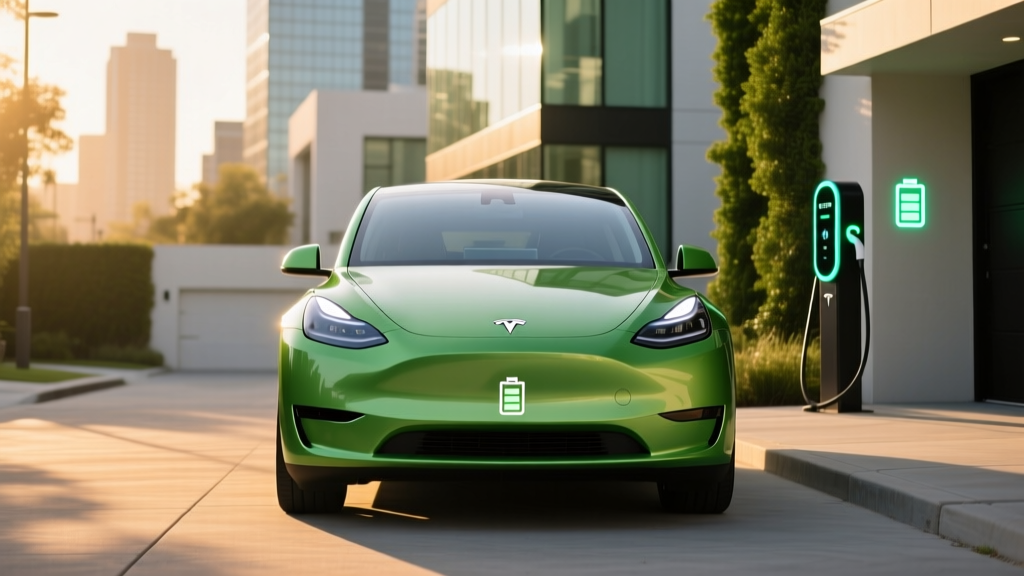
If you've been searching for the new Tesla Model Y name, you've likely encountered "Project Juniper" — Tesla's internal codename for the most significant mid-cycle refresh the crossover has received since its 2020 debut. Unlike the Model 3's "Highland" update, Tesla never officially branded the refreshed Model Y with a consumer-facing sub-name. It is sold simply as the 2026 Tesla Model Y, but the EV community and press universally refer to it as the Model Y Juniper. Here's everything you need to know about this substantially re-engineered electric SUV.
What Changed With the Juniper Refresh?
The Juniper update mirrors the Model 3 Highland playbook: a streamlined exterior with a full-width light bar, a completely reworked interior with ventilated seats, acoustic glass, ambient lighting, and a rear touchscreen for passengers. Under the skin, Tesla revised the suspension tuning for improved ride compliance, added power-folding second-row seats, and optimized the thermal management system for better cold-weather efficiency. The result is a vehicle that addresses the most common owner complaints — ride harshness, cabin noise, and rear-seat comfort — while preserving the efficiency and charging infrastructure advantages that made the Model Y the world's best-selling vehicle in 2023.
Range, Battery, and Efficiency: The Numbers That Matter
The Long Range AWD carries an EPA-estimated 320 miles. In real-world highway driving at 70-75 mph, expect approximately 275-290 miles. In cold weather (below 32°F), range can drop to 240-260 miles without preconditioning. The RWD base model is EPA-rated at 290 miles.
The 2026 Model Y Long Range AWD uses a 78.4 kWh usable battery pack with NMC (nickel manganese cobalt) chemistry, consistent with Tesla's dual-motor configurations that prioritize energy density. The base RWD model uses a 60 kWh usable LFP (lithium iron phosphate) pack — a chemistry that sacrifices some energy density for longer cycle life and the ability to charge routinely to 100% without degradation concerns.
| Spec | Model Y RWD | Model Y Long Range AWD | Model Y Performance |
|---|---|---|---|
| EPA Range | 290 mi | 320 mi | 295 mi |
| Battery (usable) | 60 kWh (LFP) | 78.4 kWh (NMC) | 78.4 kWh (NMC) |
| Efficiency | 27 kWh/100mi (125 MPGe) | 26 kWh/100mi (130 MPGe) | 28 kWh/100mi (120 MPGe) |
| Drivetrain | RWD, single motor | AWD, dual motor | AWD, dual motor |
| Horsepower | 295 hp | 384 hp | 456 hp |
| 0-60 mph | 6.2 sec | 4.8 sec | 3.5 sec |
| Base MSRP | $44,990 | $48,990 | $53,990 |
Efficiency remains a Tesla stronghold. The Long Range AWD's 26 kWh per 100 miles (approximately 130 MPGe combined) is among the best in the mid-size electric crossover segment, meaning less energy wasted and lower per-mile charging costs. According to fueleconomy.gov, the Model Y Long Range continues to outperform most AWD competitors in combined efficiency.
Charging Speed: DC Fast Charge and Home Level 2
Charging speed is where the Juniper refresh delivers meaningful gains. Tesla upgraded the thermal management to sustain higher charge rates longer on the DC fast-charging curve.
| Charging Level | Power / Rate | Speed / Time |
|---|---|---|
| Level 1 (120V household) | ~1.4 kW | ~4 miles per hour |
| Level 2 (240V home, 48A) | 11.5 kW | ~44 miles per hour |
| DC Fast Charge (Supercharger V4) | Peak 250 kW | 10-80% in ~22 minutes |
| DC Fast Charge (sustained avg.) | ~170 kW avg | 10-80% real-world average |
Understanding the charge curve: The Model Y Long Range peaks at 250 kW only between roughly 10-30% state of charge. From 30-60%, it sustains approximately 180-200 kW, then tapers to ~100 kW from 60-80%, and drops sharply above 80%. This is why Tesla (and we) quote 10-80% times rather than 0-100%. Charging from 80-100% can add another 20+ minutes — plan your road-trip stops accordingly.
For home charging, a 48-amp Level 2 wall connector on a 60-amp circuit delivers 11.5 kW, replenishing the Long Range battery from empty in roughly 7 hours — easily covering overnight replenishment. Tesla's Mobile Connector with a NEMA 14-50 adapter provides up to 32 amps (7.7 kW) as a more affordable alternative, though installation of a dedicated 240V circuit typically runs $500-$2,000 depending on panel proximity.
Interior, Cargo Space, and Technology
The Juniper interior is a marked departure from the spartan pre-refresh cabin. Key improvements include:
- Ventilated front seats (previously a top owner complaint in warm climates)
- Rear 8-inch touchscreen for climate and media control
- Acoustic laminated glass on all windows, reducing highway noise by approximately 3-5 dB
- Ambient lighting across the dashboard and door panels
- Power-folding second-row seats for cargo flexibility
Cargo volume: 30.2 cubic feet behind the second row, expanding to 72.1 cubic feet with the rear seats folded. The front trunk (frunk) adds 4.1 cubic feet — useful for charging cables and groceries. Rear legroom measures 40.5 inches, adequate for adults on longer trips.
On the technology front, the 15.4-inch center touchscreen runs Tesla's latest software with an improved navigation system, integrated trip planner with battery preconditioning for Superchargers, and over-the-air updates. Autopilot comes standard with Traffic-Aware Cruise Control and Autosteer. Full Self-Driving (Supervised) remains an $8,000 add-on (or $99/month subscription).
Per NHTSA's SAE automation framework, both Autopilot and FSD (Supervised) are SAE Level 2 driver-assistance systems. The driver must remain fully engaged, eyes on the road, hands available to take over at any moment. These systems are not self-driving. Level 4 autonomous operation (no driver required) is currently only available through commercial robotaxi services like Waymo in limited geographic areas.
Pricing, Trims, and Federal Tax Credit Eligibility
| Trim | Base MSRP | Destination | Est. After §30D Credit |
|---|---|---|---|
| Model Y RWD | $44,990 | $1,390 | ~$38,880* |
| Model Y Long Range AWD | $48,990 | $1,390 | ~$42,880* |
| Model Y Performance | $53,990 | $1,390 | ~$47,880* |
*Estimated prices assume full §30D credit eligibility. Your actual credit may vary.
- MSRP cap: SUVs/crossovers must be ≤$80,000 (all Model Y trims qualify)
- Buyer income cap: AGI ≤$150,000 (single) / ≤$300,000 (joint) / ≤$225,000 (head of household)
- Battery sourcing: Critical minerals and battery components must meet phased-in domestic/free-trade sourcing thresholds — Tesla's supply chain has largely met these requirements for US-built Model Y vehicles, but confirm at point of sale
- Point-of-sale transfer: You can transfer the credit to the dealer at purchase, reducing your out-of-pocket cost immediately rather than waiting for tax filing
- VIN verification: Confirm the specific vehicle's eligibility at fueleconomy.gov before purchasing
The point-of-sale transfer option, introduced in 2024, is a significant advantage. Instead of claiming the credit on your tax return, you can assign it to Tesla at delivery, effectively reducing your purchase price by up to $7,500 on the spot. Consult a tax professional for your specific situation, and always verify current rules at irs.gov, as battery-sourcing requirements tighten annually.
Warranty and Long-Term Ownership
Tesla's warranty coverage for the 2026 Model Y:
- Basic vehicle: 4 years / 50,000 miles
- Battery & drive unit (Long Range/Performance): 8 years / 120,000 miles, with a minimum 70% capacity retention threshold
- Battery & drive unit (RWD/LFP): 8 years / 100,000 miles, with a minimum 70% capacity retention threshold
The 70% retention threshold is important context: Tesla guarantees the battery will hold at least 70% of its original capacity during the warranty period. Real-world degradation data from Tesla's fleet suggests most Model Y packs retain approximately 88-92% capacity at 100,000 miles, well above the warranty floor. LFP packs in the RWD model tend to show slower degradation curves, particularly when owners follow Tesla's recommendation to charge to 100% regularly.
Insurance costs remain a consideration. The Model Y typically carries premiums 15-25% higher than comparable gas-powered crossovers due to repair costs and parts pricing. Average annual insurance runs $2,200-$2,800 depending on state, driving record, and coverage level.
Pros, Cons, and Who Should Buy
- Class-leading efficiency at 130 MPGe combined (Long Range)
- Access to Tesla's Supercharger network — the most reliable and extensive DC fast-charging network in North America
- 250 kW peak DC charging with improved sustained curve
- Substantially improved ride quality and cabin quietness over pre-refresh Model Y
- Over-the-air updates continue to add features post-purchase
- Strong resale value relative to most EV competitors
- Qualifies for full §30D credit (when sourcing and income requirements are met)
- No physical stalks — turn signals are on the steering wheel, wiper controls on screen
- FSD (Supervised) remains Level 2 despite the "self-driving" name; $8,000 is steep for what it delivers
- Minimal button/tactile controls — everything routes through the touchscreen
- Rear visibility is limited; relies heavily on backup camera
- Insurance premiums above segment average
- Competitors like the Hyundai Ioniq 5 and Kia EV6 now offer comparable range and faster peak charging (up to 350 kW on 800V architecture)
- Choose the Model Y Long Range AWD if: You want the best combination of range, efficiency, Supercharger access, and family-friendly cargo space for daily commuting and road trips. It's the default pick for most buyers.
- Choose the Model Y RWD if: You live in a mild climate, primarily commute under 40 miles daily, want the lowest entry price, and prefer the longer cycle life of LFP chemistry.
- Choose the Model Y Performance if: Acceleration thrills matter to you (3.5-second 0-60), and you don't mind sacrificing ~25 miles of range for the upgraded motors, brakes, and wheels.
- Look at the Hyundai Ioniq 5 or Kia EV6 instead if: You prioritize 800V ultra-fast charging (10-80% in ~18 min), prefer physical controls, or want a more distinctive design.
Frequently Asked Questions
What is the real-world range of the 2026 Tesla Model Y?
The Long Range AWD is EPA-rated at 320 miles, but expect approximately 275-290 miles in real-world highway driving at 70-75 mph. In cold weather below freezing, range can dip to 240-260 miles without preconditioning. The RWD model delivers roughly 250-265 real-world highway miles from its 290-mile EPA rating.
How fast does the Model Y charge at home and on the road?
On a 48-amp Level 2 home charger (240V), the Model Y adds approximately 44 miles of range per hour, fully recharging overnight. On a Tesla V4 Supercharger, it peaks at 250 kW and charges from 10-80% in approximately 22 minutes. Note that peak rate is only sustained briefly — the average rate across the 10-80% session is closer to 170 kW.
Does the 2026 Model Y qualify for the $7,500 federal EV tax credit?
All Model Y trims fall under the $80,000 SUV MSRP cap. Eligibility depends on your adjusted gross income (≤$300,000 joint / ≤$150,000 single), and the vehicle must meet battery-sourcing requirements, which US-built Model Y vehicles have largely satisfied. You can transfer the credit to Tesla at the point of sale. Always verify your specific vehicle's VIN at fueleconomy.gov and consult a tax professional.
Is the refreshed Model Y worth buying over competitors?
The Juniper-refreshed Model Y remains the segment benchmark for efficiency, Supercharger network access, and software integration. However, the Hyundai Ioniq 5 and Kia EV6 offer 800V charging (faster 10-80% times), the Ford Mustang Mach-E provides more engaging driving dynamics, and the upcoming Chevrolet Equinox EV undercuts on price. If Supercharger access and efficiency are your top priorities, the Model Y is still the strongest all-around choice.
What is the new Tesla Model Y name — is it called Juniper officially?
Tesla does not use "Juniper" in any consumer-facing marketing. The vehicle is sold as the 2026 Tesla Model Y. "Juniper" is the internal project codename used during development and widely adopted by media and the EV community to distinguish the refreshed model from the pre-2025 version. There is no separate consumer brand name for the update.
What are the biggest drawbacks of the 2026 Model Y?
The most common owner complaints center on the lack of physical controls (turn signals on the wheel, no wiper stalk), higher-than-average insurance costs, limited rear visibility, and the steep price of FSD for a system that still requires full driver attention. The base RWD model's 60 kWh LFP pack also delivers noticeably less range than the Long Range.