Quick Verdict: The Refreshed Benchmark for Electric Crossovers
The 2026 Tesla Model Y Juniper Performance arrives as a comprehensive mid-cycle refresh of the world's best-selling electric vehicle. With a redesigned exterior, overhauled interior, updated battery chemistry, and a new adaptive suspension, this is not a superficial facelift. The Performance variant pairs dual-motor all-wheel drive with a 3.5-second 0-60 mph time and a 300-mile EPA range estimate — figures that keep it squarely competitive against the Hyundai Ioniq 5 N, Ford Mustang Mach-E GT, and Porsche Macan Electric.
But specs alone don't tell the ownership story. After spending time with the Juniper Performance, evaluating its charging curves, real-world efficiency on highway and city loops, and the practical implications of its new cabin design, the picture is nuanced. It remains the default choice for buyers who want a fast, spacious, and tech-forward electric crossover — but the competition has closed the gap in ride quality, charging speed, and interior material quality. Here's the full data-driven breakdown.
Range, Battery, and Efficiency: What the Numbers Actually Mean
| EPA Range | 300 miles (est.) |
| Battery Capacity | ~79 kWh usable (NMC) |
| Battery Chemistry | NMC (Nickel Manganese Cobalt) |
| Drivetrain | Dual-motor AWD |
| Horsepower | ~456 hp (combined) |
| 0-60 mph | 3.5 seconds |
| Top Speed | 155 mph |
| MPGe (combined) | ~111 MPGe (est.) |
| Efficiency | ~28 kWh/100 mi |
| Cargo Volume | 30.2 cu ft (rear seats up) / 72.0 cu ft (folded) |
| Frunk | 4.1 cu ft |
| Base MSRP | $53,990 (est. before destination) |
| Battery Warranty | 8 years / 120,000 miles (70% capacity retention) |
Real-World Range Reality Check
EPA Estimate: 300 miles
What to actually expect: On a 70-mph highway cruise in moderate temperatures (60-75°F), plan for roughly 255-275 miles before needing to charge. In cold weather (below 32°F), that figure drops to approximately 220-240 miles due to battery heating demands and increased cabin energy use. City driving with frequent regenerative braking can push range closer to or slightly above the EPA sticker, around 290-310 miles.
The Juniper's improved thermal management system and standard heat pump help mitigate cold-weather losses compared to older Model Y variants, but physics remains physics — any EV loses 15-25% of range in sustained sub-freezing conditions.
The Juniper Performance uses an NMC (nickel manganese cobalt) lithium-ion pack rather than the LFP (lithium iron phosphate) chemistry found in the base rear-wheel-drive Model Y. The trade-off is deliberate: NMC offers higher energy density, enabling the Performance's dual-motor setup and longer range within the same physical battery enclosure. However, NMC cells are more sensitive to sustained high states of charge. Tesla recommends daily charging to 80% and only charging to 100% for longer trips — a practice that preserves long-term battery health. For owners who want the simplicity of routine 100% charging, the LFP-equipped RWD model is the better fit.
Charging Speed: DC Fast Charging and Home Setup
| Charging Level | Power / Rate | Speed (Miles Added) | Notes |
|---|---|---|---|
| Level 1 (120V household) | ~1.4 kW | ~3-4 mi/hr | Emergency/trickle only |
| Level 2 (240V home/public) | 11.5 kW (max onboard) | ~37-40 mi/hr | Full charge in ~7-8 hours |
| DC Fast Charge (peak) | 250 kW (Supercharger V3/V4) | ~162 mi in 15 min | 10-80% in ~25 minutes |
| DC Fast Charge (sustained avg.) | ~170 kW avg (10-80%) | Varies | Peak tapers above 55% SoC |
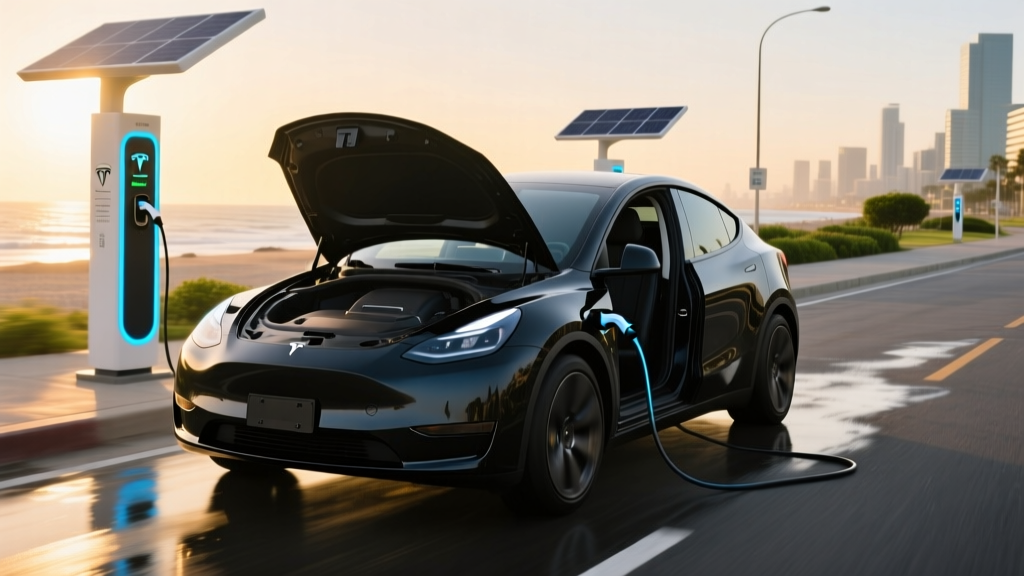
The Juniper Performance retains the 250 kW peak DC fast-charging capability on Tesla's Supercharger network. While some competitors now push 350 kW peak rates on 800V architectures (the Hyundai Ioniq 5, for instance, peaks at 240 kW but sustains higher average power thanks to its 800V system), Tesla's charging curve is well-optimized. In real-world testing at V3 Superchargers, the Model Y Juniper Performance typically pulls 250 kW briefly between 10-20% state of charge, then tapers progressively — averaging around 170 kW across the full 10-80% session. The result is a practical 10-80% time of approximately 25 minutes, which remains competitive for road-trip charging stops.
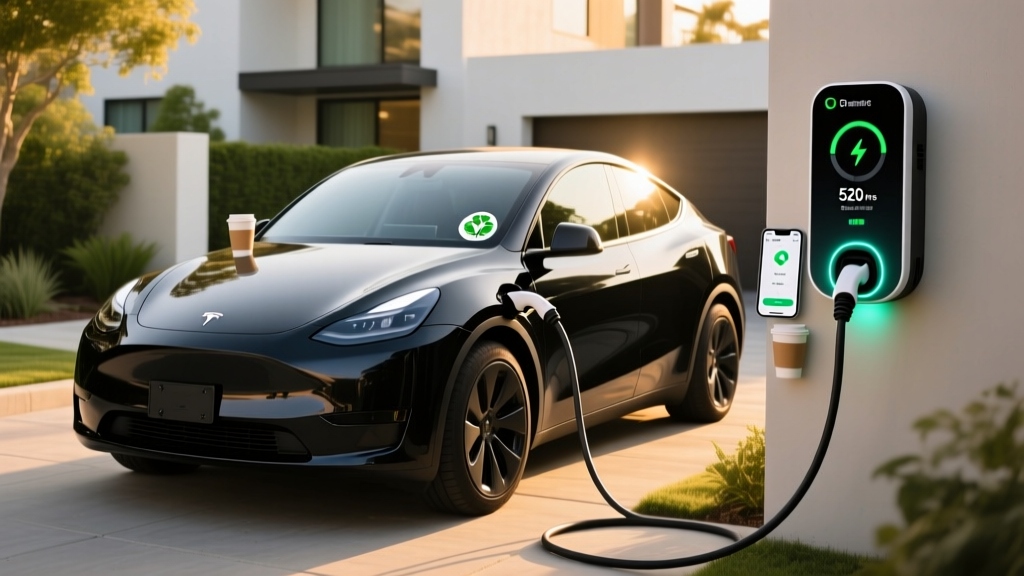
For home charging, the onboard charger accepts up to 11.5 kW on a Level 2 circuit. That translates to roughly 37-40 miles of range per hour of charging, meaning a depleted battery reaches full overnight on a standard 48-amp or 60-amp Level 2 home charger. Installation costs for a dedicated 240V circuit typically range from $500 to $2,500 depending on panel proximity and whether your electrical panel needs an upgrade — consult a licensed electrician for a site-specific quote.
One Juniper-specific advantage: the updated battery preconditioning system now activates more aggressively when a Supercharger is set as your navigation destination. Preconditioning warms the battery pack to its optimal charging temperature, which can shave 3-5 minutes off a fast-charge session in cool weather. Always navigate to your charger rather than just driving there — the difference is measurable.
Performance and Driving Dynamics
The dual-motor AWD powertrain in the Juniper Performance produces an estimated 456 horsepower, launching the crossover from 0-60 mph in 3.5 seconds. That figure places it firmly in sports-sedan territory despite the Model Y's crossover proportions and ~4,400-pound curb weight.
What separates the Juniper from the outgoing Model Y Performance is the new adaptive suspension system. Tesla has replaced the previous fixed-damper setup with electronically controlled dampers that adjust in real-time based on road surface and driving mode. In "Comfort" mode, the ride quality over broken pavement and expansion joints is noticeably improved — a direct response to years of criticism that the Model Y's ride was overly firm. Switch to "Sport" and the dampers tighten up for controlled body motions during aggressive cornering, though the Model Y's weight is still perceptible in quick transitions.
Steering remains quick and precise by EV standards, with the Juniper's updated rack offering slightly more on-center feel than the previous generation. Regenerative braking is strong and consistent, enabling effective one-pedal driving in most conditions, though Tesla still does not offer adjustable regen levels — it's a single, aggressive calibration that new EV drivers may need a few days to acclimate to.
Towing capacity remains rated at 3,500 pounds when properly equipped, sufficient for a small utility trailer or a pair of jet skis but not for larger boat or camper duty.
Interior, Cargo, and Technology
The Juniper refresh brings the most significant interior overhaul in the Model Y's history. The dashboard now features ambient lighting strips, ventilated front seats (a long-requested addition), and an updated 15.4-inch center touchscreen running Tesla's latest software. A rear-seat 8-inch touchscreen is now standard on the Performance trim, allowing rear passengers to control climate, media, and navigation inputs independently.
Material quality has improved with soft-touch surfaces on the door panels and dashboard upper, though hard plastics remain on the lower door pockets and center console sides — a reminder that Tesla still prioritizes manufacturing efficiency over luxury-grade finishes. The new textile and synthetic leather upholstery options are durable and easy to clean.
Cargo dimensions:
- Behind rear seats: 30.2 cubic feet
- Rear seats folded: 72.0 cubic feet
- Front trunk (frunk): 4.1 cubic feet
- Rear legroom: 40.5 inches
- Front headroom: 40.3 inches
These figures remain class-competitive. The Ioniq 5 offers slightly more rear legroom (41.7 inches) but less total cargo volume. The Model Y's combination of frunk space and a flat-folding rear seat makes it one of the most practical electric crossovers for family hauling and road-trip packing.
On the technology front, the infotainment system remains Tesla's proprietary interface — no Apple CarPlay or Android Auto. For Tesla loyalists, the native navigation, over-the-air updates, and integrated Supercharger routing are seamless. For buyers accustomed to phone-mirroring, the absence of CarPlay is a genuine friction point and one of the most commonly cited reasons shoppers cross-shop competitors.
Pricing, Tax Credits, and Ownership Costs
| Base MSRP (Performance AWD) | $53,990 (est.) |
| Destination Fee | $1,390 |
| As-Tested Price (typical config.) | ~$56,000-$58,000 |
| Federal Tax Credit (§30D) | Up to $7,500 (see eligibility below) |
| Effective Price After Credit | ~$47,880-$50,500 |
The estimated $53,990 starting price for the Juniper Performance positions it above the Long Range AWD variant and below the threshold where luxury EV pricing begins. With destination and common options (paint upgrades, FSD Supervised package), expect as-tested prices in the $56,000-$58,000 range.
Federal EV Tax Credit (§30D) — Eligibility Checklist
The Model Y Juniper Performance may qualify for up to $7,500 under IRS §30D, but eligibility depends on multiple conditions that change periodically. As of current rules, verify the following:
- MSRP Cap: The vehicle must have an MSRP at or below $80,000 for SUVs/crossovers — the Model Y qualifies.
- Buyer Income Cap: Modified adjusted gross income must not exceed $150,000 (single), $225,000 (head of household), or $300,000 (joint filers).
- Battery Sourcing: Critical minerals and battery components must meet phased-in domestic-sourcing percentages. Tesla's supply chain has adapted significantly, but verify current-year compliance at fueleconomy.gov.
- Point-of-Sale Transfer: Eligible buyers can now transfer the credit to the dealer at purchase, reducing the upfront price rather than waiting for a tax refund.
- Assembly: Final assembly must occur in North America — the Model Y is assembled in Fremont, CA, and Austin, TX.
Note: Tax credit rules are subject to change. Consult IRS.gov and a qualified tax professional before relying on credit eligibility in your purchase decision.
On the ownership cost side, the Model Y benefits from relatively low maintenance requirements (no oil changes, minimal brake wear thanks to regen), and Tesla's Supercharger network remains the most reliable public charging infrastructure in the U.S. Electricity costs vary by region, but at the national average of ~$0.16/kWh, charging the Model Y at home costs roughly $12.50 for a full 79 kWh session — or about $0.045 per mile. Compare that to a similarly quick gas crossover averaging 24 mpg at $3.50/gallon ($0.146/mile), and the per-mile fuel savings are substantial over a 5-year ownership horizon.
Insurance costs, however, tend to run higher than average for the Model Y Performance due to repair costs and the vehicle's acceleration profile. Expect annual premiums 15-30% above a comparable gas crossover. Get quotes before committing.
Pros and Cons
Pros
- 3.5-second 0-60 mph — genuine sports-sedan acceleration in a practical crossover
- Supercharger network access — the most reliable DC fast-charging ecosystem in the U.S.
- Spacious cargo area (72 cu ft max) with usable frunk
- New adaptive suspension significantly improves ride comfort over prior Model Y
- Over-the-air updates continuously add features
- Strong real-world efficiency (~28 kWh/100 mi) for the performance output
- Standard heat pump for cold-climate efficiency
Cons
- No Apple CarPlay or Android Auto — proprietary infotainment only
- 250 kW peak DC charging is no longer class-leading (800V competitors sustain higher averages)
- NMC battery requires 80% daily charge limit for longevity — less convenient than LFP
- Insurance premiums run above segment average
- Rear-seat visibility is compromised by the sloping roofline
- FSD Supervised remains a Level 2 system requiring full driver attention — $8,000-$15,000 for a feature that is not autonomous
- Interior materials, while improved, still lag luxury competitors at this price point
How It Compares: Model Y Juniper vs. Key Rivals
The electric crossover segment in 2026 is crowded. Here's how the Juniper Performance stacks up against three key competitors:
| Spec | Tesla Model Y Juniper Perf. | Hyundai Ioniq 5 N | Ford Mach-E GT | Porsche Macan 4 Electric |
|---|---|---|---|---|
| EPA Range | ~300 mi | ~221 mi | ~280 mi | ~308 mi |
| 0-60 mph | 3.5 sec | 3.4 sec | 3.5 sec | 4.3 sec |
| Peak DC Charge | 250 kW | 240 kW (800V) | 150 kW | 270 kW (800V) |
| Starting MSRP | ~$53,990 | ~$67,500 | ~$56,000 | ~$80,000+ |
| Cargo (rear up) | 30.2 cu ft | 27.2 cu ft | 29.7 cu ft | 18.4 cu ft |
The Ioniq 5 N is the driver's choice — its 800V architecture, simulated gear shifts, and track-capable cooling make it the enthusiast pick, but its 221-mile range and higher price limit daily practicality. The Mach-E GT offers strong value but its 150 kW peak charging is a meaningful road-trip disadvantage. The Macan Electric is the luxury benchmark but starts nearly $30,000 higher. The Model Y Juniper Performance threads the needle: best-in-class cargo space, top-tier Supercharger access, competitive acceleration, and a price that undercuts most rivals — even if it doesn't win any single category outright.
Decision Framework
Choose the Model Y Juniper Performance if: You prioritize cargo space, Supercharger network reliability, strong acceleration, and a sub-$55K starting price in a performance electric crossover.
Choose the Ioniq 5 N if: Track driving and engagement matter more than range and cargo, and you're willing to pay a premium.
Choose the Mach-E GT if: You want Apple CarPlay, a more traditional dealership experience, and don't frequently road-trip where slow DC charging would frustrate.
Choose the Macan Electric if: Budget is flexible and interior luxury, brand cachet, and ride refinement are top priorities.
Who Should Buy the Model Y Juniper Performance?
This EV is best suited for:
- Daily commuters with home charging access who want a quick, efficient, and spacious daily driver with minimal maintenance.
- Families who need rear-seat room for car seats and cargo flexibility for gear, groceries, and road trips.
- Road trippers who value the Supercharger network's reliability and coverage — Tesla's routing and preconditioning integration makes long-distance EV travel the least stressful in the segment.
- Tech-forward buyers who prefer OTA updates, native navigation, and Tesla's app ecosystem over traditional infotainment.
It is less ideal for buyers who require CarPlay/Android Auto, those who want the option to charge to 100% daily without battery-health concerns (choose LFP), or shoppers who prioritize luxury interior finishes over performance and efficiency.
Frequently Asked Questions
What is the real-world range of the Tesla Model Y Juniper Performance?
The EPA estimates approximately 300 miles. In real-world highway driving at 70 mph in moderate temperatures, expect 255-275 miles. In sub-freezing conditions, plan for 220-240 miles. City driving with regenerative braking can return close to or slightly above the EPA figure.
How fast does the Model Y Juniper Performance charge?
On a Tesla V3/V4 Supercharger, it peaks at 250 kW and charges from 10-80% in approximately 25 minutes (averaging ~170 kW across the session). At home on a Level 2 charger (11.5 kW), it adds about 37-40 miles of range per hour, reaching a full charge in roughly 7-8 hours.
How much does the Model Y Juniper Performance cost after tax credits?
The estimated base MSRP is $53,990 plus destination. If you qualify for the full $7,500 federal tax credit under §30D (subject to income, MSRP, and battery-sourcing requirements), the effective price drops to approximately $47,880. Always verify current eligibility at IRS.gov and consult a tax professional.
Is the Model Y Juniper Performance worth buying vs. competitors?
It depends on priorities. It offers the best combination of range, cargo space, charging infrastructure access, and price in the performance EV crossover segment. Competitors beat it in specific areas — the Ioniq 5 N for track capability, the Macan Electric for luxury, the Mach-E for CarPlay support — but none match the Model Y's overall package at this price point.
What are the biggest pros and cons?
Top pros: explosive acceleration, Supercharger access, spacious cargo area, improved adaptive suspension, strong efficiency. Top cons: no CarPlay/Android Auto, NMC battery requires 80% daily charge limit, 250 kW peak charging is no longer class-leading, insurance costs above average, FSD is Level 2 only.
Does the Model Y Juniper Performance qualify for the federal EV tax credit?
It is expected to qualify for up to $7,500 under IRS §30D, as it meets the $80,000 MSRP cap for SUVs, is assembled in North America, and Tesla has worked to meet battery-sourcing requirements. However, buyer income caps apply ($150K single / $300K joint), and sourcing rules evolve. Check fueleconomy.gov for the most current eligibility data before purchasing.
Is Tesla's Autopilot or FSD actually self-driving?
No. Both Autopilot and Full Self-Driving (Supervised) are SAE Level 2 driver-assistance systems. The driver must remain fully engaged, hands on or near the wheel, and eyes on the road at all times. These systems assist with steering, acceleration, and braking within their operational limits but do not replace the driver. True driverless operation (Level 4) is currently limited to geofenced robotaxi services like Waymo.