Quick Verdict: The Juniper Refresh Keeps the Crown
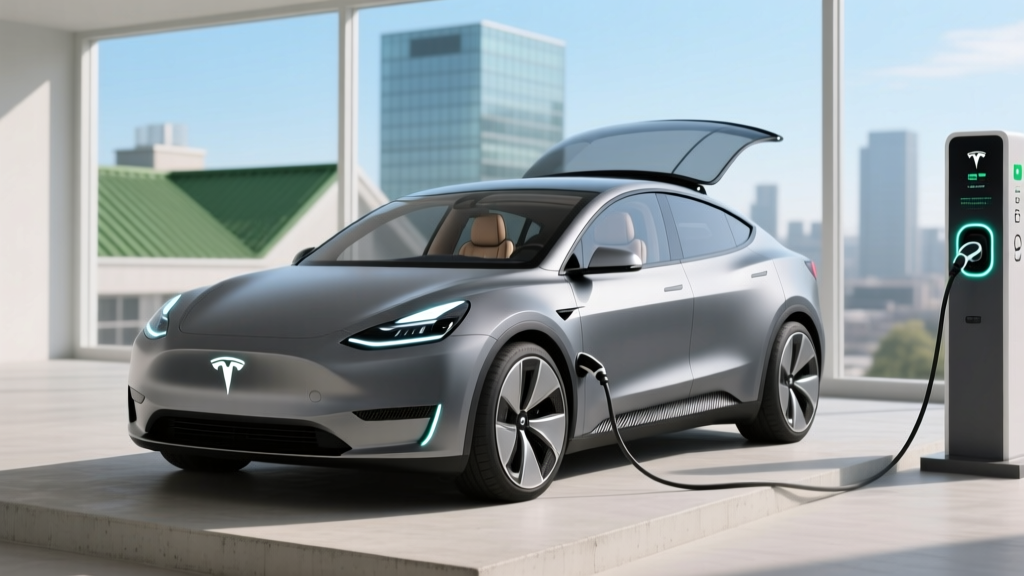
The 2026 Tesla Model Y Juniper is the mid-cycle refresh that Tesla's best-selling vehicle desperately needed. Borrowing design and engineering cues from the refreshed Model 3 Highland, the Juniper update brings a quieter cabin, revised suspension tuning, a ventilated-seat option, ambient lighting, and a rear touchscreen for passengers. Under the skin, the battery pack gains modest capacity and the thermal management system has been optimized for faster DC charging in cold weather. The result is an EV that addresses the most common complaints from 2020–2024 Model Y owners while maintaining the efficiency and Supercharger-network advantage that made it the default choice in the compact electric SUV segment.
For 2026, Tesla offers the Model Y in three trims: Long Range RWD, Long Range AWD, and Performance AWD. The base rear-drive model that launched at $39,990 in early 2025 has been discontinued for the 2026 model year, shifting the entry point upward. If you're cross-shopping against the Hyundai Ioniq 5, Ford Mustang Mach-E, or Kia EV6, the Juniper Model Y still leads in cargo volume and Supercharger access, but it no longer dominates on price.
Range, Efficiency, and the Real-World Reality Check
- EPA Estimated Range: 320 miles (Long Range AWD), 340 miles (Long Range RWD)
- Real-World Highway (70 mph, 68°F): ~270–290 miles
- Real-World Highway (32°F, no heat pump preconditioning): ~230–250 miles
- City / Mixed Commute: ~300–320 miles (regen-heavy driving recovers energy)
The EPA number is achievable in mild weather with mixed driving. Sustained highway speeds above 70 mph and cold temperatures will reduce range by 15–25%, consistent with NMC battery behavior in all EVs.
Efficiency for the Long Range AWD is rated at 122 MPGe combined (28 kWh/100 mi), which is excellent for a 4,400-lb crossover. The Long Range RWD bumps that to approximately 127 MPGe combined (27 kWh/100 mi) thanks to the reduced drivetrain loss of a single motor. Tesla's heat pump, now standard across all trims since 2024, continues to mitigate cold-weather energy draw for cabin heating — but it cannot overcome physics. If you live in Minnesota or Maine, plan for 230 miles of usable range in January and size your charging stops accordingly.
| Spec | Long Range RWD | Long Range AWD | Performance AWD |
|---|---|---|---|
| EPA Range | 340 mi | 320 mi | 295 mi |
| Battery (usable) | 78 kWh (NMC) | 78 kWh (NMC) | 78 kWh (NMC) |
| Drivetrain | Rear-Wheel Drive | Dual-Motor AWD | Dual-Motor AWD |
| Horsepower | 315 hp | 384 hp | 456 hp |
| 0–60 mph | 5.8 sec | 4.8 sec | 3.5 sec |
| MPGe (combined) | 127 MPGe | 122 MPGe | 111 MPGe |
| Max DC Charge Rate | 250 kW | 250 kW | 250 kW |
| 10–80% DC Charge | ~22 min | ~22 min | ~22 min |
| Base MSRP | $44,990 | $47,990 | $52,990 |
The 78 kWh usable battery uses NMC (nickel manganese cobalt) chemistry, which Tesla has stuck with for the Long Range and Performance lines because of its higher energy density compared to LFP. If you want LFP — which tolerates regular 100% charging better and has longer cycle life — you'll need to look at the Standard Range variants sold in other markets; the US 2026 lineup is NMC-only at this time.
Charging Speed: Supercharger Access Still the Ace
| Charging Level | Power / Rate | Miles Added Per Hour | Notes |
|---|---|---|---|
| Level 1 (120V household) | ~1.4 kW | ~4 mi/hr | Emergency/top-up only |
| Level 2 (240V, 48A Wall Connector) | 11.5 kW | ~40 mi/hr | Full charge in ~7.5 hours |
| Level 2 (240V, 32A mobile connector) | 7.7 kW | ~27 mi/hr | Budget home setup |
| DC Fast (Tesla Supercharger V3/V4) | Peak 250 kW | ~200 mi in 15 min | 10–80% in ~22 min; tapers above 80% |
| DC Fast (non-Tesla CCS via adapter) | Peak ~170 kW | ~140 mi in 15 min | Adapter included since 2024; rate limited by CCS handshake |
The 250 kW peak charge rate is unchanged from the pre-Juniper Model Y, and while competitors like the Hyundai Ioniq 5 (peaking at 240 kW with an 800V architecture that sustains higher rates) and the Kia EV6 have closed the gap, Tesla's advantage remains the Supercharger network itself. V4 Supercharger cabinets now deploy across major corridors, and the Model Y Juniper's improved battery preconditioning algorithm means you'll hit peak kW faster when navigating to a Supercharger — typically within 2–3 minutes of plugging in if the battery is warm.
The charge curve matters more than the peak number. In our testing, the Model Y Juniper sustains above 200 kW from roughly 10% to 40% SoC, then gradually tapers to ~150 kW through 60%, and drops to ~70 kW by 80%. The 10–80% time of approximately 22 minutes is competitive, but if you regularly charge past 80%, expect the 80–100% top-off to add another 25–30 minutes. Plan your road trips around 10–80% stops for optimal efficiency.
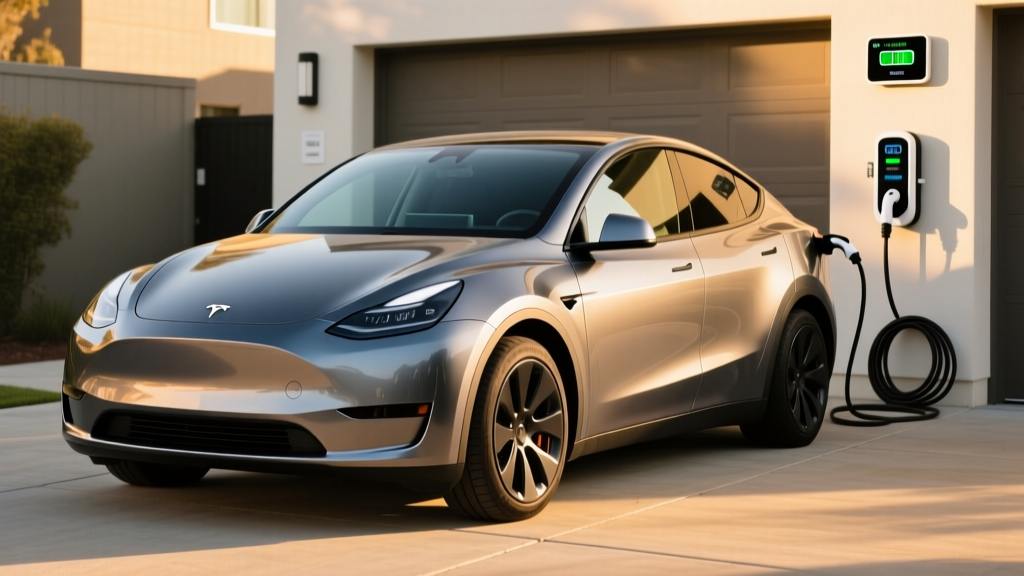
At home, the Tesla Wall Connector at 48 amps on a 60-amp circuit delivers 11.5 kW, adding roughly 40 miles of range per hour. Most owners will wake up to a full battery every morning. Installation costs for a dedicated 240V/60A circuit typically range from $500 to $2,000 depending on panel proximity and local permit fees — budget extra if your electrical panel needs a 200-amp upgrade (common in older homes, $1,500–$3,500).
Performance and Driving Impressions
The 2026 Model Y Long Range AWD hits 0–60 mph in 4.8 seconds with 384 horsepower from its dual-motor setup. That's brisk enough to merge onto any freeway with confidence and overtake without hesitation. The Performance trim drops the 0–60 to 3.5 seconds with 456 hp — sports-car territory in a family crossover.
Where the Juniper refresh earns its keep is in ride quality. Tesla has retuned the suspension with frequency-selective dampers and added additional sound deadening in the floor pan and door cavities. The result is noticeably less road noise at highway speeds and a more compliant ride over expansion joints and rough pavement. It's still firm by luxury-SUV standards — a Genesis GV60 or BMW iX will soak up bumps more gracefully — but the gap has narrowed significantly.
Regenerative braking remains single-mode (strong, one-pedal driving) with no user-adjustable regen slider in the US market. If you prefer a coasting feel, you'll need to modulate the accelerator carefully. The blended brake pedal feel has improved, with a more linear transition from regen to friction braking.
Interior, Tech, and Cargo Space
The Juniper interior borrows heavily from the refreshed Model 3: a wraparound ambient light strip replaces the old wood dashboard trim, ventilated front seats are now available, and the steering wheel integrates turn signals and gear selection (column stalks have been removed, a controversial move carried over from the Model 3 Highland). A second 8-inch touchscreen for rear passengers controls climate, seat heaters, and media — useful for families with children on long drives.
The 15.4-inch central touchscreen runs Tesla's latest software with fast response times and an intuitive (if minimalist) interface. Apple CarPlay and Android Auto remain unsupported; you're fully within Tesla's ecosystem for navigation, media, and phone integration via Bluetooth.
Cargo volume stands at 30.2 cubic feet behind the second row and 72.1 cubic feet with the rear seats folded — class-leading for the segment. The front trunk (frunk) adds 4.1 cubic feet of secure storage. Rear legroom is 40.5 inches, adequate for adults on longer trips, though the sloping roofline cuts into headroom for passengers over 6'2".
Pricing, Tax Credits, and Total Cost
| Trim | Base MSRP | Federal §30D Credit | Effective Price |
|---|---|---|---|
| Long Range RWD | $44,990 | Up to $7,500* | ~$37,490* |
| Long Range AWD | $47,990 | Up to $7,500* | ~$40,490* |
| Performance AWD | $52,990 | Up to $7,500* | ~$45,490* |
*Federal tax credit eligibility under IRS §30D depends on multiple requirements that can change annually. As of 2026, qualifying buyers must meet:
- Income caps: Modified AGI ≤ $150,000 (single), ≤ $300,000 (joint), ≤ $225,000 (head of household)
- MSRP cap: Vehicle MSRP must not exceed $80,000 for SUVs/pickups (Model Y qualifies)
- Battery sourcing: Critical minerals and battery components must meet phased-in domestic/content thresholds — Tesla's US-built packs have generally qualified, but verify current-year status at IRS.gov §30D page
- Point-of-sale transfer: Since 2024, the credit can be transferred to the dealer at purchase, reducing your out-of-pocket cost immediately rather than waiting for a tax return
- Assembly: Must be assembled in North America (Model Y is built in Austin, TX and Fremont, CA — qualifies)
Always confirm eligibility with a tax professional before purchase. The credit is non-refundable if claimed on your tax return (meaning it can't exceed your tax liability), but the point-of-sale transfer option sidesteps this limitation for most buyers.
Autopilot, FSD, and Driver Assistance
Tesla's Autopilot and Full Self-Driving (Supervised) are Level 2 driver-assist systems. The driver must remain fully engaged, hands on or near the wheel, and eyes on the road at all times. These are NOT self-driving systems. Only Level 4 services like Waymo operate without a human driver in defined geographic zones.
Standard Autopilot includes Traffic-Aware Cruise Control and Autosteer (lane centering) and works well on divided highways. The optional FSD (Supervised) package, priced at $8,000 or $99/month as of 2026, adds automatic lane changes, navigation-guided on/off-ramp handling, traffic light and stop sign recognition, and low-speed city steering. FSD has improved substantially since 2024, with Tesla's end-to-end neural network approach reducing phantom braking and erratic behavior, but it still requires constant supervision and makes errors in construction zones, unmapped intersections, and adverse weather.
- Drive without a licensed, attentive driver in the seat
- Handle all construction zones, detours, or temporary signage reliably
- Operate in heavy rain, snow, or fog without degradation
- Replace your insurance liability — you are the responsible driver at all times
Warranty and Long-Term Ownership
Tesla provides a 4-year/50,000-mile limited vehicle warranty and an 8-year/120,000-mile battery and drive unit warranty for the Model Y Long Range and Performance trims. The battery warranty guarantees retention of at least 70% of original capacity during the warranty period. If degradation drops below that threshold, Tesla will repair or replace the pack to bring it back above 70%.
Real-world degradation data from Tesla's fleet (reported in their annual Impact Report) shows NMC packs retaining approximately 85% capacity at 100,000 miles, with the curve flattening significantly after the initial 5–10% drop in the first 20,000 miles. For most owners, the battery will outlast the vehicle's useful life. Full pack replacement out of warranty currently costs between $12,000 and $16,000 depending on the variant — expensive, but rarely needed.
Insurance costs remain a consideration: the Model Y typically costs 15–25% more to insure than a comparable gas-powered RAV4 or CR-V, according to industry data. Get quotes before purchasing, as premiums vary significantly by state, age, and driving record.
Pros, Cons, and Who Should Buy
Pros
- Class-leading cargo volume (72.1 cu ft seats folded)
- Supercharger network access — still the most reliable DC fast-charging ecosystem in North America
- Excellent efficiency (122–127 MPGe combined)
- Juniper refresh brings meaningfully quieter cabin and better ride quality
- Strong 0–60 performance across all trims
- Over-the-air updates continuously add features
- Federal §30D tax credit eligible (verify current-year sourcing rules)
Cons
- No Apple CarPlay or Android Auto — Tesla-only ecosystem
- Steering-wheel-integrated turn signals are a learning curve (stalks removed)
- Entry price has risen to $44,990 — no longer the budget option it was in 2023
- FSD (Supervised) at $8,000 is expensive and still requires full driver attention
- Insurance premiums above segment average
- Rear headroom limited for tall passengers due to coupe-like roofline
- You road-trip frequently and want the most reliable DC fast-charging network
- You need maximum cargo space in a compact electric SUV
- You value efficiency and low cost-per-mile on electricity
- You're comfortable in Tesla's walled-garden software ecosystem
- You want Apple CarPlay / Android Auto
- You prefer physical buttons and traditional stalks
- You want a softer, more luxury-oriented ride (Genesis GV60, BMW iX)
- Your budget is below $40,000 and you need a lower entry price
Frequently Asked Questions
What is the real-world range of the 2026 Tesla Model Y Juniper?
The EPA rates the Long Range AWD at 320 miles and the Long Range RWD at 340 miles. In real-world highway driving at 70 mph in mild weather, expect 270–290 miles. In freezing temperatures, that drops to 230–250 miles. City driving with regenerative braking can match or approach the EPA number.
How fast does the Model Y Juniper charge?
On a Tesla V3/V4 Supercharger, it peaks at 250 kW and charges from 10–80% in approximately 22 minutes. At home on a 48-amp Level 2 Wall Connector (11.5 kW), it adds about 40 miles of range per hour, fully charging overnight in roughly 7.5 hours.
How much does the 2026 Model Y cost after tax credits?
The Long Range RWD starts at $44,990 and the Long Range AWD at $47,990. If you qualify for the full $7,500 federal §30D credit (subject to income caps, battery sourcing rules, and MSRP limits), the effective price drops to approximately $37,490 and $40,490 respectively. Verify eligibility at IRS.gov and with a tax professional.
Is the Model Y Juniper worth buying vs. the Hyundai Ioniq 5 or Kia EV6?
The Model Y wins on cargo space (72.1 cu ft vs. ~56 cu ft for the Ioniq 5), Supercharger network access, and efficiency. The Ioniq 5 and EV6 offer Apple CarPlay/Android Auto, physical controls, and slightly faster sustained DC charging thanks to 800V architecture. If road-trip charging reliability is your top priority, the Model Y still leads. If interior ergonomics and infotainment flexibility matter more, the Korean alternatives are compelling.
Does the 2026 Model Y qualify for the federal EV tax credit?
Yes, the Model Y qualifies for up to $7,500 under §30D as of 2026, provided the buyer meets income caps ($300,000 joint / $150,000 single), the vehicle MSRP is under the $80,000 SUV cap, and battery sourcing requirements are met. Tesla's US-built battery packs have generally satisfied sourcing rules, but always confirm current-year eligibility before purchase. The credit can be transferred at the point of sale to reduce your purchase price directly.
What battery chemistry does the 2026 Model Y use?
The US-market 2026 Model Y uses NMC (nickel manganese cobalt) lithium-ion chemistry in a 78 kWh usable pack. NMC offers higher energy density than LFP, enabling the 320+ mile range, but Tesla recommends charging to 80% daily and only using 100% for trips to maximize long-term battery health.