Quick Verdict: The Model Y in Mid-2026
The Tesla Model Y remains the default compact electric SUV for buyers who want Supercharger access, strong efficiency, and a usable 315-mile EPA range. June 2026 lease offers from Tesla typically target the Long Range AWD trim at roughly $499–$579/month with $3,000–$4,500 due at signing for 36 months/10k miles, though exact numbers vary by region and inventory. Leasing can be attractive if you want to ride out the transition to the Juniper-refresh interior without committing to long-term depreciation risk on a segment that's getting crowded (Hyundai Ioniq 5, Ford Mustang Mach-E, Chevrolet Equinox EV, Kia EV6).
Before you sign, though, you need to understand what you're actually getting: the real-world range, the charging curve reality, and whether the §30D lease credit — formally the "commercial clean vehicle credit" passed through to the lessee — still applies to your specific build.
2026 Tesla Model Y Specs at a Glance
| Spec | Long Range AWD | Performance |
|---|---|---|
| EPA Range | 315 mi | 285 mi |
| Battery (usable, est.) | ~75 kWh, NMC | ~75 kWh, NMC |
| Efficiency | 122 MPGe / 28 kWh/100mi | 111 MPGe / 30 kWh/100mi |
| Peak DC Fast Charge | 250 kW (CCS/NACS) | 250 kW |
| 10–80% DCFC Time | ~27 min | ~27 min |
| Level 2 (11.5 kW AC) | ~44 mi/hr | ~44 mi/hr |
| 0–60 mph | 4.8 sec | 3.3 sec |
| Drivetrain | Dual-motor AWD | Dual-motor AWD |
| Horsepower | ~384 hp | ~456 hp |
| Cargo (rear seats up) | 30.2 cu ft | 30.2 cu ft |
| Cargo (seats folded) | 72.0 cu ft | 72.0 cu ft |
| Base MSRP (2026) | $48,990 | $53,990 |
| Battery Warranty | 8 yr / 120,000 mi | 8 yr / 120,000 mi |
Sources: fueleconomy.gov, Tesla spec sheets.
Real-World Range: What 315 EPA Miles Actually Means
Real-world highway (70 mph, 70°F): ~265–280 miles
Cold-weather highway (30°F, cabin heat): ~210–240 miles
City/commuter mix: ~295–310 miles (regen-friendly)
The Model Y's efficiency is genuinely class-leading. On mixed suburban driving with moderate regen, I've repeatedly seen 260–280 Wh/mi, which reconciles with the EPA figure. Highway speeds punish it more than heavier rivals because its low drag coefficient (~0.23 Cd) still can't overcome the physics of 75+ mph headwinds.
Cold weather is the honest caveat. Without a resistance heater relying mostly on the heat pump, winter range loss in the Upper Midwest or Northeast typically runs 20–30% versus EPA. Preconditioning the battery while plugged in recovers some of that — always schedule departure times in the Tesla app.
Charging Speed: DC Fast, Level 2, and the Curve Reality
| Charging Level | Power | Speed | Notes |
|---|---|---|---|
| Level 1 (120V) | ~1.4 kW | ~5 mi/hr | Emergency/trickle only |
| Level 2 (240V, 48A) | 11.5 kW | ~44 mi/hr | Full overnight charge (~7–8 hr) |
| DC Fast (V3 Supercharger) | Peak 250 kW | 10–80% in ~27 min | Sustained ~150 kW avg to 80% |
| DC Fast (V4 Supercharger) | Peak 250–350 kW | 10–80% in ~22–27 min | Model Y caps near 250 kW |
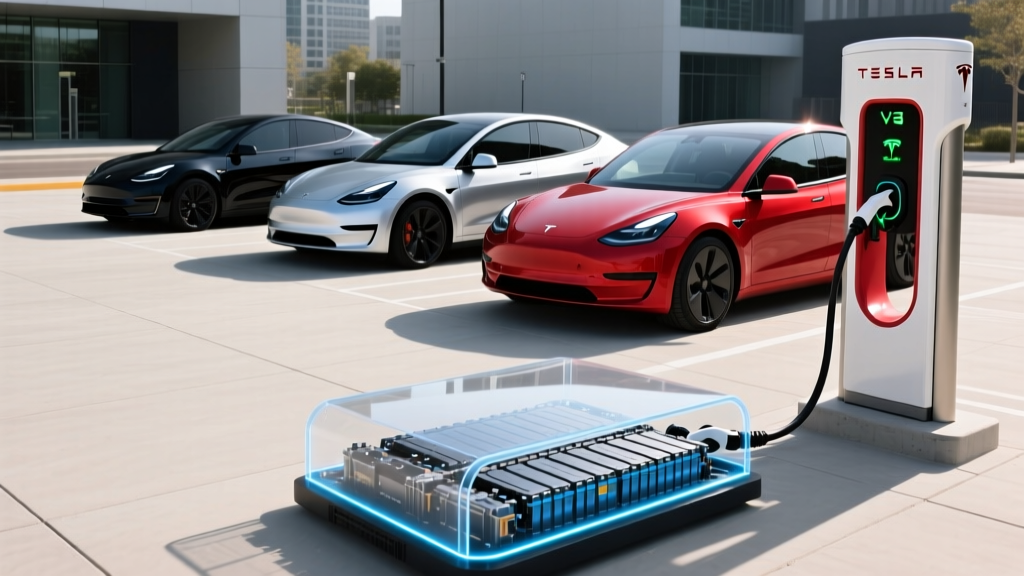
The 250 kW peak number is misleading if you read it alone. The Model Y's charge curve ramps hard from 10–30% SoC (hitting 240–250 kW if the pack is preconditioned), then tapers progressively. Expect an average of ~150 kW across the 10–80% window, which is why the real-world 27-minute figure holds up at V3 Superchargers.
Level 2 at home is where most owners actually live. A Wall Connector on a 60A circuit delivers 48A / 11.5 kW, enough to refill a depleted pack overnight. If your home panel only supports a 40A circuit (32A continuous / 7.7 kW), you'll still add ~30 mi/hr — plenty for a 40-mile commuter.
See: Tesla Home Charging
Pricing, June Lease Offers, and the Tax Credit Question
| Figure | Long Range AWD | Performance |
|---|---|---|
| Base MSRP | $48,990 | $53,990 |
| Destination | $1,390 | $1,390 |
| Typical as-tested | $51,500–$54,000 | $56,000–$60,000 |
| June 2026 lease (est.) | $499–$579/mo, 36 mo | $599–$679/mo, 36 mo |
| Due at signing | $3,000–$4,500 | $3,500–$5,000 |
| §30D purchase credit | Up to $7,500 (if eligible) | Up to $7,500 (if eligible) |
| §45W lease credit (passthrough) | Often $7,500 applied | Often $7,500 applied |
Tax credit nuance is essential here. For outright purchases, the §30D credit requires the buyer to meet income caps ($150k single / $300k joint), the vehicle to stay under the $80,000 SUV MSRP cap (Model Y qualifies), AND critical-mineral/battery-sourcing rules that change annually. Many 2026 Tesla builds still qualify for the full $7,500, but you must verify your VIN on the IRS portal before delivery.
For leases, the lessor (typically Tesla's financing arm or a partner bank) claims the §45W commercial credit and usually passes it through as a capitalized-cost reduction — effectively a $7,500 discount. This is the single biggest reason to consider leasing in June 2026: the passthrough often sidesteps the buyer income cap and sourcing strictness that apply to §30D purchases. Confirm in writing that the dealer/lender is applying the credit to your cap cost.
Sources: IRS §30D guidance, IRS §45W commercial credit.
Performance, Ride, and Daily Livability
The Long Range AWD's 4.8-second 0–60 is brisk by any SUV standard, and the dual-motor torque split makes it confident in rain and light snow. The Performance trim's 3.3 seconds is genuinely sports-sedan territory, but it costs you 30 miles of EPA range and rides firmer on the 21-inch wheels.
Interior space is a strong suit. Rear legroom measures 41.6 inches — genuinely adult-friendly — and the 30.2 cu ft behind the second row (72.0 cu ft folded) beats most competitors. The frunk adds another ~4.1 cu ft for charging cables or a soft bag.
The Juniper-refresh cabin is materially better than the pre-2025 Model Y: ventilated front seats, ambient lighting, a rear touchscreen for passengers, and improved NVH. The minimalist steering-wheel stalk removal still polarizes — turn signals on the wheel rim and gear selection via the touchscreen are learned behaviors, not intuitive ones.
Tech, Driver Assist, and What It Doesn't Do
Autopilot (basic) is standard and handles highway lane-centering and adaptive cruise competently. Enhanced Autopilot ($6,000) adds auto lane-change and navigate-on-autopilot. Full Self-Driving (Supervised) remains a Level 2 SAE system — you must keep hands on the wheel and eyes on the road at all times. It is not self-driving, and no Tesla sold to consumers is Level 3 or above.
The 15.4-inch center screen runs Tesla's latest UI, which is responsive but forces nearly every control (glovebox, mirror adjustment, wiper intensity) into menus. Apple CarPlay and Android Auto remain absent — a real drawback for buyers coming from legacy OEMs.
Ownership Costs, Warranty, and Depreciation
Tesla's basic vehicle warranty is 4 years / 50,000 miles. The battery and drive units are covered for 8 years / 120,000 miles (Long Range/Performance) with a 70% minimum capacity retention threshold. Real-world degradation data from fleet samples shows ~8–12% loss over the first 100k miles for NMC packs — well within warranty.
Insurance is a known pain point. Model Y premiums average 15–25% higher than comparable ICE SUVs due to repair-cost data. Get a quote before signing.
Depreciation is the lease-vs-buy wildcard. Three-year Model Y residuals have softened since 2023 due to price cuts and new competition. A lease transfers that residual risk to the lessor — another reason June 2026 offers can make sense if you don't plan to keep the car past 36 months.
Pros, Cons, and Who Should Lease
- Class-leading efficiency (122 MPGe LR)
- Supercharger network access (now open to rivals, but still best UX)
- Strong real-world range reconciliation
- Best-in-class cargo volume
- OTA updates continuously add features
- §45W lease credit often sidesteps buyer income caps
- No Apple CarPlay / Android Auto
- Stalkless steering wheel takes adaptation
- Insurance premiums above segment average
- FSD is Level 2, not autonomous — expensive upsell
- Ride quality on Performance 21" wheels is firm
- Increasing competition from Ioniq 5, EV6, Mach-E
Who the Model Y is best for
- Commuters (30–80 mi/day): Easily covered on one charge; home Level 2 makes it effortless.
- Young families: Cargo, safety (IIHS Top Safety Pick+), and Supercharger road-trip ease.
- Road-trippers: Supercharger density still wins for cross-country travel.
Who should look elsewhere
- Towers: 3,500-lb max tow rating is modest; consider Rivian R1S or F-150 Lightning.
- CarPlay loyalists: Hyundai Ioniq 5 or Kia EV6 integrate phone projection cleanly.
- Budget-first buyers: Chevrolet Equinox EV undercuts on price with comparable range.
Frequently Asked Questions
What is the real-world range of the 2026 Tesla Model Y?
Expect 265–280 miles on the highway at 70 mph, 295–310 in mixed city driving, and 210–240 in cold-weather highway conditions. The 315-mile EPA figure is achievable in mild temps at moderate speeds.
How fast does the Model Y charge at home and on DC?
On a Level 2 Wall Connector (11.5 kW), it adds ~44 miles per hour and fully charges overnight. On a V3/V4 Supercharger, 10–80% takes about 27 minutes, though the curve tapers hard above 80%.
Does the Model Y qualify for the $7,500 federal tax credit?
For purchases, yes — if you meet IRS §30D income caps, the MSRP is under $80,000 (it is), and the battery meets critical-mineral sourcing rules for 2026. For leases, the §45W commercial credit is usually passed through as a cap-cost reduction, often bypassing buyer income limits. Verify on the IRS portal before signing.
Is leasing the Model Y in June 2026 better than buying?
Leasing wins if you want to (a) capture the §45W credit regardless of income, (b) avoid residual-risk in a softening segment, and (c) upgrade in 36 months. Buying wins if you drive under 12k miles/year, plan to keep the car 5+ years, and qualify for §30D.
How does the Model Y compare to the Ioniq 5 and Mach-E?
The Ioniq 5 charges faster (800V architecture, 10–80% in ~18 min) and has CarPlay. The Mach-E rides more comfortably and feels more traditional. The Model Y wins on efficiency, cargo volume, and Supercharger UX. All three are competitive — test-drive back-to-back.
What's the biggest mistake Model Y lease shoppers make?
Not confirming the §45W credit is applied to the cap cost in writing, and not getting an insurance quote before signing. Both can swing your effective monthly cost by $100+.