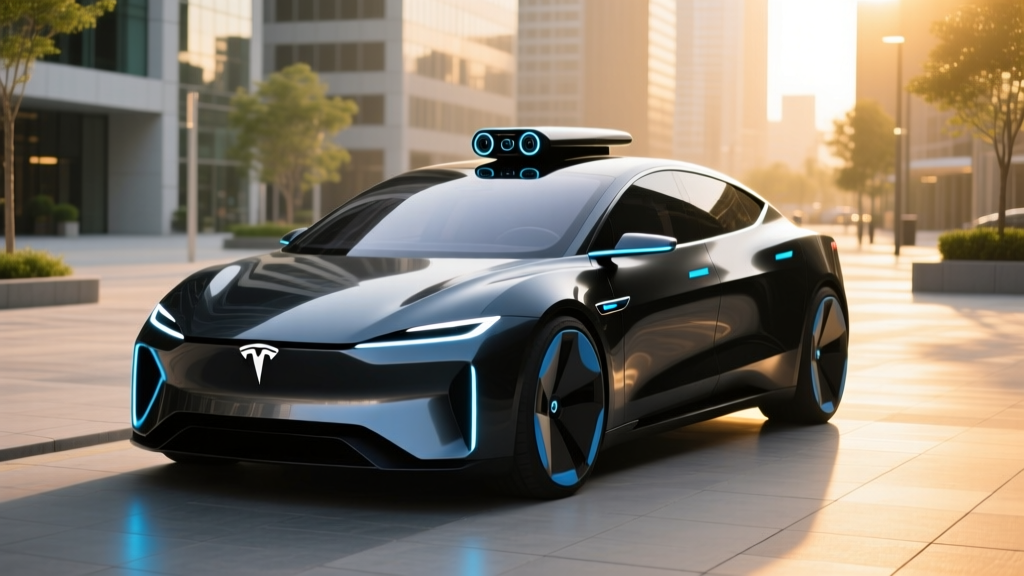
The Tesla Model Y remains the benchmark compact electric SUV for buyers who prioritize cargo versatility and a tech-forward cabin. But beyond the headline range and Supercharger network, how does the Tesla interior back seat actually perform for adults, car seats, and long road trips? This review dissects the Model Y's passenger space, real-world efficiency, charging speed, and ownership costs with the exact numbers buyers need before signing a purchase agreement.
Quick Verdict: Who the Model Y Interior Back Seat Serves Best
The Model Y's second row is genuinely usable for adults on trips under two hours, with 41.6 inches of rear legroom — competitive with the Hyundai Ioniq 5 and slightly ahead of the Ford Mustang Mach-E. However, the low cushion height and firm padding draw complaints on longer drives. Families with rear-facing car seats will find the 41.6-inch legroom generous, but the fixed panoramic glass roof limits headroom adjustability. For commuters and road-trippers who value cargo volume (76.2 cu ft max) and DC fast-charging speed, the Model Y still leads the segment.
Range, Efficiency, and Real-World Expectations
Real-World Expectation: Expect 250–275 miles on highway-heavy trips at 70+ mph. Cold-weather (below 32°F) can reduce range by 20–30%, bringing effective highway range to 190–220 miles in winter conditions. City driving with regenerative braking often exceeds EPA estimates.
The Long Range AWD model pairs an estimated 75 kWh usable battery (NMC chemistry, cathode confirmed by Tesla battery documentation) with industry-leading efficiency. The EPA rates it at 122 MPGe combined, or roughly 27 kWh per 100 miles — among the best in the electric SUV segment. The Performance trim sacrifices 30 miles of range for a 0-60 mph time of 3.5 seconds.
| Spec | Long Range AWD | Performance AWD |
|---|---|---|
| EPA Range | 310 miles | 280 miles |
| Battery (usable) | ~75 kWh (NMC) | ~75 kWh (NMC) |
| 0-60 mph | 4.8 seconds | 3.5 seconds |
| Horsepower | 384 hp | 456 hp |
| Drivetrain | Dual-Motor AWD | Dual-Motor AWD |
| Efficiency (MPGe) | 122 combined | 111 combined |
| Cargo (rear seats up) | 30.2 cu ft | 30.2 cu ft |
| Cargo (rear seats folded) | 76.2 cu ft | 76.2 cu ft |
| Rear Legroom | 41.6 in | 41.6 in |
| Base MSRP | $47,990 | $52,990 |
Charging Speed: DC Fast, Level 2, and the Supercharger Advantage
Charging speed is where the Model Y justifies its premium. On a V3 or V4 Tesla Supercharger, the Long Range AWD peaks at 250 kW, adding up to 200 miles in 15 minutes under optimal conditions (battery preconditioned, state of charge below 30%).
| Charging Level | Power / Rate | Time / Miles Added |
|---|---|---|
| DC Fast (Supercharger V3/V4) | Peak 250 kW | 10–80% in ~22 minutes |
| DC Fast (CCS adapter, third-party) | Peak 250 kW | 10–80% in ~22–25 minutes |
| Level 2 (Tesla Wall Connector, 48A) | 11.5 kW | ~44 miles per hour |
| Level 2 (public, 7.2 kW) | 7.2 kW | ~27 miles per hour |
| Level 1 (120V household) | ~1.4 kW | ~3–5 miles per hour |
The charge curve tapers sharply above 80% state of charge — expect the final 20% to take as long as the first 60%. For road trips, plan stops around the 10–80% window to minimize time plugged in. The Model Y ships with the NACS (North American Charging Standard) connector natively, granting access to 60,000+ Tesla Superchargers globally. A CCS adapter (sold separately, ~$250) unlocks Electrify America, EVgo, and other networks.
Interior, Back Seat Comfort, and Cargo Practicality
The Tesla interior back seat is a study in minimalism. Rear passengers get a single central touchscreen (no dedicated climate controls), two USB-C ports, and a flat floor thanks to the dedicated EV platform. The 41.6 inches of legroom is class-competitive, but the seat cushion sits low — taller adults (6'+) will notice their knees angled upward on longer drives. The panoramic glass roof floods the cabin with light but reduces headroom adjustability; the fixed roof cannot be optioned with a traditional headliner.
Cargo volume leads the segment: 30.2 cubic feet behind the second row, expanding to 76.2 cubic feet with seats folded. The front trunk (frunk) adds 4.1 cubic feet — enough for a charging cable bag and small groceries. For comparison, the Hyundai Ioniq 5 offers 27.2 cu ft / 59.3 cu ft, and the Ford Mustang Mach-E delivers 29.7 cu ft / 59.7 cu ft.
Notable drawbacks: the Model Y lacks ventilated rear seats, rear USB-A ports, and physical buttons for climate or audio — everything routes through the 15.4-inch center touchscreen, which can frustrate passengers who want quick adjustments. Build quality has improved significantly since 2023, but some owners still report panel-gap inconsistencies.
Pricing, Trim Levels, and Federal Tax Credit Eligibility
The 2026 Tesla Model Y is offered in two trims. Both qualify for the full $7,500 federal EV tax credit under IRS §30D, provided the buyer meets income and sourcing requirements. The credit can now be transferred to the dealer at point of sale, reducing the effective purchase price immediately.
| Trim | Base MSRP | Federal Credit (§30D) | Effective Price |
|---|---|---|---|
| Long Range AWD | $47,990 | $7,500 | ~$40,490 |
| Performance AWD | $52,990 | $7,500 | ~$45,490 |
- MSRP Cap: SUVs must be ≤$80,000 (Model Y qualifies at all trims).
- Income Cap: Modified AGI ≤$150,000 (single), ≤$225,000 (head of household), ≤$300,000 (joint). Exceed these and the credit phases out.
- Battery Sourcing: ≥80% critical minerals from U.S. or FTA partners; ≥100% battery components manufactured in North America (phased thresholds per IRS guidance).
- Point-of-Sale Transfer: Buyers can assign the credit to the dealer, reducing the down payment by $7,500 at signing.
As-tested pricing typically lands between $49,000–$55,000 after destination fees, paint upgrades ($1,500–$2,500), and Full Self-Driving (Supervised) capability ($8,000 or $99/month). FSD is a Level 2 driver-assist system — the driver must remain engaged at all times — and is not required to access Autopilot, which comes standard.
Warranty, Battery Longevity, and Ownership Costs
Tesla covers the Model Y's battery and drive units for 8 years or 120,000 miles (whichever comes first), with a capacity retention threshold of 70%. The basic vehicle limited warranty is 4 years / 50,000 miles. Real-world degradation data from Tesla's Impact Reports shows the average Model Y battery retains ~88% capacity after 150,000 miles — well within the warranty threshold.
Insurance premiums run 15–25% higher than comparable gas SUVs due to repair costs and parts pricing. Home charging at $0.13/kWh costs roughly $9.75 to fully charge the 75 kWh battery, or ~$0.04 per mile — a fraction of gasoline at $3.50/gallon and 25 MPG combined.
Pros, Cons, and How It Compares to Rivals
- Class-leading 76.2 cu ft cargo volume and 310-mile EPA range
- 250 kW DC fast charging with access to 60,000+ Superchargers
- Genuine adult-usable rear legroom (41.6 in) and flat floor
- Strong efficiency (122 MPGe) keeps charging costs low
- Full $7,500 federal tax credit eligibility at point of sale
- Low rear seat cushion and firm padding reduce long-trip comfort
- No rear climate controls or physical buttons — all touchscreen
- FSD ($8,000) is Level 2 only, not autonomous
- Insurance premiums 15–25% higher than gas rivals
- Fixed glass roof limits headroom adjustability
Against the Hyundai Ioniq 5 (EPA 303 mi, 350 kW charging, $45,500 base), the Model Y wins on cargo volume and Supercharger access but trails on rear-seat comfort and 800V charging architecture. The Ford Mustang Mach-E (EPA 320 mi Extended Range, $42,995 base) undercuts on price and offers a more traditional interior layout with physical buttons, but its public charging network reliability lags Tesla's. For buyers who road-trip frequently and value charging infrastructure, the Model Y's network advantage is decisive.
Frequently Asked Questions
What is the real-world range of the Tesla Model Y?
The EPA rates the Long Range AWD at 310 miles. In real-world highway driving at 70+ mph, expect 250–275 miles. Cold weather (below 32°F) can reduce range by 20–30%, bringing effective winter highway range to 190–220 miles. City driving with regenerative braking often exceeds EPA estimates.
How fast does the Model Y charge at home and on the road?
On a 250 kW Tesla Supercharger, the Model Y charges from 10–80% in ~22 minutes. At home on a Tesla Wall Connector (11.5 kW, 48A), it adds ~44 miles per hour, fully charging overnight in 7–8 hours. Level 1 (120V) adds only 3–5 miles per hour and is best for topping off.
How much does the Model Y cost after the federal tax credit?
The Long Range AWD starts at $47,990 MSRP. With the full $7,500 §30D credit applied at point of sale, the effective price is ~$40,490 before destination fees or upgrades. Eligibility requires meeting IRS income caps (≤$300,000 joint AGI) and battery sourcing rules.
Is the Model Y worth buying vs. the Ioniq 5 or Mach-E?
Choose the Model Y if Supercharger access, cargo volume (76.2 cu ft), and proven efficiency (122 MPGe) are priorities. Choose the Ioniq 5 for 350 kW charging speed and a more comfortable rear seat. Choose the Mach-E for a lower entry price and traditional interior controls.
Does the Tesla Model Y qualify for the full $7,500 federal EV tax credit?
Yes, both trims qualify for the full $7,500 credit under IRS §30D, provided the buyer's modified AGI is within limits (≤$300,000 joint) and the vehicle's battery meets critical-mineral and component-sourcing thresholds. The credit can be transferred to the dealer at point of sale, reducing the purchase price immediately. Confirm eligibility with a tax professional and the latest IRS guidance.
Is the Model Y's back seat comfortable for adults on long trips?
The 41.6 inches of rear legroom is competitive, but the low seat cushion and firm padding draw complaints on drives over two hours. Taller adults (6'+) will notice knees angled upward. For shorter commutes and city driving, the back seat is perfectly adequate. Families with rear-facing car seats will appreciate the generous legroom.