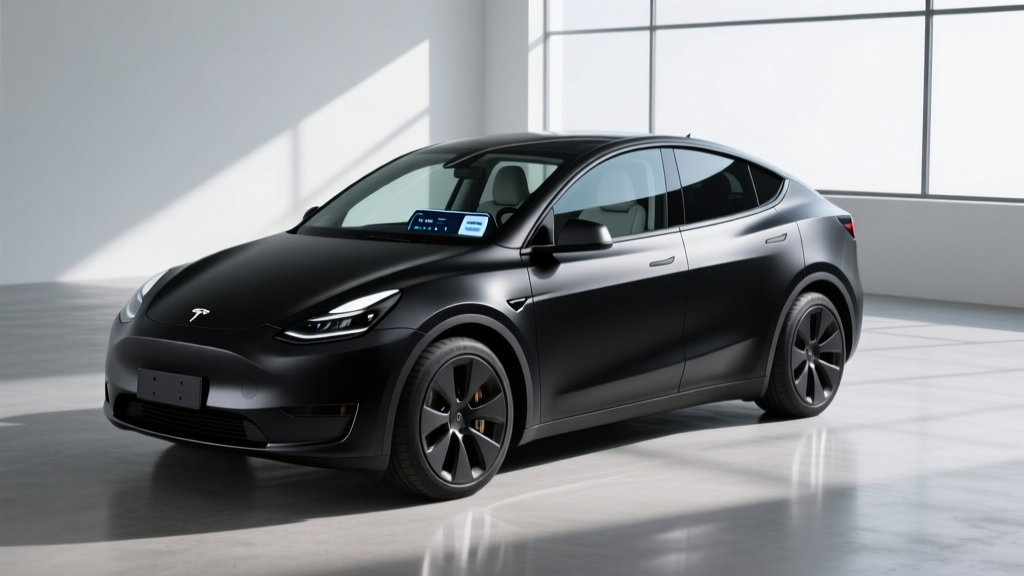
Why Tesla Insurance Costs More (and What You Can Do About It)
If you've searched "how much is insurance for a Tesla" you've probably seen sticker shock. Tesla vehicles consistently rank among the most expensive mainstream EVs to insure, and the Model Y — America's best-selling EV — is no exception. The average Tesla Model Y insurance premium in 2026 sits between $2,400 and $3,600 per year depending on trim, driver profile, location, and coverage level. That's roughly 40–65% higher than the national average for compact SUVs.
But insurance is just one line in the total cost of ownership equation. This review breaks down the 2026 Tesla Model Y's full financial picture — premiums, purchase price, federal tax credits, charging costs, and how it stacks up against rivals like the Hyundai Ioniq 5 and Ford Mustang Mach-E. We'll also cover the specs that matter: real-world range, DC fast-charging speed, battery chemistry, and whether the numbers justify the insurance premium.
2026 Tesla Model Y Insurance: What You'll Actually Pay
Tesla's insurance costs stem from three structural factors: high repair costs (unibody aluminum and high-voltage components), expensive replacement parts (integrated sensor arrays, large glass roof panels), and the vehicle's strong acceleration profile, which correlates with higher collision frequency in actuarial models.
Average Annual Premiums by Trim (2026 Estimates)
| Trim | MSRP | Avg. Annual Premium | Monthly Estimate |
|---|---|---|---|
| Model Y Long Range RWD | $44,990 | $2,400–$2,900 | $200–$242 |
| Model Y Long Range AWD | $47,990 | $2,600–$3,100 | $217–$258 |
| Model Y Performance | $51,490 | $3,000–$3,600 | $250–$300 |
Sources: Aggregated from State Farm, GEICO, Progressive quoted averages for a 35-year-old driver with clean record, garaged in a major metro area. Your rate will vary by ZIP code, driving history, and deductible choice.
Tesla's Own Insurance Product
Tesla offers its own insurance in most U.S. states, priced dynamically based on a real-time Safety Score derived from your driving behavior. For careful drivers, Tesla Insurance can undercut traditional carriers by 10–20%. For aggressive drivers, it can cost more. The Safety Score tracks hard braking, rapid acceleration, aggressive turning, and Autopilot disengagement frequency. If you're a low-mileage commuter who drives conservatively, this is worth quoting alongside traditional options.
Specs That Matter: Range, Battery, and Efficiency
Insurance costs aside, the Model Y's core value proposition rests on range, efficiency, and charging infrastructure access. Here's what the 2026 lineup delivers.
| Spec | Long Range RWD | Long Range AWD | Performance |
|---|---|---|---|
| EPA Range | 320 mi | 308 mi | 293 mi |
| Battery (usable) | ~75 kWh, NMC | ~75 kWh, NMC | ~75 kWh, NMC |
| MPGe (combined) | 123 MPGe | 119 MPGe | 115 MPGe |
| kWh/100 mi | 27 | 28 | 29 |
| 0–60 mph | 5.8 sec | 4.8 sec | 3.5 sec |
| Horsepower | 346 hp | 384 hp | 456 hp |
| Drivetrain | RWD (single motor) | AWD (dual motor) | AWD (dual motor) |
| Base MSRP | $44,990 | $47,990 | $51,490 |
The EPA rates the Long Range RWD at 320 miles. In real-world highway driving at 70–75 mph with climate control on, expect 250–275 miles before needing a charge stop. In cold weather (below 30°F), lithium-ion chemistry loses efficiency and cabin heating draws significant power — plan for 210–240 miles of usable range. City driving with frequent regenerative braking opportunities gets you closer to the EPA sticker, often 300+ miles. Always plan road trips around 200–220 miles between DC fast-charger stops to maintain a comfortable buffer.
All 2026 Model Y trims use NMC (nickel manganese cobalt) battery chemistry, which offers higher energy density than LFP (lithium iron phosphate) but is more sensitive to sustained 100% state-of-charge storage. Tesla recommends daily charging to 80–90% for NMC packs and 100% only before long trips. This is a meaningful ownership nuance: if you want a battery you can routinely charge to full without degradation concern, an LFP-equipped vehicle (like the base Model 3 RWD or some competitors) may suit you better.
Charging Speed: DC Fast, Level 2, and the Supercharger Advantage
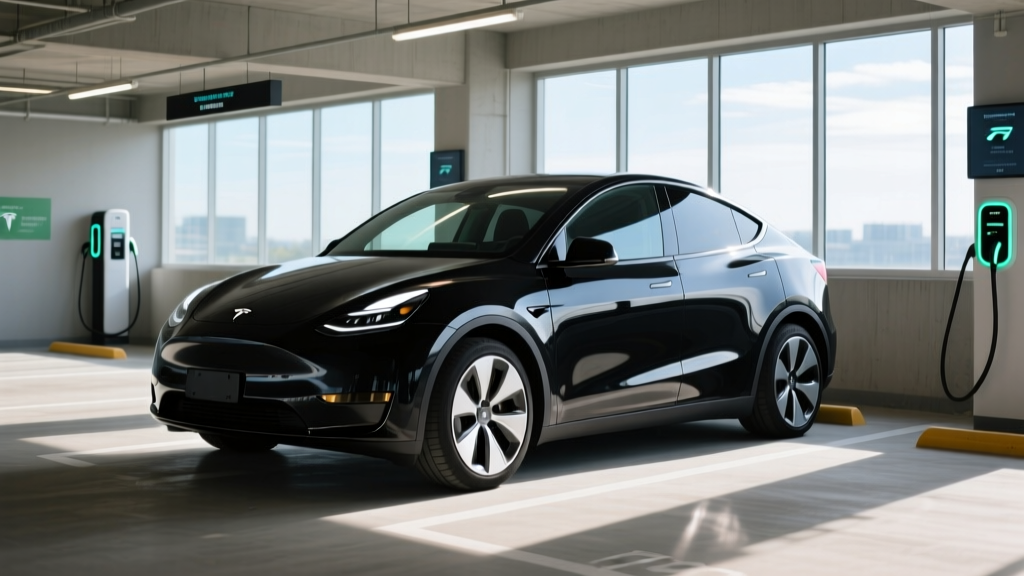
Charging speed is where the Model Y's Tesla ecosystem advantage shows clearly. Access to the Supercharger network — now the most reliable and widespread DC fast-charging network in the U.S. — is a significant practical benefit that competitors still can't fully match, even after the NACS connector opening.
| Charging Level | Power / Rate | Time or Miles Added |
|---|---|---|
| Level 1 (120V household) | ~1.2 kW | ~3–4 mi/hr |
| Level 2 (240V home, 48A) | 11.5 kW | ~37 mi/hr, full charge in ~8 hrs |
| DC Fast Charge (V3 Supercharger) | Peak 250 kW | 10–80% in ~22 min |
| DC Fast Charge (V4 Supercharger) | Peak 250+ kW | 10–80% in ~20 min (varies by station) |
A critical nuance: the 250 kW peak rate is not sustained across the full charging session. The Model Y's charge curve tapers significantly above 60% state-of-charge. You'll see 200–250 kW between 10–40% SoC, dropping to ~100 kW by 60%, and ~50 kW by 80%. This is why the 10–80% metric matters more than peak kW — and why Tesla's ~22-minute 10–80% time is competitive but not class-leading. The Hyundai Ioniq 5, with its 800V architecture, can hit 10–80% in roughly 18 minutes at a 350 kW charger.
Home charging setup: Tesla's Wall Connector ($475) delivers up to 48 amps (11.5 kW) on a 60-amp circuit. Professional installation by a licensed electrician typically runs $500–$2,000 depending on panel proximity and whether your home needs a service upgrade from 100A to 200A. Budget $1,000–$2,500 total for a complete Level 2 home charging installation. Always get a quote from a licensed electrician before purchasing equipment.
Pricing, Tax Credits, and the Real Bottom Line
The 2026 Model Y's pricing positions it as a premium compact SUV, but federal and state incentives can meaningfully reduce the effective cost.
| Trim | MSRP | §30D Federal Credit | Effective Price (if eligible) |
|---|---|---|---|
| Long Range RWD | $44,990 | Up to $7,500 | ~$37,490 |
| Long Range AWD | $47,990 | Up to $7,500 | ~$40,490 |
| Performance | $51,490 | Up to $7,500 | ~$43,990 |
- MSRP cap: SUVs must be under $80,000 — all Model Y trims qualify.
- Income cap: Modified AGI must not exceed $150,000 (single), $225,000 (head of household), or $300,000 (joint). Check IRS §30D guidelines for current-year limits.
- Battery sourcing: The full $7,500 credit requires meeting both critical-mineral and battery-component sourcing thresholds. Tesla's U.S. battery assembly and supply chain have largely satisfied these requirements for the Model Y, but always verify on fueleconomy.gov before purchasing.
- Point-of-sale transfer: As of 2024, you can transfer the credit to the dealer at purchase, reducing your out-of-pocket cost immediately rather than waiting for tax filing.
Consult a tax professional to confirm your personal eligibility. Credit rules are subject to change.
Interior, Cargo, Tech, and Daily Livability
The Model Y's cabin is minimalist by design — some say too minimalist. Virtually all vehicle controls are routed through the 15.4-inch center touchscreen, including climate, mirrors, and glovebox release. There is no traditional instrument cluster; a slim secondary screen for rear passengers handles their climate and entertainment.
Dimensions and Space
- Cargo (rear seats up): 30.2 cu ft
- Cargo (rear seats folded): 72.1 cu ft
- Front trunk (frunk): 4.1 cu ft
- Rear legroom: 41.6 inches
- Front headroom: 41.0 inches
- Seating: 5 passengers standard; optional 7-seat layout (third row is best suited for small children only)
Standout Tech
- Autopilot (standard): SAE Level 2 driver-assist with adaptive cruise, lane-centering, and automatic emergency braking. Requires active driver supervision at all times — this is not self-driving.
- FSD Supervised (optional, ~$8,000 or $99/mo): Adds automatic lane changes, intersection navigation, and parking assist. Still Level 2 — hands on wheel, eyes on road.
- Over-the-air updates: Tesla regularly pushes software updates that add features, refine efficiency, and update the UI.
- Sentry Mode / Dashcam: Integrated camera recording when parked or driving, no extra hardware needed.
- Supercharger network: 50,000+ stalls globally; industry-leading uptime and plug-and-charge simplicity.
Notable Drawbacks
- No physical buttons for climate or volume — everything is screen-dependent.
- Ride quality on 20-inch wheels can be firm on rough pavement.
- Rear visibility is limited by the sloping roofline; the camera-based mirror helps but takes adjustment.
- Panel gap consistency has improved but still draws scrutiny vs. legacy automakers.
Pros and Cons: The Honest Verdict
✅ Pros
- Best-in-class Supercharger network access
- Strong real-world efficiency (27–29 kWh/100 mi)
- Spacious cargo area with flat floor
- OTA updates keep the car improving post-purchase
- Eligible for full $7,500 federal tax credit (verify sourcing)
- Strong resale value relative to EV segment
❌ Cons
- Insurance premiums 40–65% above segment average
- Touchscreen-only controls frustrate some drivers
- NMC battery needs 80–90% daily charge limit
- FSD Supervised costs $8,000 and remains Level 2
- DC fast-charging speed trails 800V competitors
- Firm ride on larger wheel options
Is the Model Y Worth It vs. Key Competitors?
For buyers weighing the insurance premium against total ownership cost, here's how the Model Y compares to its two closest rivals.
| Attribute | Tesla Model Y LR AWD | Hyundai Ioniq 5 SEL AWD | Ford Mustang Mach-E Premium AWD |
|---|---|---|---|
| EPA Range | 308 mi | 290 mi | 290 mi |
| Battery | 75 kWh NMC | 77.4 kWh NMC | 91 kWh NMC (ext. range) |
| DC Fast 10–80% | ~22 min (250 kW peak) | ~18 min (350 kW peak, 800V) | ~30 min (150 kW peak) |
| 0–60 mph | 4.8 sec | 5.1 sec | 5.1 sec |
| Base MSRP (AWD) | $47,990 | $49,600 | $48,995 |
| §30D Credit Eligible | Yes (verify) | Partial / varies by build | Yes (verify) |
| Avg. Insurance/yr | $2,600–$3,100 | $1,900–$2,400 | $2,100–$2,600 |
| Charging Network | Supercharger (native) | NACS adapter / CCS | NACS adapter / CCS |
Decision Framework
Choose the Tesla Model Y if: You value the Supercharger network's reliability, want the best OTA software experience, and can secure a competitive insurance quote (check Tesla Insurance and at least two traditional carriers). The tax credit and strong resale help offset the insurance premium over a 5-year hold.
Choose the Hyundai Ioniq 5 if: Faster DC charging (18-min 10–80%) matters for your road-trip habits, you prefer physical buttons, and you want lower insurance premiums. The 800V architecture is a genuine technical advantage at 350 kW stations.
Choose the Ford Mustang Mach-E if: You want a more traditional SUV feel, prefer Ford's dealer service network, and value BlueCruise for hands-free highway driving on mapped routes.
Warranty and Long-Term Battery Outlook
Tesla covers the Model Y with:
- Basic vehicle warranty: 4 years / 50,000 miles
- Battery & drive unit warranty: 8 years / 120,000 miles (Long Range & Performance), with a guaranteed minimum 70% capacity retention over the warranty period
The 70% retention threshold is industry-standard. Real-world data from high-mileage Tesla owners suggests NMC packs typically retain 85–90% capacity at 100,000 miles when charged responsibly (avoiding prolonged 100% SoC storage). Battery replacement outside warranty is expensive — $12,000–$16,000 for a Model Y pack — but catastrophic failures before 150,000 miles are statistically rare according to Tesla's own Impact Report data.
5-Year Total Cost of Ownership: Insurance in Context
| Cost Category | Model Y LR AWD (5-Year Estimate) |
|---|---|
| Purchase price (after $7,500 credit) | $40,490 |
| Insurance (avg. $2,850/yr × 5) | $14,250 |
| Electricity (15,000 mi/yr × $0.14/kWh avg) | $5,880 |
| Maintenance (tires, cabin filter, wiper fluid) | $2,500 |
| Estimated depreciation (40% over 5 yrs) | –$16,196 |
| Net 5-Year Cost | ~$46,924 |
Insurance is the second-largest ownership cost after depreciation — exceeding electricity costs by more than 2×. This is why shopping your insurance quote before purchasing is essential. Get quotes from at least three carriers plus Tesla Insurance, and factor the actual premium into your budget, not the segment average.
Frequently Asked Questions
How much is insurance for a Tesla Model Y compared to a gas SUV?
The average Model Y premium ($2,400–$3,600/yr) is 40–65% higher than a comparable gas SUV like the Toyota RAV4 ($1,500–$2,000/yr). Higher repair costs, expensive parts, and performance profiles drive the difference. However, the Model Y's lower fuel and maintenance costs partially offset this gap over time.
Does Tesla Insurance actually save money?
For careful drivers with low mileage, Tesla's real-time Safety Score insurance can save 10–20% versus traditional carriers. For aggressive drivers or those in high-rate ZIP codes, it may cost more. Always get a Tesla Insurance quote alongside at least two traditional carriers before deciding.
Does the Model Y qualify for the $7,500 federal tax credit?
All 2026 Model Y trims fall under the $80,000 SUV MSRP cap. Eligibility for the full $7,500 depends on your income (under $150K single / $300K joint), battery sourcing compliance, and purchasing from an authorized dealer. Verify current eligibility on fueleconomy.gov and consult a tax professional.
What is the real-world range of the Tesla Model Y?
The EPA rates the Long Range AWD at 308 miles. Expect 250–275 miles in real-world highway driving and 210–240 miles in freezing temperatures. City driving with regen braking can approach or slightly exceed the EPA number.
Is the Model Y worth buying over the Hyundai Ioniq 5 or Ford Mach-E?
The Model Y wins on Supercharger access, efficiency, software, and cargo space. The Ioniq 5 wins on DC fast-charging speed and lower insurance. The Mach-E wins on ride comfort and dealer service network. Your priority ranking among these factors should drive the decision.
How fast does the Model Y charge at home?
On a 240V Level 2 Tesla Wall Connector (48A / 11.5 kW), the Model Y adds roughly 37 miles of range per hour, going from empty to full in about 8 hours. This is ideal for overnight charging — plug in when you get home, wake up to a full battery every morning.