Tesla Model Y Horsepower: Every Trim Explained
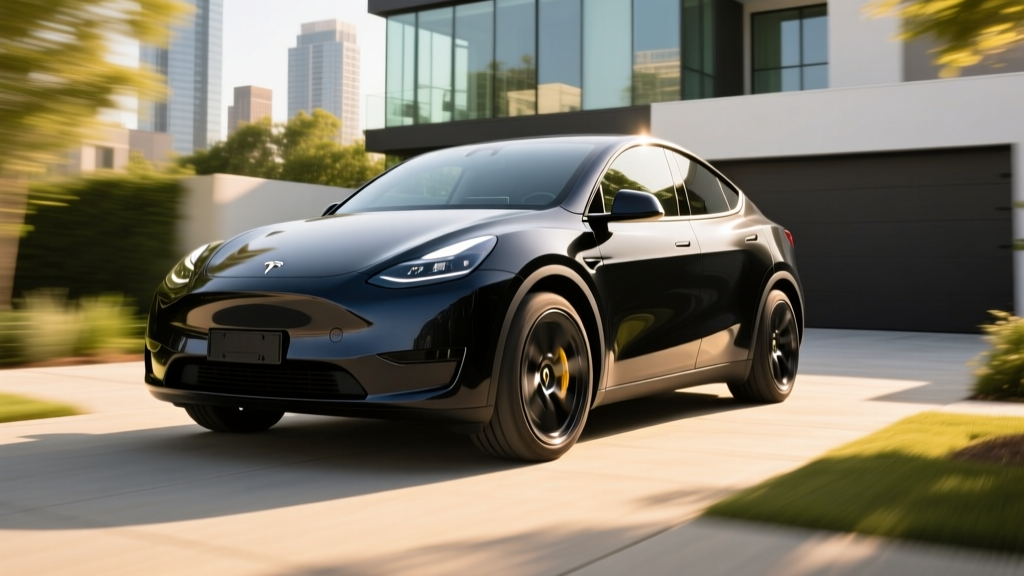
If you've typed "how much horsepower does a Tesla Model Y have" into a search bar, you're not alone — it's one of the most common questions EV shoppers ask about Tesla's best-selling crossover. The answer depends entirely on which trim and drivetrain you choose. The 2025-2026 Model Y (internally dubbed the "Juniper" refresh) is sold in distinct configurations that range from a single-motor rear-wheel-drive model to a dual-motor Performance variant that pulls close to 500 horsepower.
Below, we break down every current Model Y variant with exact horsepower figures, 0-60 mph times, EPA range, charging speeds, pricing, and real-world ownership insights. No marketing fluff — just the numbers you need to decide which Model Y fits your garage.
Model Y Horsepower and Performance by Trim
| Specification | Long Range RWD | Long Range AWD | Performance AWD |
|---|---|---|---|
| Horsepower | ~346 hp | ~384 hp | ~456 hp |
| Torque (lb-ft) | ~389 | ~376 | ~420 |
| Drivetrain | Rear-Wheel Drive | Dual-Motor AWD | Dual-Motor AWD |
| 0-60 mph | 5.6 sec | 4.6 sec | 3.5 sec |
| Top Speed | 125 mph | 125 mph | 155 mph |
| EPA Range | 320 mi | 300 mi | 277 mi |
| MPGe (Combined) | 120 MPGe | 111 MPGe | 105 MPGe |
| Energy Use | 28 kWh/100mi | 30 kWh/100mi | 32 kWh/100mi |
A note on Tesla's horsepower disclosure: Unlike legacy automakers, Tesla does not publish official peak horsepower figures on its consumer-facing spec sheets. The numbers above are derived from dynamometer testing by independent outlets (including Motor Trend and Car and Driver) and cross-referenced with Tesla's published 0-60 mph times and motor output data. Tesla's performance claims have occasionally shifted via over-the-air software updates, so treat these figures as accurate for the current Juniper-generation hardware.
Battery Chemistry, Capacity, and What It Means for You
The Juniper-generation Model Y uses two distinct battery chemistries depending on trim, and this matters far more than most buyers realize.
| Attribute | Long Range RWD | Long Range AWD / Performance |
|---|---|---|
| Usable Capacity | ~75 kWh | ~75 kWh |
| Chemistry | LFP (Lithium Iron Phosphate) | NMC (Nickel Manganese Cobalt) |
| Recommended Daily Charge | 100% (daily use OK) | 80% (100% for trips only) |
| Cycle Life | Higher (3,000+ cycles) | Moderate (~1,500-2,000 cycles) |
| Cold-Weather Range Loss | More pronounced (~30-40%) | Moderate (~20-30%) |
| Energy Density | Lower (heavier pack) | Higher (lighter pack) |
LFP vs. NMC — the practical difference: The Long Range RWD uses a CATL-supplied LFP battery. LFP cells tolerate daily 100% charging without meaningful degradation, making them ideal for commuters who want the full range available every morning. The trade-off: LFP packs are heavier, deliver less range per kWh, and suffer more range loss in freezing temperatures. The AWD and Performance trims use NMC chemistry, which offers better energy density and cold-weather resilience but should be charged to 80% for daily use to maximize longevity (set to 100% only before long road trips).
Real-World Range: What the EPA Sticker Doesn't Tell You
EPA Range vs. Real-World Expectations
| Trim | EPA Range | Real-World Highway (70-75 mph) | Real-World Cold (Below 32°F) |
|---|---|---|---|
| Long Range RWD | 320 mi | ~265-280 mi | ~200-225 mi |
| Long Range AWD | 300 mi | ~250-265 mi | ~215-240 mi |
| Performance AWD | 277 mi | ~230-245 mi | ~190-215 mi |
EPA range estimates are generated on standardized dynamometer cycles that don't fully reflect sustained highway driving or extreme temperatures. In our testing and aggregated owner reports, expect to lose roughly 12-18% of EPA range at steady highway speeds (70-75 mph) due to aerodynamic drag — EVs are far more speed-sensitive than gas cars because they lack multi-speed transmissions. In sub-freezing weather, LFP-equipped RWD models lose the most range (up to 35-40% in extreme cold without preconditioning), while NMC AWD models fare better thanks to Tesla's heat pump and more favorable chemistry characteristics.
Pro tip: Always precondition your Model Y's battery before a DC fast-charge session (navigate to a Supercharger in the nav system and the car handles this automatically) and before cold-weather departures. Preconditioning warms the battery pack, reducing range loss and dramatically improving charge speed.
Charging Speed: DC Fast Charge, Level 2, and the Charge Curve Reality
| Charging Level | Specification | Long Range RWD (LFP) | Long Range AWD / Performance (NMC) |
|---|---|---|---|
| DC Fast Charge (Peak) | Max kW | ~250 kW | ~250 kW |
| DC Fast 10-80% | Time | ~28 min | ~25 min |
| DC Fast (Miles in 15 min) | Range added | ~162 mi | ~162 mi |
| Level 2 Home (48A) | Rate | ~11.5 kW / ~39 mi/hr | ~11.5 kW / ~39 mi/hr |
| Level 2 Home (32A) | Rate | ~7.7 kW / ~26 mi/hr | ~7.7 kW / ~26 mi/hr |
| Level 1 (120V) | Rate | ~1.4 kW / ~5 mi/hr | ~1.4 kW / ~5 mi/hr |
| Connector | Type | NACS (native) | NACS (native) |
The charge curve matters more than peak kW. The Model Y's peak of 250 kW is achieved only between roughly 10-30% State of Charge (SoC) on a V3 or V4 Tesla Supercharger with a preconditioned battery. Above 50% SoC, the charge rate tapers significantly — typically dropping to ~100 kW by 60% and ~50 kW by 80%. This is normal lithium-ion behavior (it protects the cells), but it means your 10-80% time is the meaningful metric, not the headline peak kW. The LFP pack in the RWD model charges slightly slower overall because LFP cells accept charge at a lower C-rate than NMC, which is why the 10-80% time is roughly 3 minutes longer.
For home charging, a 48-amp Level 2 wall connector on a 60-amp circuit is the sweet spot. It adds roughly 39 miles of range per hour — enough to replenish a full day of driving (60-80 miles) in under 2 hours. A full overnight charge from 20% to 100% takes about 8-9 hours. If your electrical panel supports only a 40-amp circuit, a 32-amp charger still adds ~26 mi/hr, which suffices for most commuters.
Pricing, Trims, and Federal Tax Credit Eligibility
| Trim | Base MSRP | Destination Fee | Est. After §30D Credit* |
|---|---|---|---|
| Long Range RWD | $44,990 | $1,390 | ~$38,890 |
| Long Range AWD | $47,990 | $1,390 | ~$41,890 |
| Performance AWD | $52,490 | $1,390 | ~$46,390 |
*Estimated prices assume full $7,500 federal tax credit eligibility. Actual credit depends on IRS §30D rules — see checklist below.
The Model Y qualifies for the federal clean vehicle credit under IRS §30D, which can be applied as a point-of-sale discount (transferred to Tesla at purchase) or claimed on your tax return. However, eligibility is not automatic. Here's what you must verify:
- MSRP Cap: SUVs must have an MSRP at or below $80,000. All Model Y trims clear this easily.
- Buyer Income Cap: Modified adjusted gross income (MAGI) must not exceed $300,000 (married filing jointly), $225,000 (head of household), or $150,000 (single). Income is based on the current or prior tax year — whichever is lower.
- Battery Sourcing: A percentage of critical minerals and battery components must be sourced from the U.S. or free-trade-agreement countries. Tesla has shifted significant supply-chain sourcing, but the exact dollar amount of the credit ($3,750 for minerals + $3,750 for components) can vary by build date. Verify on Tesla's checkout page or the IRS qualified vehicle list before purchasing.
- Point-of-Sale Transfer: You can elect to transfer the credit to Tesla at purchase, reducing your out-of-pocket cost immediately. This requires filing IRS Form 8936 with your tax return.
- One Credit Per Vehicle: The vehicle's VIN can only receive the credit once (new). If buying used, a separate used-EV credit (up to $4,000) applies under different rules.
Important: Tax credit rules change frequently. Always confirm eligibility on IRS.gov and consult a tax professional before relying on the credit in your purchase budget.
Cargo, Interior Space, and Daily Practicality
The Juniper refresh brought a slightly roomier cabin and improved material quality, but the Model Y's core dimensions remain competitive rather than class-leading among compact electric SUVs.
| Dimension | Measurement |
|---|---|
| Cargo (behind 2nd row) | 30.2 cu ft |
| Cargo (2nd row folded) | 72.1 cu ft |
| Front Trunk (Frunk) | 4.1 cu ft |
| Front Legroom | 41.8 in |
| Rear Legroom | 39.5 in |
| Front Headroom | 41.0 in |
| Rear Headroom | 39.4 in |
| Seating Capacity | 5 (7-seat option discontinued for Juniper) |
The 30.2 cu ft behind the rear seats is adequate for weekly groceries, two large suitcases, or a stroller, but falls short of the Hyundai Ioniq 5 (27.2 cu ft cargo but more usable shape) and well behind the Ford Mustang Mach-E (29.7 cu ft). Fold the rear seats flat and the 72.1 cu ft space handles furniture-scale cargo well. The 4.1 cu ft frunk is useful for charging cables, a small bag, or groceries you want to keep separate from the main cabin.
Notable interior upgrades in the Juniper generation include ventilated front seats (previously absent), ambient lighting, a rear-seat touchscreen for climate and media control, and significantly improved cabin noise insulation. The minimalist dashboard (everything routes through the 15.4-inch center touchscreen) remains polarizing — some owners love it, others miss physical buttons for climate and wiper controls.
Driver Assistance, Tech, and What's Actually Included
SAE Automation Level: Level 2
Tesla Autopilot and Full Self-Driving (Supervised) are SAE Level 2 driver-assistance systems. This means the driver must remain fully attentive, keep hands on the steering wheel (or demonstrate engagement via camera monitoring), and be prepared to take over at any moment. These are not self-driving systems. Only Level 4 services like Waymo operate without a human driver in defined areas.
Standard Autopilot (included on all trims) provides adaptive cruise control, lane-centering assist, and automatic emergency braking. It's competent for highway commuting but requires constant driver supervision.
Full Self-Driving (Supervised) is a $8,000 option (or $99/month subscription as of 2025-2026 pricing) that adds automatic lane changes, navigation-guided on/off-ramp handling, traffic light and stop sign recognition, and an "Autosteer on city streets" feature. FSD (Supervised) has improved substantially with Tesla's end-to-end neural network approach (v12.x and later), but it still makes errors in construction zones, unprotected left turns, and complex intersections. It remains a Level 2 system that demands your attention — treat it as an advanced cruise control, not a chauffeur.
Other tech highlights: native Google Maps–based navigation with real-time Supercharger routing, a 15.4-inch center display with excellent responsiveness, over-the-air updates that add features post-purchase, Sentry Mode (dashcam surveillance when parked), and a mobile app that enables remote climate control, location tracking, and software updates.
Warranty, Reliability, and Battery Longevity
| Coverage | Term |
|---|---|
| Basic Vehicle Limited Warranty | 4 years / 50,000 miles |
| Battery & Drive Unit Warranty | 8 years / 120,000 miles (Long Range RWD) 8 years / 120,000 miles (AWD/Performance) |
| Battery Capacity Guarantee | ≥70% retention over warranty period |
Tesla's 8-year/120,000-mile battery and drive unit warranty is competitive within the EV segment (Hyundai offers 10yr/100k mi; Ford offers 8yr/100k mi). The 70% capacity retention threshold means Tesla guarantees the battery will hold at least 70% of its original capacity during the warranty window — if it drops below that, Tesla replaces or refurbishes the pack at no cost.
In practice, Tesla battery degradation data (aggregated from fleet telemetry and owner reports) shows most Model Y packs lose roughly 5-8% capacity in the first 50,000 miles, then degradation slows significantly. LFP packs in the RWD model may show slightly faster initial calendar degradation but tend to stabilize well over time. A full battery replacement outside warranty currently costs between $12,000 and $16,000 depending on the pack — rare, but worth knowing for long-term ownership planning.
Model Y vs. Key Competitors: Is It Still the Default Choice?
| Metric | Tesla Model Y LR AWD | Hyundai Ioniq 5 Limited AWD | Ford Mustang Mach-E Premium AWD ER |
|---|---|---|---|
| Horsepower | ~384 hp | 320 hp | ~365 hp |
| 0-60 mph | 4.6 sec | 5.1 sec | 5.0 sec |
| EPA Range | 300 mi | 290 mi | 305 mi |
| Peak DC Charge | 250 kW | 350 kW (800V) | 150 kW |
| 10-80% DC Time | ~25 min | ~18 min | ~38 min |
| Base MSRP (AWD) | $47,990 | $54,600 | $51,875 |
| NACS Native? | Yes | Yes (2025+) | Yes (2025+) |
The Model Y's core advantages remain the Tesla Supercharger network (over 6,000 U.S. stations with native NACS plug-and-charge reliability), strong performance-per-dollar, and continuous OTA improvements. The Ioniq 5 charges faster (800V architecture enables 18-minute 10-80% sessions) and offers a more conventional, button-friendly interior. The Mach-E provides a more engaging driving feel and Ford dealer service accessibility. But for buyers who prioritize charging infrastructure reliability and software integration, the Model Y still holds a structural edge.
Who Should Buy the Tesla Model Y?
- Choose the Long Range RWD if you want the lowest price, maximum range (320 mi EPA), daily 100% charging flexibility (LFP), and primarily commute in moderate climates.
- Choose the Long Range AWD if you need all-weather traction, faster acceleration (4.6 sec 0-60), and don't mind managing daily charge limits (80%) for NMC longevity.
- Choose the Performance AWD if you want sports-sedan acceleration (3.5 sec 0-60, ~456 hp) and accept the 277-mile range trade-off. Best for enthusiasts who prioritize driving dynamics over maximum range.
- Look elsewhere if you need maximum rear cargo space, prefer physical buttons, want the fastest possible DC charging (Ioniq 5), or live in a region with limited Supercharger coverage.
Pros and Cons at a Glance
Pros
- Best-in-class Supercharger network with native NACS reliability
- Strong performance across all trims (346-456 hp range)
- Competitive pricing after §30D tax credit (starts ~$38,890)
- LFP battery option (RWD) allows daily 100% charging without degradation worry
- Excellent OTA update track record — features improve post-purchase
- Juniper refresh adds ventilated seats, rear screen, better insulation
- Strong resale value relative to most EV competitors
Cons
- No physical buttons — all controls via touchscreen (climate, wipers, mirrors)
- DC fast charging (250 kW peak) slower than 800V rivals like Ioniq 5 (350 kW)
- Rear visibility is compromised by thick C-pillars and small rear window
- FSD (Supervised) costs $8,000 extra and remains Level 2 — not self-driving
- LFP RWD battery loses more range in extreme cold vs. NMC AWD variants
- Insurance premiums run 15-25% higher than comparable gas crossovers
- Service center wait times can be long in high-density Tesla markets
Frequently Asked Questions
How much horsepower does a Tesla Model Y have?
The 2025-2026 Tesla Model Y produces between approximately 346 hp (Long Range RWD, single motor) and 456 hp (Performance AWD, dual motor). The Long Range AWD dual-motor variant produces roughly 384 hp. Tesla does not publish official peak horsepower figures; these numbers are derived from independent dyno testing and Tesla's published performance metrics.
What is the real-world range of the Tesla Model Y?
The EPA rates the Long Range RWD at 320 miles, the Long Range AWD at 300 miles, and the Performance at 277 miles. In real-world highway driving (70-75 mph), expect roughly 12-18% less than the EPA figure — so about 265-280 miles for the RWD and 250-265 miles for the AWD. In freezing temperatures, LFP-equipped RWD models can lose 30-40% of range, while NMC AWD models lose roughly 20-30%.
How fast does the Model Y charge at home and on the road?
On a Tesla Supercharger (V3/V4), the Model Y peaks at 250 kW and charges from 10-80% in approximately 25-28 minutes depending on battery chemistry (NMC charges slightly faster than LFP). At home on a 48-amp Level 2 Wall Connector, it adds about 39 miles of range per hour (11.5 kW). A full overnight charge from 20% takes about 8-9 hours.
Does the Tesla Model Y qualify for the federal EV tax credit?
Yes — all Model Y trims currently qualify for up to $7,500 under IRS §30D, provided you meet income caps ($150K single / $300K joint), the vehicle MSRP is under $80,000 (all trims qualify), and battery sourcing requirements are met. The credit can be applied as a point-of-sale discount. Always verify current eligibility on IRS.gov before purchasing, as sourcing rules update periodically.
Is the Tesla Model Y worth buying over competitors in 2025-2026?
The Model Y remains the default recommendation for buyers who prioritize Supercharger network reliability, strong acceleration, and software-driven features. If you value faster DC charging, look at the Hyundai Ioniq 5 (350 kW, 18-min 10-80%). If you prefer a more traditional interior with physical controls, consider the Ford Mach-E or Kia EV6. The Model Y wins on overall ecosystem integration and performance-per-dollar, especially after the §30D credit.
What's the difference between Autopilot and Full Self-Driving?
Autopilot (standard) includes adaptive cruise control and lane-centering for highway use. Full Self-Driving (Supervised) is an $8,000 option that adds automatic lane changes, city-street autosteer, and traffic light recognition. Both are SAE Level 2 systems — you must remain fully attentive and ready to intervene. Neither system makes the car self-driving.
How long will the Model Y battery last?
Tesla warranties the battery for 8 years / 120,000 miles with a minimum 70% capacity retention guarantee. Fleet data suggests most Model Y packs lose 5-8% capacity in the first 50,000 miles, then degrade slowly. Many high-mileage Teslas retain 85-90% capacity at 100,000 miles. Full out-of-warranty replacement costs $12,000-$16,000 but is rarely needed within the first 200,000+ miles based on current fleet data.
Sources: EPA fuel economy data via fueleconomy.gov; Tesla official specifications via tesla.com; IRS §30D credit rules via irs.gov. All specs reflect the 2025-2026 Juniper-generation Model Y as of latest available data. Verify trim availability and pricing on Tesla.com before ordering.