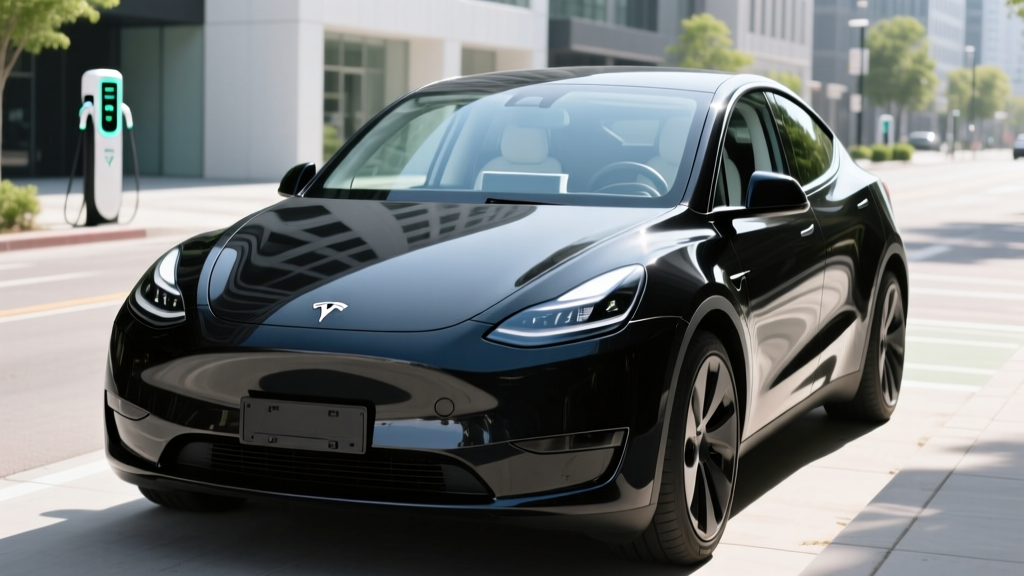
The Tesla Model Y remains one of the best-selling electric vehicles in the United States, and its 2025 refresh (carried into the 2026 model year) brought meaningful changes to the exterior, interior, and powertrain. Among the most discussed exterior updates is the redesigned Tesla hood — lower, more sculpted, and integrated with a reshaped front bumper and new lighting signature. This review covers the Model Y's full spec sheet, from the hood-down styling to real-world range, charging speed, pricing, and whether it still holds its crown against a growing field of midsize electric crossovers.
Redesigned Tesla Hood and Exterior Updates
The 2026 Model Y's hood is noticeably flatter and more aerodynamic than the pre-refresh version. Tesla reshaped the front fascia to reduce drag, contributing to the Long Range model's improved efficiency. The hood line sits lower, improving forward sightlines from the driver's seat — a welcome change, as earlier Model Ys had a somewhat tall, bluff leading edge that obscured close-range ground visibility.
The new slim LED headlamps wrap further around the fenders, and a thin light bar spans the hood's leading edge, giving the front end a more cohesive, modern appearance. Aerodynamic refinements around the hood, front bumper, and wheel arches help the Long Range AWD achieve an EPA-estimated 320 miles of range — up from 308 miles in the prior generation.
Design note: The lower hood profile also reduces the front trunk (frunk) opening slightly. You still get useful storage, but the compartment is shallower than before — plan on a backpack or grocery bag rather than a full suitcase up front.
Range, Battery, and Efficiency
EPA estimated: 320 miles (Long Range AWD) / 277 miles (Performance) / 302 miles (RWD base, where available)
Real-world highway (70 mph, moderate temps): Expect approximately 260–285 miles on the Long Range AWD. Tesla's efficiency is among the best in the segment, but sustained highway speeds, headwinds, and elevation changes pull range below the EPA sticker.
Cold-weather (below 30°F): Plan for a 20–30% reduction — roughly 225–260 miles on the Long Range AWD. The heat pump helps, but battery chemistry still loses capacity in freezing temps. Preconditioning while plugged in mitigates some of this loss.
The Long Range AWD uses an estimated 78 kWh usable battery pack (NMC chemistry — nickel manganese cobalt), which balances energy density with longevity. The base RWD variant, when available, has used LFP (lithium iron phosphate) chemistry in recent years, which tolerates regular 100% charging and offers excellent cycle life, though with slightly lower energy density and reduced cold-weather performance compared to NMC.
| Metric | Long Range AWD | Performance |
|---|---|---|
| EPA Range | 320 mi | 277 mi |
| MPGe (combined) | 122 MPGe | 111 MPGe |
| Efficiency | 28 kWh/100 mi | 30 kWh/100 mi |
| Battery (usable, est.) | ~78 kWh (NMC) | ~78 kWh (NMC) |
Source: fueleconomy.gov — 2026 Tesla Model Y
Charging: DC Fast, Level 2, and the Supercharger Network
The 2026 Model Y comes equipped with the NACS (North American Charging Standard) port natively, meaning direct access to Tesla's Supercharger network without adapters. This remains one of the Model Y's strongest ownership advantages — Tesla's Supercharger network is the most reliable and widespread DC fast-charging infrastructure in North America.
| Charging Level | Max Rate | Speed / Time |
|---|---|---|
| DC Fast (Supercharger V3/V4) | 250 kW peak | 10–80% in ~25 min; adds ~150 mi in 15 min |
| Level 2 (Home, 48A) | 11.5 kW | ~44 mi/hr; full charge in ~8 hr |
| Level 2 (Home, 32A) | 7.7 kW | ~30 mi/hr; full charge in ~11 hr |
| Level 1 (120V outlet) | ~1.4 kW | ~4 mi/hr; emergency/trickle only |
Charging curve reality: The 250 kW peak rate is achieved only between roughly 10–30% state of charge (SoC) on a V3 Supercharger with a preconditioned battery. Above 50% SoC, the rate tapers significantly — expect ~100 kW by 60% and ~50 kW by 80%. This is normal for NMC lithium-ion packs, but it means the last 20% of a charge session takes nearly as long as the first 60%. Plan road-trip stops around 10–80% top-ups for the fastest overall travel times.
For home charging, the Tesla Wall Connector (48 amps, hardwired to a 60-amp circuit) delivers the best Level 2 experience. Budget $500–$1,500 for a licensed electrician to install a 60-amp circuit, depending on your panel's proximity to the garage and whether a panel upgrade is needed. A NEMA 14-50 outlet (40-amp circuit, 32A continuous) is a lower-cost alternative.
Performance and Drivetrain
The 2026 Model Y Long Range AWD uses a dual-motor setup (permanent magnet synchronous motor front, induction or synchronous reluctance rear) producing an estimated 384 horsepower and 376 lb-ft of torque. The result is a 4.8-second 0–60 mph time — quick enough to merge confidently onto any freeway and overtake without hesitation.
The Performance variant drops the 0–60 to 3.5 seconds with 456 hp, though the 277-mile EPA range and stiffer ride are the trade-offs. Both trims come with all-wheel drive as standard.
| Spec | Long Range AWD | Performance |
|---|---|---|
| 0–60 mph | 4.8 sec | 3.5 sec |
| Horsepower | 384 hp | 456 hp |
| Drivetrain | AWD (dual motor) | AWD (dual motor) |
| Top Speed | 125 mph | 155 mph |
Interior, Cargo, and Passenger Space
The refreshed Model Y interior received a significant upgrade in materials and noise isolation. Acoustic glass, ambient lighting, ventilated front seats, and a rear-seat touchscreen improve the cabin experience over the pre-refresh model. The minimalist layout remains — a single 15.4-inch center touchscreen handles navigation, media, climate, and vehicle settings.
Cargo capacity remains a Model Y strength:
- Behind second row: 30.2 cu ft
- Second row folded: 72.1 cu ft
- Frunk (front trunk): 4.1 cu ft (reduced slightly from pre-refresh due to the lower hood line)
- Rear legroom: 41.6 inches
- Front headroom: 40.8 inches
The slightly reduced frunk is a direct consequence of the redesigned Tesla hood and front-end architecture. Most owners use the frunk for charging cables, a small bag, or groceries — it's adequate but no longer class-leading. The rear cargo area, however, remains generous and easily swallows luggage for a family of four on a week-long trip.
Pricing, Trims, and Federal Tax Credit
| Trim | MSRP | §30D Credit Eligible? | Effective Price (est.) |
|---|---|---|---|
| Long Range AWD | $44,990 | Yes (if sourcing rules met) | ~$37,490 |
| Performance | $48,990 | Yes (if sourcing rules met) | ~$41,490 |
Federal tax credit details (IRS §30D): The Model Y qualifies for up to $7,500 under the current federal EV tax credit, which can now be transferred to the dealer at the point of sale as an instant discount. However, eligibility depends on several factors:
- MSRP cap: SUVs must be under $80,000 — Model Y clears this easily.
- Buyer income cap: Modified AGI must not exceed $150,000 (single), $225,000 (head of household), or $300,000 (joint).
- Battery sourcing: A percentage of critical minerals and battery components must be sourced from the U.S. or free-trade-agreement countries. Tesla's U.S. manufacturing helps, but exact eligibility can shift as sourcing percentages change annually. Always verify current-year requirements at IRS.gov §30D page.
- Point-of-sale transfer: You can elect to transfer the credit to Tesla at purchase, reducing your out-of-pocket cost immediately rather than waiting for a tax return offset.
Consult a tax professional to confirm your specific eligibility. State and local incentives (e.g., California's CVRP, Colorado's state credit) may stack on top but vary by jurisdiction.
Tech, Driver Assistance, and Safety
Every 2026 Model Y includes Tesla's Autopilot as standard — a Level 2 driver-assistance suite providing adaptive cruise control, lane centering, and automatic emergency braking. The optional Full Self-Driving (Supervised) package ($8,000 or $99/month) adds features like automatic lane changes, navigation-guided on/off-ramp handling, and traffic-light recognition, but the driver must remain fully engaged at all times.
Tesla Autopilot and FSD (Supervised) are SAE Level 2 systems. They do not make the vehicle self-driving. You must keep your hands on the wheel (or demonstrate attentiveness via the steering-wheel torque sensor and cabin camera) and eyes on the road. No production Tesla is SAE Level 4 (driverless). Only purpose-built robotaxi services like Waymo operate at Level 4 in geofenced areas.
Safety ratings remain strong. The Model Y earned a 5-star overall rating from NHTSA and top marks from IIHS in prior model years; the refreshed version carries forward the same structural architecture.
Standout tech features include:
- 15.4-inch center touchscreen with integrated navigation and over-the-air updates
- 8-camera vision system for Autopilot/FSD
- Sentry Mode (360° parked surveillance recording)
- Dog Mode, Camp Mode, and theater-style media streaming while parked
- Phone-as-key with Bluetooth proximity unlock
Pros, Cons, and Who Should Buy
Pros
- Best-in-class Supercharger network access (native NACS)
- 320-mile EPA range on Long Range AWD — among the longest in the segment
- Strong efficiency at 28 kWh/100 mi
- Excellent cargo space (72.1 cu ft with seats folded)
- Continuous OTA updates add features post-purchase
- Redesigned hood and exterior improve aero and visibility
Cons
- Frunk space reduced after hood redesign
- No physical buttons — all controls via touchscreen
- FSD (Supervised) costs $8,000 extra and remains Level 2
- Ride quality on Performance trim is firm over rough pavement
- Build quality inconsistency (panel gaps) still reported by some owners
- Insurance premiums tend to be higher than segment average
Who the Model Y suits best: Commuters and small families who want a long-range EV with reliable fast-charging infrastructure. The 320-mile EPA range and Supercharger network make it one of the most practical EVs for road trips. If you regularly drive 50+ miles round-trip and want to avoid range anxiety on longer drives, the Model Y Long Range AWD is hard to beat.
Consider alternatives if: You prioritize plush ride quality (look at the Hyundai Ioniq 5 or Kia EV6), need third-row seating (Kia EV9), or prefer physical controls and a more traditional cabin layout.
Warranty and Long-Term Ownership
Tesla provides the following warranty coverage for the 2026 Model Y:
- Basic vehicle: 4 years / 50,000 miles
- Battery and drive unit (Long Range/Performance): 8 years / 120,000 miles (whichever comes first), with a minimum 70% capacity retention guarantee
- Battery and drive unit (RWD, LFP): 8 years / 100,000 miles, same 70% retention threshold
The 70% retention floor means Tesla will replace or repair the battery if it degrades below 70% of original capacity within the warranty window. In practice, Tesla's NMC packs have shown degradation curves that plateau around 90–92% after the first year or two, then degrade slowly. Real-world data from high-mileage owners suggests 80–85% capacity at 100,000 miles is typical for well-maintained packs.
For LFP-equipped RWD models, Tesla recommends periodic charging to 100% (unlike NMC, where daily charging to 80% is recommended for longevity). LFP chemistry tolerates full charges without accelerated degradation, and it offers a longer cycle life, though with slightly less range and worse cold-weather performance.
Frequently Asked Questions
What is the real-world range of the 2026 Tesla Model Y?
The Long Range AWD has an EPA estimate of 320 miles. In real-world highway driving at 70 mph in moderate temperatures, expect roughly 260–285 miles. In freezing conditions, plan for 225–260 miles. The Performance trim's 277-mile EPA estimate translates to roughly 230–250 miles in mixed real-world use.
How fast does the Model Y charge at home and on the road?
On a Tesla V3/V4 Supercharger, the Model Y peaks at 250 kW and charges from 10–80% in approximately 25 minutes. At home on a 48-amp Wall Connector (11.5 kW), it adds about 44 miles of range per hour, reaching a full charge overnight in roughly 8 hours.
Does the 2026 Model Y qualify for the $7,500 federal EV tax credit?
Yes, the Model Y qualifies under IRS §30D rules, provided the buyer meets income caps ($150K single / $300K joint) and the battery sourcing requirements are satisfied for the current year. The credit can be transferred at point of sale as an instant discount. Always verify current sourcing rules at IRS.gov before purchasing.
Is the redesigned Tesla hood a meaningful improvement?
The lower, more sculpted hood improves forward visibility and contributes to the aerodynamic gains that helped push the Long Range AWD to 320 miles EPA. The trade-off is a slightly smaller frunk opening, but for most owners the visibility and efficiency benefits outweigh the minor cargo loss.
How does the Model Y compare to the Hyundai Ioniq 5 or Kia EV6?
The Ioniq 5 and EV6 offer faster peak charging (up to 350 kW on 800V architecture), a more comfortable ride, and physical climate controls. However, they rely on CCS or third-party NACS adapters for charging and lack the seamlessness of Tesla's native Supercharger integration. The Model Y wins on charging network reliability and range; the Korean rivals win on ride comfort and interior ergonomics.
Is FSD (Supervised) worth the $8,000 cost?
For most buyers, no — the standard Autopilot handles highway cruising and stop-and-go traffic well. FSD (Supervised) adds convenience features but remains a Level 2 system requiring constant driver attention. Unless you regularly navigate complex urban routes and value the assisted lane changes and navigation integration, the base Autopilot is sufficient for daily driving.