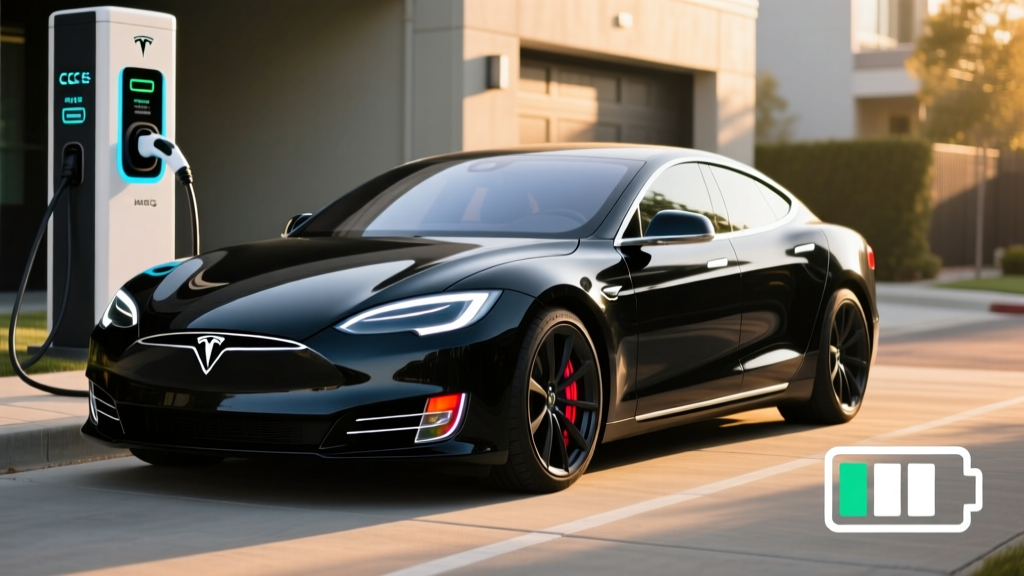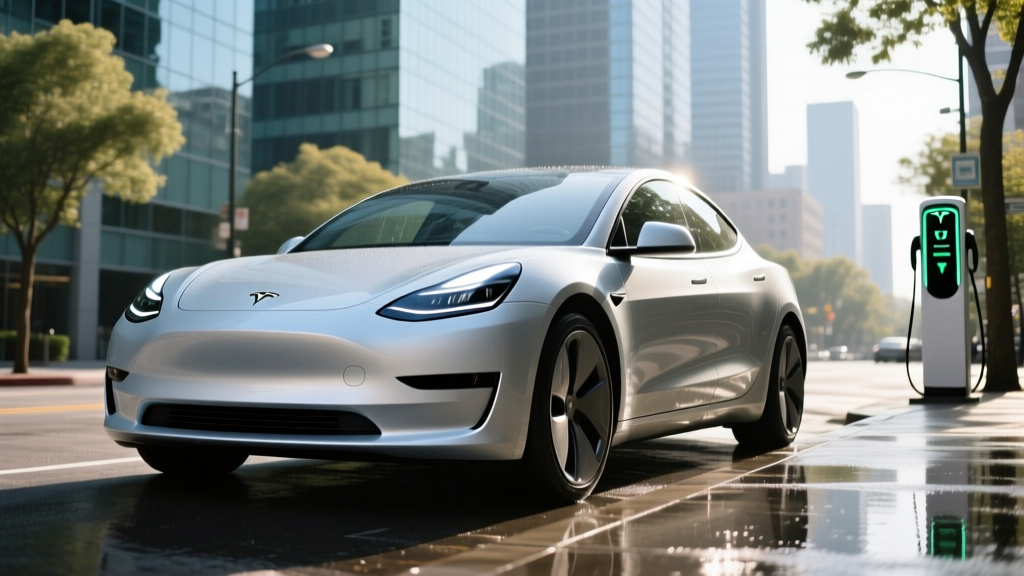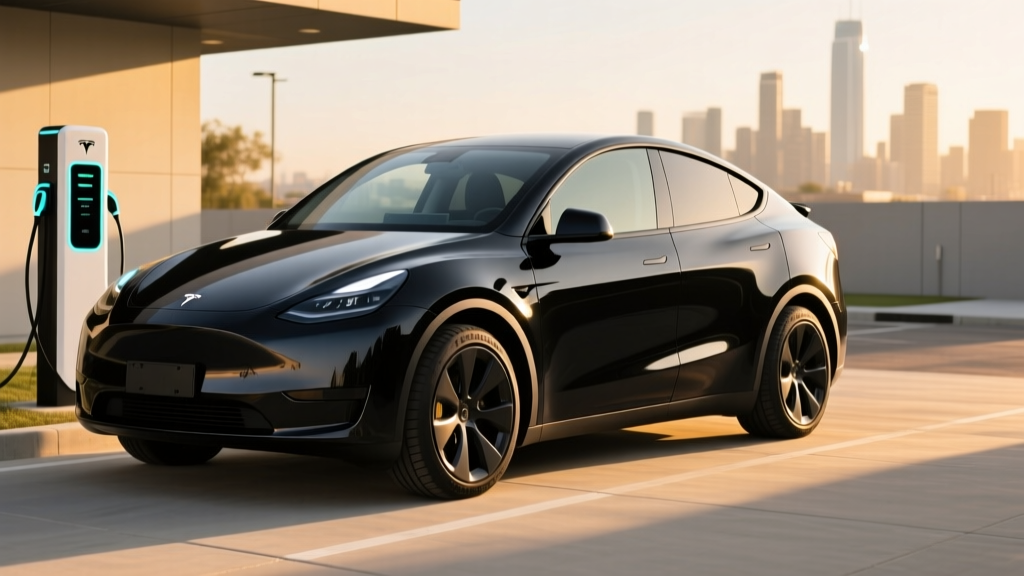
If you are measuring your garage door clearance or comparing the Tesla Model Y against a growing field of electric crossovers, the question of Tesla Model Y height is more practical than it seems. The 2026 Model Y (the refreshed "Juniper" generation introduced in early 2025) stands at 63.9 inches (1,624 mm) tall with mirrors folded. That puts it lower than a Toyota RAV4 (67.0 in) and significantly lower than a Ford Explorer, yet taller than a Model 3 sedan. Understanding the full dimensional picture — ground clearance, interior headroom, cargo volume, and curb weight — is essential before you sign a purchase agreement.
This review covers every spec a buyer needs: EPA range, battery chemistry, DC fast-charging curves, real-world efficiency, federal tax credit eligibility under IRS §30D, and how the 2026 Model Y stacks up against the Hyundai Ioniq 5, Ford Mustang Mach-E, and Chevrolet Equinox EV.
Tesla Model Y Exterior Dimensions & Ground Clearance
The Juniper-refreshed Model Y is slightly longer and marginally taller than the pre-2025 version, with revised suspension tuning and a redesigned front fascia. Below are the exact exterior measurements for the 2026 Long Range AWD trim.
| Measurement | Value | Competitor Comparison |
|---|---|---|
| Overall Height | 63.9 in (1,624 mm) | Ioniq 5: 63.0 in | Mach-E: 63.0 in |
| Overall Length | 188.6 in (4,790 mm) | Ioniq 5: 182.7 in | Mach-E: 189.8 in |
| Overall Width (mirrors folded) | 75.6 in (1,921 mm) | Ioniq 5: 74.4 in | Mach-E: 74.1 in |
| Wheelbase | 113.8 in (2,890 mm) | Ioniq 5: 116.1 in | Mach-E: 116.7 in |
| Ground Clearance | 6.6 in (167 mm) | Ioniq 5: 6.0 in | Mach-E: 5.7 in |
| Curb Weight | 4,398 lbs (1,995 kg) | Ioniq 5: 4,663 lbs | Mach-E: 4,725 lbs |
The 6.6 inches of ground clearance is the best in this segment, which matters for snow-belt buyers and those who venture onto gravel driveways. The Model Y's height also clears most standard residential garage doors (typically 80–84 inches) with ample margin, and it fits comfortably in automated parking garages with 6'6" height restrictions.
Range, Battery & Real-World Efficiency
The 2026 Model Y Long Range AWD carries an estimated 75 kWh usable battery pack using a mix of NMC (nickel manganese cobalt) cells in the structural battery pack. The rear-wheel-drive Standard Range variant uses a ~60 kWh LFP (lithium iron phosphate) pack — heavier per kWh but more durable over thousands of cycles and free of cobalt.
Real-World Range vs. EPA Sticker
EPA Estimated: 320 miles (Long Range AWD) | 295 miles (RWD Standard Range)
Real-World Expectation: In mixed driving at 65–75 mph with climate control on, expect 270–290 miles from the Long Range. In cold weather (below 32°F), range drops 15–25%, yielding approximately 230–260 miles before needing a charge. The Model Y's heat pump mitigates some winter loss compared to older resistive-heater EVs, but physics still wins in sub-zero conditions.
Efficiency remains a Tesla strong suit. The Long Range AWD achieves an EPA-rated 111 MPGe combined (roughly 30 kWh/100 mi), beating the Ioniq 5 AWD (101 MPGe) and the Mach-E Extended Range AWD (101 MPGe). That efficiency translates directly to lower charging costs and longer intervals between stops on road trips.
Charging Speed: DC Fast, Level 2 & Home Setup
Charging speed is where Tesla's NACS connector and Supercharger network advantage become tangible. The 2026 Model Y Long Range supports up to 250 kW peak DC fast charging on V3 and V4 Superchargers. The RWD Standard Range (LFP pack) peaks at approximately 170 kW.
| Charging Level | Power / Rate | Time or Miles Added |
|---|---|---|
| DC Fast Charge (V3 Supercharger) | 250 kW peak | 10–80% in ~25 minutes (Long Range) |
| DC Fast Charge (Standard Range LFP) | 170 kW peak | 10–80% in ~30 minutes |
| Level 2 Home (48A / 11.5 kW) | 11.5 kW | ~37 miles of range per hour |
| Level 2 Home (32A / 7.7 kW) | 7.7 kW | ~25 miles of range per hour |
| Level 1 (120V / 12A) | ~1.4 kW | ~4 miles of range per hour |
Charging curve reality check: The 250 kW peak is only sustained between roughly 10–30% state of charge. Above 50%, the rate tapers significantly — expect ~100 kW at 60% SoC and ~40 kW above 85%. This is normal for NMC chemistry, but it means the last 20% of a charge session can take as long as the first 50%. Plan road-trip stops to charge from 10–80% and skip topping off unless you need the final miles.
For home charging, Tesla's Wall Connector (48A on a 60A circuit) adds roughly 37 miles per hour — enough to fully replenish the Long Range overnight in about 8–9 hours. Installation typically costs $800–$2,000 depending on panel proximity and whether a 200A service upgrade is needed. According to fueleconomy.gov, the Model Y's annual charging cost is approximately $600–$750 depending on local electricity rates, compared to $2,000+ for a comparable gasoline crossover.
Performance, Drivetrain & Ride Quality
The 2026 Long Range AWD uses a dual-motor setup producing an estimated 384 horsepower and 376 lb-ft of torque. Tesla quotes a 0–60 mph time of 4.8 seconds, which remains brisk for a family crossover. The RWD Standard Range model produces around 295 hp with a 0–60 time of approximately 6.5 seconds.
The Juniper refresh brought meaningful improvements to ride quality. Tesla revised the suspension bushings, added acoustic glass, and retuned the dampers to reduce the crashy low-speed ride that plagued pre-2025 models. The result is a crossover that absorbs expansion joints and broken pavement far better than its predecessor, though it still leans toward firm compared to a Hyundai Ioniq 5 or Kia EV6.
Regenerative braking remains aggressive and non-adjustable (Tesla removed the low-regen option several years ago). One-pedal driving works well in traffic, but new EV drivers should budget a few days to acclimate to the strong deceleration when lifting off the accelerator.
Interior Space, Cargo & Passenger Dimensions
Despite its relatively low roofline, the Model Y's interior packaging is efficient. Here are the key cabin measurements:
| Measurement | Front | Second Row |
|---|---|---|
| Headroom | 40.7 in | 37.7 in |
| Legroom | 41.8 in | 37.3 in |
| Shoulder Room | 56.5 in | 54.0 in |
Cargo Volume: 30.2 cu ft behind the second row, expanding to 72.1 cu ft with the 60/40 split rear seats folded. The front trunk (frunk) adds approximately 4.1 cu ft of secure, drainable storage — useful for charging cables or gym bags.
The 37.7 inches of rear headroom is tighter than the Ford Mustang Mach-E (38.5 in) and noticeably less than the Hyundai Ioniq 5 (38.7 in). Adults over 6 feet will find the rear seat adequate but not generous. The Juniper refresh added ventilated second-row seats and a small rear touchscreen for climate/entertainment control, addressing a longstanding complaint.
Pricing, Trims & Federal Tax Credit Eligibility
The 2026 Tesla Model Y lineup is streamlined into two primary trims, with a Performance variant expected later in the model year.
| Trim | Base MSRP | Federal §30D Credit | Effective Price |
|---|---|---|---|
| Standard Range (RWD, LFP) | $44,990 | Up to $7,500* | ~$37,490* |
| Long Range AWD | $48,990 | Up to $7,500* | ~$41,490* |
| Performance AWD (expected) | ~$53,990 (est.) | Up to $7,500* | ~$46,490* |
*Federal tax credit eligibility under IRS §30D depends on multiple requirements:
- MSRP Cap: The Model Y qualifies as an SUV under IRS vehicle classifications, meaning the MSRP cap is $80,000 (all trims clear this easily).
- Buyer Income Limits: Modified AGI must not exceed $150,000 (single), $225,000 (head of household), or $300,000 (joint filers).
- Battery Sourcing: At least 60% of critical minerals and 50% of battery components must meet North American or FTA-partner sourcing requirements. Tesla's Fremont and Austin-built packs have progressively met these thresholds, but exact eligibility can shift by production batch. Always confirm the specific VIN's credit status on the manufacturer's window sticker or the DOE's qualifying vehicle list before purchase.
- Point-of-Sale Transfer: Buyers can transfer the credit to the dealer at purchase, reducing the out-of-pocket price immediately rather than waiting for a tax refund.
Consult a tax professional to confirm your eligibility — state incentives (such as California's CVRP or Colorado's innovative motor vehicle credit) may stack on top of the federal credit.
Technology, Safety & Driver Assistance
The 2026 Model Y continues with Tesla's minimalist interior centered around a 15.4-inch touchscreen running Tesla's proprietary infotainment OS. The Juniper refresh eliminated stalk-mounted turn signals (now on the steering wheel) and added ambient lighting, power-folding second-row seats, and improved cabin materials.
Autopilot & FSD Supervised — SAE Level 2
Standard Autopilot includes adaptive cruise control and lane centering. The optional Full Self-Driving (Supervised) package ($8,000 or $99/month) adds automatic lane changes, traffic light recognition, and navigate-on-autopilot. Both are SAE Level 2 systems — the driver must remain fully engaged, hands on the wheel, and eyes on the road at all times. This is not autonomous driving. Only Level 4 services like Waymo operate without a human driver.
Safety ratings remain strong. The Model Y earned a 5-star overall rating from NHTSA and continues to perform well in IIHS testing. Standard active safety features include automatic emergency braking, blind-spot monitoring, rear cross-traffic alert, and lane departure prevention.
Warranty Coverage
| Component | Coverage |
|---|---|
| Basic Vehicle | 4 years / 50,000 miles |
| Battery & Drive Unit | 8 years / 120,000 miles (Long Range AWD) |
| Battery & Drive Unit | 8 years / 100,000 miles (Standard Range RWD) |
| Battery Capacity Retention | Minimum 70% over warranty period |
Tesla's battery warranty guarantees at least 70% capacity retention over the coverage period. In practice, NMC packs in Long Range models typically degrade 8–12% over the first 100,000 miles based on fleet data, while LFP packs in the Standard Range variant often show slower degradation (5–8%) due to the chemistry's inherent stability.
Pros, Cons & Who Should Buy
Pros
- Best-in-class efficiency (111 MPGe combined)
- Supercharger network access — the most reliable DC fast-charging ecosystem in North America
- Strong real-world range (270–290 mi highway in fair weather)
- Class-leading ground clearance (6.6 in) for snow/gravel
- OTA software updates continuously add features
- Competitive pricing after federal tax credit
Cons
- Rear headroom (37.7 in) is tight for tall passengers
- No physical turn signal stalks after Juniper refresh — adjustment required
- FSD at $8,000 remains a Level 2 system, not autonomous
- Non-adjustable regenerative braking frustrates some drivers
- Service center availability varies by region; body repairs can take weeks
Who the 2026 Tesla Model Y Suits Best
Choose the Model Y Long Range AWD if: You want maximum range for road trips, need AWD for snow, value Supercharger access, and your household fits within the §30D income caps.
Choose the Model Y Standard Range RWD if: Your daily commute is under 80 miles round-trip, you charge at home, and you want the lowest entry price (~$37,490 after credit) with LFP battery longevity.
Look at the Hyundai Ioniq 5 or Kia EV6 instead if: You need more rear headroom, prefer physical controls, or want 800V charging architecture (10–80% in ~18 min at 350 kW chargers).
Frequently Asked Questions
What is the exact height of the 2026 Tesla Model Y?
The 2026 Tesla Model Y measures 63.9 inches (1,624 mm) tall. With roof rails (if equipped), add approximately 0.5 inches. This clears most residential garage doors and automated parking structures with 6'6" height limits.
What is the real-world range of the Tesla Model Y?
The EPA rates the Long Range AWD at 320 miles. In real-world highway driving at 70 mph with climate control, expect 270–290 miles. In cold weather (below freezing), plan for 230–260 miles. The Standard Range RWD (EPA 295 mi) delivers approximately 245–265 miles in mixed real-world use.
How fast does the Model Y charge at home and on road trips?
On a V3 Supercharger (250 kW), the Long Range charges from 10–80% in approximately 25 minutes. At home on a 48A Level 2 Wall Connector (11.5 kW), it adds about 37 miles per hour, fully charging overnight in 8–9 hours.
Does the 2026 Tesla Model Y qualify for the $7,500 federal tax credit?
It can, but eligibility depends on the buyer's income (AGI caps apply), the specific VIN's battery sourcing compliance, and MSRP limits ($80,000 SUV cap — all trims qualify). The credit can be transferred at point of sale. Always verify your VIN's eligibility before purchase.
Is the Model Y worth buying over the Hyundai Ioniq 5 or Ford Mach-E?
The Model Y wins on efficiency, Supercharger network access, and cargo volume. The Ioniq 5 wins on 800V charging speed (at compatible stations), rear-seat headroom, and interior design. The Mach-E offers a more traditional driving feel and strong BlueCruise hands-free highway driving. Test-drive all three before deciding.
What is the towing capacity?
The 2026 Model Y is rated to tow up to 3,500 lbs when equipped with the factory tow package. This covers small utility trailers, a pair of dirt bikes, or a light camper — but not a full-size boat or large travel trailer.