Tesla Model Y Gray: The Complete 2026 Buyer's Breakdown
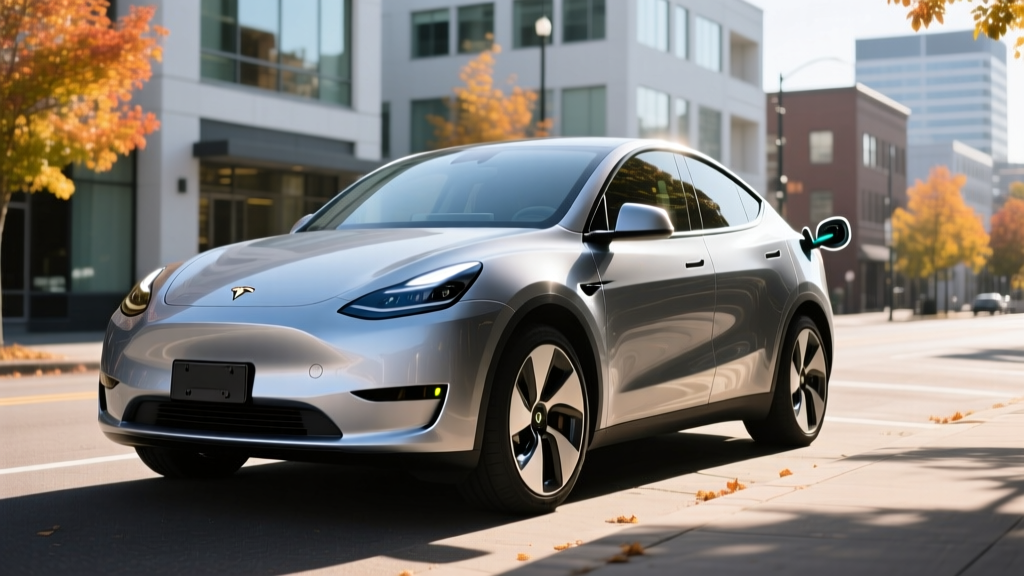
Search any EV community or configurator and you'll see one color dominate the order sheets: gray. Specifically, Tesla's Stealth Gray (and the legacy Midnight Silver Metallic) have become the default choice for Model Y buyers who want a premium look without the $2,000 premium of Quicksilver or Ultra Red. But color is just the entry point. What really matters is whether the 2026 Tesla Model Y — in any color — still holds its position as the best-selling electric vehicle in the United States against a rapidly closing field of competitors.
This review dissects the 2026 Tesla Model Y with the exact numbers buyers need: real-world range versus EPA sticker, DC fast-charge curves, federal tax credit eligibility under current IRS §30D rules, and a direct comparison to the Hyundai Ioniq 5 and Ford Mustang Mach-E. Whether you're configuring a gray Model Y right now or weighing it against alternatives, here's the data that matters.
2026 Tesla Model Y Spec Sheet at a Glance
| Specification | Long Range AWD | Performance | Long Range RWD |
|---|---|---|---|
| EPA Range | 320 miles | 293 miles | 330 miles |
| Battery (usable) | ~75 kWh (NMC) | ~75 kWh (NMC) | ~75 kWh (NMC) |
| Drivetrain | Dual-Motor AWD | Dual-Motor AWD | Rear-Wheel Drive |
| Horsepower | 384 hp | 510 hp | 295 hp |
| 0-60 mph | 4.8 sec | 3.5 sec | 5.8 sec |
| Peak DC Fast Charge | 250 kW | 250 kW | 250 kW |
| 10-80% DC Time | ~27 min | ~27 min | ~27 min |
| Level 2 Home Charge | 11.5 kW (~44 mi/hr) | 11.5 kW (~44 mi/hr) | 11.5 kW (~44 mi/hr) |
| MPGe (combined) | 111 MPGe | 102 MPGe | 115 MPGe |
| Base MSRP | $46,630 | $52,130 | $44,130 |
| Battery Warranty | 8 yr / 120,000 mi | 8 yr / 120,000 mi | 8 yr / 120,000 mi |
Sources: EPA fueleconomy.gov, Tesla.com configurator (2026 model year). Prices reflect MSRP before destination fees and applicable incentives.
Real-World Range: What the EPA Sticker Doesn't Tell You
EPA Sticker: 320 miles
Real-World Highway (70-80 mph): ~260-280 miles
Real-World Mixed Commute: ~290-310 miles
Cold Weather (below 32°F): ~220-260 miles (20-30% reduction)
The 2026 Model Y Long Range AWD carries an EPA-estimated 320 miles of range, which is competitive but not class-leading. The RWD variant pushes that to 330 miles thanks to reduced drivetrain losses and slightly less weight.
Here's what those numbers mean on actual roads. At sustained highway speeds of 70-80 mph, aerodynamic drag dominates energy consumption, and you'll see roughly 260-280 miles before needing to stop. Tesla's heat pump — standard on all 2026 Model Y trims — significantly reduces cold-weather cabin-heating energy draw compared to older resistive heaters, but battery chemistry still suffers in freezing temperatures. Expect a 20-30% range reduction in sustained sub-freezing driving, bringing the Long Range AWD down to approximately 220-260 usable miles.
For daily commuting with mixed city and highway driving, the real-world figure lands closer to the EPA estimate, around 290-310 miles, because regenerative braking recovers energy in stop-and-go traffic. The efficiency figure of 111 MPGe combined (Long Range AWD) translates to roughly 30 kWh per 100 miles of mixed driving — a number you can use to calculate your local charging cost.
Charging Speed: DC Fast Charging and Home Level 2
| Charging Level | Max Power | Speed (Miles Added) | Notes |
|---|---|---|---|
| Level 1 (120V household) | 1.4 kW | ~4-5 mi/hr | Emergency/trickle only; adds ~50 mi overnight |
| Level 2 (240V home) | 11.5 kW | ~44 mi/hr | Full charge in ~7-8 hours; ideal daily charging |
| DC Fast (Tesla Supercharger V3/V4) | 250 kW peak | ~200 mi in 15 min | 10-80% in ~27 min; tapers above 80% |
| DC Fast (CCS adapter at third-party) | ~150-175 kW typical | Varies by station | Requires NACS-to-CCS adapter (sold separately) |
The 2026 Model Y peaks at 250 kW on Tesla's V3 and V4 Supercharger network — but that peak only holds between roughly 10-30% State of Charge (SoC). The charge curve tapers progressively: by 50% SoC you're closer to 150 kW, and above 80% the rate drops sharply to protect the NMC battery cells. A 10-80% session takes approximately 27 minutes at a V3/V4 Supercharger, which remains among the fastest in the segment.
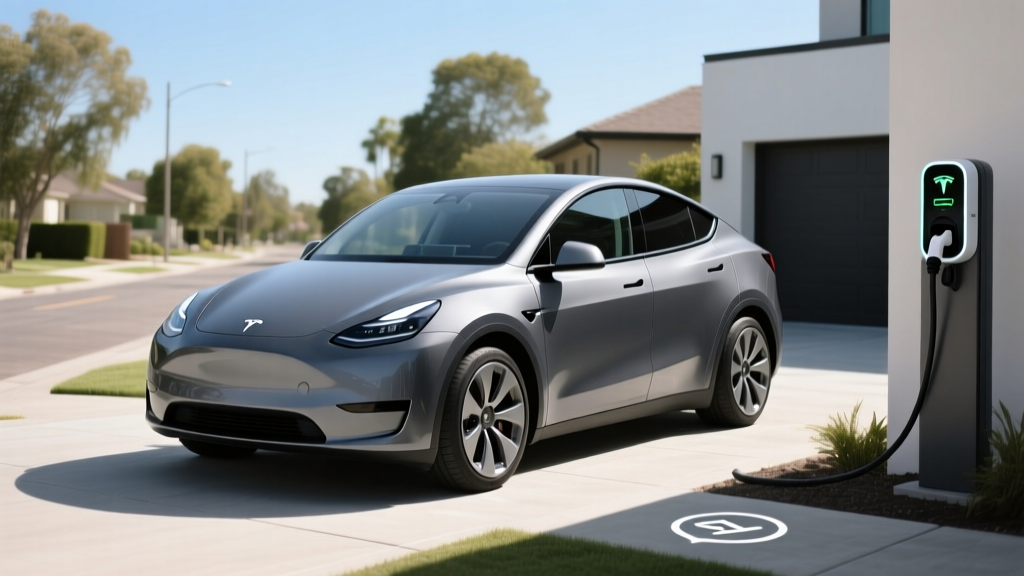
For home charging, the onboard charger accepts up to 11.5 kW on a 48-amp Level 2 circuit (requiring a 60-amp breaker). This adds roughly 44 miles of range per hour, meaning a full overnight session easily replenishes any daily driving. Installation costs for a Level 2 home charger typically run $500-$2,000 depending on your electrical panel's capacity and the distance from panel to garage — a licensed electrician should evaluate whether a panel upgrade to 200A service is needed.
Tesla's NACS (North American Charging Standard) connector is now the industry default, with Ford, GM, Rivian, and others adopting it. This means Supercharger access — Tesla's most reliable charging asset — is opening to competitors, but Tesla owners retain native compatibility and the most seamless plug-and-charge experience.
Tax Credit, Pricing, and Total Cost
| Trim | Base MSRP | Destination | Est. §30D Credit | Effective Price |
|---|---|---|---|---|
| Long Range RWD | $44,130 | $1,390 | Up to $7,500* | ~$38,020 |
| Long Range AWD | $46,630 | $1,390 | Up to $7,500* | ~$40,520 |
| Performance | $52,130 | $1,390 | Up to $7,500* | ~$46,020 |
*Federal tax credit eligibility under IRS §30D depends on multiple factors that change periodically. Key requirements for 2026:
- MSRP Cap: SUVs must be at or below $80,000 (Model Y qualifies on all trims)
- Buyer Income Cap: Modified AGI ≤ $150,000 (single) or ≤ $300,000 (joint)
- Battery Sourcing: Critical minerals and battery components must meet phased-in domestic/content thresholds — Tesla has shifted significant supply chain to qualify, but verify current-year eligibility at the point of sale
- Point-of-Sale Transfer: The credit can now be transferred to the dealer at purchase, reducing your out-of-pocket price immediately rather than waiting for tax filing
The Stealth Gray paint option adds $0 to the price (it replaced Midnight Silver Metallic as a no-cost option), while premium colors like Ultra Red or Quicksilver add $2,000-$2,500. The gray palette — whether Stealth Gray or the discontinued Midnight Silver — remains popular because it hides road grime well and photographs cleanly, which helps resale value marginally.
Interior, Cargo, and Technology
The 2026 Model Y interior follows Tesla's minimalist philosophy: a single 15.4-inch center touchscreen handles all infotainment, climate, and vehicle settings. There is no instrument cluster — speed and navigation appear on the main screen. The refreshed "Juniper" interior (introduced for the 2025 model year and carried into 2026) adds ambient lighting, ventilated front seats, a rear-seat entertainment screen, and improved sound insulation over the pre-refresh Model Y.
Cargo and Passenger Dimensions:
- Front headroom: 41.0 in / legroom: 41.8 in
- Rear headroom: 39.4 in / legroom: 37.4 in
- Cargo behind rear seats: 30.2 cu ft
- Cargo with rear seats folded: 72.0 cu ft
- Front trunk (frunk): 4.1 cu ft
The cargo area is competitive with the Ford Mustang Mach-E (29.7 / 59.7 cu ft) and significantly larger than the Hyundai Ioniq 5 (27.2 / 59.3 cu ft). The frunk adds useful space for charging cables or a small bag.
Driver Assistance — Autopilot and FSD:
Tesla Autopilot (standard) and Full Self-Driving Supervised ($8,000 option or $99/month) are Level 2 driver-assistance systems per SAE classification. The driver must remain fully engaged, hands on or near the wheel, eyes on the road, and ready to take over at any moment. These are not autonomous or self-driving systems.
Autopilot includes adaptive cruise control, lane centering, and automatic emergency braking. FSD Supervised adds automatic lane changes, on/off-ramp navigation, traffic light recognition, and city-street driving — but driver supervision remains mandatory at all times. Tesla's camera-only vision approach (no lidar or radar) has drawn scrutiny from NHTSA regarding Autopilot-related incidents, so buyers should understand the system's limitations rather than marketing implications.
Pros and Cons: The Honest Assessment
- Best-in-class Supercharger network access with native NACS plug
- Strong efficiency: 111-115 MPGe combined depending on trim
- Over-the-air updates continuously add features
- Spacious cargo area (72 cu ft max) with usable frunk
- Competitive 0-60 performance across all trims
- Stealth Gray paint is a no-cost premium option
- Heat pump standard for improved cold-weather range
- Minimalist interior not for everyone — no physical buttons or stalks (turn signals on wheel)
- FSD Supervised is expensive ($8,000) and remains Level 2
- Ride quality firm on Performance trim with 21-inch wheels
- No Apple CarPlay or Android Auto — Tesla's native UI only
- Insurance costs tend to be higher than segment average
- CCS adapter needed for non-Tesla DC fast chargers
- Build quality has improved but panel-gap inconsistency still reported
How the Gray Model Y Compares to Key Rivals
| Attribute | 2026 Tesla Model Y LR AWD | 2026 Hyundai Ioniq 5 Limited | 2026 Ford Mustang Mach-E Premium |
|---|---|---|---|
| EPA Range | 320 mi | 305 mi | 300 mi |
| Peak DC Charge | 250 kW | 238 kW | 150 kW |
| 10-80% Time | ~27 min | ~18 min (800V) | ~36 min |
| 0-60 mph | 4.8 sec | 5.1 sec (AWD) | 5.1 sec (eAWD) |
| Cargo (max) | 72.0 cu ft | 59.3 cu ft | 59.7 cu ft |
| Base MSRP | $46,630 | $52,600 | $45,995 |
| Native NACS | Yes | Yes (2025+) | Yes (2025+) |
| Charging Network | Supercharger (native) | Supercharger + third-party | Supercharger + third-party |
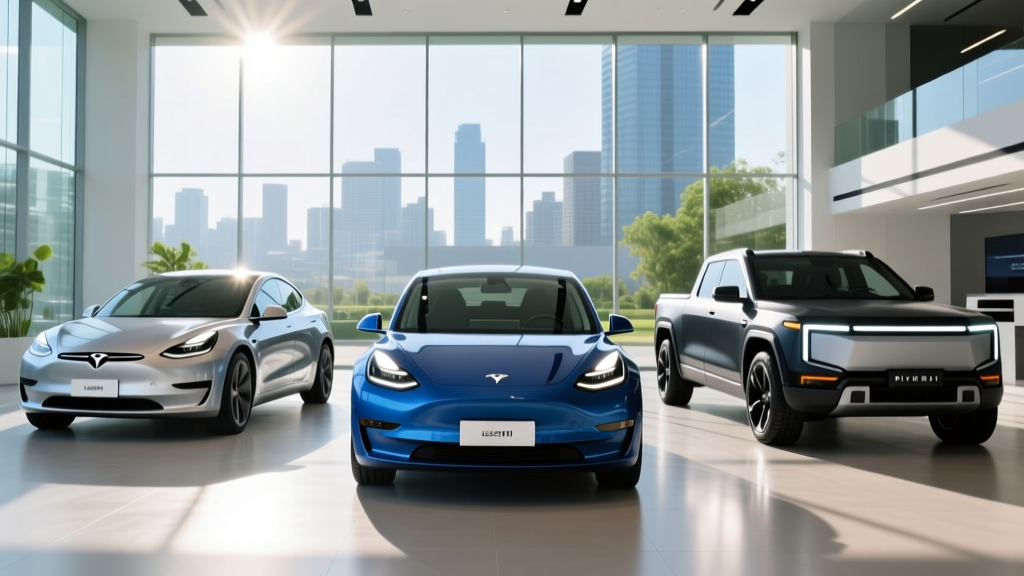
The Ioniq 5's 800V architecture enables a faster 10-80% charge time (~18 minutes) despite a lower peak kW figure, because it sustains higher power longer in the charge curve. The Mach-E lags in charging speed but offers a more traditional interior with physical controls. The Model Y wins on cargo space and Supercharger integration, but the Ioniq 5 and Mach-E now both have NACS ports and Supercharger access, narrowing Tesla's historic charging advantage.
Who Should Buy the 2026 Tesla Model Y in Gray?
- You rely on frequent road trips and want the most mature, widespread fast-charging network
- Cargo capacity is a priority (72 cu ft with seats folded beats both rivals)
- You want OTA software updates that add features post-purchase
- You prefer a minimalist, screen-centric interior
- You want physical buttons and a traditional instrument cluster (look at Mach-E)
- Fastest DC charging speed is paramount (Ioniq 5's 800V system charges faster)
- You want Apple CarPlay integration (neither Tesla offers it)
- Insurance cost is a major budget concern (Model Y premiums run 15-25% above segment average)
The Stealth Gray finish suits the Model Y's clean surfacing well and is practical for daily use — it hides dust, water spots, and minor swirl marks far better than solid black or white. Combined with the no-cost price tag, it's the rational color choice for resale-conscious buyers.
Frequently Asked Questions
What is the real-world range of the 2026 Tesla Model Y?
The EPA rates the Long Range AWD at 320 miles and the RWD at 330 miles. In real-world highway driving at 70-80 mph, expect 260-280 miles. In cold weather below freezing, plan for 220-260 miles. Mixed city/highway commuting typically yields 290-310 miles thanks to regenerative braking.
How fast does the Model Y charge at home and on DC fast chargers?
On a 48-amp Level 2 home charger (240V), the Model Y charges at 11.5 kW, adding about 44 miles of range per hour — a full overnight charge. On a Tesla V3/V4 Supercharger, it peaks at 250 kW and charges from 10-80% in approximately 27 minutes. Above 80% SoC, the charge rate tapers significantly to protect the battery.
Does the 2026 Tesla Model Y qualify for the $7,500 federal tax credit?
It can, but eligibility under IRS §30D depends on your income (≤$300,000 joint / ≤$150,000 single), the vehicle's MSRP (under $80,000 for SUVs — all Model Y trims qualify), and battery component/critical-mineral sourcing requirements that change annually. Tesla has worked to qualify, but always verify at the point of sale. The credit can be transferred to the dealer for an immediate price reduction.
How much does a gray Tesla Model Y cost after incentives?
The Stealth Gray paint is a no-cost option. The Long Range RWD starts at $44,130 + $1,390 destination. If you qualify for the full $7,500 §30D credit, the effective price drops to approximately $38,020. The Long Range AWD comes to roughly $40,520 after credit. State incentives may reduce this further — check fueleconomy.gov for current programs.
Is the Tesla Model Y still worth buying vs. the Ioniq 5 or Mach-E?
The Model Y remains the strongest all-around choice if you value Supercharger network access, maximum cargo space (72 cu ft), and Tesla's software ecosystem. The Hyundai Ioniq 5 charges faster (10-80% in ~18 min via 800V) and offers a more distinctive design. The Ford Mach-E provides a more conventional interior. All three now share NACS/Supercharger access, so the decision comes down to interior preference, cargo needs, and charging speed priorities.
What battery chemistry does the 2026 Model Y use?
The 2026 Model Y Long Range and Performance trims use NMC (nickel manganese cobalt) lithium-ion cells with approximately 75 kWh of usable capacity. NMC offers higher energy density than LFP (lithium iron phosphate), which is why it's used in the longer-range trims. The battery is warrantied for 8 years or 120,000 miles (whichever comes first) with a minimum 70% capacity retention threshold.
Is Tesla's Stealth Gray the same as Midnight Silver Metallic?
No. Tesla replaced Midnight Silver Metallic with Stealth Gray as a standard no-cost option. Stealth Gray is a darker, flatter gray with less metallic flake, giving it a more understated, satin-like appearance. Midnight Silver is still seen on pre-2024 models and had a more pronounced metallic shimmer. Both are popular and photograph well, but Stealth Gray is the current production color.
Editor's note: EV pricing, tax credit eligibility, and specifications change frequently. Always verify current figures on Tesla.com, fueleconomy.gov, and irs.gov before making a purchase decision. This review reflects 2026 model-year data available at time of publication.