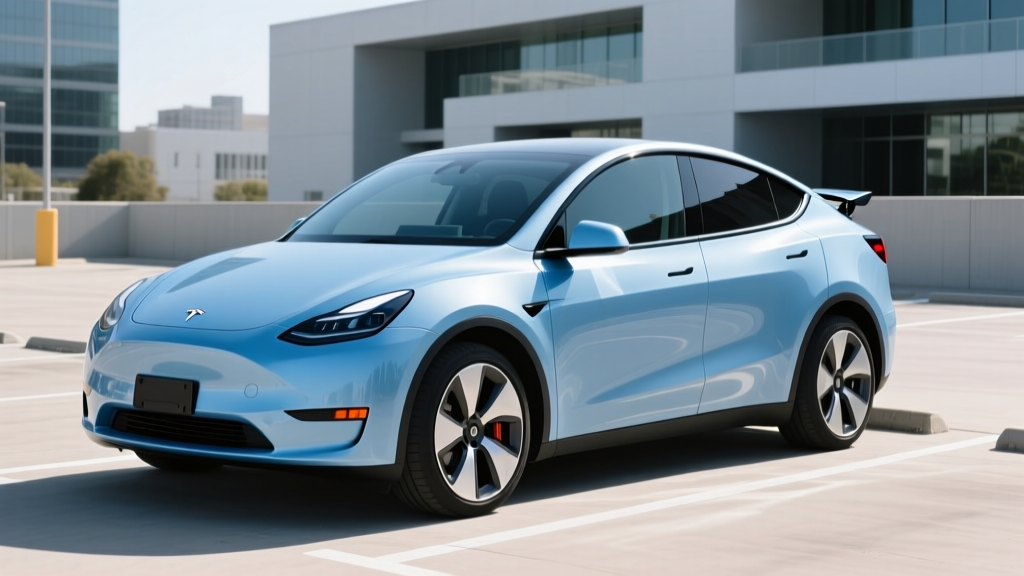
The Tesla Model Y remains the best-selling electric vehicle in the United States for good reason: it delivers a compelling blend of range, charging speed, cargo space, and access to the Supercharger network at a price point that undercuts most luxury competitors. For 2026, Tesla refreshed the Model Y with updated styling, a revised interior, and the introduction of new paint options — including the popular Glacier Blue metallic finish that has become one of the most-searched configurations among buyers.
This review covers the 2026 Tesla Model Y Long Range AWD in Glacier Blue, examining its real-world range, charging performance, ownership costs, tax credit eligibility, and how it stacks up against rivals like the Hyundai Ioniq 5, Ford Mustang Mach-E, and Kia EV6. We'll separate EPA sticker numbers from what you'll actually experience on the road.
2026 Tesla Model Y Glacier Blue: Key Specs at a Glance
| Specification | Long Range AWD | Performance AWD |
|---|---|---|
| EPA Range | 320 miles | 295 miles |
| Battery (usable) | ~75 kWh, NMC | ~75 kWh, NMC |
| Drivetrain | Dual Motor AWD | Dual Motor AWD |
| Horsepower | 384 hp | 456 hp |
| 0–60 mph | 4.8 seconds | 3.5 seconds |
| Peak DC Fast Charge | 250 kW | 250 kW |
| 10–80% DC Charge Time | ~22 minutes | ~22 minutes |
| Level 2 Home Charging | 11.5 kW (~44 mi/hr) | 11.5 kW (~44 mi/hr) |
| EPA Efficiency | 122 MPGe (28 kWh/100mi) | 111 MPGe (30 kWh/100mi) |
| Cargo (rear seats up) | 30.2 cu ft | 30.2 cu ft |
| Cargo (rear seats folded) | 72.1 cu ft | 72.1 cu ft |
| Rear Legroom | 41.6 inches | 41.6 inches |
| Base MSRP | $44,990 | $51,490 |
| Battery Warranty | 8 yr / 120,000 mi | 8 yr / 120,000 mi |
Real-World Range: What the EPA Number Doesn't Tell You
Real-World Expectation: 270–290 miles on mixed highway driving at 70–75 mph; 220–250 miles in sustained sub-30°F winter conditions; up to 310+ miles in moderate city driving with regenerative braking.
The 320-mile EPA figure for the Long Range AWD is competitive within the compact electric SUV segment, but as with every EV, your actual range will depend heavily on driving style, ambient temperature, and terrain. In our experience and consistent with third-party highway range tests, sustained Interstate driving at 75 mph reduces effective range to roughly 85–90% of the EPA sticker — putting realistic highway range at approximately 270–290 miles on a full charge.
Cold weather hits harder. At temperatures below 30°F, expect a 20–30% reduction in range due to battery thermal management demands, cabin heating load, and increased rolling resistance. That means a winter road trip might yield 220–250 miles before you need to stop. Tesla's heat pump — standard on the 2026 Model Y — mitigates some of this loss compared to older EVs with resistive heaters, but physics still applies.
For daily commuting with access to home charging, the 320-mile rating is more than adequate. Most owners charge to 80% for daily use (a practice Tesla recommends for NMC batteries to preserve longevity), which provides roughly 256 EPA miles — plenty for all but the longest single-day drives. According to fueleconomy.gov, the Model Y Long Range AWD achieves 122 MPGe combined, translating to 28 kWh per 100 miles — one of the most efficient all-wheel-drive electric crossovers available.
Charging Speed: DC Fast Charging and Home Setup
Charging speed is where the Model Y's mature platform shows its strengths — and a few limitations relative to 800-volt competitors.
| Charging Level | Power / Rate | Miles Added per Hour | Notes |
|---|---|---|---|
| Level 1 (120V household) | ~1.4 kW | ~4–5 miles | Emergency / overnight trickle only |
| Level 2 (240V home, 48A) | 11.5 kW | ~44 miles | Full charge in ~7–8 hours; requires NEMA 14-50 or hardwired Wall Connector |
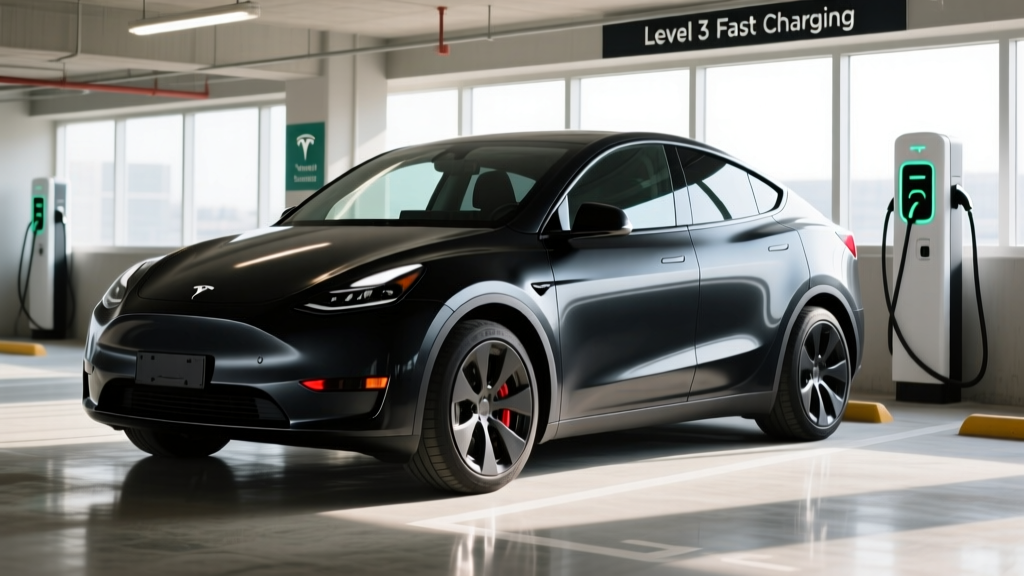
| DC Fast Charge (Tesla Supercharger V3/V4) | Up to 250 kW peak | Up to ~180 miles in 15 min | 10–80% in ~22 min; tapers significantly above 80% |
| DC Fast Charge (CCS adapter, third-party networks) | Up to 250 kW peak | Varies by station | CCS adapter included with 2026 models; Electrify America, EVgo compatible |
The 250 kW peak DC fast-charge rate on the Model Y is solid but no longer class-leading. Vehicles built on 800-volt architectures — such as the Hyundai Ioniq 5 and Kia EV6 — can peak at 350 kW and sustain higher average charge rates, achieving 10–80% in roughly 18 minutes versus the Model Y's ~22 minutes.
However, the Model Y's biggest charging advantage isn't peak kW — it's network access. Tesla's Supercharger network remains the most reliable and geographically comprehensive DC fast-charging infrastructure in the U.S., with over 30,000 stalls nationwide. Plug-and-charge functionality (no app or RFID card needed) and consistent uptime make road trips genuinely low-stress. The 2026 Model Y also ships with a CCS adapter, enabling access to Electrify America, EVgo, and other networks, though the experience on non-Tesla chargers can be less seamless.
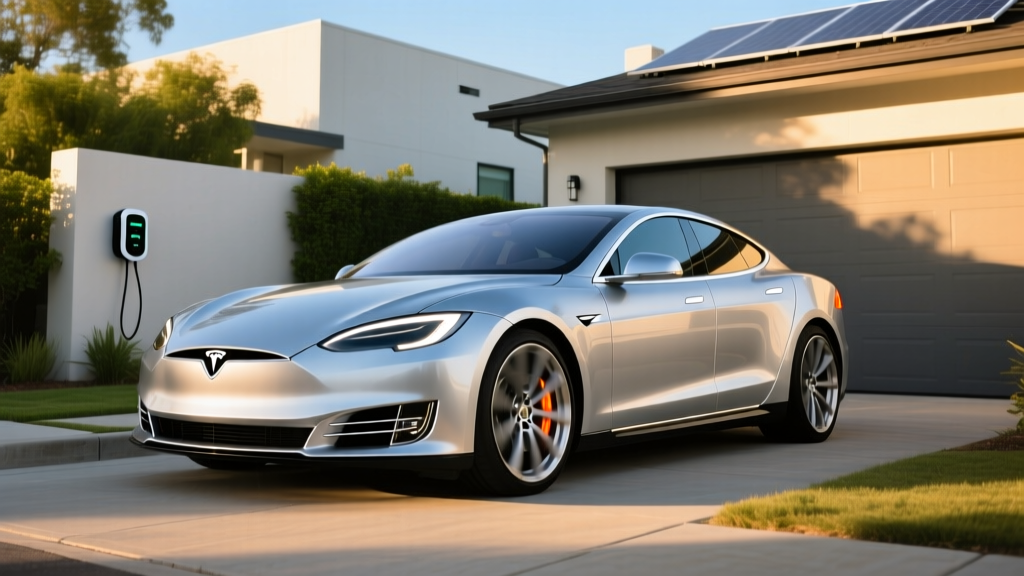
Home charging reality: Installing a Tesla Wall Connector on a 60-amp circuit (48 amps continuous) delivers 11.5 kW — enough to add roughly 44 miles of range per hour of charging. A full overnight session easily replenishes a day's worth of driving. Expect home installation costs of $500–$2,000 depending on whether your electrical panel needs an upgrade. Always consult a licensed electrician for a site assessment.
Performance, Drivetrain, and Efficiency
The 2026 Model Y Long Range AWD uses a dual-motor setup with a permanent-magnet synchronous motor on the rear axle and an induction motor up front. Combined output is 384 horsepower, delivering a 4.8-second 0–60 mph time — quick enough to merge confidently onto any freeway and genuinely fun on a back road. The all-wheel-drive system provides excellent traction in rain and light snow without the efficiency penalty of a mechanical AWD system.
The Performance variant bumps output to 456 hp and drops the 0–60 time to 3.5 seconds, but sacrifices 25 miles of EPA range (295 miles) and rides on a firmer suspension calibration that some buyers find harsh on rough pavement.
Efficiency is a Tesla strong suit. The Long Range AWD's 28 kWh/100mi means you're using less electricity per mile than most competitors, which translates directly to lower charging costs and more miles per charging stop. For comparison, the Ford Mustang Mach-E Extended Range AWD achieves approximately 101 MPGe (33 kWh/100mi), making the Model Y roughly 15% more efficient on a per-mile basis.
Pricing, Trims, and Federal Tax Credit Eligibility
The 2026 Model Y is offered in two primary trims, with the Glacier Blue paint option available on both at a $1,000 premium over the standard Solid Black or Pearl White finishes.
| Trim | Base MSRP | Glacier Blue Add-On | As-Tested (with options) | Est. After §30D Credit |
|---|---|---|---|---|
| Long Range AWD | $44,990 | +$1,000 | $47,490 (with FSD, wheels) | ~$37,490–$39,990* |
| Performance AWD | $51,490 | +$1,000 | $54,990 (loaded) | ~$43,990–$47,490* |
*Estimated after-tax-credit pricing assumes full §30D eligibility. Actual credit depends on individual circumstances.
Federal tax credit eligibility for the Model Y is one of the most common buyer questions, and the answer requires understanding the current IRS §30D rules. The Model Y Long Range AWD and Performance both fall under the $80,000 MSRP cap for SUVs, which is the first requirement. However, the full $7,500 credit depends on several additional factors:
- Buyer income caps: Modified adjusted gross income must not exceed $300,000 (joint filers), $225,000 (head of household), or $150,000 (single filers)
- Battery component sourcing: A percentage of battery components must be manufactured or assembled in North America (threshold increases annually)
- Critical minerals: A percentage of critical minerals must be sourced from the U.S. or a free-trade-agreement country (threshold increases annually)
- Point-of-sale transfer: As of 2024, eligible buyers can transfer the credit to the dealer at purchase, reducing the upfront cost rather than waiting for a tax refund
Tesla's battery supply chain has been evolving to meet these sourcing requirements. According to IRS clean vehicle credit listings, specific Model Y configurations have qualified for the full $7,500 credit in recent periods, but eligibility can shift as sourcing rules tighten each year. Always verify current eligibility on the IRS website or with a tax professional before relying on the credit in your purchase decision.
Interior, Cargo Space, and Technology
The 2026 Model Y's refreshed interior represents a meaningful step up from the spartan cabins of earlier years. Ambient lighting, ventilated front seats, acoustic glass, and revised materials create a more premium environment. The Glacier Blue exterior pairs well with Tesla's available black-and-white or all-black interior options.
Cargo and passenger dimensions:
- Rear cargo (seats up): 30.2 cu ft — competitive with the Mach-E (29.7 cu ft) and larger than the Ioniq 5 rear cargo area
- Rear cargo (seats folded): 72.1 cu ft — enough for serious hauling, camping gear, or large furniture
- Front trunk (frunk): 4.1 cu ft — useful for charging cables and small bags
- Rear legroom: 41.6 inches — generous for adults on longer trips
- Seating: 5 passengers standard; optional third-row seat available (best suited for small children)
The 15.4-inch center touchscreen runs Tesla's latest software with responsive navigation, streaming apps, and over-the-air updates. The vehicle's tech standout is Tesla's driver-assistance suite:
Autopilot (standard) includes adaptive cruise control and lane-centering. Full Self-Driving (Supervised), a $8,000 option or $99/month subscription, adds automated lane changes, intersection handling, and navigation-guided driving — but still requires constant supervision. The system is impressive in capability but can exhibit unpredictable behavior in construction zones and complex urban scenarios.
Warranty, Ownership Costs, and Long-Term Value
Tesla provides the following warranty coverage for the 2026 Model Y:
- Basic vehicle: 4 years / 50,000 miles
- Battery and drive unit: 8 years / 120,000 miles (Long Range & Performance), with a minimum 70% capacity retention guarantee
The 8-year/120,000-mile battery warranty is competitive with the segment (Hyundai offers 10 years/100,000 miles on the Ioniq 5's battery). Real-world data from high-mileage Tesla owners suggests NMC battery degradation in the Model Y typically stabilizes around 8–12% loss after 100,000 miles when following recommended charging practices (daily limit of 80%, occasional 100% for trips).
Insurance costs for the Model Y tend to run 15–25% higher than comparable gas-powered SUVs, a factor worth budgeting for. On the savings side, electricity costs for home charging average $0.13–$0.16 per kWh nationally, meaning a full 75 kWh charge costs roughly $10–$12 — versus $45–$55 for an equivalent tank of gas in a 25 MPG SUV at current fuel prices. Over five years and 75,000 miles, fuel savings alone can exceed $8,000–$10,000 depending on local electricity and gas prices.
How the Model Y Glacier Blue Compares to Key Competitors
The compact electric SUV segment is crowded. Here's how the Model Y Long Range AWD stacks up against three primary alternatives:
| Spec | Tesla Model Y LR AWD | Hyundai Ioniq 5 Long Range AWD | Ford Mustang Mach-E Ext. Range AWD | Kia EV6 Long Range AWD |
|---|---|---|---|---|
| EPA Range | 320 mi | 290 mi | 290 mi | 282 mi |
| Battery | ~75 kWh NMC | 77.4 kWh NMC | 91 kWh NMC | 77.4 kWh NMC |
| Peak DC Charge | 250 kW | 350 kW | 150 kW | 350 kW |
| 10–80% DC Time | ~22 min | ~18 min | ~38 min | ~18 min |
| 0–60 mph | 4.8 sec | 5.1 sec | 5.1 sec | 5.0 sec |
| Cargo (rear up) | 30.2 cu ft | 27.2 cu ft | 29.7 cu ft | 24.4 cu ft |
| Base MSRP | $44,990 | $49,750 | $48,995 | $50,200 |
| Efficiency | 122 MPGe | 110 MPGe | 101 MPGe | 117 MPGe |
The Model Y's advantages are clear: longest EPA range in the group, most cargo space, highest efficiency, and lowest base MSRP. Its main disadvantage is DC fast-charging speed — the Ioniq 5 and EV6, built on 800-volt platforms, charge noticeably faster on compatible 350 kW stations, which matters on long road trips with multiple stops.
The Supercharger network remains Tesla's strongest competitive moat. While other networks are improving, Tesla owners consistently report higher satisfaction with charging reliability and ease of use, according to J.D. Power EV ownership surveys.
Pros
- Class-leading 320-mile EPA range and 122 MPGe efficiency
- Access to the Supercharger network — the most reliable DC fast-charging system in the U.S.
- Best-in-class cargo space (30.2 cu ft rear, 72.1 cu ft folded)
- Strong performance (4.8-sec 0–60) with standard dual-motor AWD
- Lowest starting price among key AWD competitors
- Continuous over-the-air software updates
- Glacier Blue is a premium, resale-friendly color choice
Cons
- 250 kW peak DC charge rate trails 800V competitors (Ioniq 5, EV6 at 350 kW)
- Insurance premiums run 15–25% higher than comparable gas SUVs
- FSD (Supervised) is expensive ($8,000) and still requires full driver attention (Level 2)
- Ride quality can be firm, especially with larger optional wheels
- No Apple CarPlay or Android Auto — Tesla's proprietary infotainment only
- Build quality has improved but panel-gap variability still reported by some owners
Who Should Buy the Model Y in Glacier Blue?
- You prioritize maximum range and efficiency in a compact electric SUV
- You take regular road trips and want the most reliable DC fast-charging network
- You need serious cargo versatility (family hauler, camping, gear-heavy lifestyles)
- You want a premium color like Glacier Blue that holds resale value
- Your daily commute is under 100 miles round-trip with home charging access
- Fastest possible DC charging is your top priority (Ioniq 5 / EV6 at 350 kW)
- You need Apple CarPlay/Android Auto integration
- You prefer a traditional dealer purchase and service experience
- You want a longer battery warranty (Hyundai's 10-year/100,000-mi coverage)
The Glacier Blue paint option has become a popular choice for Model Y buyers seeking a distinctive appearance that stands apart from the ubiquitous white, black, and gray EVs on the road. The cool-toned metallic finish photographs well, hides light dust better than dark colors, and tends to hold its appeal in the used market — an underrated factor when calculating total cost of ownership.
Frequently Asked Questions
What is the real-world range of the 2026 Tesla Model Y Long Range?
The EPA rates it at 320 miles. In real-world mixed highway driving at 70–75 mph, expect 270–290 miles. In cold weather below 30°F, plan for 220–250 miles. City driving with regenerative braking can approach or exceed the EPA number in mild conditions.
How fast does the Model Y charge at home and on the road?
At home on a 240V Level 2 charger (48A), the Model Y charges at 11.5 kW, adding approximately 44 miles of range per hour — a full charge takes about 7–8 hours. On a Tesla Supercharger (DC fast charge), it peaks at 250 kW and charges from 10–80% in approximately 22 minutes. On non-Tesla DC chargers using the included CCS adapter, speeds vary by station but can reach up to 250 kW at compatible stalls.
How much does the Model Y Glacier Blue cost after the federal tax credit?
The Long Range AWD starts at $44,990 plus $1,000 for Glacier Blue paint, totaling $45,990 before options. If you qualify for the full $7,500 federal §30D tax credit (subject to income caps, battery sourcing requirements, and MSRP limits), the effective price drops to approximately $38,490. Verify current eligibility at IRS.gov before purchasing.
Does the Tesla Model Y qualify for the federal EV tax credit?
The Model Y is listed on the IRS qualified vehicles list and falls under the $80,000 MSRP cap for SUVs. However, the full $7,500 credit depends on battery component sourcing and critical mineral requirements that change annually, as well as your personal income level. The credit can now be transferred at the point of sale to reduce your purchase price directly. Check the current IRS listing and consult a tax professional for your specific situation.
Is the Model Y worth buying over the Hyundai Ioniq 5 or Kia EV6?
It depends on your priorities. The Model Y wins on range (320 vs. 282–290 miles), cargo space (30.2 vs. 24.4–27.2 cu ft), efficiency (122 vs. 110–117 MPGe), and charging network access. The Ioniq 5 and EV6 win on DC fast-charging speed (350 kW vs. 250 kW, saving ~4 minutes per stop) and offer Apple CarPlay/Android Auto. For road-trip-heavy owners, the Supercharger network often tips the balance toward Tesla. For urban owners who prioritize quick top-ups, the 800V Korean platforms are compelling.
What are the biggest pros and cons of the Model Y Glacier Blue?
The biggest pros are class-leading range, cargo versatility, Supercharger network access, strong efficiency, and competitive pricing. The biggest cons are slower DC charging vs. 800V rivals, higher insurance costs, the proprietary infotainment system (no phone mirroring), and FSD's high cost relative to its Level 2 capabilities. The Glacier Blue color itself is a plus — distinctive, resale-friendly, and well-suited to the vehicle's lines.
How long will the Model Y battery last?
Tesla warranties the battery for 8 years or 120,000 miles with a minimum 70% capacity retention guarantee. Real-world data from high-mileage owners shows typical degradation of 8–12% after 100,000 miles when following best practices: limiting daily charge to 80%, avoiding frequent 100% charges, and minimizing DC fast charging when Level 2 is available. Many Tesla batteries are projected to last 200,000+ miles before reaching the 70% capacity threshold.
Sources: EPA fueleconomy.gov, IRS Clean Vehicle Credits, Tesla Model Y specifications.