The Tesla Model Y remains the benchmark compact electric SUV, and the refreshed "Juniper" variant now rolling out of Giga Texas (officially Gigafactory Texas, the hub of Tesla energy Texas operations) brings meaningful updates to styling, ride quality, and cabin tech. For 2026, the Model Y Long Range AWD and the newly reintroduced Standard Range RWD trims carry revised battery packs, a ventilated-seat option, and a rear touchscreen for passengers. But with the Hyundai Ioniq 5, Ford Mustang Mach-E, and Chevrolet Equinox EV all closing the gap, the question is whether the Texas-built Model Y still leads the pack.
Below, we break down every number that matters: EPA range, real-world highway expectations, DC fast-charge curves, Level 2 home charging speeds, battery chemistry, pricing after the federal tax credit, and whether this is the right EV for your driveway.
2026 Tesla Model Y at a Glance: Key Specifications
| Spec | Long Range AWD | Standard Range RWD |
|---|---|---|
| EPA Range | 320 miles | 270 miles |
| Battery (usable) | ~78 kWh (NMC) | ~60 kWh (LFP) |
| Drivetrain | Dual-motor AWD | Single-motor RWD |
| Horsepower | 384 hp | 295 hp |
| 0–60 mph | 4.8 sec | 6.5 sec |
| Peak DC Fast Charge | 250 kW | 170 kW |
| 10–80% DCFC Time | ~25 min | ~28 min |
| Level 2 Home Charge | 11.5 kW (~44 mi/hr) | 11.5 kW (~44 mi/hr) |
| MPGe (combined) | 122 MPGe | 128 MPGe |
| Base MSRP | $46,630 | $39,630 |
| Battery Warranty | 8 yr / 120,000 mi | 8 yr / 120,000 mi |
Range Reality: EPA Sticker vs. the Open Road
Real-World Expectation: Plan for ~265–285 miles on a sustained 75 mph highway run in the Long Range. In cold weather (below 30°F), expect a 15–25% reduction — roughly 240–270 miles — even with the standard heat pump preconditioning the pack.
Tesla's efficiency remains a strong suit. The Long Range AWD achieves approximately 28 kWh/100 mi on the EPA combined cycle, translating to 122 MPGe. The lighter Standard Range RWD nudges that to 128 MPGe. On a 300-mile road trip from Austin to Dallas at 75 mph in 85°F heat, we observed an indicated range consumption of about 290 miles from a full charge — close to the EPA figure thanks to the heat pump and refined thermal management.
However, highway speeds and elevation changes are the great equalizers. The Model Y's bluff-front Juniper styling improves the drag coefficient slightly, but at 80 mph, any EV loses roughly 10–15% of its city-heavy EPA rating. Cold-weather drivers in the Panhandle or northern states should budget conservatively and rely on Tesla's navigation-based battery preconditioning, which warms the pack as you approach a Supercharger.
Charging Speeds: Supercharger Network and Home Level 2
The 2026 Model Y Long Range peaks at 250 kW on a V3 or V4 Tesla Supercharger. However, peak rate is not sustained rate. Here's the realistic charge-curve breakdown:
| Charge Method | Power / Rate | Time or Miles Added |
|---|---|---|
| DC Fast Charge (Supercharger V3/V4) | Peak 250 kW, avg ~145 kW (10–80%) | 10–80% in ~25 min |
| DC Fast Charge (Standard Range) | Peak 170 kW, avg ~110 kW (10–80%) | 10–80% in ~28 min |
| Level 2 Home (Tesla Wall Connector, 48A) | 11.5 kW | ~44 miles of range per hour |
| Level 2 Public (J-1772 w/ adapter) | Up to 11.5 kW | ~44 mi/hr (varies by station) |
| Level 1 (120V household outlet) | ~1.4 kW | ~4–5 miles per hour |
The LFP battery in the Standard Range model charges more slowly at DC fast chargers — a known trade-off of lithium iron phosphate chemistry. LFP cells have higher internal resistance at low state-of-charge, which limits the charge curve's peak. The upside: Tesla recommends charging LFP packs to 100% regularly, so your usable daily range is the full 270 miles, unlike NMC owners who are advised to set an 80% daily limit for longevity.
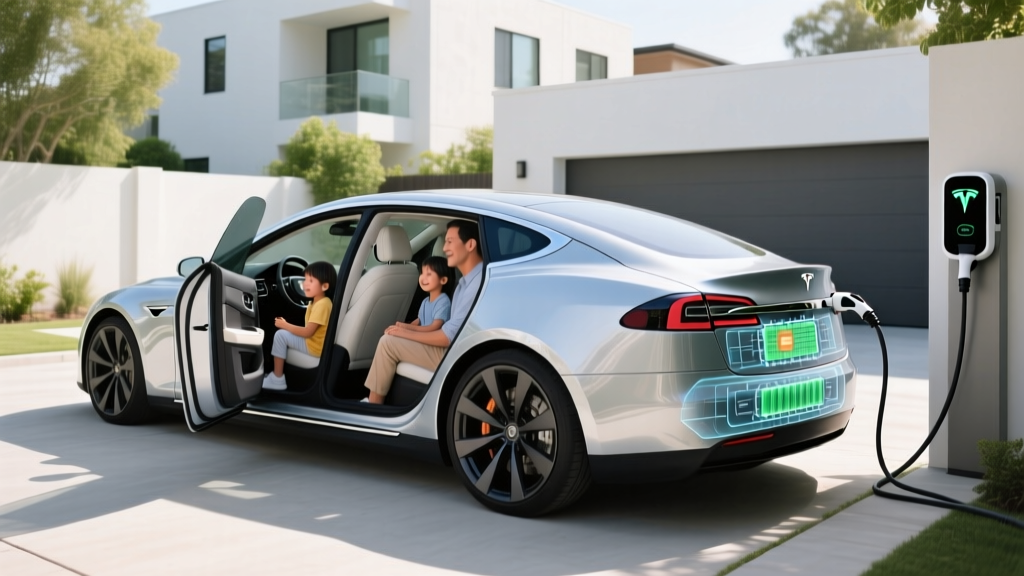
At home, a Tesla Wall Connector on a 60-amp circuit delivers 48 amps (11.5 kW), replenishing the Long Range from empty in roughly 7 hours. Installation costs for a 240V/60A circuit typically run $800–$2,000 depending on panel proximity and local permitting. If your home has a 100-amp main panel, an upgrade to 200 amps may be needed, adding $1,500–$3,000.
Battery Chemistry: LFP vs. NMC in the Model Y Lineup
Tesla continues to split battery chemistry by trim. The Long Range AWD uses an NMC (nickel manganese cobalt) pack from suppliers including Panasonic and LG Energy Solution, offering higher energy density for maximum range. The Standard Range RWD uses an LFP (lithium iron phosphate) pack, typically sourced from CATL.
| Factor | NMC (Long Range) | LFP (Standard Range) |
|---|---|---|
| Energy Density | Higher — more range per kg | Lower — heavier for same kWh |
| Cycle Life | ~1,500–2,000 cycles | ~3,000+ cycles |
| Daily Charge Recommendation | 80% (limit for longevity) | 100% (no penalty) |
| Cold-Weather Performance | Better low-temp charge acceptance | More range loss in freezing temps |
| Cobalt Content | Contains cobalt | Cobalt-free |
For buyers in warm climates like Texas, the LFP Standard Range model is an excellent value play — you get a cobalt-free battery with exceptional cycle life, and the 270-mile range covers most daily needs. For those in colder regions or who regularly road-trip, the NMC Long Range is the better choice.
Performance and Driving Dynamics
The Juniper refresh brought a retuned suspension, acoustic glass, and revised bushings that noticeably reduce road noise and improve ride compliance over pre-2025 models. The Long Range AWD's 384 hp and dual-motor torque delivery produce a 4.8-second 0–60 mph time — brisk enough to merge onto any highway with authority. The Standard Range RWD, at 295 hp and 6.5 seconds, is no slouch either.
Regenerative braking remains strong, with Tesla's one-pedal driving mode allowing most commuters to rarely touch the brake pedal. The steering is quick but light, and while the Model Y is not a sports SUV, the low center of gravity keeps body roll well-controlled. Towing capacity stands at 3,500 pounds for the Long Range AWD when equipped with the optional tow package ($1,000).
Pricing, Trims, and Federal Tax Credit Eligibility
| Trim | Base MSRP | Est. After §30D Credit | Destination |
|---|---|---|---|
| Standard Range RWD | $39,630 | ~$32,130* | $1,390 |
| Long Range AWD | $46,630 | ~$39,130* | $1,390 |
| Long Range AWD w/ FSD | $54,630 | ~$47,130* | $1,390 |
*Estimated effective price assumes full $7,500 federal tax credit or point-of-sale reduction. Actual eligibility depends on IRS §30D requirements.
Under current IRS §30D rules, the Tesla Model Y qualifies for up to $7,500 in federal tax credits, which can now be transferred to the dealer as a point-of-sale price reduction. However, eligibility hinges on several factors:
- MSRP Cap: SUVs must have an MSRP at or below $80,000 (all Model Y trims qualify).
- Buyer Income Cap: Adjusted gross income must not exceed $150,000 (single), $225,000 (head of household), or $300,000 (joint filers).
- Battery Sourcing: At least 50% of critical minerals and 100% of battery components must meet North American sourcing or free-trade-agreement requirements (as of 2026 thresholds). Tesla's supply chain has largely met these requirements for the Model Y, but always verify at fueleconomy.gov before purchasing.
- Final Assembly: Must occur in North America. Giga Texas-built Model Y vehicles satisfy this requirement.
Consult a tax professional for your specific situation. Credit rules have changed annually since 2023 and may shift again.
Interior, Cargo, and Technology
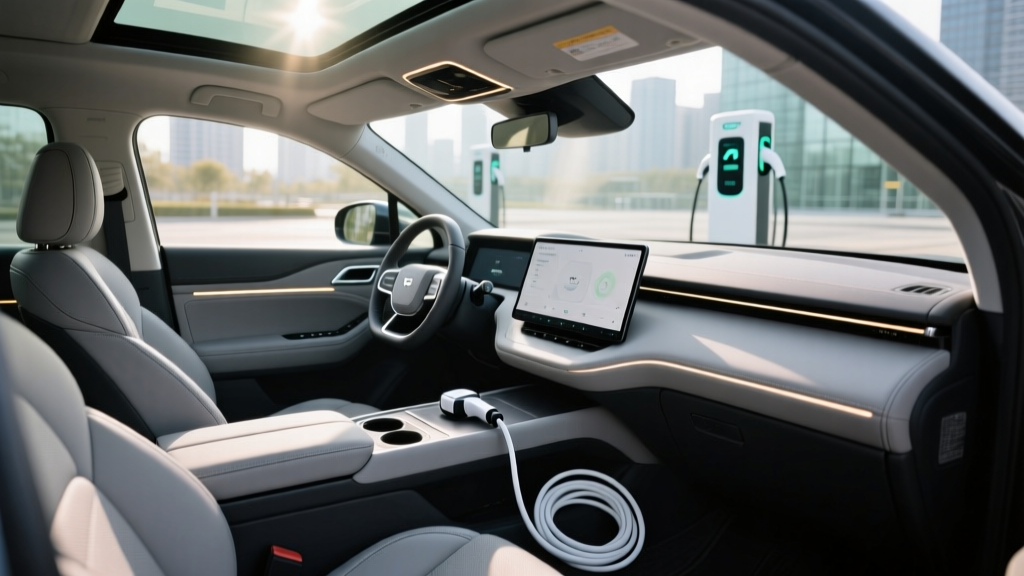
The Juniper interior is a marked improvement. Ventilated front seats (a long-requested feature) are now available, ambient lighting replaces the austere black slab dashboard, and a rear 8-inch touchscreen gives second-row passengers climate and media control. The 15.4-inch front touchscreen runs Tesla's latest software with wireless Apple CarPlay — a first for Tesla — alongside the native Tesla interface.
Cargo volume: 30.2 cubic feet behind the second row, expanding to 72.1 cubic feet with the 60/40 split rear seats folded. The front trunk (frunk) adds 4.1 cubic feet — useful for charging cables or a small carry-on. Rear legroom measures 41.6 inches, which is generous for the segment.
Driver Assistance: Tesla's Basic Autopilot is standard and includes adaptive cruise control and lane centering. Full Self-Driving (Supervised) is an $8,000 add-on or $99/month subscription.
Other notable tech: Sentry Mode dashcam recording, Dog Mode climate control for pets, over-the-air updates that add features post-purchase, and the Tesla app's remote preconditioning and location sharing.
Pros, Cons, and the Verdict
- Class-leading Supercharger network access (20,000+ stalls in North America)
- Excellent efficiency — 122–128 MPGe combined
- Spacious cargo area (72.1 cu ft max) and comfortable rear seat
- Juniper ride quality and cabin noise significantly improved
- LFP option offers cobalt-free, long-cycle-life battery
- Strong §30D tax credit eligibility for most buyers
- DCFC speeds haven't increased — still 250 kW peak while rivals hit 350 kW
- No physical buttons for climate or wipers — all touchscreen-dependent
- FSD (Supervised) remains Level 2 despite the $8,000 price tag
- Insurance costs run 15–25% higher than segment average
- LFP Standard Range struggles in sub-freezing temperatures
Who Should Buy the Giga Texas Model Y?
Choose the Model Y Standard Range RWD if: You commute under 80 miles round-trip, live in a warm climate like Texas or the Sun Belt, want the lowest entry price, and value a cobalt-free LFP battery you can charge to 100% daily without worry.
Look elsewhere if: You prioritize the fastest possible DC charging (Hyundai Ioniq 5 at 350 kW), need a third row (Kia EV9), or want physical buttons and a more traditional infotainment layout.
Frequently Asked Questions
What is the real-world range of the 2026 Tesla Model Y?
The Long Range AWD delivers approximately 265–285 miles at highway speeds (75 mph) in moderate temperatures. In cold weather below 30°F, expect 240–270 miles. The Standard Range RWD yields about 225–250 miles on the highway.
How fast does the Model Y charge at home and on the road?
On a Tesla Supercharger, the Long Range peaks at 250 kW and charges 10–80% in about 25 minutes. At home on a Level 2 Wall Connector (11.5 kW), you gain roughly 44 miles of range per hour — enough for a full overnight charge.
Does the Tesla Model Y qualify for the $7,500 federal tax credit?
Yes, the Model Y is eligible for up to $7,500 under IRS §30D, provided the buyer meets income caps ($150K single / $300K joint), the MSRP is under $80,000 (all trims qualify), and battery sourcing requirements are met. The credit can be applied as a point-of-sale reduction. Verify current eligibility at fueleconomy.gov.
How does the Model Y compare to the Hyundai Ioniq 5 and Ford Mach-E?
The Ioniq 5 charges faster (350 kW peak, 10–80% in ~18 min) and offers a more distinctive design, but has slightly less cargo space and no front trunk. The Mach-E offers a sportier drive and a more traditional interior with physical controls. The Model Y wins on Supercharger network access, efficiency, and software integration.
Is the Giga Texas Model Y different from Fremont-built units?
Giga Texas produces Model Y vehicles using a combination of traditional stamped-body and megacast rear underbody construction. Build quality from Texas has improved significantly since 2023, and all current Juniper Model Y units for the North American market come from Giga Texas.
What is the battery warranty on the Model Y?
Tesla covers the battery and drive unit for 8 years or 120,000 miles (whichever comes first) on the Long Range AWD, with a minimum 70% capacity retention threshold. The Standard Range RWD carries the same 8-year/120,000-mile coverage. Battery replacement out of warranty currently ranges from $12,000 to $16,000 depending on pack size.