Why Buyers Are Searching 'Is Tesla's Catching on Fire?'
Every few months, a viral video of a burning electric vehicle resets the conversation. The phrase Tesla's catching on fire trends on social media, and prospective buyers understandably hit pause. But do the numbers back up the headlines? As of the 2026 model year, the National Highway Traffic Safety Administration (NHTSA) data and independent fire-statistics analyses continue to show that EV battery fires are significantly rarer per vehicle-mile than internal-combustion-engine (ICE) fires. What makes EV fires memorable is their intensity and the thermal-runaway behavior of lithium-ion packs — not their frequency.
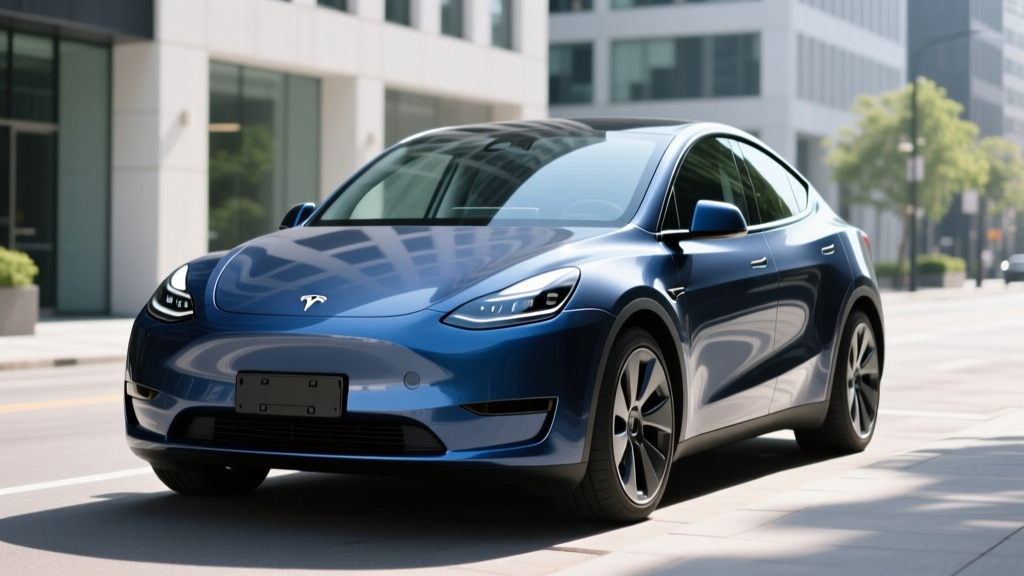
This review tackles the fire-safety question head-on using available data, then moves into the full ownership picture of the 2026 Tesla Model Y — the best-selling EV in the U.S. and the model most often in the viral crosshairs. We'll cover real-world range, charging curves, tax-credit math, and whether it still beats the Hyundai Ioniq 5, Ford Mustang Mach-E, and Chevrolet Equinox EV where it counts.
2026 Tesla Model Y Quick Spec Sheet
| Spec | Long Range AWD | Performance |
|---|---|---|
| EPA Range | 320 miles | 295 miles |
| Battery (usable) | ~75 kWh, NMC | ~75 kWh, NMC |
| Drivetrain | Dual-motor AWD | Dual-motor AWD |
| Horsepower | ~384 hp | ~456 hp |
| 0-60 mph | 4.8 sec | 3.5 sec |
| Peak DC Fast Charge | 250 kW (Supercharger V3) | 250 kW |
| 10-80% DCFC Time | ~27 min | ~27 min |
| Level 2 (11.5 kW) | ~44 mi/hr | ~44 mi/hr |
| MPGe (combined) | 122 MPGe | 111 MPGe |
| Efficiency | 28 kWh/100 mi | 30 kWh/100 mi |
| Cargo (rear up / folded) | 30.2 / 72.1 cu ft | 30.2 / 72.1 cu ft |
| Rear Legroom | 41.6 in | 41.6 in |
| Battery Warranty | 8 yr / 120,000 mi | 8 yr / 120,000 mi |
| Base MSRP | $47,990 | $52,990 |
Fire Risk in Context: EVs vs. Gas Cars
The fear that "Tesla's catching on fire" more often than other cars doesn't hold up statistically. A widely cited analysis of NTSB and Bureau of Transportation Statistics data (reproduced by AutoInsuranceEZ) found approximately 25 EV fires per 100,000 vehicles sold, compared to 1,530 ICE fires per 100,000. Hybrids actually showed the highest rate, likely due to dual powertrains and older pack designs.
What's different about an EV fire is how it burns. Nickel-manganese-cobalt (NMC) packs — the chemistry Tesla uses in the Model Y Long Range and Performance — can enter thermal runaway if cells are physically damaged or deeply shorted. These fires burn hot, can reignite hours later, and require specialized firefighting tactics (copious water, extended monitoring). That makes them visually dramatic and newsworthy, which skews perception.
Tesla's own 2024 safety report (the most recent full-year data published) claimed roughly one vehicle fire per 130 million miles driven, versus the U.S. average of about one per 19 million miles across all vehicles. Take manufacturer-reported figures with appropriate skepticism — they include all fire causes, not just battery-originated — but the directional gap is consistent with NHTSA trends. You can verify current federal data at nhtsa.gov.
The Model Y Long Range AWD carries an EPA rating of 320 miles. In mixed highway driving at 70 mph and 65°F, expect roughly 280-295 miles. In winter conditions (25°F) with cabin heat and no preconditioning, real-world range drops to about 230-250 miles. The heat pump standard on 2026 models mitigates this compared to older Teslas, but physics still wins in deep cold.
Charging Speeds and the Supercharger Reality
Tesla's charging story remains its strongest competitive moat, even now that the North American Charging Standard (NACS) has opened Supercharger access to Ford, Rivian, and GM EVs. The 2026 Model Y still peaks at 250 kW on V3 Superchargers — not class-leading against the Ioniq 5's 800-volt / 350-kW architecture, but the density and uptime of the Supercharger network offset the slower peak on road trips.
| Level | Power | Miles Added per Hour | Typical Use |
|---|---|---|---|
| Level 1 (120V, 12A) | ~1.4 kW | ~5 mi/hr | Emergency / trickle |
| Level 2 (240V, 48A) | 11.5 kW | ~44 mi/hr | Home / workplace |
| DC Fast (V3 Supercharger) | 250 kW peak | ~1,000 mi/hr peak | Road trips |
A critical nuance many spec sheets skip: the charge curve. The Model Y hits 250 kW only in a narrow state-of-charge window (roughly 10-30%). By 50% SoC it has tapered to ~150 kW, and above 80% it drops below 50 kW. That's why the 10-80% time is around 27 minutes, not the 15 minutes peak-kW math might suggest. Preconditioning the battery via navigation to a Supercharger is essential — skip it and you'll see peak rates closer to 120-150 kW even at low SoC.
Driving, Tech, and Where the Model Y Shows Its Age
Performance trim does 0-60 in 3.5 seconds; Long Range AWD in 4.8. Both feel instant around town thanks to electric torque, and the dual-motor traction control is excellent in rain and light snow. Ride quality improved with the 2025 refresh — quieter cabin, retuned dampers — but the Model Y still rides firmer than an Equinox EV or Ioniq 5 over broken pavement.
Tech remains Tesla's signature. The 15.4-inch center screen runs everything (no instrument cluster, no CarPlay), and the 2026 software adds improved voice control and a more legible map-plus-media split. Autopilot is standard and competent for lane-centering and adaptive cruise; Full Self-Driving (Supervised) remains a $8,000 option or $99/month subscription and is, per SAE definitions, Level 2 driver assistance — not self-driving. You must remain engaged, hands on the wheel, eyes on the road. Do not confuse marketing nomenclature with automation level.
Drawbacks worth naming: rear visibility is compromised by the sloping roofline (no rear wiper on some trims), panel gaps remain inconsistent vs. legacy OEMs, and the absence of Apple CarPlay / Android Auto is still a dealbreaker for some households. Service-center wait times in major metros can stretch weeks for bodywork.
Pricing, Trims, and the Federal Tax Credit Math
The 2026 Model Y lineup simplified to three trims at launch: Long Range RWD (~$44,990, limited availability), Long Range AWD ($47,990), and Performance ($52,990). All sit under the IRS §30D MSRP cap of $80,000 for SUVs/pickups, so price alone does not disqualify them. The real filters are buyer income and battery-sourcing requirements.
| Trim | MSRP | Max §30D Credit | Effective Price* |
|---|---|---|---|
| Long Range RWD | $44,990 | $7,500 | $37,490 |
| Long Range AWD | $47,990 | $7,500 | $40,490 |
| Performance | $52,990 | $7,500 | $45,490 |
*Effective price assumes full $7,500 credit eligibility. Verify current rules at irs.gov.
- Income caps: $150k single / $225k head of household / $300k joint MAGI.
- MSRP cap: $80,000 for SUVs — Model Y clears this easily.
- Battery sourcing: Critical-minerals and battery-component thresholds tighten annually. For 2026, a large share of Tesla's North American-assembled packs qualify, but specific trim/color combinations can shift eligibility mid-year. Confirm the VIN on the IRS qualified-vehicles list before signing.
- Point-of-sale transfer: You can apply the credit as a down-payment reduction at the dealer rather than waiting for tax-time reconciliation.
Model Y vs. the Competition: Who Wins Where
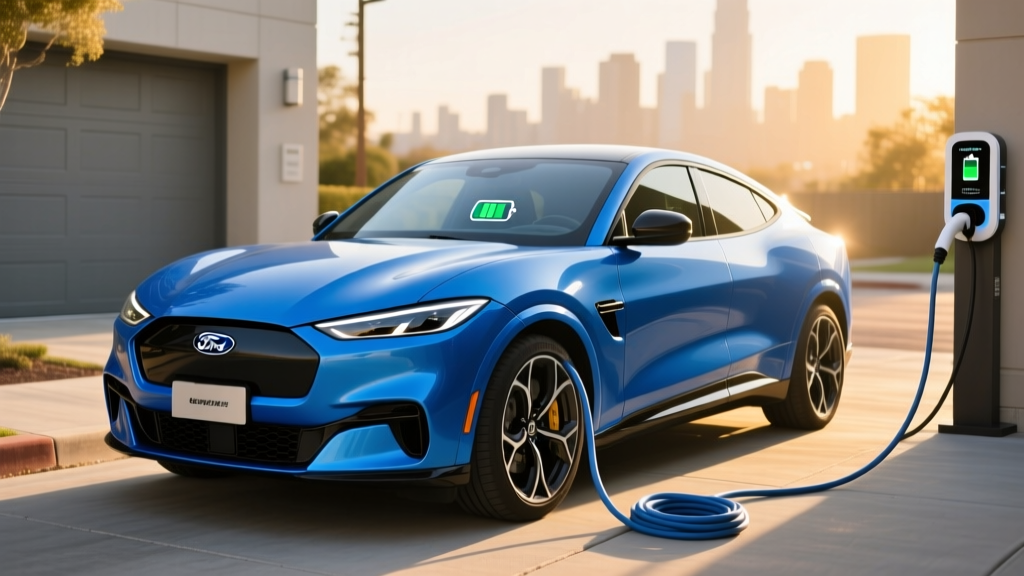
Against the Hyundai Ioniq 5 (EPA 305 mi, 350-kW 800V charging, ~$47k), the Model Y wins on range, Supercharger network access, and cargo volume, but loses on charging speed and CarPlay. The Ford Mustang Mach-E (EPA 320 mi on Extended Range, ~$43k) is a close peer; its BlueCruise hands-free highway driving is a legitimate alternative to Autopilot for commuters. The Chevrolet Equinox EV undercuts on price (~$35k base, EPA 319 mi) but trails on performance and charging infrastructure.
Pros and Cons at a Glance
- 320-mile EPA range; 280+ real-world in mild conditions
- Supercharger network reliability (17,000+ U.S. stalls)
- Class-leading cargo volume and frunk storage
- Strong efficiency (28 kWh/100 mi)
- Over-the-air updates add features post-purchase
- 250-kW peak DCFC trails 800V rivals
- No CarPlay / Android Auto
- FSD (Supervised) is expensive and still Level 2
- Service-center capacity strained in some regions
- Firm ride over rough pavement
Frequently Asked Questions
Is Tesla's catching on fire more often than gas cars?
No. Per NHTSA and BTS-derived analyses, EV fires occur at roughly 25 per 100,000 vehicles versus 1,530 per 100,000 for ICE vehicles. EV fires are rarer but more intense when they occur due to thermal runaway in lithium-ion packs, which is why they dominate headlines.
What is the real-world range of the 2026 Model Y?
EPA rates the Long Range AWD at 320 miles. Expect 280-295 miles in mixed 70-mph driving at moderate temperatures, and 230-250 miles in 25°F winter conditions without aggressive preconditioning.
How fast does the Model Y charge at home and on the road?
On a 48-amp Level 2 home charger (11.5 kW), you gain about 44 miles per hour — a full overnight top-up. On a V3 Supercharger, 10-80% takes roughly 27 minutes with proper preconditioning, peaking at 250 kW.
Does the 2026 Model Y qualify for the federal EV tax credit?
It can, subject to IRS §30D rules: buyer MAGI under $150k/$225k/$300k (single/HOH/joint), SUV MSRP under $80,000 (all trims qualify), and current-year battery-sourcing thresholds. Always confirm your VIN on the IRS qualified-vehicle list before purchase, as eligibility can change mid-year.
Is FSD actually self-driving?
No. Full Self-Driving (Supervised) is an SAE Level 2 driver-assist system. You must keep hands on the wheel and eyes on the road at all times. True driverless operation (Level 4) in the U.S. is currently limited to geofenced robotaxi services.
Is the Model Y still worth buying in 2026?
If your priorities are range, cargo space, and reliable road-trip charging, yes — it remains the segment benchmark. If you prioritize ultra-fast DC charging, CarPlay integration, or a softer ride, test-drive the Ioniq 5 or Mach-E before committing.