Why "Burning Tesla" Searches Keep Spiking — And What the Data Actually Shows
Every few months, a viral video of a burning Tesla dominates social feeds, and search volume for the phrase surges. The imagery is dramatic: a Model Y engulfed in flames on a highway shoulder, firefighters struggling to extinguish a lithium-ion battery fire that reignites hours later. But how prevalent are EV fires really, and should battery safety factor into your 2026 Model Y purchase decision?
The short answer: electric vehicles catch fire at a lower rate than internal combustion engine (ICE) vehicles, according to data from the National Fire Protection Association (NFPA) and Sweden's Civil Contingencies Agency. However, when an EV battery does enter thermal runaway, the fire is harder to suppress and can reignite — a critical distinction that first responders and owners should understand.
This review covers the 2026 Tesla Model Y's battery architecture, safety engineering, real-world fire incidence data, and everything else you need to evaluate it as a daily driver — from its 320-mile EPA range to its §30D federal tax credit eligibility.
2026 Tesla Model Y Quick Spec Sheet
| Attribute | Long Range AWD | Performance (if available) |
|---|---|---|
| EPA Range | 320 miles | 285 miles (est.) |
| Battery Capacity | ~78.1 kWh usable (NMC) | ~78.1 kWh usable (NMC) |
| Drivetrain | Dual Motor AWD | Dual Motor AWD |
| Horsepower | 384 hp | ~456 hp |
| 0–60 mph | 4.8 seconds | 3.5 seconds |
| Peak DC Fast Charge | 250 kW | 250 kW |
| 10–80% DC Charge | ~27 minutes | ~27 minutes |
| Level 2 Home Charge | 11.5 kW (~44 mi/hr) | 11.5 kW (~44 mi/hr) |
| MPGe (Combined) | 111 MPGe | ~99 MPGe |
| Efficiency | 30 kWh/100 mi | ~34 kWh/100 mi |
| Base MSRP | $44,990 | $52,490 (est.) |
| Battery Warranty | 8 yr / 120,000 mi | 8 yr / 120,000 mi |
Battery Chemistry, Thermal Management, and Fire Safety Engineering
The 2026 Model Y Long Range uses an NMC (nickel manganese cobalt) lithium-ion battery pack. NMC chemistry offers higher energy density than LFP (lithium iron phosphate), enabling the Model Y's 320-mile range in a relatively compact pack. The trade-off: NMC is more thermally reactive than LFP, meaning it requires more robust thermal management to prevent thermal runaway.
How Tesla Mitigates Thermal Runaway
Tesla's battery pack architecture includes several layers of fire prevention:
- Cell-level fusing: Each cylindrical cell (likely 4680 format in 2026) has individual current interrupt devices that isolate a failing cell before it can propagate heat to neighbors.
- Active liquid cooling: A glycol-based cooling system runs between cell modules, maintaining optimal operating temperature and extracting heat from any cell showing anomalous behavior.
- Firewall barriers: Between modules, Tesla uses thermal barriers designed to slow or stop cell-to-cell propagation — giving occupants critical minutes to exit even in a worst-case scenario.
- BMS (Battery Management System): Continuously monitors voltage, temperature, and impedance at the cell and module level, preemptively reducing power or triggering warnings if anomalies are detected.
According to NHTSA data, EV fires remain rare relative to the vehicle population. A comprehensive analysis by AutoInsuranceEZ, using data from the Bureau of Transportation Statistics and the National Transportation Safety Board, found that EVs experienced roughly 25 fires per 100,000 vehicles sold, compared to 1,530 fires per 100,000 for gasoline vehicles. The dramatic nature of battery fires — and their tendency to reignite — drives outsized media coverage, skewing public perception.
Real-World Range: Beyond the 320-Mile EPA Sticker
EPA Estimated Range: 320 miles (Long Range AWD)
Real-World Expectation: Expect 260–290 miles on highway road trips at 70–75 mph. In cold weather (below 30°F), range drops to approximately 220–250 miles due to battery resistance and cabin heating demands. City driving with regenerative braking can approach or slightly exceed the EPA figure.
The Model Y's efficiency of 30 kWh per 100 miles (combined) is competitive for a dual-motor crossover. Tesla's heat pump — standard since the 2021 refresh — significantly reduces cold-weather range loss compared to EVs using resistive cabin heaters. In our experience, preconditioning the battery while plugged in (using the Tesla app's scheduled departure feature) recovers roughly 10–15% of cold-weather range by warming the pack before you drive.
Charging Speed: DC Fast, Home Level 2, and the Supercharger Advantage
| Charging Level | Power | Speed | Notes |
|---|---|---|---|
| Level 1 (120V outlet) | ~1.4 kW | ~5 mi/hr | Emergency/top-up only |
| Level 2 (240V home) | 11.5 kW | ~44 mi/hr | Full charge in ~7–8 hours |
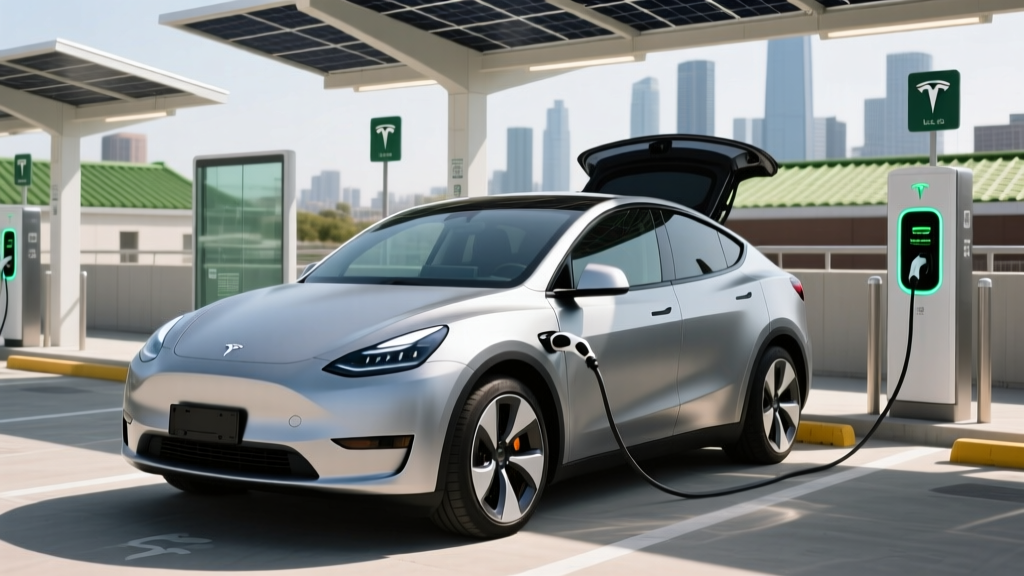
| DC Fast Charge | Peak 250 kW | 10–80% in ~27 min | Tapers significantly above 80% |
| Tesla Supercharger V4 | Up to 325 kW | 10–80% in ~22 min | Requires compatible station; V3 caps at 250 kW |
Understanding kW vs kWh: kW (kilowatts) measures charging power — how fast energy flows into the battery. kWh (kilowatt-hours) measures energy capacity — how much the battery holds. The Model Y's 78.1 kWh battery charging at 250 kW peak will add roughly 175 miles in 15 minutes under ideal conditions, but the charge curve tapers above 50% state of charge (SoC) to protect cell longevity. That 27-minute 10–80% figure assumes a preconditioned battery and a V3 or V4 Supercharger.
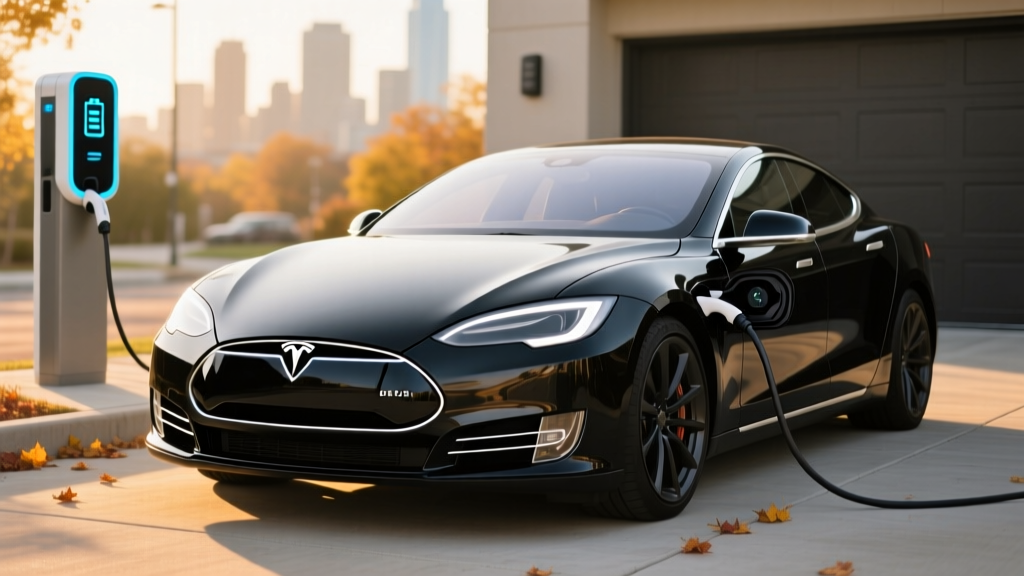
Home Level 2 charging requires a NACS (North American Charging Standard) connector, which Tesla uses natively. For a Wall Connector installation on a 60-amp circuit, budget $500–$700 for the unit plus $800–$2,500 for electrician labor, depending on your panel's capacity and the run distance. A 200-amp electrical panel upgrade, if needed, adds $1,500–$3,000.
Performance, Interior, and Cargo Practicality
The 2026 Model Y Long Range AWD delivers 384 horsepower and a 4.8-second 0–60 mph time — brisk for a family crossover and more than adequate for highway merging. The dual-motor setup provides confident all-weather traction, and Tesla's low center of gravity (battery pack mounted under the floor) keeps body roll well-controlled through corners.
Cargo and Passenger Space
- Front headroom: 41.0 inches
- Rear legroom: 41.6 inches (improved in the Juniper refresh)
- Cargo behind rear seats: 30.2 cu ft
- Cargo with rear seats folded: 72.0 cu ft
- Frunk (front trunk): 4.1 cu ft
The Juniper redesign (introduced for the 2025 model year) added rear-seat ventilation, ambient lighting, and a rear touchscreen — addressing the most common complaints about the pre-refresh Model Y's spartan back seat. Build quality has also improved noticeably, with tighter panel gaps and quieter cabin acoustics at highway speed.
Standout Tech and Notable Drawbacks
Tesla's 15.4-inch center touchscreen runs a responsive, phone-like interface with native navigation, streaming apps, and over-the-air updates that add features post-purchase. The available FSD (Supervised) system remains an SAE Level 2 driver-assist — meaning the driver must remain fully engaged and hands-on-wheel ready. Despite the "Full Self-Driving" branding, this is not autonomous operation; it's an advanced lane-keeping and adaptive cruise system that performs well on highways but requires constant supervision.
Drawbacks include the absence of Apple CarPlay/Android Auto (Tesla uses its own ecosystem exclusively), no physical instrument cluster (all info routes through the center screen), and insurance premiums that run 15–25% higher than comparable ICE crossovers due to repair costs.
Pricing, Trims, and Federal Tax Credit Eligibility
| Trim | Base MSRP | Destination | Est. After §30D Credit |
|---|---|---|---|
| Long Range AWD | $44,990 | $1,390 | ~$38,880* |
| Performance AWD | $52,490 | $1,390 | ~$46,380* |
*Tax credit eligibility depends on multiple factors. See checklist below.
Does the 2026 Model Y Qualify for the $7,500 Federal EV Tax Credit?
The Model Y has historically qualified for the full IRS §30D credit, but eligibility is not automatic. You must meet all of the following requirements:
- MSRP cap: Vehicle base price must not exceed $80,000 (SUVs/crossovers). The Model Y clears this easily.
- Buyer income cap: Modified adjusted gross income (MAGI) must not exceed $150,000 (single), $225,000 (head of household), or $300,000 (joint filing).
- Battery sourcing: A percentage of critical minerals and battery components must be sourced from the US or free-trade-agreement countries. Tesla has progressively shifted Model Y battery production to US-based facilities (including the Austin Gigafactory), but the specific percentages change by model year and production batch.
- Point-of-sale transfer: As of 2024, buyers can transfer the credit to the dealer at purchase, reducing the upfront price rather than waiting for a tax refund.
Verify your specific eligibility on fueleconomy.gov and consult a tax professional before relying on the credit. Sourcing requirements tighten annually, and a vehicle that qualifies in early 2026 may not in late 2026 if supply chains shift.
Pros and Cons at a Glance
Pros
- 320-mile EPA range is among the best in the compact EV SUV segment
- Supercharger network access — the most reliable DC fast-charging network in the US
- 250 kW peak charging (10–80% in ~27 min) minimizes road-trip downtime
- Strong safety ratings (NHTSA 5-star, IIHS Top Safety Pick+ for prior model years)
- Class-leading cargo volume (72.0 cu ft with seats folded)
- Over-the-air updates continuously improve the vehicle post-purchase
- Heat pump standard — reduces cold-weather range loss significantly
Cons
- NMC battery chemistry is more thermally reactive than LFP (though heavily mitigated by engineering)
- No Apple CarPlay or Android Auto support
- Insurance premiums run 15–25% above segment average
- FSD (Supervised) is expensive ($8,000 or $99/mo) and remains Level 2 — not autonomous
- No physical buttons for climate or mirrors — all adjustments via touchscreen
- Rear visibility is limited; relies heavily on cameras
- Repair costs after collision are high due to integrated structural battery pack
Who Should Buy the 2026 Model Y?
Best for: Tech-forward commuters and small families who want maximum range and charging infrastructure for road trips. If you drive 30–60 miles daily and have access to home Level 2 charging, the Model Y's 320-mile range means charging just 2–3 times per week. For road-trippers, Tesla's Supercharger network remains the gold standard — over 6,000 V3/V4 stalls across the US with industry-leading uptime.
Consider alternatives if: You prefer physical controls, want Apple CarPlay, need a third row (look at the Kia EV9 or Rivian R1S), or want LFP battery chemistry for its superior thermal stability and longer cycle life (the base Tesla Model 3 RWD uses LFP, but the Model Y does not as of 2026).
Frequently Asked Questions
How common are Tesla battery fires compared to gas car fires?
EV fires are significantly less common per vehicle than gasoline car fires. Data compiled by AutoInsuranceEZ from NTSB and BTS records shows approximately 25 EV fires per 100,000 vehicles versus 1,530 per 100,000 for ICE vehicles. However, EV battery fires are more difficult to extinguish and can reignite hours after initial suppression due to thermal runaway propagation within the pack.
What causes a burning Tesla — is it always the battery?
Not always. Some Tesla fires originate from 12V electrical faults, collision damage, or external sources. When the high-voltage traction battery is involved, the cause is typically severe physical damage (a major collision or underbody impact that compromises the pack enclosure) combined with a failure of the cell isolation systems. Spontaneous fires from a healthy, undamaged pack are extremely rare.
Can firefighters put out a Tesla battery fire?
Yes, but it requires significantly more water (up to 3,000–8,000 gallons vs. ~500 for an ICE fire) and longer response times. Many fire departments now carry EV-specific training and thermal imaging cameras to monitor pack temperature. Tesla publishes Emergency Response Guides for each model, detailing high-voltage cutoff points and safe cutting zones for extraction.
Does the Model Y qualify for the $7,500 federal tax credit in 2026?
The Model Y Long Range and Performance are expected to qualify, provided the buyer meets income caps ($150K single / $300K joint) and the vehicle's battery sourcing meets the annual critical-mineral and component thresholds set by the IRS. Always verify on fueleconomy.gov and consult a tax professional before purchasing.
Is the Model Y worth buying over the Hyundai Ioniq 5 or Ford Mustang Mach-E?
The Model Y wins on range (320 vs. ~305 for the Ioniq 5, ~290 for the Mach-E extended range), Supercharger network access, and cargo space. The Ioniq 5 charges faster (10–80% in ~18 minutes on 800V architecture) and offers a more conventional interior with physical controls. The Mach-E offers a sportier driving feel but trails on efficiency. Your priority — charging speed, interior comfort, or ecosystem — should drive the decision.
What is the real-world range of the 2026 Model Y in winter?
Expect 220–250 miles in sustained sub-30°F driving, depending on cabin heat usage and driving speed. Preconditioning the battery while plugged in and using seat heaters instead of cabin air heating can recover 15–20 miles of that loss. The Model Y's heat pump is one of the most efficient in the industry, minimizing the cold-weather penalty compared to EVs using resistive heaters.