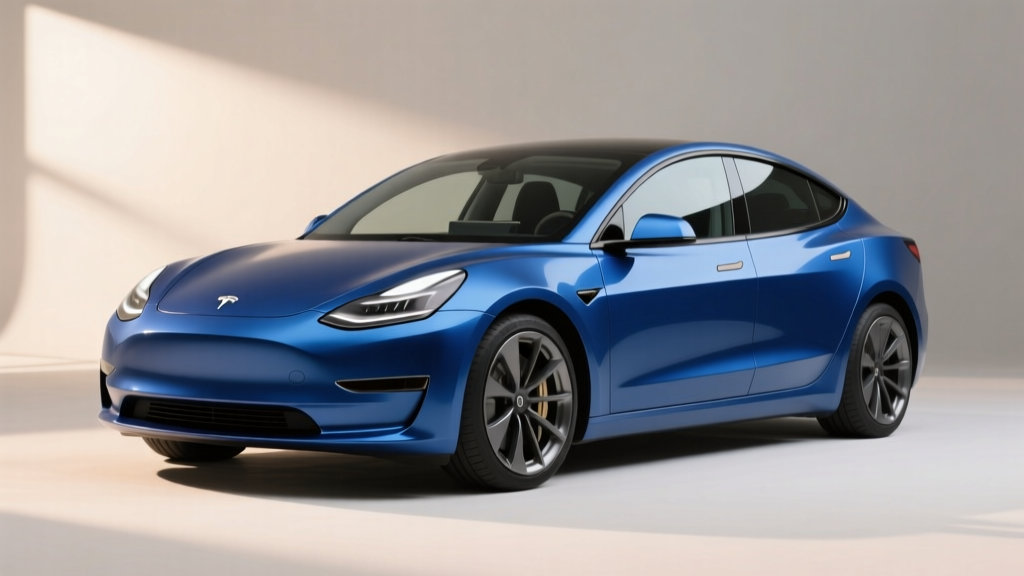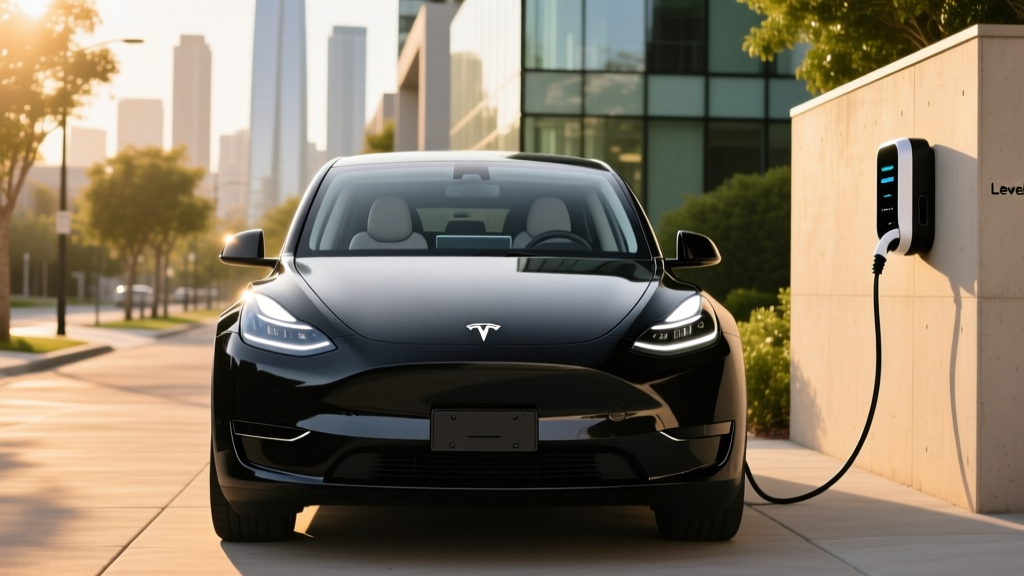
The 2026 Tesla Model Y Juniper refresh sharpens an already dominant crossover with a quieter cabin, updated suspension tuning, and a revised battery pack. For buyers, the bigger question isn't whether the Model Y is competent — it is — but whether the numbers pencil out. With Tesla Model Y financing rates fluctuating in response to macroeconomic conditions and Tesla's own promotional APR offers, understanding the full cost picture requires looking at the sticker price, federal tax credit eligibility, real-world range, and five-year ownership math together.
This review breaks down every figure that matters: EPA range versus what you'll actually see on a cold highway morning, DC fast-charging curves, IRS §30D credit eligibility, and how Tesla's captive financing compares to third-party lenders. All specs reflect the 2026 model year as sold in the United States.
2026 Tesla Model Y Specs at a Glance
| Attribute | Long Range AWD | Performance |
|---|---|---|
| EPA Range | 320 mi | 293 mi |
| Battery (usable) | ~75 kWh, NMC | ~75 kWh, NMC |
| Drivetrain | Dual-motor AWD | Dual-motor AWD |
| Horsepower | 384 hp | 456 hp |
| 0–60 mph | 4.8 sec | 3.5 sec |
| Peak DC Charge Rate | 250 kW | 250 kW |
| 10–80% DCFC Time | ~25 min | ~25 min |
| Level 2 Rate (11.5 kW) | ~44 mi/hr | ~44 mi/hr |
| MPGe (combined) | 111 MPGe | 103 MPGe |
| Efficiency | 28 kWh/100 mi | 31 kWh/100 mi |
| Cargo (rear seats up) | 30.2 cu ft | 30.2 cu ft |
| Cargo (rear seats folded) | 72.1 cu ft | 72.1 cu ft |
| Rear Legroom | 41.6 in | 41.6 in |
| Towing Capacity | 3,500 lb | 3,500 lb |
| Base MSRP | $44,990 | $51,490 |
| Battery Warranty | 8 yr / 120,000 mi | 8 yr / 120,000 mi |
| Basic Warranty | 4 yr / 50,000 mi | 4 yr / 50,000 mi |
Sources: fueleconomy.gov, Tesla spec sheets. Performance figures may vary with wheel option and software updates.
Real-World Range: What the EPA Sticker Doesn't Tell You
Real-world expectation: ~260–290 miles on mixed highway driving; ~200–230 miles in sustained sub-freezing temperatures with cabin heat.
The Long Range AWD's 320-mile EPA figure is competitive for the segment, but real-world efficiency depends heavily on conditions. At 75 mph on a flat interstate in 65°F weather, expect roughly 270–285 miles before the battery buffer warns you to find a charger. Push speeds to 80+ mph or encounter headwinds and elevation gain, and that drops closer to 250 miles.
Cold weather is the equalizer. Tesla's heat pump — standard on all 2026 Model Y trims — recovers waste heat from the drivetrain to warm the cabin, reducing the range penalty compared to older resistive-heater EVs. Even so, at 20°F with the cabin set to 70°F, plan for 30–35% range loss on short trips where the battery and cabin must heat from cold. Preconditioning the battery while plugged in (using the Tesla app's scheduled departure feature) mitigates this significantly by warming the pack before you drive.
The Performance trim's stickier tires and sportier tuning cost you about 27 EPA miles, landing at 293. For most buyers, the Long Range is the efficiency sweet spot.
Charging Speed: DC Fast Charging and Home Level 2
| Charging Level | Power | Connector | Speed |
|---|---|---|---|
| Level 1 (120V) | ~1.4 kW | NACS (J3400) | ~3–4 mi/hr |
| Level 2 (240V, 48A) | 11.5 kW | NACS (J3400) | ~44 mi/hr |
| DC Fast Charge | Peak 250 kW | NACS (J3400) | 10–80% in ~25 min |
The 2026 Model Y uses the NACS (J3400) connector natively, giving it seamless access to the full Tesla Supercharger network — still the most reliable DC fast-charging ecosystem in the US, with over 20,000 stalls nationally. The peak 250 kW charge rate is achievable at V3 and V4 Superchargers when the battery is properly preconditioned (the car does this automatically when you navigate to a Supercharger).
Understand the charge curve: the 250 kW peak holds roughly from 10% to 35% State of Charge, then tapers. By 60% SoC, you'll see approximately 120–140 kW. Above 80%, the rate drops sharply to protect battery longevity — charging from 80% to 100% can take as long as the 10–80% session. For road trips, plan stops at 10–80% to minimize time at the stall.
At home on a Wall Connector (48-amp circuit, 60-amp breaker), the onboard charger accepts 11.5 kW, replenishing roughly 44 miles of range per hour. A full overnight charge from 20% to 80% takes about 4 hours — more than adequate for daily driving. Installation costs for a 240V/60A circuit typically run $800–$2,000 depending on panel proximity and local permitting, on top of the ~$400 Wall Connector hardware cost.
Tesla Model Y Financing Rates and Total Cost
Tesla offers captive financing through Tesla Finance, and rates vary based on creditworthiness, loan term, and promotional periods. As of early 2026, typical Tesla Model Y financing rates through Tesla Finance range from approximately 4.99% to 7.99% APR for 36- to 72-month terms for buyers with excellent credit (720+ FICO). Buyers with good credit (660–719) may see rates between 6.49% and 9.49% APR.
Tesla periodically offers promotional APRs — sometimes as low as 1.99% or 2.99% for 36-month terms — to stimulate deliveries at quarter-end. These promos are time-limited and often require excellent credit. Always check Tesla's website for current offers before committing.
| Cost Factor | Long Range AWD | Performance |
|---|---|---|
| Base MSRP | $44,990 | $51,490 |
| Destination Fee | $1,390 | $1,390 |
| Federal Tax Credit (§30D) | Up to $7,500* | Up to $7,500* |
| Effective Price (after max credit) | ~$38,880 | ~$45,380 |
| Est. Monthly Payment (72 mo, 5.99% APR, max credit) | ~$643 | ~$751 |
*Federal tax credit eligibility depends on multiple factors. See the tax credit section below.
Third-party lenders — credit unions, banks, and online lenders — sometimes beat Tesla Finance rates, particularly for shorter terms. Capital One Auto Navigator, PenFed, and local credit unions are worth quoting. The advantage of Tesla Finance is streamlined processing at delivery; the disadvantage is that rates aren't always the most competitive. Get pre-approved externally before ordering to use as leverage.
Leasing is also available through Tesla, with typical money factors translating to effective APRs in the 5–8% range. Leasing may allow point-of-sale credit application depending on the lessor's structure — consult a tax professional for your situation.
Federal EV Tax Credit: Does the 2026 Model Y Qualify?
- MSRP Cap: SUVs must be under $80,000. The Model Y qualifies (base $44,990–$51,490).
- Buyer Income Cap: Modified AGI ≤ $150,000 (single), $225,000 (head of household), $300,000 (joint).
- Battery Sourcing: Critical minerals and battery components must meet phased-in domestic/free-trade-partner thresholds. Tesla has worked to qualify US-built Model Y variants, but sourcing rules tighten annually.
- Assembly: Must be assembled in North America. The Model Y is built in Fremont, CA, and Austin, TX — both qualify.
- Point-of-Sale Transfer: Since 2024, the credit can be transferred to the dealer at purchase, reducing the sale price directly rather than waiting for a tax refund.
The Model Y's eligibility for the full $7,500 credit has been inconsistent as IRS sourcing requirements tighten each year. For the 2026 model year, Tesla's US-built vehicles have generally maintained eligibility for at least a partial credit, but the exact amount depends on the specific battery cell sourcing in your vehicle's production batch. Always verify current eligibility on IRS.gov or fueleconomy.gov before placing an order, and consult a tax professional regarding your personal eligibility.
The point-of-sale transfer option means qualifying buyers can apply the credit as a down-payment reduction at delivery, which directly lowers the financed amount and monthly payment. If you're above the income cap, you won't qualify regardless of the vehicle's eligibility.
Performance, Ride, and Daily Driving
The Long Range AWD's 4.8-second 0–60 time is brisk for a family crossover, and the dual-motor all-wheel-drive system provides confident traction in rain and light snow. The Juniper refresh brought a retuned suspension with frequency-selective dampers that absorb sharp pavement impacts more gracefully than the pre-refresh Model Y, though the ride remains firm compared to a Hyundai Ioniq 5 or a Ford Mustang Mach-E.
The Performance trim's 3.5-second 0–60 is genuinely quick — territory once reserved from sports sedans — and includes larger brakes, a lowered sport suspension, and 21-inch wheels. The trade-off is roughly 10% less range and a noticeably stiffer ride.
Regenerative braking in the Model Y is aggressive in its default setting, enabling effective one-pedal driving in most city and suburban conditions. The steering is precise and quick-ratio, though it lacks the feedback some enthusiasts want. Cabin noise has improved significantly with the Juniper update, with laminated glass all around and additional sound deadening.
Interior, Cargo, and Technology
The 2026 Model Y cabin follows Tesla's minimalist philosophy: a single 15.4-inch touchscreen handles infotainment, climate, navigation, and vehicle settings. There is no separate instrument cluster — speed and range information display in the upper-left corner of the main screen. The Juniper refresh introduced ambient lighting, ventilated front seats, and a rear-seat touchscreen for passenger climate and media control.
Cargo volume is a strong suit: 30.2 cubic feet behind the second row and 72.1 cubic feet with the 60/40 split rear seats folded. The rear trunk opening is wide and the load floor is low, making it practical for strollers, groceries, and camping gear. A small front trunk (frunk) adds about 4.1 cubic feet for charging cables or a laptop bag.
Rear legroom measures 41.6 inches — adequate for adults on longer trips, though the rear seat cushion is relatively flat and low, which tall passengers notice on drives over two hours. Three-across seating works for children but is tight for adults.
Tech highlights: Tesla's navigation with real-time Supercharger routing, over-the-air software updates that add features post-purchase, the Tesla mobile app for remote preconditioning and monitoring, and a robust dashcam/Sentry Mode security system. The optional Full Self-Driving (Supervised) package ($8,000 or $99/month) adds city-street autosteer, but remains a SAE Level 2 system requiring continuous driver supervision — it is not autonomous driving.
Pros and Cons
- Supercharger network access — the most reliable DCFC ecosystem in the US
- Class-leading efficiency at 28 kWh/100 mi (Long Range)
- Strong cargo capacity and practical hatchback form factor
- Continuous OTA updates add features over time
- Competitive financing promos available periodically
- Touchscreen-only controls frustrate some drivers (no physical climate knobs)
- Firm ride quality, especially on Performance trim with 21" wheels
- FSD (Supervised) is expensive and still requires full driver attention
- Tax credit eligibility can shift with sourcing rule changes
- No Apple CarPlay or Android Auto
How the Model Y Stacks Up Against Competitors
The Model Y's closest rivals are the Ford Mustang Mach-E (Extended Range AWD: 305 mi EPA, ~$48,995) and the Hyundai Ioniq 5 (Long Range AWD: 290 mi EPA, ~$49,450). The Model Y wins on efficiency, Supercharger access, and cargo space. The Ioniq 5 counters with 800V architecture enabling 10–80% charging in roughly 18 minutes at a 350 kW charger, a more comfortable ride, and physical buttons. The Mach-E offers a more engaging driving feel and a traditional crossover aesthetic that some buyers prefer.
On financing, Ford and Hyundai both offer captive-lender promotional rates that can undercut Tesla's standard APR, especially for returning lessees or loyalty customers. If financing rate is your primary lever, get quotes from all three manufacturers' financial arms before deciding.
Who Should Buy the 2026 Tesla Model Y?
- Choose the Model Y Long Range if: You want maximum range and efficiency, rely on road-trip charging infrastructure (Superchargers), and value cargo versatility with a hatchback profile.
- Choose the Model Y Performance if: Acceleration matters to you, you accept a ~27-mile range trade-off and firmer ride, and you want the sportiest EV crossover under $55,000.
- Look elsewhere if: You need Apple CarPlay, prefer physical buttons, want the fastest possible DC charging (Ioniq 5's 800V system), or find the touchscreen-only interface distracting.
The Model Y is best suited for tech-comfortable families and commuters who can charge at home and want the lowest-effort road-trip charging experience. Its combination of efficiency, Supercharger access, and cargo practicality is difficult to match, even as competitors close the gap in ride comfort and charging speed.
Frequently Asked Questions
What financing rates does Tesla offer on the 2026 Model Y?
Tesla Finance typically offers APRs from approximately 4.99% to 7.99% for excellent-credit buyers on 36- to 72-month terms. Promotional rates as low as 1.99%–2.99% are occasionally available for shorter terms. Third-party lenders may offer competitive or lower rates — always compare.
What is the real-world range of the 2026 Model Y Long Range?
The EPA rates it at 320 miles. In real-world highway driving at 70–75 mph, expect 260–290 miles. In sustained freezing weather, plan for 200–230 miles. Preconditioning while plugged in helps recover some cold-weather range.
Does the 2026 Tesla Model Y qualify for the $7,500 federal tax credit?
The Model Y is assembled in the US and falls under the $80,000 SUV MSRP cap, making it potentially eligible. However, the full $7,500 depends on battery component and critical-mineral sourcing requirements that tighten each year, plus your personal income eligibility. Verify on fueleconomy.gov and consult a tax professional before relying on the credit.
How fast does the Model Y charge at home?
On a 240V/48A Level 2 circuit (Tesla Wall Connector or equivalent), the Model Y charges at 11.5 kW, adding approximately 44 miles of range per hour. A typical overnight session from 20% to 80% takes about 4 hours.
Is the Model Y better than the Ford Mustang Mach-E or Hyundai Ioniq 5?
It depends on your priorities. The Model Y leads in efficiency, Supercharger access, and cargo volume. The Ioniq 5 charges faster on compatible 350 kW chargers and rides more comfortably. The Mach-E offers more engaging driving dynamics. All three are strong — test-drive each and compare financing offers.
Is Tesla's Full Self-Driving actually self-driving?
No. FSD (Supervised) is an SAE Level 2 driver-assistance system. You must keep your hands on the wheel, eyes on the road, and remain fully responsible for driving at all times. It can assist with highway lane changes, city-street navigation, and stop-light recognition, but it does not drive the car autonomously.
What is the battery warranty on the 2026 Model Y?
Tesla covers the battery and drive unit for 8 years or 120,000 miles (whichever comes first) with a minimum 70% capacity retention threshold. The basic vehicle warranty is 4 years or 50,000 miles.