Quick Verdict: The Benchmark EV SUV Still Earns Its Spot
The 2026 Tesla Model Y remains the default answer for buyers shopping a mid-size electric crossover. It isn't the newest platform in the segment — rivals like the Hyundai Ioniq 5, Ford Mustang Mach-E, and Chevrolet Equinox EV have closed the gap on interior quality and ride comfort — but the Model Y still leads where it matters most: charging infrastructure access, software capability, and real-world efficiency. For 2026, Tesla has refreshed the Model Y with a revised interior, improved acoustic glass, and a slightly larger battery pack on Long Range trims, nudging EPA range upward. The question for many buyers now isn't just whether the Model Y is good, but whether the Tesla Model Y extended warranty cost makes financial sense given the vehicle's reliability track record and repair pricing outside of factory coverage.
Range, Efficiency, and the Real-World Reality
The 2026 Model Y is offered in three main configurations: Long Range RWD, Long Range AWD, and Performance AWD. EPA range figures vary by trim and wheel size, and as always, the sticker number is only part of the story.
- EPA estimated range: 335 miles (19" wheels) / 310 miles (21" wheels)
- Real-world highway (70-75 mph, moderate temps): ~275-295 miles
- Real-world cold weather (below 32°F, mixed driving): ~230-260 miles
- City/regenerative-heavy driving (mild temps): ~310-330 miles
The Model Y's heat pump is one of the best in the industry, limiting cold-weather range loss to roughly 20-25% — better than most competitors that lose 30-40%. Still, if you live in the upper Midwest or Northeast and commute more than 80 miles round-trip in winter, plan your charging accordingly.
Efficiency remains a Tesla strong point. The Long Range AWD achieves an EPA-rated 122 MPGe combined (roughly 28 kWh/100 miles), which translates to about 3.5-4.0 miles per kWh depending on conditions. That efficiency advantage means you're paying less per mile to charge than most competing EV SUVs, and it's a meaningful edge on long road trips where every kWh counts.
| Spec | Long Range RWD | Long Range AWD | Performance AWD |
|---|---|---|---|
| EPA Range | 340 mi | 335 mi (19") / 310 mi (21") | 295 mi |
| Battery (usable) | ~78 kWh (NMC) | ~78 kWh (NMC) | ~78 kWh (NMC) |
| Drivetrain | Rear-Wheel Drive | Dual-Motor AWD | Dual-Motor AWD |
| Horsepower | 346 hp | 384 hp | 456 hp |
| 0-60 mph | 5.8 sec | 4.8 sec | 3.5 sec |
| Max DC Fast Charge | 250 kW | 250 kW | 250 kW |
| 10-80% DC Time | ~22 min | ~22 min | ~22 min |
| Level 2 Charge Rate | 11.5 kW (~44 mi/hr) | 11.5 kW (~44 mi/hr) | 11.5 kW (~44 mi/hr) |
| MPGe (combined) | 125 MPGe | 122 MPGe | 111 MPGe |
| Cargo (rear seats up) | 30.2 cu ft | ||
| Cargo (rear seats folded) | 72.1 cu ft | ||
| Frunk | 4.1 cu ft | ||
| Rear Legroom | 38.7 in | ||
| Base MSRP | $44,990 | $47,990 | $52,990 |
Source: fueleconomy.gov and Tesla specifications. Real-world results vary by driving style, temperature, and terrain.
Charging Speed: DC Fast, Level 2, and the Supercharger Advantage
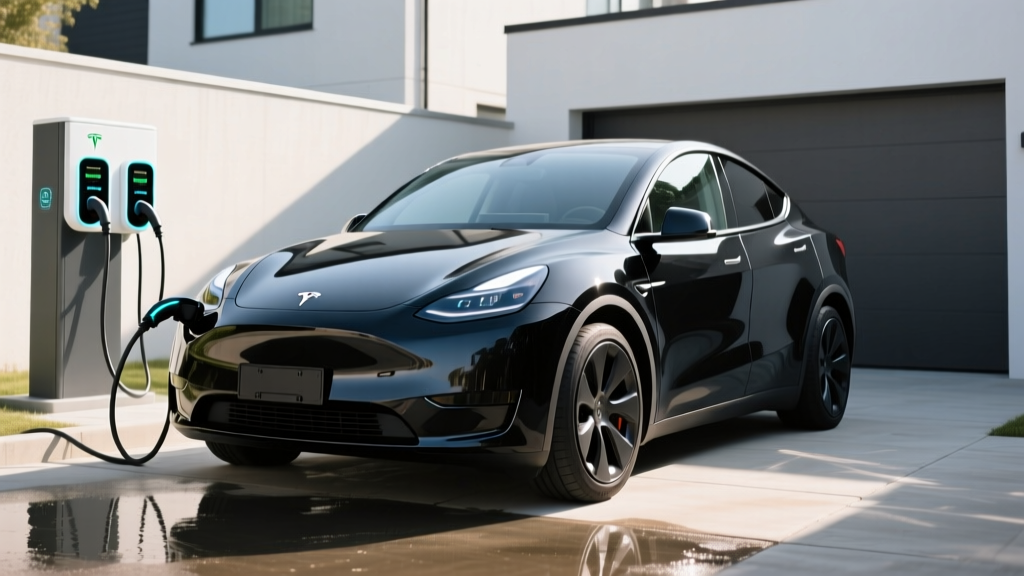
The Model Y charges at a peak rate of 250 kW on DC fast chargers, specifically on Tesla's V3 and V4 Superchargers. On a CCS-equipped public charger (via Tesla's included CCS adapter or on newer builds with native CCS capability), you'll see similar peak rates at capable stations, though sustained speeds depend heavily on the station's actual output and the battery's state of charge.
Here's the critical nuance that spec sheets hide: the Model Y's charge curve tapers significantly above 80% state of charge. You'll hit 80% in roughly 22 minutes from a low state of charge, but pushing from 80-100% can add another 25-30 minutes. For road trips, plan to charge in the 10-80% window and skip topping off unless you're at your overnight stop.
| Charging Level | Power | Miles Added per Hour | Typical Use Case |
|---|---|---|---|
| Level 1 (120V household) | ~1.4 kW | ~4-5 mi/hr | Emergency / trickle top-off |
| Level 2 (240V, 48A Wall Connector) | 11.5 kW | ~44 mi/hr | Home overnight charging |
| Level 2 (240V, 32A mobile connector) | 7.7 kW | ~30 mi/hr | Home with lower-amperage circuit |
| DC Fast (Tesla Supercharger V3/V4) | Up to 250 kW | ~170 mi in 15 min (peak) | Road trips, quick top-ups |
| DC Fast (CCS public station) | Up to 250 kW* | ~150-170 mi in 15 min (peak) | Non-Tesla network charging |
*Actual CCS speeds depend on station capability and adapter overhead. Tesla Superchargers remain the most reliable DC network in the U.S., with over 30,000 stalls nationally.
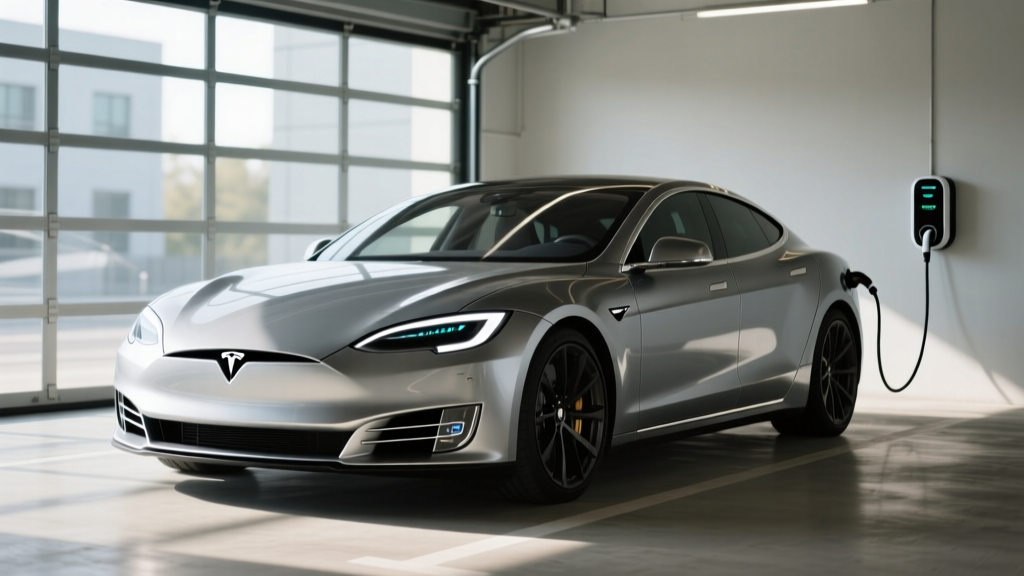
At home, the Tesla Wall Connector on a 60-amp circuit delivers the full 11.5 kW (48 amps), replenishing a depleted battery overnight in roughly 7-8 hours. Most owners who charge nightly at home rarely need to visit a public charger except on road trips — a key ownership advantage over apartment dwellers without home charging access.
Pricing, Tax Credits, and Total Cost After Incentives
The 2026 Model Y lineup starts at $44,990 for the Long Range RWD, with the Long Range AWD at $47,990 and the Performance at $52,990. Destination fees add approximately $1,390. Options are limited to paint color, wheel size, interior color, and Full Self-Driving (Supervised) capability at $8,000 — Tesla has largely eliminated the complex trim ladder that legacy automakers use.
| Trim | Base MSRP | Destination | Federal Credit* | Effective Price |
|---|---|---|---|---|
| Long Range RWD | $44,990 | $1,390 | Up to $7,500 | ~$38,880 |
| Long Range AWD | $47,990 | $1,390 | Up to $7,500 | ~$41,880 |
| Performance AWD | $52,990 | $1,390 | Up to $7,500 | ~$46,880 |
Federal tax credit eligibility (§30D) is not automatic. For 2026, the IRS requires all of the following:
- MSRP cap: The vehicle's base MSRP must not exceed $80,000 for SUVs — all Model Y trims clear this easily.
- Buyer income cap: Modified adjusted gross income must not exceed $150,000 (single), $225,000 (head of household), or $300,000 (joint filers).
- Battery sourcing requirements: A percentage of critical minerals and battery components must be sourced from the U.S. or free-trade-agreement countries. Tesla's supply chain has progressively met these thresholds, but the exact credit amount (full $7,500 vs. partial $3,750) can shift based on annual sourcing rule updates.
- Point-of-sale transfer: Buyers can now transfer the credit to the dealer at purchase, reducing the upfront cost rather than waiting for a tax refund.
Always verify current eligibility on IRS.gov before purchasing, as battery-sourcing rules are updated periodically. Consult a tax professional for your specific situation.
Tesla Model Y Extended Warranty Cost: Is It Worth It?
This is where many Model Y buyers get stuck. Tesla's factory warranty covers the vehicle with a 4-year/50,000-mile basic (bumper-to-bumper) warranty and an 8-year/120,000-mile battery and drive unit warranty (Long Range and Performance trims). The battery warranty guarantees that the pack will retain at least 70% of its original capacity over that period — a reasonable threshold, and one that most Tesla packs clear with room to spare based on fleet degradation data.
But what happens after year four, when the basic warranty expires and you're still years away from the battery/drive-unit coverage ending? That's where the Tesla Model Y extended warranty cost becomes a real conversation.
Tesla's Own Extended Service Agreement
Tesla offers an Extended Service Agreement (ESA) that can be purchased before the original 4-year/50,000-mile warranty expires. As of 2026, pricing for the Model Y ESA typically falls in the following range:
- 2-year/25,000-mile extension (beyond 4/50k): ~$2,500-$3,500
- 4-year/50,000-mile extension (to 8/100k total): ~$4,000-$5,500
Pricing varies based on trim (Performance models cost more to cover) and when you purchase the agreement. Tesla's ESA covers most components beyond the battery and drive unit — think suspension, HVAC, infotainment screen, power windows, and door handles. The touchscreen and MCU are particularly relevant: a screen replacement out of warranty runs $1,500-$2,500 at Tesla service centers.
Third-Party Extended Warranties
Several third-party providers (such as XCare and Endurance) offer EV-specific extended warranties for the Model Y, often at lower prices than Tesla's own ESA — sometimes in the $2,000-$3,500 range for similar coverage periods. The trade-off is that third-party claims may require using Tesla-approved service centers (which limits your options) and reimbursement processes can be slower. Read the contract exclusions carefully: some third-party plans exclude the MCU, air suspension (not applicable to Model Y), and certain high-voltage-adjacent components.
The Math: Should You Buy Extended Coverage?
Based on Tesla reliability data and owner surveys, the Model Y's most common out-of-warranty repairs involve:
- Touchscreen/MCU failure: $1,500-$2,500
- Drive unit (motor) replacement: $3,000-$5,000 (covered under the 8-year powertrain warranty)
- Heat pump / HVAC compressor: $1,200-$2,000
- Suspension components (control arms, bushings): $600-$1,200 per corner
- 12V lithium auxiliary battery: $400-$600
If you plan to own the Model Y past 50,000 miles and beyond year four, the extended warranty cost of $3,000-$5,000 starts to look reasonable when a single major repair (MCU or heat pump) can consume half that amount. If you're a 4-year-or-less owner who trades before the factory warranty lapses, skip the ESA entirely.
Tech, Driver Assistance, and Interior
The 2026 Model Y continues with Tesla's minimalist interior approach, though the recent refresh added ventilated front seats, ambient lighting, rear-seat ventilation, and improved sound insulation. The 15.4-inch center touchscreen handles virtually all vehicle functions — there are no physical buttons for climate, mirrors, or glovebox. This is either elegant or infuriating depending on your tolerance for menu-diving while driving.
On the driver-assistance front, the Model Y comes standard with Tesla Autopilot (adaptive cruise control and lane-keeping). The optional Full Self-Driving (Supervised) package ($8,000) adds automated lane changes, city-street navigation, traffic light recognition, and parking assist. It is critical to understand that FSD is an SAE Level 2 system — it requires continuous driver supervision and is not autonomous driving. You must keep your hands on the wheel and eyes on the road at all times.
Tesla Autopilot and FSD (Supervised) are Level 2 driver-assistance systems. The vehicle can manage steering and acceleration simultaneously under certain conditions, but the driver is fully responsible for monitoring the environment and intervening immediately. This is fundamentally different from Level 4 robotaxi services like Waymo, which operate without a human driver in defined geographic areas. Do not treat any current Tesla system as self-driving.
Notable tech highlights include over-the-air software updates that add features post-purchase, Sentry Mode (360° parked surveillance), Dashcam, Dog Mode, and the Tesla app's remote preconditioning and charging management. The Model Y also supports the Tesla mobile app as a phone-as-key, eliminating the need for a traditional fob.
Pros, Cons, and Who Should Buy
- Class-leading Supercharger network access (30,000+ stalls)
- Excellent efficiency (3.5-4.0 mi/kWh real-world)
- Strong real-world range with heat-pump cold-weather performance
- Fast 250 kW DC charging, 10-80% in ~22 minutes
- Spacious cargo area (72.1 cu ft with seats folded)
- Over-the-air updates continuously improve the vehicle
- 8-year/120,000-mile battery and drive unit warranty
- Minimalist interior forces all controls through the touchscreen
- Ride quality is firm; not as refined as Hyundai Ioniq 5 or Genesis GV60
- FSD (Supervised) is expensive and remains Level 2, not autonomous
- Out-of-warranty repair costs are high (Tesla service pricing)
- No Apple CarPlay or Android Auto integration
- Panel gaps and build consistency still trail legacy luxury brands
- Extended warranty cost adds $2,500-$5,500 to long-term ownership
Who the Model Y Suits Best
- Daily commuters with home charging: The efficiency and Level 2 home charging speed make this a set-it-and-forget-it daily driver.
- Families needing cargo space: 72 cu ft with seats down plus the frunk handles strollers, groceries, and road-trip luggage easily.
- Road trippers: The Supercharger network removes charging-infrastructure anxiety on interstate routes better than any competitor.
- Tech-forward buyers: If you value software features, OTA updates, and app integration over traditional luxury materials.
Who should look elsewhere: Buyers who prioritize ride comfort, physical climate controls, or Apple CarPlay should test-drive the Ioniq 5 or Mach-E before committing. Those without home charging access should verify public charger availability in their area first.
Frequently Asked Questions
What is the real-world range of the 2026 Tesla Model Y?
The EPA rates the Long Range AWD at 335 miles on 19-inch wheels, but expect approximately 275-295 miles in real-world highway driving at moderate temperatures. In cold weather below freezing, plan for 230-260 miles. City driving with heavy regenerative braking can approach or slightly exceed the EPA estimate.
How fast does the Model Y charge at home and on the road?
On DC fast chargers (Tesla Superchargers), the Model Y peaks at 250 kW and charges from 10-80% in about 22 minutes. At home on a Level 2 Wall Connector (240V, 48A), it charges at 11.5 kW, adding roughly 44 miles of range per hour — enough for a full overnight charge.
How much does the 2026 Model Y cost after federal tax credits?
With the full $7,500 federal tax credit applied, the Long Range RWD drops to approximately $38,880 including destination. The Long Range AWD comes to roughly $41,880. Credit eligibility depends on your income (under $150k single / $300k joint), the vehicle's MSRP (under $80k for SUVs), and battery sourcing requirements — verify on IRS.gov.
How much does the Tesla Model Y extended warranty cost?
Tesla's Extended Service Agreement typically costs $2,500-$3,500 for a 2-year extension or $4,000-$5,500 for a 4-year extension beyond the factory 4-year/50,000-mile basic warranty. Third-party options may be cheaper ($2,000-$3,500) but come with more exclusions. Whether it's worth it depends on your planned ownership duration — if you'll keep the car past 50,000 miles, the coverage can pay for itself with a single major repair.
Is the Tesla Model Y worth buying vs. competitors?
The Model Y wins on efficiency, Supercharger network access, and cargo space. The Hyundai Ioniq 5 offers a more comfortable ride, physical buttons, and 800V ultra-fast charging capability. The Ford Mustang Mach-E provides a more engaging driving experience. If Supercharger access matters to you (and for road trips, it should), the Model Y remains the most pragmatic choice in the segment.
Does the 2026 Model Y qualify for the federal EV tax credit?
Yes — all 2026 Model Y trims fall under the $80,000 SUV MSRP cap. However, your personal eligibility depends on income limits ($150k single / $300k joint MAGI) and current battery-sourcing requirements under §30D. The credit can be transferred at point of sale to reduce your purchase price directly. Always confirm current eligibility before buying, as sourcing rules are subject to change.
What is the battery warranty on the Model Y?
Tesla covers the battery and drive unit for 8 years or 120,000 miles (whichever comes first) on Long Range and Performance trims, with a guaranteed minimum 70% capacity retention. The basic bumper-to-bumper warranty is 4 years or 50,000 miles. Fleet data shows most Model Y packs retain 85-90% capacity at 100,000 miles, well above the warranty threshold.
For official safety ratings, check NHTSA and IIHS. For the latest EPA efficiency data, visit fueleconomy.gov.